

2 weeks 4 days ago
We collect individuals into 'kinds' by applying to them the Idea of Likeness.

2 months 2 weeks ago
People usually think that progress consists in the increase of knowledge, in the improvement of life, but that isn't so. Progress consists only in the greater clarification of answers to the basic questions of life. The truth is always accessible to a man. It can't be otherwise, because a man's soul is a divine spark, the truth itself. It's only a matter of removing from this divine spark (the truth) everything that obscures it. Progress consists, not in the increase of truth, but in freeing it from its wrappings. The truth is obtained like gold, not by letting it grow bigger, but by washing off from it everything that isn't gold.
▼
Source
source
Tolstoy's Diaries (1985) edited and translated by R. F. Christian. London: Athlone Press, Vol 2, p. 512

5 months 3 weeks ago
The liar is a person who uses the valid designations, the words, in order to make something which is unreal appear to be real. He says, for example, "I am rich," when the proper designation for his condition would be "poor." He misuses fixed conventions by means of arbitrary substitutions or even reversals of names. If he does this in a selfish and moreover harmful manner, society will cease to trust him and will thereby exclude him. What men avoid by excluding the liar is not so much being defrauded as it is being harmed by means of fraud. Thus, even at this stage, what they hate is basically not deception itself, but rather the unpleasant, hated consequences of certain sorts of deception. It is in a similarly restricted sense that man now wants nothing but truth: he desires the pleasant, life-preserving consequences of truth. He is indifferent toward pure knowledge which has no consequences; toward those truths which are possibly harmful and destructive he is even hostilely inclined.

4 months 2 weeks ago
We live together, we act on, and react to, one another; but always and in all circumstances we are by ourselves. The martyrs go hand in hand into the arena; they are crucified alone. Embraced, the lovers desperately try to fuse their insulated ecstacies into a single self-transcendence; in vain. By its very nature every embodied spirit is doomed to suffer and enjoy in solitude.
▼
Source
source
Page 159

4 months 2 weeks ago
So far as living instruments of labour are concerned, for instance horses, their reproduction is timed by nature itself. Their average lifetime as instruments of labour is determined by the laws of nature. As soon as this term has expired they must be replaced by new ones. A horse cannot be replaced piecemeal; it must be replaced by another horse.
▼
Source
source
Vol. II, Ch. VIII, p. 174.

3 months 2 weeks ago
The objects of a financier are, then, to secure an ample revenue; to impose it with judgment and equality; to employ it economically; and, when necessity obliges him to make use of credit, to secure its foundations in that instance, and for ever, by the clearness and candour of his proceedings, the exactness of his calculations, and the solidity of his funds.

3 months 2 weeks ago
No one can be perfectly free till all are free; no one can be perfectly moral till all are moral; no one can be perfectly happy till all are happy.
▼
Source
source
Pt. IV, Ch. 30 : General Considerations
2 months 1 week ago
Joe Hume talked to me very earnestly about the necessity of an union of Liberals. He said much about Ballot and the Franchise. I told him that I could easily come to some compromise with him and his friends on these matters, but that there were other questions about which I feared that there was an irreconcileable difference, particularly the vital question of national defence. He seemed quite confounded, and had absolutely nothing to say. I am fully determined to make them eat their words on that point, or to have no political connection with them.
▼
Source
source
Journal entry (November 1852), quoted in George Otto Trevelyan, The Life and Letters of Lord Macaulay, Volume II (1876), p. 368
3 months 2 weeks ago
...my extreme anxiety about the Object of our common sollicitude and my clear and decided conviction, that there is one part of the War, which instead of being postponed and considered in a secondary light, ought to have priority over every other, and requires our most early and our most careful attention; I mean La Vendée. ... This is a War directly against Jacobinism and its principles. It strikes at the Enemy in his weakest and most vulnerable part. At La Vendée with infinitely less Charge, we may make an impression likely to be decisive. This goes to the heart of the Business.
▼
Source
source
Letter to the Home Secretary Henry Dundas (8 October 1793), quoted in P. J. Marshall and John A. Woods (eds.)

4 months 2 weeks ago
Those who forget good and evil and seek only to know the facts are more likely to achieve good than those who view the world through the distorting medium of their own desires.
▼
Source
source
Ch. 1: Mysticism and Logic

1 month 3 days ago
Besides, he who is feared, fears also; no one has been able to arouse terror and live in peace of mind.
1 week 1 day ago
We Jews have been too adaptable. We have been too eager to sacrifice our idiosyncrasies for the sake of social conformity. ... Even in modern civilization, the Jew is most happy if he remains a Jew.
4 months 2 weeks ago
What is troubling us is the tendency to believe that the mind is like a little man within.
▼
Source
source
Remarks to John Wisdom, quoted in Zen and the Work of WIttgenstein by Paul Weinpaul in The Chicago Review Vol. 12, (1958), p. 70
2 weeks 1 day ago
To change your mind and to follow him who sets you right is to be nonetheless the free agent that you were before. Remember that to change thy opinion and to follow him who corrects thy error is as consistent with freedom as it is to persist in thy error.
▼
Source
source
(Long translation) VIII, 16

4 months 2 weeks ago
There are two things which make it impossible to believe that this world is the successful work of an all-wise, all-good, and, at the same time, all-powerful Being; firstly, the misery which abounds in it everywhere; and secondly, the obvious imperfection of its highest product, man, who is a burlesque of what he should be.
▼
Source
source
"On the Sufferings of the World"

1 month 1 week ago
These things, which we state lightly enough here, are yet of deep import, and indicate a mighty change in our whole manner of existence. For the same habit regulates not our modes of action alone, but our modes of thought and feeling. Men are grown mechanical in head and in heart, as well as in hand. They have lost faith in individual endeavour, and in natural force, of any kind. Not for internal perfection, but for external combinations and arrangements, for institutions, constitutions, for Mechanism of one sort or other, do they hope and struggle. Their whole efforts, attachments, opinions, turn on mechanism, and are of a mechanical character.
4 months 3 weeks ago
All thought must, directly or indirectly, by way of certain characters, relate ultimately to intuitions, and therefore, with us, to sensibility, because in no other way can an object be given to us.
▼
Source
source
B 33

2 months 2 weeks ago
If a work of art is to explore new environments, it is not to be regarded as a blueprint but rather as a form of action-painting.
▼
Source
source
To Wilfred Watson, October 6 1965. Letters of Marshall McLuhan (1987), p. 325
3 weeks 6 days ago
The one absolutely, the Intelligible, the ever Preexisting, comprehending all the universe together within the One - nay, more, is not the whole world One living thing - all and everywhere full of life and soul, perfect and made up out of parts likewise perfect? Now of this double unity the most perfect part (I mean of the Unity in the Intelligible World that comprehends all things in One, and of the Unity encompassing the Sensible World, that brings together all things into a single and perfect nature) is the perfection of the sovereign Sun, which is central and single, and placed in the middle of the intermediate Powers.
4 months 3 weeks ago
My mind is calm, for my fortune is not my felicity. I know I have clean hands and a clean heart, and I hope a clean house for friends or servants; but Job himself, or whoever was the justest judge, by such hunting for matters against him as hath been used against me, may for a time seem foul, especially in a time when greatness is the mark and accusation is the game.
▼
Source
source
Quoted by Thomas Fowler in "Francis Bacon 1561-1626
5 months 2 weeks ago
The third kind of life is the life of contemplation.

3 months 1 day ago
On the whole, the scientist is better off if he collects his facts by accident, little by little, so he can study them before he tries to fit them into a jigsaw puzzle, This is how the late Tom Lethbridge came to arrive at his theories about other dimensions of reality. It is also how Guy Lyon Playfair came to develop his own theories about the nature of the poltergeist.
▼
Source
source
p. 196
4 weeks 1 day ago
If Christianity is wine and Islam coffee, Buddhism is most certainly tea.
▼
Source
source
p. 190
1 month 3 weeks ago
In the long run, there is nothing to stop intelligent agents from identifying the molecular signature of experience below hedonic zero and eliminating it altogether - even in insects. Nociception is vital; pain is optional. I tentatively predict that the world's last unpleasant experience in our forward light-cone will be a precisely datable event - perhaps some micro-pain in an obscure marine invertebrate a few centuries hence.
▼
Source
source
The Radical Plan to Phase out Earth's Predatory Species, io9, 30 Jul. 2014

4 months 2 weeks ago
Tout existant naît sans raison, se prolonge par faiblesse et meurt par rencontre. Every existing thing is born without reason, prolongs itself out of weakness and dies by chance.
2 months 2 weeks ago
The ethical and political practice of nonviolence can rely neither exclusively on the dyadic encounter, nor on the bolstering of a prohibition; it requires a political opposition to the biopolitical forms of racism and war logics that rely on phantasmagoric inversions that occlude the binding and interdependent character of the social bond. It requires, as well, an account of why, and under what conditions, the frameworks for understanding violence and nonviolence, or violence and self-defense, seem to invert into one another, causing confusion about how best to pin down those terms.
▼
Source
source
p. 62
4 months 1 week ago
By virtue of its innermost intention, and like all questions about language, structuralism escapes the classical history of ideas which already supposes structuralism's possibility, for the latter naively belongs to the province of language and propounds itself within it.Nevertheless, by virtue of an irreducible region of irreflection and spontaneity within it, by virtue of the essential shadow of the undeclared, the structuralist phenomenon will deserve examination by the historian of ideas. For better or for worse. Everything within this phenomenon that does not in itself transparently belong to the question of the sign will merit this scrutiny; as will everything within it that is methodologically effective, thereby possessing the kind of infallibil-ity now ascribed to sleepwalkers and formerly attributed to instinct, which was said to be as certain as it was blind.
▼
Source
source
Force and Signification
2 weeks 1 day ago
This is a fine saying of Plato: That he who is discoursing about men should look also at earthly things as if he viewed them from some higher place; should look at them... a mixture of all things and an orderly combination of contraries.
▼
Source
source
VII, 48
4 months 2 weeks ago
Don't get involved in partial problems, but always take flight to where there is a free view over the whole single great problem.
3 months 2 weeks ago
The bigger the crowd, the more negligible the individual.
▼
Source
source
p 14
3 months 4 days ago
The jargon makes it seem that ... the pure attention of the expression to the subject matter would be a fall into sin.
▼
Source
source
p. 9
2 months 1 week ago
In advanced age, and in cases of disability from accident, natural infirmity or any other cause, the individual shall be supported by the colony, and receive every comfort which kindness can administer.
4 months 2 weeks ago
Three o'clock is always too late or too early for anything you want to do.
4 weeks 1 day ago
How is it possible that a being with such sensitive jewels as the eyes, such enchanted musical instruments as the ears, and such fabulous arabesque of nerves as the brain can experience itself anything less than a god.
▼
Source
source
Page 138
3 months 1 day ago
There is no reason whatever to assume that woman, in her climb to emancipation, has been, or will be, helped by the ballot.
2 weeks 5 days ago
"Do not die that we may not die," the dead cry out within you. "We had no time to enjoy the women we desired; be in time, sleep with them! We had no time to turn our thoughts into deeds; turn them into deeds! We had no time to grasp and to crystallize the face of our hope; make it firm!" ... But you must choose with care whom to hurl down again into the chasms of your blood, and whom you shall permit to mount once more into the light and the earth.

4 months 2 weeks ago
Never self-possessed, or prudent, love is all abandonment.
▼
Source
source
p. 158

3 months 4 days ago
One could count on one's fingers the number of scientists in the entire world who have a general idea of the history and development of their own particular science; there is not one who is really competent as regards sciences other than his own. As science forms an indivisible whole, one may say that there are no longer, strictly speaking, any scientists, but only drudges doing scientific work. . . .
▼
Source
source
p. 13 (as quoted in On Science, Necessity, and the Love of God (1968), p.1)
2 months 2 weeks ago
Reason has discovered the struggle for existence and the law that I must throttle all those who hinder the satisfaction of my desires. That is the deduction reason makes. But the law of loving others could not be discovered by reason, because it is unreasonable.
▼
Source
source
Pt. VIII, ch. 13
2 months 2 weeks ago
Civilization gives the barbarian or tribal man an eye for an ear and is now at odds with the electronic world.
▼
Source
source
(p. 30)
4 months 2 weeks ago
Commoners are weightless. But he was a royal bon vivant who, no matter what, always weighed 125 kilos. I would be very surprised if he didn't have a few pounds left.
▼
Source
source
A soldier in Argos, speaking of the dead King Agamemnon, Act 2
1 week 1 day ago
In the temple of science are many mansions, and various indeed are they that dwell therein and the motives that have led them thither. Many take to science out of a joyful sense of superior intellectual power; science is their own special sport to which they look for vivid experience and the satisfaction of ambition; many others are to be found in the temple who have offered the products of their brains on this altar for purely utilitarian purposes. Were an angel of the Lord to come and drive all the people belonging to these two categories out of the temple, the assemblage would be seriously depleted, but there would still be some men, of both present and past times, left inside. Our Planck is one of them, and that is why we love him. I am quite aware that we have just now lightheartedly expelled in imagination many excellent men who are largely, perhaps chiefly, responsible for the buildings of the temple of science; and in many cases, our angel would find it a pretty ticklish job to decide. But of one thing I feel sure: if the types we have just expelled were the only types there were, the temple would never have come to be, any more than a forest can grow which consists of nothing but creepers. For these people any sphere of human activity will do if it comes to a point; whether they become engineers, officers, tradesmen, or scientists depends on circumstances.Now let us have another look at those who have found favor with the angel. Most of them are somewhat odd, uncommunicative, solitary fellows, really less like each other, in spite of these common characteristics, than the hosts of the rejected. What has brought them to the temple? That is a difficult question and no single answer will cover it.
2 months 3 weeks ago
We distinguish diagrammatic from sentential paper-and-pencil representations of information by developing alternative models of information-processing systems that are informationally equivalent and that can be characterized as sentential or diagrammatic. Sentential representations are sequential, like the propositions in a text. Diagrammatic representations are indexed by location in a plane. Diagrammatic representations also typically display information that is only implicit in sentential representations and that therefore has to be computed, sometimes at great cost, to make it explicit for use. We then contrast the computational efficiency of these representations for solving several.illustrative problems in mathematics and physics.
▼
Source
source
p. 65

4 months 3 weeks ago
We were halves throughout, and to that degree that, methinks, by outliving him I defraud him of his part.
▼
Source
source
Ch. 27. Of Friendship, tr. Cotton, rev. W. Hazlitt, 1842
5 months 2 weeks ago
There are many aspects of the universe that still cannot be explained satisfactorily by science; but ignorance only implies ignorance that may someday be conquered. To surrender to ignorance and call it God has always been premature, and it remains premature today.
3 months 2 weeks ago
While all these are disturbed and divided by the multifarious objects to which their thoughts must be applied, the Philosopher pursues, in solitary silence and in unbroken concentration of mind, his single and undeviating course towards the Good, the Beautiful, and the True; and that is his daily labour, to which others can only resort at times for rest and refreshment after toil.
▼
Source
source
P. 17

5 months 6 days ago
Medicine considers the human body as to the means by which it is cured and by which it is driven away from health.
4 months 1 week ago
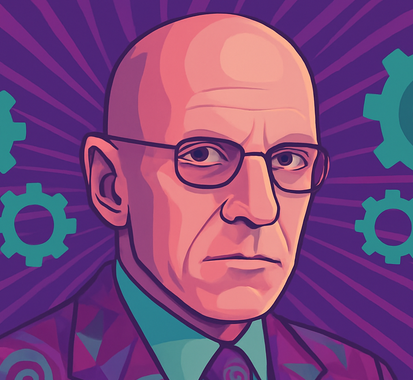
Is it surprising that prisons resemble factories, schools, barracks, hospitals, which all resemble prisons?
▼
Source
source
Discipline and Punish (1977) as translated by Alan Sheridan, p. 228
1 month 1 week ago
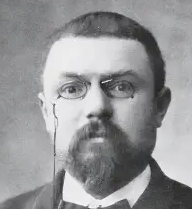
It is only through science and art that civilization is of value. Some have wondered at the formula: science for its own sake; an yet it is as good as life for its own sake, if life is only misery; and even as happiness for its own sake, if we do not believe that all pleasures are of the same quality...Every act should have an aim. We must suffer, we must work, we must pay for our place at the game, but this is for seeing's sake; or at the very least that others may one day see.
CivilSimian.com created by AxiomaticPanic, CivilSimian, Kalokagathia