


3 months 2 weeks ago
Each new ontological theory, propounded in lieu of previous ones shown to be untenable, has been followed by a new criticism leading to a new scepticism. All possible conceptions have been one by one tried and found wanting; and so the entire field of speculation has been gradually exhausted without positive result: the only result reached being the negative one above stated, that the reality existing behind all appearances is, and must ever be, unknown.
▼
Source
source
Pt. I, The Unknowable; Ch. IV, The Relativity of All Knowledge

4 months 2 weeks ago
You never know how much you really believe anything until its truth or falsehood becomes a matter of life and death to you. It is easy to you believe a rope to be strong and sound as long as you are merely using it to cord a box. But suppose that you had to hang by that rope over a precipice. Wouldn't you then first discover how much you really trusted it? ... Only a real risk tests the reality of a belief.
2 weeks ago
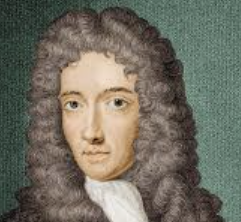
Being Gentlemen and very far from the litigious humour of loving to wrangle about words or terms or notions as empty; they had before his coming in, readily agreed promiscuously to use when they pleased Elements and Principles as terms equivalent: and to understand both by the one and the other, those primitive and simple bodies of which the mixt ones are said to be composed, and into which they are ultimately resolved.

4 months 3 weeks ago
Once conform, once do what others do because they do it, and a kind of lethargy steals over all the finer senses of the soul.

4 months 2 weeks ago
When memory begins to decay, proper names are what go first ...[C]ommon qualities and names have contracted an infinitely greater number of associations ...than the names of most of the persons ...Their memory is better organized. ...'Organization' means numerous associations; and the more numerous the associations, the greater the number of paths of recall. For the same reason... words... which form the grammatical framework of all our speech, are the very last to decay.
▼
Source
source
Ch. 16
4 months 2 weeks ago
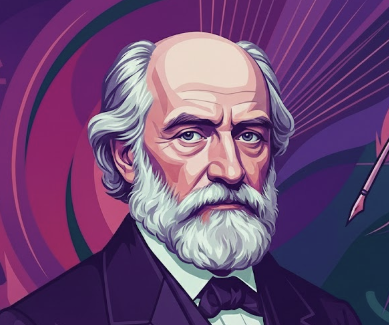
If, while hurrying ostensibly to the temple of truth, we hand the reins over to our personal interests which look aside at very different guiding stars, for instance at the tastes and foibles of our contemporaries, at the established religion, but in particular at the hints and suggestions of those at the head of affairs, then how shall we ever reach the high, precipitous, bare rock whereon stands the temple of truth?
▼
Source
source
E. Payne, trans. (1974) Vol. 1, pp. 22-23

4 months 2 weeks ago
Night is falling: at dusk, you must have good eyesight to be able to tell the Good Lord from the Devil.
▼
Source
source
Act 10, sc. 2

4 months 2 weeks ago
In the revolt against idealism, the ambiguities of the word "experience" have been perceived, with the result that realists have more and more avoided the word. It is to be feared, however, that if the word is avoided the confusions of thought with which it has been associated may persist.
▼
Source
source
On the Nature of Acquaintance: Neutral Monism, 1914

4 months 3 weeks ago
III. Every tax ought to be levied at the time, or in the manner, in which it is most likely to be convenient for the contributor to pay it.
▼
Source
source
Chapter II Part II, p. 893.

5 months 3 weeks ago
May I really say it! All truths are bloody truths to me, take a look at my previous writings.



3 months 5 days ago
And what has Don Quixote left, do you ask? I answer, he has left himself, and a man, a living and eternal man, is worth all the theories and all the philosophies. Other peoples have left chiefly institutions, books; we have left souls; St. Teresa is worth any institution, any Critique of Pure Reason.

3 months 2 weeks ago
By adverting to the dignity of this high calling our ancestors have turned a savage wilderness into a glorious empire: and have made the most extensive, and the only honorable conquests, not by destroying, but by promoting the wealth, the number, the happiness of the human race.
3 months 1 week ago
In the life of the mass-order, the culture of the generality tends to conform to the demands of the average human being. Spirituality decays through being diffused among the masses when knowledge is impoverished in every possible way by rationalisation until it becomes accessible to the crude understanding of all.
4 months 2 weeks ago
The consciousness of being betrayed is to the collective consciousness of a sacred group what a certain form of schizophrenia is to the individual...it is a form of madness.
▼
Source
source
p. 193
3 months 1 week ago
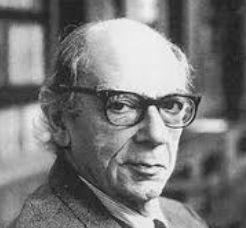
By freedom he meant a condition in which men were not prevented from choosing both the object and the manner of their worship. For him only a society in which this condition was realised could be called fully human. Its realisation was an ideal which Mill regarded as more precious than life itself.
4 months 2 weeks ago
There is an artist imprisoned in each one of us. Let him loose to spread joy everywhere.
▼
Source
source
Last Essay: "1967"
2 weeks 1 day ago
Don't let yourself forget how many doctors have died, after furrowing their brows over how many deathbeds. How many astrologers, after pompous forecasts about others' ends. How many philosophers, after endless disquisitions on death and immortality. How many warriors, after inflicting thousands of casualties themselves. How many tyrants, after abusing the power of life and death atrociously, as if they were themselves immortal.
▼
Source
source
(Hays translation) IV, 48

4 months 2 weeks ago
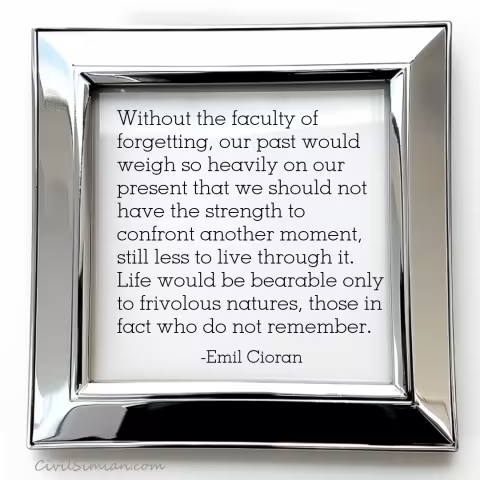
No man can have society upon his own terms. If he seeks it, he must serve it too.
▼
Source
source
1833
4 months 3 weeks ago
Whence we see spiders, flies, or ants entombed and preserved forever in amber, a more than royal tomb.
▼
Source
source
Historia Vitæ et Mortis; Sylva Sylvarum, Cent. i. Exper. 100, reported in Bartlett's Familiar Quotations, 10th ed.

5 months 1 week ago
They hate not to make use of their abilities... they do not necessarily work for their own self-interest.

3 months 1 day ago
Catastrophic fatality abruptly switches over into salvation.

5 months 2 days ago
Violence and injury enclose in their net all that do such things, and generally return upon him who began.
▼
Source
source
Book V, lines 1152-1153 (tr. Rouse)

3 months 1 day ago
It was the normal working of the antisuccess mechanism. In our overcrowded modern world a hit record, a best-selling book, a successful film, can reach more people in a week than Shakespeare or Beethoven reached in a whole lifetime. And so fame has become the most romantic, the most desirable of all commodities, the dream for which a modern Faust might sell his soul to the Devil. Once attained, fame is never as easy to hold on to as some people believe. The people who achieve fame by some accident of fashion are usually forgotten within a week; the ones who remain on top have to work to stay there. But few people understand this. The result is that anyone who achieves sudden notoriety arouses envy and hostility. The greater the success, the greater the reaction.
▼
Source
source
p. 28
4 months 2 weeks ago
As we take, in fact, a general view of the wonderful stream of our consciousness, what strikes us first is this different pace of its parts. Like a bird's life, it seems to be made of an alternation of flights and perchings.
▼
Source
source
Ch. 9
2 weeks 1 day ago
Every soul, the philosopher says, is involuntarily deprived of truth; consequently in the same way it is deprived of justice and temperance and benevolence and everything of the kind. It is most necessary to keep this in mind, for thus thou wilt be more gentle towards all.
▼
Source
source
VII, 63

2 weeks 4 days ago
Our country is now taking so steady a course as to show by what road it will pass to destruction, to wit: by consolidation of power first, and then corruption, its necessary consequence. The engine of consolidation will be the Federal judiciary; the two other branches the corrupting and corrupted instruments.
▼
Source
source
Letter, Thomas Jefferson to Nathaniel Macon, 1821: ME 15-341

2 months 2 weeks ago
The role of the artist is to create an Anti-environment as a means of perception and adjustment.
▼
Source
source
(p. 31)

4 months ago
Anger begins in folly, and ends in repentance.
▼
Source
source
As quoted in Treasury of Thought: Forming an Encyclopædia of Quotations from Ancient and Modern Authors (1894) by Maturin Murray Ballou

4 months 3 weeks ago
All happiness or unhappiness solely depends upon the quality of the object to which we are attached by love.
▼
Source
source
I, 9; translation by W. Hale White (Revised by Amelia Hutchison Stirling)
2 months 1 day ago
Marriage is tough, because it is woven of all these various elements, the weak and the strong. "In love-ness" is fragile for it is woven only with the gossamer threads of beauty. It seems to me absurd to talk about "happy" and "unhappy" marriages.
4 months 2 weeks ago
That man should think of God as nothingness must at first sight seem astonishing, must appear to us a most peculiar idea. But, considered more closely, this determination means that God is absolutely nothing determined. He is the Undetermined; no determinateness of any kind pertains to God; He is the Infinite. This is equivalent to saying that God is the negation of all particularity.
▼
Source
source
Hegel, Georg Wilhelm Friedrich, Lectures on the philosophy of religion, together with a work on the proofs of the existence of God. Vol 2 Translated from the 2d German ed. 1895 Ebenezer Brown Speirs 1854-1900, and J Burdon Sanderson p. 51
5 months 4 days ago
The Heavenly City outshines Rome, beyond comparison. There, instead of victory, is truth; instead of high rank, holiness; instead of peace, felicity; instead of life, eternity.
▼
Source
source
Book II, Chapter 29
3 months 1 week ago
Calvin's theocentric irrationalism eventually revealed itself as the cunning to technocratic reason which had to shape its human material. Misery and the poor laws did not suffice to drive men into the workshops of the early capitalistic era. The new spirit helped to supplement external pressures with a concern for wife and child to which the moral autonomy of the introverted subject in reality was tantamount.
▼
Source
source
p. 34.
1 month 3 weeks ago
In future, nerve cell responsiveness to naturally occurring endogenous opioids can be increased via receptor enrichment in the brain too. In principle, we can modulate their lifelong "overexpression", intermittently heightened (or gently diminished) by whatever kinds of personal and environmental contingencies we judge fit. Both functionally and anatomically, our reward pathways can be made "bigger and better". But intelligent emotional self-mastery will involve re-engineering the mind-brain so we derive the most intense rewards from activities we deem most lastingly worthwhile: i.e. prioritising our higher-order desires over legacy first-order appetites. Natural selection has "encephalised" our emotions to benefit our genes. Rational agents can "re-encephalise" our emotions to benefit us.
▼
Source
source
Utopian Neuroscience, BLTC Research, 2019
1 month 4 days ago
Credit expansion can bring about a temporary boom. But such a fictitious prosperity must end in a general depression of trade, a slump.
2 months 2 weeks ago
Cartoons drove the photo back to myth and dream screen.

4 months 2 weeks ago
That power should be exercised over any portion of mankind without any obligation of consulting them, is only tolerable while they are in an infantine, or a semi-barbarous state. In any civilized condition, power ought never to be exempt from the necessity of appealing to the reason, and recommending itself by motives which justify it to the conscience and feelings, of the governed.
▼
Source
source
Thoughts on Parliamentary Reform (1859), p. 24
4 months 2 weeks ago
Many agnostics (including myself) are quite as doubtful of the body as they are of the soul, but this is a long story taking one into difficult metaphysics. Mind and matter alike, I should say, are only convenient symbol in discourse, not actually existing things.
▼
Source
source
What is an Agnostic?, 1953
2 weeks 5 days ago
God cries to my heart: "Save me!" God cries to men, to animals, to plants, to matter: "Save me!" Listen to your heart and follow him. Shatter your body and awake: We are all one. Love man because you are he. Love animals and plants because you were they, and now they follow you like faithful co-workers and slaves. Love your body; only with it may you fight on this earth and turn matter into spirit. Love matter. God clings to it tooth and nail, and fights. Fight with him. Die every day. Be born every day. Deny everything you have every day. The superior virtue is not to be free but to fight for freedom. Do not condescend to ask: "Shall we conquer? Shall we be conquered?" Fight on!
1 week 1 day ago
It is easy to follow in the sacred writings of the Jewish people the development of the religion of fear into the moral religion, which is carried further in the New Testament. The religions of all civilized peoples, especially those of the Orient, are principally moral religions. An important advance in the life of a people is the transformation of the religion of fear into the moral religion. But one must avoid the prejudice that regards the religions of primitive peoples as pure fear religions and those of the civilized races as pure moral religions. All are mixed forms, though the moral element predominates in the higher levels of social life.
2 weeks 4 days ago
I have often thought that nothing would do more extensive good at small expense than the establishment of a small circulating library in every county, to consist of a few well-chosen books, to be lent to the people of the country under regulations as would secure their safe return in due time.
▼
Source
source
Letter to John Wyche
5 months 2 weeks ago
Beholding beauty with the eye of the mind, he will be enabled to bring forth, not images of beauty, but realities (for he has hold not of an image but of a reality), and bringing forth and nourishing true virtue to become the friend of God and be immortal, if mortal man may.
3 weeks 5 days ago
I truly cannot say what the person who still has hope for man should think of the imminence of quasi-apocalyptic destruction. It would certainly force many to face the existential problem in all its nakedness, and subject them to extreme trials; but is this a worse evil than that of mankind's safe, secure, satisfied, and total consignment to the kind of happiness that befits Nietzsche's "last man": a comfortable consumer civilization of socialized human animals, aided by all the discoveries of science and industry and reproducing demographically in a squirming, catastrophic crescendo?
▼
Source
source
p. 140
2 months 1 week ago
We are not born free, nor do we come into this world with a self-identity and autonomy of our own. We achieve those things, through the conflict and cooperation that weave us into the social fabric.
▼
Source
source
Where We Are: The State of Britain Now
2 weeks 1 day ago
The particular conception of ideology operates primarily with a psychology of interests, while the total conception uses a more formal functional analysis, without any reference to motivations, confining itself to an objective description of the structural differences in minds operating in different social settings. The former assumes that this or that interest is the cause of a given lie or deception. The latter presupposes simply that there is a correspondence between a given social situation and a given perspective, point of view, or apperception mass. In this case, while an analysis of constellations of interests may often be necessary it is not to establish causal connections but to characterize the total situation. Thus interest psychology tends to be displaced by an analysis of the correspondence between the situation to be known and the forms of knowledge.
3 months ago
I believe that man is the product of natural evolution that is born from the conflict of being a prisoner and separated from nature, and from the need to find unity and harmony with it.
CivilSimian.com created by AxiomaticPanic, CivilSimian, Kalokagathia