


3 months 1 day ago
This is a strange -- and rather alarming -- realisation. For it clearly implies that masturbation is one of our highest faculties that human beings have developed. Many animals masturbate -- but never without the presence of another animal, or some similar stimulus. A human being can masturbate in an empty room: a triumph of pure imagination.
▼
Source
source
p. 90
3 months 3 weeks ago
Impenetrable in their dissimulation, cruel in their vengeance, tenacious in their purposes, unscrupulous as to their methods, animated by profound and hidden hatred for the tyranny of man - it is as though there exists among them an ever-present conspiracy toward domination, a sort of alliance like that subsisting among the priests of every country.
▼
Source
source
"On Women" (1772), as translated in Selected Writings (1966) edited by Lester G. Crocker


4 months 2 weeks ago
I am responsible for everything ... except for my very responsibility, for I am not the foundation of my being. Therefore everything takes place as if I were compelled to be responsible. I am abandoned in the world ... in the sense that I find myself suddenly alone and without help, engaged in a world for which I bear the whole responsibility without being able, whatever I do, to tear myself away from this responsibility for an instant.
▼
Source
source
Part 4, Chapter 1, III
4 months 3 weeks ago
All human knowledge begins with intuitions, proceeds from thence to concepts, and ends with ideas.
▼
Source
source
B 730; Variant translation: All our knowledge begins with the senses, proceeds then to the understanding, and ends with reason. There is nothing higher than reason.
3 months 2 weeks ago
The transition of the subject-object relation to that of the I-Thou implies a passage of consciousness to a new sphere of existence, viz, the interval, betweenness or Zwischen; and this is a passage from thought to Umfassung.
▼
Source
source
The Levinas reader by Levinas, Emmanuel p. 73
3 months 1 week ago
What happens in the movement of art is emergence of new materials of experience demanding expression, and therefore involving in their expression new forms and techniques.
▼
Source
source
p. 148
3 months 3 days ago
It is a safe rule to apply that, when a mathematical or philosophical author writes with a misty profundity, he is talking nonsense.
▼
Source
source
ch. 15.
3 months 4 days ago
Wrong life cannot be lived rightly.
▼
Source
source
E. Jephcott, trans. (1974), § 18

3 months 3 weeks ago
Happy are they that go to bed with grave music like Pythagoras.
4 months 2 weeks ago
Could the activity of thinking as such, the habit of examining whatever happens to come to pass or to attract attention, regardless of results and specific content, could this activity be among the conditions that make men abstain from evil-doing?
▼
Source
source
p. 5

4 months 2 weeks ago
Art, I suppose, is only for beginners, or else for those resolute dead-enders, who have made up their minds to be content with the ersatz of Suchness, with symbols rather than with what they signify, with the elegantly composed recipe in lieu of actual dinner.

3 months 4 days ago
The necessity for power is obvious, because life cannot be lived without order; but the allocation of power is arbitrary because all men are alike, or very nearly. Yet power must not seem to be arbitrarily allocated, because it will not then be recognized as power. Therefore prestige, which is illusion, is of the very essence of power.
▼
Source
source
p. 235
3 months 1 day ago
Human nature asserts itself regardless of all laws, nor is there any plausible reason why nature should adapt itself to a perverted conception of morality.
4 months 3 weeks ago
What defects women have, we must check them for in private, gently by word of mouth, for woman is a frail vessel.
▼
Source
source
Table Talk, quoted in Luther On "Woman"

4 months 2 weeks ago
If a man is offered a fact which goes against his instincts, he will scrutinize it closely, and unless the evidence is overwhelming, he will refuse to believe it. If, on the other hand, he is offered something which affords a reason for acting in accordance with his instincts, he will accept it even on the slenderest evidence. The origin of myths is explained in this way.
▼
Source
source
Ch. VI: International relations, p. 97
5 months 1 week ago
Let the states of equilibrium and harmony exist in perfection, and a happy order will prevail throughout heaven and earth, and all things will be nourished and flourish.
4 months 2 weeks ago
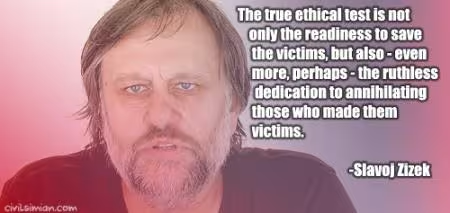
If there were in the world today any large number of people who desired their own happiness more than they desired the unhappiness of others, we could have a paradise in a few years.
▼
Source
source
As quoted in Think, Vol. 27 (1961), p. 32

2 months 2 weeks ago
People continued - regardless of all that leads man forward - to try to unite the incompatibles : the virtue of love, and what is opposed to love, namely, the restraining of evil by violence. And such a teaching, despite its inner contradiction, was so firmly established that the very people who recognize love as a virtue accept as lawful at the same time an order of life based on violence and allowing men not merely to torture but even to kill one another.
▼
Source
source
III
3 months 2 weeks ago
What is the use of all knowledge, if one does not act in accordance with it? This remark implies that knowledge is regarded as a means to action, and the latter as the real end. One could put the question the other way round and ask: How can we possibly act well without knowing what the Good is? This way of expressing it would regard knowledge as conditioning action. But both expressions are one-sided, and the truth is that both, knowledge as well as action, are in the same way inseparable elements of rational life.
▼
Source
source
Consequences of the Difference p. 75
2 weeks 1 day ago
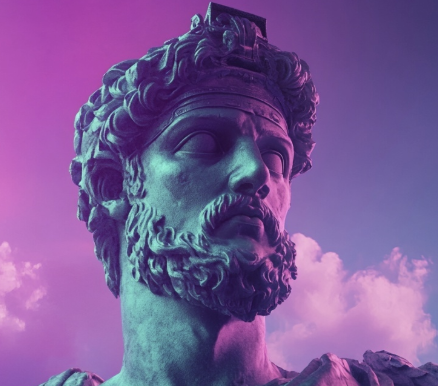
...be tolerant with others and strict with yourself. Remember, nothing belongs to you but your flesh and blood-and nothing else is under your control.
▼
Source
source
(Hays translation) V, 33
3 weeks 6 days ago
We must not suppose any corporeal conjunction or marriage in the case - all which are merely the sportive fables of Poetry; but must hold the father and the producer of that Being as something most divine and super-eminent. Of such a nature is He who is above all things, around whom, and by reason of whom, all things do subsist. But Homer calls him by his father's name, "Hyperion," in order to show that he is independent, and not subjected to any constraint.
5 months 2 weeks ago
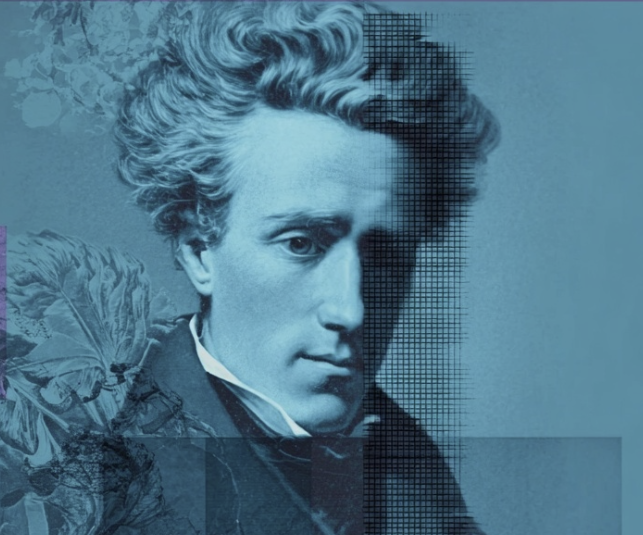
For as only one thing is necessary, and as the theme of the talk is the willing of only one thing: hence the consciousness before God of one's eternal responsibility to be an individual is that one thing necessary.
3 months 3 weeks ago
Gaiety - a quality of ordinary men. Genius always presupposes some disorder in the machine.
▼
Source
source
"Diseases"
4 months 3 weeks ago
Criticism alone can sever the root of materialism, fatalism, atheism, free-thinking, fanaticism, and superstition, which can be injurious universally; as well as of idealism and skepticism, which are dangerous chiefly to the Schools, and hardly allow of being handed on to the public.
▼
Source
source
B xxxiv
3 months 2 weeks ago
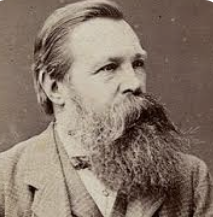
So long as it is not possible to produce so much that there is enough for all, with more left over for expanding the social capital and extending the forces of production - so long as this is not possible, there must always be a ruling class directing the use of society's productive forces, and a poor, oppressed class. How these classes are constituted depends on the stage of development.

3 months 1 day ago
This perversion of the ethical values soon crystallized into the all-dominating slogan of the Communist Party: THE END JUSTIFIES ALL MEANS. Similarly in the past the Inquisition and the Jesuits adopted this motto and subordinated to it all morality. It avenged itself upon the Jesuits as it did upon the Russian Revolution. In the wake of this slogan followed lying, deceit, hypocrisy and treachery, murder, open and secret. It should be of utmost interest to students of social psychology that two movements as widely separated in time and ideas as Jesuitism and Bolshevism reached exactly similar results in the evolution of the principle that the end justifies all means. The historic parallel, almost entirely ignored so far, contains a most important lesson for all coming revolutions and for the whole future of mankind.
3 months 1 day ago
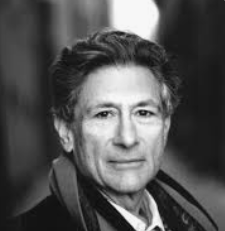
When one learns something one first performs an act of will, because only by willing to learn can one learn.
▼
Source
source
"Vico: Autodidact and Humanist," The Centennial Review, Vol. 11, No. 3 (Summer 1967), p. 340
2 weeks 4 days ago
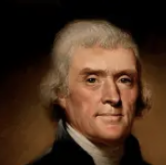
Knowing that religion does not furnish grosser bigots than law, I expect little from old judges.
▼
Source
source
Letter to Thomas Cooper
2 months 4 days ago
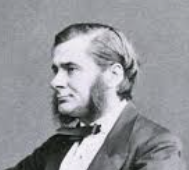
For every man the world is as fresh as it was at the first day, and as full of untold novelties for him who has the eyes to see them.
4 months 2 weeks ago
A writer who takes political, social or literary positions must act only with the means that are his. These means are the written words.
▼
Source
source
Refusing the Nobel Prize, New York Times
5 months 2 weeks ago
A fate is not a punishment.

1 month 1 week ago
The Age that admires talk so much can have little discernment for inarticulate work, or for anything that is deep and genuine. Nobody, or hardly anybody, having in himself an earnest sense for truth, how can anybody recognize an inarticulate Veracity, or Nature-fact of any kind; a Human Doer especially, who is the most complex, profound, and inarticulate of all Nature's Facts? Nobody can recognize him: till once he is patented, get some public stamp of authenticity, and has been articulately proclaimed, and asserted to be a Doer. To the worshipper of talk, such a one is a sealed book. An excellent human soul, direct from Heaven,-how shall any excellence of man become recognizable to this unfortunate? Not except by announcing and placarding itself as excellent,-which, I reckon, it above other things will probably be in no great haste to do.
3 months 4 days ago
I too have a growing inner certainty that there is a deposit of pure gold in me which ought to be passed on. The trouble is that I am more and more convinced by my experience and observation of my contemporaries that there is no one to receive it.
4 weeks ago
Symmetry is a vast subject, significant in art and nature. Mathematics lies at its root, and it would be hard to find a better one on which to demonstrate the working of the mathematical intellect.
▼
Source
source
Symmetry

3 months 2 weeks ago
For my part for one, though I make no doubt of preferring the antient Course, or almost any other to this vile chimera, and sick mans dream of Government yet I could not actively, or with a good heart, and clear conscience, go to the establishment of a monarchical despotism in the place of this system of Anarchy.
▼
Source
source
Letter to Richard Burke (26 September 1791), quoted in Alfred Cobban and Robert A. Smith (eds.), The Correspondence of Edmund Burke, Volume VI: July 1789-December 1791 (1967), p. 414

3 months 2 weeks ago
To make more plans than an explorer or a crook, yet to be infected at the will's very root.
3 months 2 weeks ago
I cannot contribute anything to this world because I only have one method: agony.

2 months 3 weeks ago
There is one ethical principle, either you are preserving life generally, or you aren't. Preserving life in your ends and your means determines whether you are good or evil.
1 month 2 weeks ago
One whose intentions and thoughts are cultivated will disregard wealth and nobility. One whose greatest concern is for the Way and righteousness will take lightly kings and dukes. It is simply that when one examines oneself on the inside, external goods carry little weight. A saying goes, "The gentleman makes things his servants. The petty man is servant to things.
▼
Source
source
Readings in Classical Chinese Philosophy (2001), p. 263
5 months 2 weeks ago
Freedom's possibility is not the ability to choose the good or the evil. The possibility is to be able. In a logical system, it is convenient to say that possibility passes over into actuality. However, in actuality it is not so convenient, and an intermediate term is required. The intermediate term is anxiety, but it no more explains the qualitative leap than it can justify it ethically. Anxiety is neither a category of necessity nor a category of freedom; it is entangled freedom, where freedom is not free in itself but entangled, not by necessity, but in itself.
3 months 2 weeks ago
Saints live in flames; wise men, next to them.
4 months 1 week ago
Meaning created links so numerous, so rich and involved that only esoteric knowledge could possibly have the necessary key. Objects became so weighed down with attributes, connections and associations that they lost their own original face. Meaning was no longer read in an immediate perception, and accordingly objects ceased to speak directly: between the knowledge that animated the figures of objects and the forms they were transformed into, a divide began to appear, opening the way for a symbolism more often associated with the world of dreams.
▼
Source
source
Part One: 1. Stultifera Navis
2 months 2 weeks ago
When the Indians complain that the English have enslaved them it is as if drunkards complained that the spirit-dealers who have settled among them have enslaved them. You tell them that they might give up drinking, but they reply that they are so accustomed to it that they cannot abstain, and that they must have alcohol to keep up their energy. Is it not the same thing with the millions of people who submit to thousands or even to hundreds, of others - of their own or other nations? If the people of India are enslaved by violence it is only because they themselves live and have lived by violence, and do not recognize the eternal law of love inherent in humanity.
▼
Source
source
V
4 months 2 weeks ago
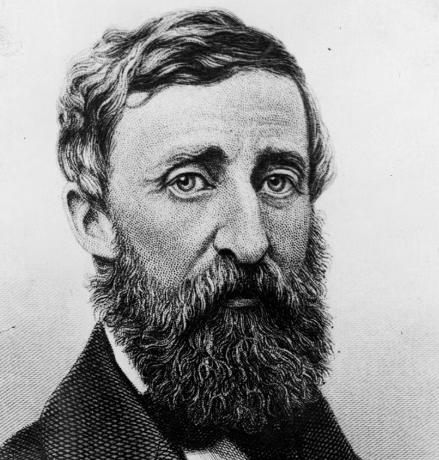
I do not wish to kill nor to be killed, but I can foresee circumstances in which both these things would be by me unavoidable. We preserve the so-called peace of our community by deeds of petty violence every day. Look at the policeman's billy and handcuffs! Look at the jail! Look at the gallows! Look at the chaplain of the regiment! We are hoping only to live safely on the outskirts of this provisional army. So we defend ourselves and our hen-roosts, and maintain slavery. I know that the mass of my countrymen think that the only righteous use that can be made of Sharp's rifles and revolvers is to fight duels with them, when we are insulted by other nations, or to hunt Indians, or shoot fugitive slaves with them, or the like. I think that for once the Sharp's rifles and the revolvers were employed in a righteous cause. The tools were in the hands of one who could use them.

3 months 5 days ago
May we not say, perhaps, that the evil man is annihilated because he wished to be annihilated, or that he did not wish strongly enough to eternalize himself because he was evil? May we say that it is not believing in the other life which causes a man to be good, but rather that being good causes him believe in it? And what is being good and being evil? These states belong to the sphere of ethics, not of religion; or rather, does not the doing good though being evil pertain to ethics, and the being good [forgivable] though doing evil, to religion?
3 months 4 days ago
Philosophy ... should not imagine that specialized work in epistemological theory, or whatever else prides itself on being research, is actually philosophy. Yet a philosophy forswearing all of that must in the end be irreconcilably at odds with the dominant consciousness. Nothing else raises it above the suspicion of apologetics. Philosophy that satisfies its own intention, and does not childishly skip behind its own history and the real one, has its lifeblood in the resistance against the common practices of today and what they serve, against the justification of what happens to be the case.
▼
Source
source
p. 6
CivilSimian.com created by AxiomaticPanic, CivilSimian, Kalokagathia