

9 months 6 days ago
No multitude is able to acquire any art whatsoever. Then if there is a kingly art, neither the collective body of the wealthy nor the whole people could ever acquire this science of statesmanship.
5 months 1 day ago
In 1903 there appeared Problems of Idealism, a collection of essays many of whose authors had recently been Marxists, but which condemned Marxism and materialism for their moral nihilism, contempt of personality, determinism, and fanatical pursuit of social values regardless of the individuals who made up society; they also attacked Marxism for its uncritical worship of progress and sacrifice of the present to the future.
▼
Source
source
(pp. 420-1)

8 months 3 weeks ago
It is on account neither of God's weakness nor ignorance that evil comes into the world, but rather it is due to the order of his wisdom and the greatness of his goodness that diverse grades of goodness occur in things, many of which would be lacking if no evil were permitted. Indeed, the good of patience would not exist without the evil of persecution; nor the good of preservation of life in a lion if not for the evil of the destruction of the animals on which it lives.
▼
Source
source
q. 3, art. 6, ad 4

6 months 3 weeks ago
No sacrifice is lost for a great ideal!
▼
Source
source
(p. 135)

7 months 2 weeks ago
I can cure the gout or stone in some, sooner than Divinity, Pride, or Avarice in others.
▼
Source
source
Section 9

5 months ago
It is always a genial laughter. Not at mere weakness, at misery or poverty; never. No man who can laugh, what we call laughing, will laugh at these things. It is some poor character only desiring to laugh, and have the credit of wit, that does so. Laughter means sympathy.

8 months 3 days ago
The harmony between word and deed in Socrates' life is Dorian... manifested in the courage he showed at Delium. This harmonic accord... distinguishes Socrates from a sophist... [who] can give... fine and beautiful discourses on courage, but is not courageous... [U]nlike the sophist, he can use parrhesia and speak freely because what he says accords... with what he thinks... [which] accords... with what he does.

6 months 1 week ago
I have lived through much, and now I think I have found what is needed for happiness. A quiet secluded life in the country, with the possibility of being useful to people to whom it is easy to do good, and who are not accustomed to have it done to them; then work which one hopes may be of some use; then rest, nature, books, music, love for one's neighbor -- such is my idea of happiness. And then, on the top of all that, you for a mate, and children perhaps -- what more can the heart of man desire?
▼
Source
source
Part 1, Chapter V
7 months 4 weeks ago
It is better to fall in with crows than with flatterers; for in the one case you are devoured when dead, in the other case while alive.
▼
Source
source
§ 4
8 months 3 weeks ago
What is the first business of one who practices philosophy? To get rid of self-conceit. For it is impossible for anyone to begin to learn that which he thinks he already knows.
▼
Source
source
Book II, ch. 17, 1.

8 months 1 week ago
I have always - at least, ever since I can remember - had a kind of longing for death. Psyche
8 months 2 weeks ago
It is the mind that maketh good or ill, That maketh wretch or happy, rich or poor.
8 months 1 week ago
To each according to his threat advantage does not count as a principle of justice.
▼
Source
source
Chapter III, Section 24, pg. 141

4 months 1 week ago
Whensoever hostile aggressions...require a resort to war, we must meet our duty and convince the world that we are just friends and brave enemies.
▼
Source
source
Letter to Andrew Jackson

8 months 1 week ago
It takes two to speak the truth, - one to speak, and another to hear.
7 months ago
The vicious circle of dread of war which leads the nations to arm themselves for self-protection, with the result that bloated armaments ultimately lead to the war which they were intended to avert, can be broken in either of two conceivable ways. There might arise a unique world power, brought into being by the unification of all those now in possession of weapons, and equipped with the capacity to forbid the lesser and unarmed nations to make war. On the other hand, it may arise by the working of a fate to us still inscrutable which, out of ruin, will disclose a way towards the development of a new human being. To will the discovery of this way would be blind impotence, but those who do not wish to deceive themselves will be prepared for the possibility.
9 months 6 days ago
Socrates: I think the most likely view is, that these ideas exist in nature as patterns, and the other things resemble them and are imitations of them; their participation in ideas is assimilation to them, that and nothing else.Parmenides: It is impossible that anything be like the idea, or the idea like anything; for if they are alike, some further idea, in addition to the first, will always appear, and if that is like anything, still another, and a new idea will always be arising, if the idea is like that which partakes of it.
5 months 3 weeks ago
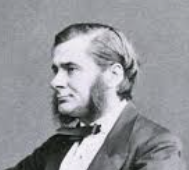
Science has taught... me to be careful how I adopt a view which jumps with my preconceptions, and to require stronger evidence for such belief than for one to which I was previously hostile. My business is to teach my aspirations to conform themselves to fact, not to try and make facts harmonise with my aspirations.
8 months 3 weeks ago
Any one thing in the creation is sufficient to demonstrate a Providence to an humble and grateful mind.
▼
Source
source
Book I, ch. 16,7.
6 months 5 days ago
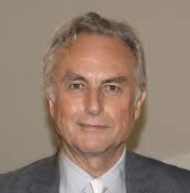
We've reached a truly remarkable situation: a grotesque mismatch between the American intelligentsia and the American electorate. A philosophical opinion about the nature of the universe which is held by the vast majority of top American scientists, and probably the majority of the intelligentsia generally, is so abhorrent to the American electorate that no candidate for popular election dare affirm it in public. If I'm right, this means that high office in the greatest country in the world is barred to the very people best qualified to hold it: the intelligentsia, unless they are prepared to lie about their beliefs. To put it bluntly American political opportunities are heavily loaded against those who are simultaneously intelligent and honest.
▼
Source
source
Richard Dawkins on militant atheism,
7 months 3 weeks ago
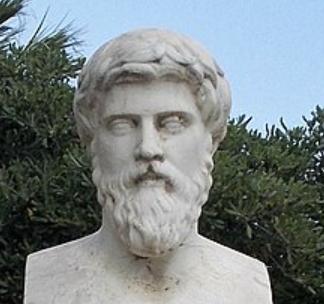
Lamachus chid a captain for a fault; and when he had said he would do so no more, "Sir," said he, "in war there is no room for a second miscarriage." Said one to Iphicrates, "What are ye afraid of?" "Of all speeches," said he, "none is so dishonourable for a general as 'I should not have thought of it.'"
▼
Source
source
52 Iphicrates
8 months 3 days ago
The public execution is to be understood not only as a judicial, but also as a political ritual. It belongs, even in minor cases, to the ceremonies by which power is manifested.
▼
Source
source
Chapter One, The body of the condemned

4 months 2 weeks ago
To be honest, as critical as I am of people for being anti-human, I love everybody so much for sinking on this ship with me. Admit it or not, we're all dying together.
9 months 1 week ago
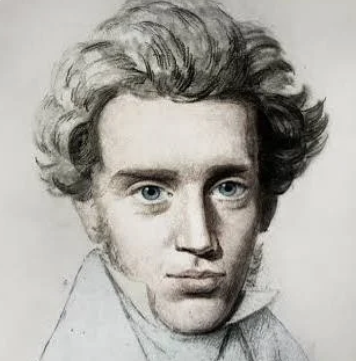
The person who is going to preach ought to live in the Christian thoughts and ideas: they ought to be his daily life. If so, this is the view of Christianity, then you, too, will have eloquence enough and precisely that which is needed when you speak extemporaneously without specific preparation. However, it is fallacious eloquence if someone, without otherwise occupying himself with, without living in these thoughts, once in a while sits down and laboriously collects such thoughts, perhaps in the field of literature, and then works them into a well-composed discourse, which is then committed to memory and delivered superbly, with respect both to voice and diction and gestures.
4 months 2 weeks ago
It was my wish to present this great subject as an illustration of the itermingling of philosophical, mathematical, and physical thought, a study which is dear to my heart. This could be done only by building up the theory systematically from the foundations, and by restricting attention throughout to the principles. But I have not been able to satisfy these self-imposed requirements: the mathematician predominates at the expense of the philosopher.
▼
Source
source
From the Author's Preface to First Edition

8 months 1 week ago
It is said (I do not know with what truth) that a certain Hindu thinker believed the earth to rest upon an elephant. When asked what the elephant rested upon, he replied that it rested upon a tortoise. When asked what the tortoise rested upon, he said, "I am tired of this. Suppose we change the subject." This illustrates the unsatisfactory character of the First-Cause argument.
▼
Source
source
"Is There a God?", 1952

7 months 1 week ago
One that confounds good and evil is an enemy to the good.
▼
Source
source
Speech in opening the impeachment of Warren Hastings (18 February 1788), quoted in The Works of the Right Honourable Edmund Burke, Volume the Tenth (1899), p. 48

6 months 1 week ago
The meaning of experience is typically one generation behind the experience. The content of new situations, both private and corporate, is typically the preceding situation.
▼
Source
source
quoted in "The Prospects of Recording" by Glenn Gould, The Glenn Gould reader, 1984, p. 345

8 months 1 week ago
Man is always separated from what he is by all the breadth of the being which he is not. He makes himself known to himself from the other side of the world and he looks from the horizon toward himself to recover his inner being.

7 months 1 week ago
He who carries self-regard far enough to keep himself in good health and high spirits, in the first place thereby becomes an immediate source of happiness to those around, and in the second place maintains the ability to increase their happiness by altruistic actions. But one whose bodily vigour and mental health are undermined by self-sacrifice carried too far, in the first place becomes to those around a cause of depression, and in the second place renders himself incapable, or less capable, of actively furthering their welfare. In estimating conduct we must remember that there are those who by their joyousness beget joy in others, and that there are those who by their melancholy cast a gloom on every circle they enter.
▼
Source
source
Ethics (New York:1915), § 72, pp. 193-194
4 months 4 weeks ago
Those who try to include all life when trying to determine justice: Should a man be executed for killing a fly? No? The fly has a short life span? The fly is small? All these rationalizations can be applied to you, by a creature that lives longer, is bigger, etc. #philosophy

9 months 5 days ago
Let us be understood. If the Japanese surrender after the destruction of Hiroshima, having been intimidated, we will rejoice. But we refuse to see anything in such grave news other than the need to argue more energetically in favor of a true international society, in which the great powers will not have superior rights over small and middle-sized nations, where such an ultimate weapon will be controlled by human intelligence rather than by the appetites and doctrines of various states. Before the terrifying prospects now available to humanity, we see even more clearly that peace is the only goal worth struggling for. This is no longer a prayer but a demand to be made by all peoples to their governments a demand to choose definitively between hell and reason.
6 months 1 week ago
One can imagine a computer simulation of the action of peptides in the hypothalamus that is accurate down to the last synapse. But equally one can imagine a computer simulation of the oxidation of hydrocarbons in a car engine or the action of digestive processes in a stomach when it is digesting pizza. And the simulation is no more the real thing in the case of the brain than it is in the case of the car or the stomach. Barring miracles, you could not run your car by doing a computer simulation of the oxidation of gasoline, and you could not digest pizza by running the program that simulates such digestion. It seems obvious that a simulation of cognition will similarly not produce the effects of the neurobiology of cognition.
▼
Source
source
"Is the Brain's Mind a Computer Program?", Scientific American (January 1990).
5 months 3 days ago
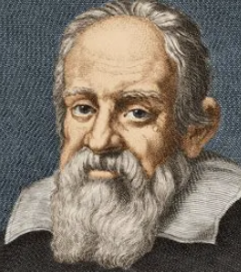
We seek not what God could have done but what He has done.... God could have caused birds to fly with bones of solid gold, with veins full of quicksilver, with flesh heavier than lead and very small and heavy wings, so as to better show His power ... but He wanted to make their bones, flesh and feathers very light ... to teach us that He likes simplicity and ease.
▼
Source
source
Notes in a copy of Jean-Baptiste Morin's "Famous and ancient problems of the earth's motion or rest, yet to be solved" (published 1631).
4 months 1 week ago
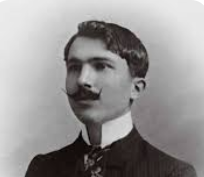
The bodies breathe, feed, store up strength, and then in an erotic moment are shattered, are spent and drained utterly, that they may bequeath their spirit to their sons. What spirit? The drive upward!
7 months 4 weeks ago
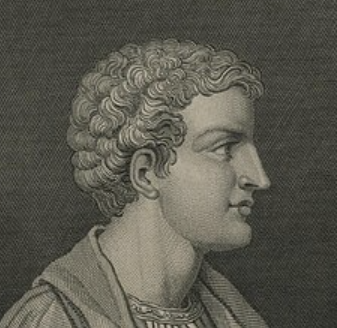
What odds does it make to the man who lives within Nature's bounds, whether he ploughs a hundred acres or a thousand?
▼
Source
source
Book I, satire i, line 48
7 months 1 day ago
The soul contains few secrets and longings which cannot be sensibly discussed, analyzed, and polled. Solitude, the very condition which sustained the individual against and beyond his society, has become technically impossible. Logical and linguistic analysis demonstrate that the old metaphysical problems are illusory problems; the quest for the "meaning" of things can be reformulated as the quest for the meaning of words, and the established universe of discourse and behavior can provide perfectly adequate criteria for the answer.
▼
Source
source
p. 71
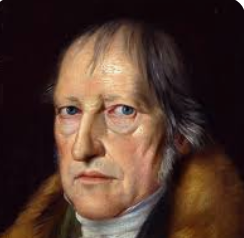
8 months 1 week ago
To be independent of public opinion is the first formal condition of achieving anything great or rational whether in life or in science. Great achievement is assured, however, of subsequent recognition and grateful acceptance by public opinion, which in due course will make it one of its own prejudices.
▼
Source
source
Sect. 318, as translated by T. M. Knox,, 1952
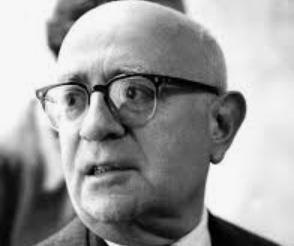
6 months 3 weeks ago
If philosophy is still necessary, it is so only in the way it has been from time immemorial: as critique, as resistance to the expanding heteronomy, even if only as thought's powerless attempt to remain its own master and to convict of untruth, by their own criteria, both a fabricated mythology and a conniving, resigned acquiescence. ... It is incumbent upon philosophy ... to provide a refuge for freedom. Not that there is any hope that it could break the political tendencies that are throttling freedom throughout the world both from within and without and whose violence permeates the very fabric of philosophical argumentation.
▼
Source
source
p. 10
8 months 1 week ago
He yawned. He had finished the day and he had also finished with his youth. Various well-bred moralities had already discreetly offered him their services: disillusioned epicureanism, smiling tolerance, resignation, common sense stoicism - all the aids whereby a man may savour, minute by minute, like a connoisseur, the failure of a life.
▼
Source
source
L'âge de raison (The Age of Reason)
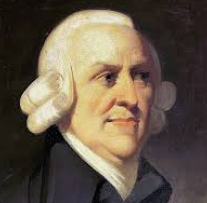
8 months 1 week ago
That a joint stock company should be able to carry on successfully any branch of foreign trade, when private adventurers can come into any sort of open and fair competition with them, seems contrary to all experience.
▼
Source
source
Chapter I, Part III, Article I, p. 810.
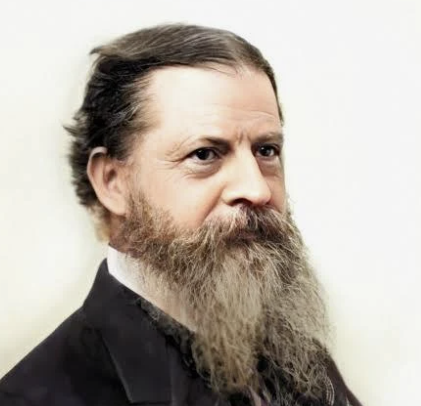
7 months 5 days ago
Fifth, in what measure this unification acts, seems to be regulated only by special rules; or, at least, we cannot in our present knowledge say how far it goes. But it may be said that, judging by appearances, the amount of arbitrariness in the phenomenon of human minds is neither altogether trifling nor very prominent.


6 months 3 weeks ago
A terrible thing is intelligence. It tends to death as memory tends to stability. The living, the absolutely unstable, the absolutely individual, is strictly unintelligible. Logic tends to reduce everything to identities and genera, to each representation having no more than one self-same content in whatever place, time or relation it may occur to us. And there is nothing that remains for two successive moments of its existence. My idea of God is different each time that I conceive it. Identity, which is death, is the goal of the intellect. The mind seeks what is dead, for what is living escapes it; it seeks to congeal the flowing stream in blocks of ice; it seeks to arrest it. In order to analyze a body it is necessary to extenuate or destroy it. In order to understand anything it is necessary to kill it, to lay it out rigid in the mind.


8 months 1 week ago
The second doctrine of the Perennial Philosophy - that it is possible to know the Divine Ground by a direct intuition higher than discursive reasoning - is to be found in all the great religions of the world. A philosopher who is content merely to know about the ultimate Reality - theoretically and by hearsay - is compared by Buddha to a herdsman of other men's cows. Mohammed uses an even homelier barnyard metaphor. For him the philosopher who has not realized his metaphysics is just an ass bearing a load of books. Christian, Hindu, Taoist teachers wrote no less emphatically about the absurd pretensions of mere learning and analytic reasoning.
7 months 4 days ago
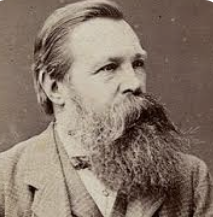
The abolition of private property is, doubtless, the shortest and most significant way to characterize the revolution in the whole social order which has been made necessary by the development of industry - and for this reason it is rightly advanced by communists as their main demand.
CivilSimian.com created by AxiomaticPanic, CivilSimian, Kalokagathia