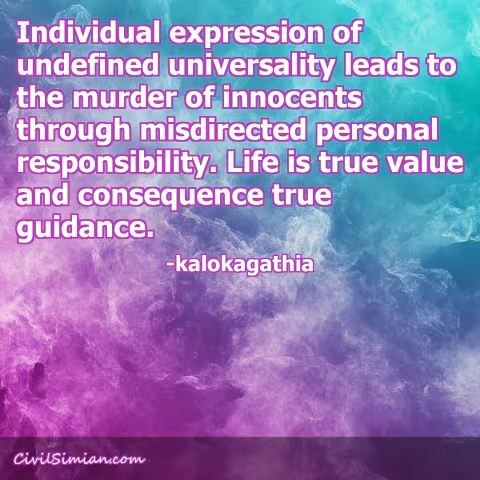
Individual expression of undefined universality leads to the murder of innocents through misdirected personal responsibility. Life is true value and consequence true guidance.


To the rational being only the irrational is unendurable, but the rational is endurable.
Before abstraction everything is one, but one like chaos; after abstraction everything is united again, but this union is a free binding of autonomous, self-determined beings. Out of a mob a society has developed, chaos has been transformed into a manifold world.

But the thing a man does practically believe (and this is often enough without asserting it even to himself, much less to others); the thing a man does practically lay to heart, and know for certain, concerning his vital relations to this mysterious Universe, and his duty and destiny there, that is in all cases the primary thing for him, and creatively determines all the rest. That is his religion; or, it may be, his mere scepticism and no-religion: the manner it is in which he feels himself to be spiritually related to the Unseen World or No-World; and I say, if you tell me what that is, you tell me to a very great extent what the man is, what the kind of things he will do is.
If the importance of science does not lie in its constituting the whole of human knowledge, even less does it lie, in my view, in its technological applications. Science at the best is a way of coming to know, and hopefully a way of acquiring some reverence for, the wonders of nature. The philosophical study of science, at the best, has always been a way of coming to understand both some of the nature and some of the limitations of human reason. These seem to me to be sufficient grounds for taking science and philosophy of science seriously; they do not justify science worship.

There are many kinds of gods. Therefore there are many kinds of men.
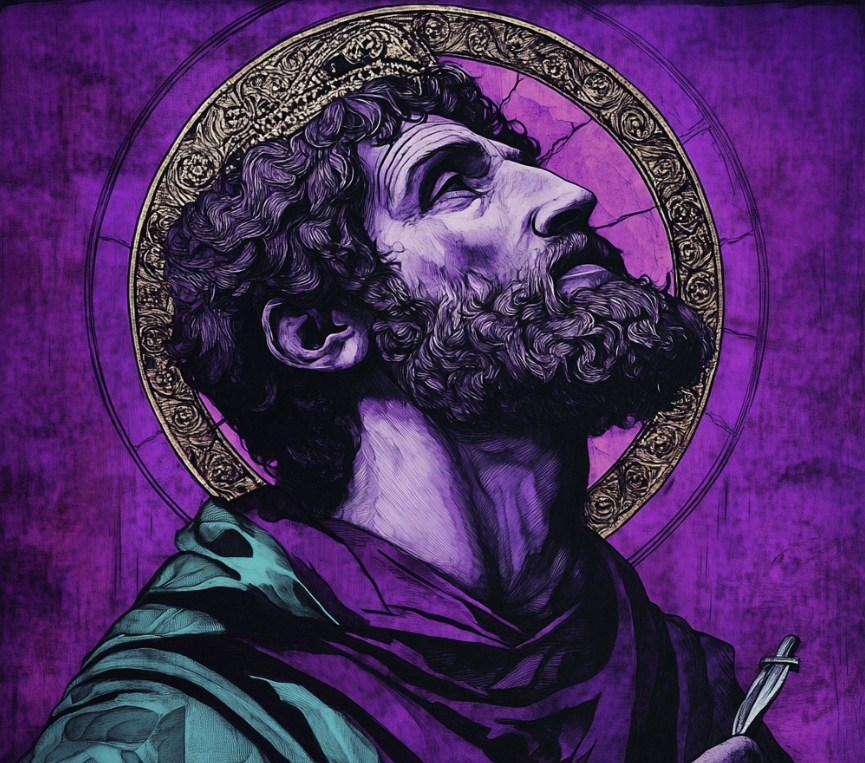
But it isn't just a matter of faith, but of faith and works. Each is necessary. For the demons also believe you heard the apostle and tremble (Jas 2:19); but their believing doesn't do them any good. Faith alone is not enough, unless works too are joined to it: Faith working through love (Gal 5:6), says the apostle.

Mathematics, rightly viewed, possesses not only truth, but supreme beauty - a beauty cold and austere, like that of sculpture, without appeal to any part of our weaker nature, without the gorgeous trappings of painting or music, yet sublimely pure, and capable of a stern perfection such as only the greatest art can show. The true spirit of delight, the exaltation, the sense of being more than Man, which is the touchstone of highest excellence, is to be found in mathematics as surely as in poetry. What is best in mathematics deserves not merely to be learnt as a task, but to be assimilated as a part of daily thought, and brought again and again before the mind with ever-renewed encouragement.

Superstition is to religion what astrology is to astronomy, the mad daughter of a wise mother. These daughters have too long dominated the earth.
Only when the true ends of society have nothing to do with the sublime does "culture" become necessary as a veneer to cover over the void. Culture can at best appreciate the monuments of earlier faith; it cannot produce them.
The equation of religion with belief is rather recent.
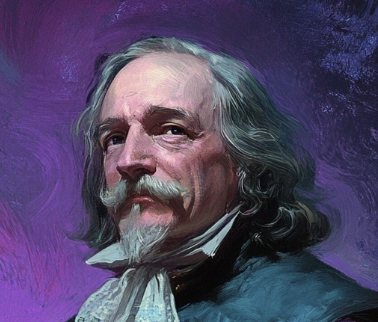
... and where men build on false grounds, the more they build, the greater is the ruine.
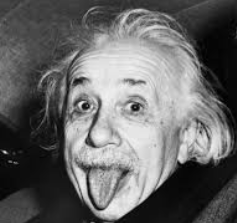
It is, therefore, quite natural that the churches have always fought against science and have persecuted its supporters. But, on the other hand, I assert that the cosmic religious experience is the strongest and noblest driving force behind scientific research. No one who does not appreciate the terrific exertions, and, above all, the devotion without which pioneer creations in scientific thought cannot come into being, can judge the strength of the feeling out of which alone such work, turned away as it is from immediate practical life, can grow. What a deep faith in the rationality of the structure of the world and what a longing to understand even a small glimpse of the reason revealed in the world there must have been in Kepler and Newton to enable them to unravel the mechanism of the heavens in long years of lonely work! Any one who only knows scientific research in its practical applications may easily come to a wrong interpretation of the state of mind of the men who, surrounded by skeptical contemporaries, have shown the way to kindred spirits scattered over all countries in all centuries. Only those who have dedicated their lives to similar ends can have a living conception of the inspiration which gave these men the power to remain loyal to their purpose in spite of countless failures. It is the cosmic religious sense which grants this power. A contemporary has rightly said that the only deeply religious people of our largely materialistic age are the earnest men of research.

There are no passengers on Spaceship Earth. We are all crew.
Behold therefore, this England of the Year 1200 was no chimerical vacuity or dreamland, peopled with mere vaporous Fantasms, Rymer's Foedera, and Doctrines of the Constitution, but a green solid place, that grew corn and several other things. The Sun shone on it; the vicissitude of seasons and human fortunes. Cloth was woven and worn; ditches were dug, furrowfields ploughed, and houses built. Day by day all men and cattle rose to labour, and night by night returned home weary to their several lairs. In wondrous Dualism, then as now, lived nations of breathing men; alternating, in all ways, between Light and Dark; between joy and sorrow, between rest and toil, between hope, hope reaching high as Heaven, and fear deep as very Hell. Not vapour Fantasms, Rymer's Foedera at all!
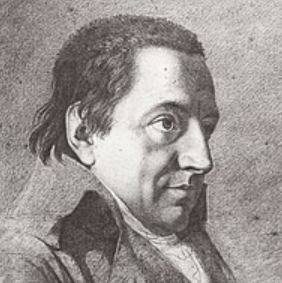
Should it seem to me that truth has been put to silence, and virtue trampled under foot, and that folly and vice will certainly triumph; should it happen, when all hearts were filled with hope for the human race, that the horizon should suddenly darken around them as it had never done before; should the work, well and happily begun, on which all eyes were fixed with joyous expectation, suddenly and unexpectedly be turned into a deed of shame, - yet will I not be dismayed; nor if the good cause should appear to grow and flourish, the lights of freedom and civilization be diffused, and peace and good-will amongst men be extended, shall yet my efforts be relaxed.
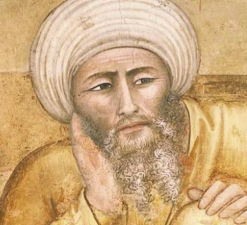
Praise be to God with all due praise, and a prayer for Muhammad His chosen servant and apostle. The purpose of this treatise is to examine, from the standpoint of the study of the Law, whether the study of philosophy and logic is allowed by the Law, or prohibited, or commanded either by way of recommendation or as obligatory.
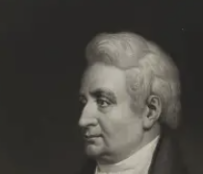
The fox, when caught, is worth nothing: he is followed for the pleasure of following.

In a shared fish, there are no bones.
Divinity reveals herself in all things... everything has Divinity latent within itself. For she enfolds and imparts herself even unto the smallest beings, and from the smallest beings, according to their capacity. Without her presence nothing would have being, because she is the essence of the existence of the first unto the last being.

Die before you Die. There is no chance after.

We plant trees, we build stone houses, we redeem the waste, we make prospective laws, we found colleges and hospitals, for remote generations.
The Divine Existence (Daseyn),-his Existence, I say, which, according to the distinction already laid down, is his (Manifestation and Revelation of himself-is absolute- only through itself, and of necessity, LIGHT:-namely, y the inward and spiritual Light. This Light, left to itself, separates and divides itself into an infinite multiplicity of individual rays; and in this way, in these individual rays, becomes estranged from itself and its | original source. But this same Light may also again concentrate itself from out this separation, and conceive and comprehend itself as One, as that which it is in itself,-the Existence and Revelation of God; remaining indeed, even in this conception, that which it is in its form,-Light; but yet in this condition, and even by means of this very condition, announcing it-to self as having no real Being in itself, but as only the, Existence and Self-Manifestation of God.
Olympian bards who sung Divine ideas below, Which always find us young And always keep us so.
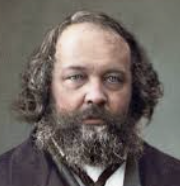
Here then is what we understand by these words: "the equalization of the classes." It would perhaps have been better to say suppression of the classes, the unification of society by the abolition of economic and social inequality. But we have also demanded the equalization of the individuals, and it is there especially that we attract all the thunderbolts of outraged eloquence from our adversaries. One has made use of that part of our proposition to prove in a conclusive manner that we are nothing but communists.
There have been other Priests perhaps equally notable, in calmer times, for doing faithfully the office of a Leader of Worship; bringing down, by faithful heroism in that kind, a light from Heaven into the daily life of their people; leading them forward, as under God's guidance, in the way wherein they were to go. But when this same way was a rough one, of battle, confusion and danger, the spiritual Captain, who led through that, becomes, especially to us who live under the fruit of his leading, more notable than any other.
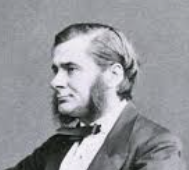
I really have no claim to rank myself among fatalistic, materialistic, or atheistic philosophers. Not among fatalists, for I take the conception of necessity to have a logical, and not a physical foundation; not among materialists, for I am utterly incapable of conceiving the existence of matter if there is no mind in which to picture that existence; not among atheists, for the problem of the ultimate cause of existence is one which seems to me to be hopelessly out of reach of my poor powers. Of all the senseless babble I have ever had occasion to read, the demonstrations of these philosophers who undertake to tell us all about the nature of God would be the worst, if they were not surpassed by the still greater absurdities of the philosophers who try to prove that there is no God.

The idea of an all-powerful divine Being is present everywhere, unconsciously if not consciously, because it is an archetype. There is in the psyche some superior power, and if it is not consciously a god, it is the "belly" at least, in St. Paul's words. I therefore consider it wiser to acknowledge the idea of God consciously, for, if we do not, something else is made God, usually something quite inappropiate and stupid such as only an "enlightened" intellect could hatch forth.
The enmity of one's kindred is far more bitter than the enmity of strangers.
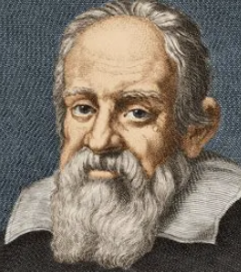
If you could see the earth illuminated when you were in a place as dark as night, it would look to you more splendid than the moon.

But many of us seek community solely to escape the fear of being alone. Knowing how to be solitary is central to the art of loving. When we can be alone, we can be with others without using them as a means of escape.
If I find in myself a desire which no experience in this world can satisfy, the most probable explanation is that I was made for another world.
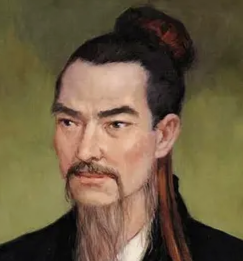
Now, as to universal love and mutual aid, they are beneficial and easy beyond a doubt. It seems to me that the only trouble is that there is no superior who encourages it. If there is a superior who encourages it, promoting it with rewards and commendations, threatening its reverse with punishments, I feel people will tend toward universal love and mutual aid like fire tending upward and water downwards - it will be unpreventable in the world.
Each the herald is who wrote His rank, and quartered his own coat. There is no king nor sovereign state That can fix a hero's rate.

Happiness is a good flow of life.

In England, and in all Roman Catholic countries, the lottery of the church is in reality much more advantageous than is necessary.
The difficulty of literature is not to write, but to write what you mean; not to affect your reader, but to affect him precisely as you wish.
Another doctrine repugnant to Civill Society, is that whatsoever a man does against his Conscience, is Sinne; and it dependeth on the presumption of making himself judge of Good and Evill. For a man's Conscience and his Judgement are the same thing, and as the Judgement, so also the Conscience may be erroneous.
Statistically, myth is on the right. There, it is essential, well-fed, sleek, expensive, garrulous, it invents itself ceaselessly. It takes hold of everything, all aspects of the law, of morality, of aesthetics, of diplomacy, of household equipment, of Literature, of entertainment.

The so-called communism of capital, that is, its drive toward an ever more extensive socialization of labor, points ambiguously toward the communism of the multitude.

He who does not prevent a crime, when he can, encourages it.
The old often envy the young; when they do, they are apt to treat them cruelly.
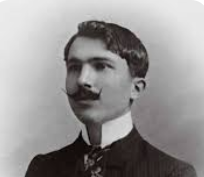
You are not free. Myriad invisible hands hold your hands and direct them. When you rise in anger, a great-grandfather froths at your mouth; when you make love, an ancestral caveman growls with lust; when you sleep, tombs open in your memory till your skull brims with ghosts.

If there is a sin against life, it consists perhaps not so much in despairing of life as in hoping for another life and in eluding the implacable grandeur of this life.

Ethical ideas and sentiments have to be considered as parts of the phenomena of life at large. We have to deal with man as a product of evolution, with society as a product of evolution, and with moral phenomena as products of evolution.
The law of the table is beauty, a respect to the common soul of the guests. Everything is unreasonable which is private to two or three, or any portion of the company. Tact never violates for a moment this law; never intrudes the orders of the house, the vices of the absent, or a tariff of expenses, or professional privacies; as we say, we never "talk shop" before company. Lovers abstain from caresses, and haters from insults, while they sit in one parlor with common friends.
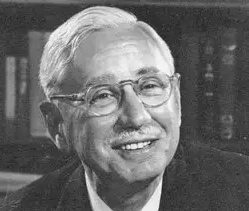
Youth is learning to read (which is all that one learns in school), and is learning where and how to find what he may later need to know (which is the best of the arts that he acquires in college). Nothing learned from a book is worth anything until it is used and verified in life; only then does it begin to affect behavior and desire. It is Life that educates, and perhaps love more than anything else in life.

The Diary of Vaslav Nijinjsky reaches a limit of sincerity beyond any of the documents that we have referred to on this study. There are other modern works that express the same sense that civilized life is a form of living death; notably the poetry of T. S. Eliot and the novels of Franz Kafka; but there is an element of prophetic denunciation in both, the attitude of healthy men rebuking their sick neighbors. We possess no other record of the Outsider's problems that was written by a man about to be defeated and permanently smashed by those problems.
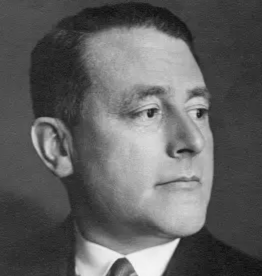
Every religious, moral, economic, ethical, or other antithesis transforms into a political one if it is sufficiently strong to group human beings effectively according to friend and enemy. The political does not reside in the battle itself, which. possesses its own technical, psychological, and military laws, but in the mode of behavior which is determined by this possibility, by clearly evaluating the concrete situation and thereby being able to distinguish correctly the real friend and the real enemy.
CivilSimian.com created by AxiomaticPanic, CivilSimian, Kalokagathia