


5 months 1 week ago
Science doesn't purvey absolute truth. Science is a mechanism. It's a way of trying to improve your knowledge of nature. It's a system for testing your thoughts against the universe and seeing whether they match. And this works, not just for the ordinary aspects of science, but for all of life. I should think people would want to know that what they know is truly what the universe is like, or at least as close as they can get to it.
3 months 1 week ago
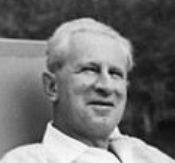
At the classical origins of philosophic thought, the transcending concepts remained committed to the prevailing separation between intellectual and manual labor to the established society of enslavement. ... Those who bore the brunt of the untrue reality and who, therefore, seemed to be most in need of attaining its subversion were not the concern of philosophy. It abstracted from them and continued to abstract from them.
▼
Source
source
pp. 134-135
3 months 1 week ago
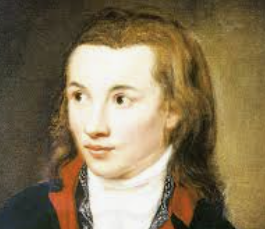
The ideal of Morality has no more dangerous rival than the ideal of highest Strength, of most powerful life; which also has been named (very falsely as it was there meant) the ideal of poetic greatness. It is the maximum of the savage; and has, in these times, gained, precisely among the greatest weaklings, very many proselytes. By this ideal, man becomes a Beast-Spirit, a Mixture; whose brutal wit has, for weaklings, a brutal power of attraction.

4 months 2 weeks ago
Liberty, as we all know, cannot flourish in a country that is permanently on a war footing, or even a near war footing. Permanent crisis justifies permanent control of everybody and everything by the agencies of central government.
▼
Source
source
Chapter 1 (p. 14)

4 months 2 weeks ago
Nature is no sentimentalist, - does not cosset or pamper us. We must see that the world is rough and surly, and will not mind drowning a man or a woman, but swallows your ships like a grain of dust. The cold, inconsiderate of persons, tingles your blood, benumbs your feet, freezes a man like an apple. The diseases, the elements, fortune, gravity, lightning, respect no persons.
▼
Source
source
p. 182

4 months 2 weeks ago
For as soon as the distribution of labour comes into being, each man has a particular exclusive sphere of activity, which is forced upon him and from which he cannot escape. He is a hunter, a fisherman, a shepherd, or a critical critic and must remain so if he does not wish to lose his means of livelihood; while in communist society, where nobody has one exclusive sphere of activity but each can become accomplished in any branch he wishes, society regulates the general production and thus makes it possible for me to do one thing today and another tomorrow, to hunt in the morning, to fish in the afternoon, rear cattle in the evening, criticize after dinner, just as I have in mind, without ever becoming hunter, fisherman, shepherd or critic.
▼
Source
source
Vol. 1, Part 1.
2 months 3 weeks ago
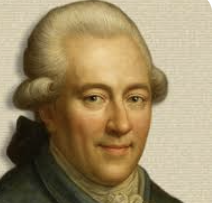
The sure conviction that we could if we wanted to is the reason so many good minds are idle.
▼
Source
source
K 27

1 month 3 weeks ago
Only in growth, reform, and change, paradoxically enough, is true security to be found.
▼
Source
source
The Wave of the Future

3 months 1 week ago
Are ye also yet without understanding? Do not ye yet understand, that whatsoever entereth in at the mouth goeth into the belly, and is cast out into the draught? But those things which proceed out of the mouth come forth from the heart; and they defile the man. For out of the heart proceed evil thoughts, murders, adulteries, fornications, thefts, false witness, blasphemies: These are the things which defile a man: but to eat with unwashen hands defileth not a man.
▼
Source
source
15:16-20 (KJV)

4 months 2 weeks ago
It is an odd circumstance that neither the old nor the new, by itself, is interesting; the absolutely old is insipid; the absolutely new makes no appeal at all. The old in the new is what claims the attention,-the old with a slightly new turn.
▼
Source
source
Chapter XI: Attention
5 months 2 days ago
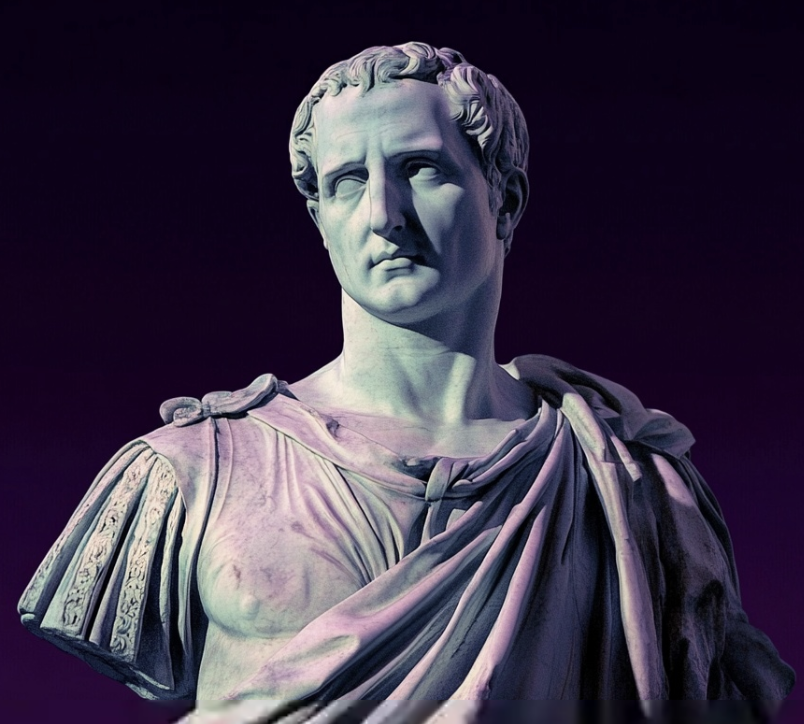
They are such fools that they seem to expect that, though the Republic is lost, their fish-ponds will be safe.
▼
Source
source
Letters to Atticus, Book I, 18.

1 month ago
Just as we suffer from excess in all things, so we suffer from excess in literature; thus we learn our lessons, not for life, but for the lecture room.
▼
Source
source
Line 12 Alternate translation: Not for life, but for school do we learn. (translator unknown) Alternate translation: We are taught for the schoolroom, not for life. (translator unknown).
2 months 3 weeks ago
Modem mainstream economic theory bravely assumes that people make their decisions in such a way as to maximize their utility. Accepting this assumption enables economics to predict a great deal of behavior (correctly or incorrectly) without ever making empirical studies of human actors.
▼
Source
source
Simon (1990) "Invariants of Human Behavior" in: Annu. Rev. Psychol. 41: p. 6.
4 months 2 weeks ago
Only the great generalizations survive. The sharp words of the Declaration of Independence, lampooned then and since as 'glittering generalities,' have turned out blazing ubiquities that will burn forever and ever.
▼
Source
source
From a lecture on Books given in the Fraternity Course in Boston in 1864
5 days ago
I believe in intuition and inspiration. ... At times I feel certain I am right while not knowing the reason. When the eclipse of 1919 confirmed my intuition, I was not in the least surprised. In fact I would have been astonished had it turned out otherwise. Imagination is more important than knowledge. For knowledge is limited, whereas imagination embraces the entire world, stimulating progress, giving birth to evolution. It is, strictly speaking, a real factor in scientific research.
1 month ago
Kindly remember that he whom you call your slave sprang from the same stock, is smiled upon by the same skies, and on equal terms with yourself breathes, lives and dies. It is just as possible for you to see in him a free-born man as for him to see in you a slave.
▼
Source
source
Line 10.
1 month ago
Tis the first art of kings, the power to suffer hate.

4 months 5 days ago
Education is an ornament for the prosperous, a refuge for the unfortunate.
▼
Source
source
Freeman (1948), p. 161
3 months 2 weeks ago
Evil always turns up in this world through some genius or other.
▼
Source
source
As quoted in Dictionary of Foreign Quotations (1980) by Mary Collison, Robert L. Collison, p. 98

1 week 4 days ago
For it very rarely otherwise happens, than that theories, that are grounded but upon few and obvious experiments, are subject to be contradicted by some such instances, as more free and diligent inquiries into what of nature is more abstruse, or even into the less obvious qualities of things, are wont to bring to light.
4 months 2 weeks ago
A good indignation brings out all one's powers.
▼
Source
source
1841
3 weeks 3 days ago
Time! Time! Time! - we must not impugn the Scripture Chronology, but we must interpret it in accordance with whatever shall appear on fair enquiry to be the truth for there cannot be two truths. And really there is scope enough: for the lives of the Patriarchs may as reasonably be extended to 5000 or 50000 years apiece as the days of Creation to as many thousand millions of years.
▼
Source
source
Letter to Charles Lyell after being inspired by his Principles of Geology

1 month 6 days ago
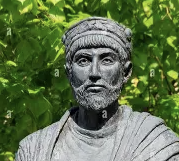
No Dilettantism in this Mahomet; it is a business of Reprobation and Salvation with him, of Time and Eternity: he is in deadly earnest about it! Dilettantism, hypothesis, speculation, a kind of amateur-search for Truth, toying and coquetting with Truth: this is the sorest sin. The root of all other imaginable sins. It consists in the heart and soul of the man never having been open to Truth; - "living in a vain show." Such a man not only utters and produces falsehoods, but is himself a falsehood. The rational moral principle, spark of the Divinity, is sunk deep in him, in quiet paralysis of life-death.
3 weeks 3 days ago
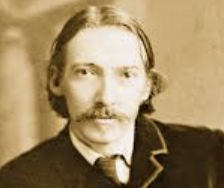
I pray the Sovereign Sun himself to grant me ability to explain the nature of the station that he holds amongst those in whose middle he is placed! By the term "middle" we are to understand not what is so defined in the case of things contrary to each other, as "equi-distant from the extremes," as orange and dark brown in the case of colours; lukewarm, in that of hot and cold, and other things of the sort; but the power that collects and unites into one things dispersed, like the "Harmony" of Empedocles, from which he completely excludes all discord and contention.
2 months 1 week ago
We do not go to cowards for tender dealing; there is nothing so cruel as panic; the man who has least fear for his own carcase, has most time to consider others.
▼
Source
source
314

3 months 2 weeks ago
You had that action and counteraction which, in the natural and in the political world, from the reciprocal struggle of discordant powers draws out the harmony of the universe.
▼
Source
source
Volume iii, p. 277
1 month 1 week ago
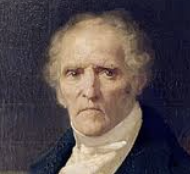
This miracle of social concord would result not from direct conciliation, which would be impossible, but from the development of new interests, and especially from the amazement with which the minds of men would be filled on being convinced of the radical falseness of the civilized social order by comparison with the associative or combined, and of the errors in which the social world has been so long plunged - misled by speculative philosophy, which upholds and extols this order with all its defects to the entire neglect of the study of association.
▼
Source
source
The Theory of Social Organization. Harmonian Man: Selected Writings of Charles Fourier, p. 5.

4 months 1 week ago
The Enlightenment worldview held by Du Bois is ultimately inadequate, and, in many ways, antiquated, for our time. The tragic plight and absurd predicament of Africans here and abroad requires a more profound interpretation of the human condition - one that goes beyond the false dichotomies of expert knowledge vs. mass ignorance, individual autonomy vs. dogmatic authority, and self-mastery vs. intolerant tradition.
▼
Source
source
The Future of the Race (1997) by Henry Louis Gates, Jr. and Cornel West, p. 64
3 months 2 weeks ago
An event has happened, upon which it is difficult to speak, and impossible to be silent.
▼
Source
source
Speech on the sixth article of charge in the impeachment of Warren Hastings (5 May 1789), quoted in The Works of the Right Honourable Edmund Burke, Volume the Tenth (1899), p. 306

5 months 2 weeks ago
Morality is herd instinct in the individual.

2 months 3 weeks ago
Perhaps it is not true to speak of God as a judge at all, or of his judgements. There does not seem to be really any evidence that His worlds are places of trial but rather schools, place of training, or that He is a judge but rather a Teacher, a Trainer, not in the imperfect sense in which men are teachers, but in the sense of His contriving and adapting His whole universe for one purpose of training every intelligent being to be perfect. ... I think God would not be the Almighty, the All-Wise, the All-Good, if he were the judge, in the sense that the evangelical and Roman Catholic Christians impute judgement to him. ... Our business is, I think, to understand, not to judge. What He does, as far as we know, to rule by law down to the most infinitesimally small portion of His universe, not to judge.
▼
Source
source
As quoted in Florence Nightingale's Theology: Collected Works of Florence Nightingale (2002) by Lynn McDonald, pps. 177-179



3 months 2 weeks ago
Not to be content with Life is the unsatisfactory state of those which destroy themselves; who being afraid to live, run blindly upon their own Death, which no Man fears by Experience.

1 month 1 week ago
As a rule, all heroism is due to a lack of reflection, and thus it is necessary to maintain a mass of imbeciles. If they once understand themselves the ruling men will be lost.
▼
Source
source
Orlando, in Caliban, act 2, sc. 1 (1878).
1 month 1 week ago
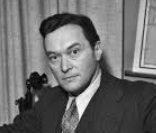
A large plural society cannot be governed without recognizing that, transcending its plural interests, there is a rational order with a superior common law.
▼
Source
source
pp. 106-107
1 month 1 week ago
There can be no higher law in journalism than to tell the truth and shame the devil.
▼
Source
source
Journalism and the Higher Law, p. 13

2 months 1 week ago
All meaning alters with acceleration, because all patterns of personal and political interdependence change with any acceleration of information.
▼
Source
source
(p. 178-179)

4 months 2 weeks ago
Consumption is the sole end and purpose of all production; and the interest of the producer ought to be attended to, only so far as it may be necessary for promoting that of the consumer.
▼
Source
source
Chapter VIII, p. 719.

3 months 2 weeks ago
Yes! We believe in a higher principle than your virtue and the kind of morality you speak of so paltrily and without much conviction. We believe that there is no imperative or reward for virtue for the soul because it simply acts according to the necessity of its inherent nature. The moral imperative expresses itself in an ought and presupposes the concept of an evil next to that of good.
▼
Source
source
P. 43
4 months 2 days ago
Perseverance is more prevailing than violence; and many things which cannot be overcome when they are together, yield themselves up when taken little by little.
▼
Source
source
Sertorius 16 (Tr. Dryden and Clough)
2 months 3 weeks ago
If an angel were ever to tell us anything of his philosophy I believe many propositions would sound like 2 times 2 equals 13.
▼
Source
source
B 44
1 month 6 days ago
Is it not a right glorious thing, and set of things, this that Shakspeare has brought us? For myself, I feel that there is actually a kind of sacredness in the fact of such a man being sent into this Earth.


4 months 1 week ago
Critical social science attempts to determine when theoretical statements grasp invariant regularities of social action as such and when they express ideologically frozen relations of dependence that can in principle be transformed.
▼
Source
source
p. 310 as cited in: Dominick LaCapra (1983) Rethinking Intellectual History: Texts, Contexts, Language. p. 170

4 months 3 weeks ago
Arts and sciences are not cast in a mould, but are formed and perfected by degrees, by often handling and polishing, as bears leisurely lick their cubs into form.
▼
Source
source
Book II, Ch. 12. Apology for Raimond Sebond
5 months 2 weeks ago
As a genius of construction man raises himself far above the bee in the following way: whereas the bee builds with wax that he gathers from nature, man builds with the far more delicate conceptual material which he first has to manufacture from himself.

2 months 2 weeks ago
But one no longer wonders when one realizes that in the higher classes there is an unerring instinct of what tends to maintain and of what tends to destroy the organization by virtue of which they enjoy their privileges. The fashionable lady had certainly not reasoned out that if there were no capitalists and no army to defend them, her husband would have no fortune, and she could not have her entertainments and her ball-dresses. And the artist certainly does not argue that he needs the capitalists and the troops to defend them, so that they may buy his pictures. But instinct, replacing reason in this instance, guides them unerringly. And it is precisely this instinct which leads all men, with few exceptions, to support all the religious, political, and economic institutions which are to their advantage.
▼
Source
source
Chapter XII, Conclusion-Repent Ye, for the Kingdom of Heaven is at Hand

4 months 2 weeks ago
Were a stranger to drop on a sudden into this world, I would show him, as a specimen of its ills, a hospital full of diseases, a prison crowded with malefactors and debtors, a field of battle strewed with carcasses, a fleet foundering in the ocean, a nation languishing under tyranny, famine, or pestilence. To turn the gay side of life to him, and give him a notion of its pleasures; whither should I conduct him? to a ball, to an opera, to court? He might justly think, that I was only showing him a diversity of distress and sorrow.
▼
Source
source
Demea to Philo, Part X
2 weeks ago
I hold in fact(1) That small portions of space are in fact of a nature analogous to little hills on a surface which is on the average flat; namely, that the ordinary laws of geometry are not valid in them.(2) That this property of being curved or distorted is continually being passed on from one portion of space to another after the manner of a wave.(3) That this variation of the curvature of space is what really happens in that phenomenon which we call the motion of matter, whether ponderable or etherial.(4) That in the physical world nothing else takes place but this variation, subject possibly to the law of continuity.
▼
Source
source
Abstract
CivilSimian.com created by AxiomaticPanic, CivilSimian, Kalokagathia