


7 months 1 week ago
Then he said to them, "Watch out! Be on your guard against all kinds of greed; a man's life does not consist in the abundance of his possessions." And he told them this parable: "The ground of a certain rich man produced a good crop. He thought to himself, 'What shall I do? I have no place to store my crops.' "Then he said, 'This is what I'll do. I will tear down my barns and build bigger ones, and there I will store all my grain and my goods. And I'll say to myself, "You have plenty of good things laid up for many years. Take life easy; eat, drink and be merry." ' "But God said to him, 'You fool! This very night your life will be demanded from you. Then who will get what you have prepared for yourself?' "This is how it will be with anyone who stores up things for himself but is not rich toward God."
▼
Source
source
12:15-21 (NIV)
7 months 2 weeks ago
We Shall Naturally look round in vain the macrophysical world for acausal events, for the simple reason that we cannot imagine events that are connected non-causally and are capable of a non-causal explanation. But that does not mean that such events do not exist... The so-called "scientific view of the world" based on this can hardly be anything more than a psychologically biased partial view which misses out all those by no means unimportant aspects that cannot be grasped statistically.
▼
Source
source
p. 5

8 months 2 weeks ago
The aim of the book is to set a limit to thought, or rather - not to thought, but to the expression of thoughts: for in order to be able to set a limit to thought, we should have to find both sides of the limit thinkable (i.e. we should have to be able to think what cannot be thought). It will therefore only be in language that the limit can be set, and what lies on the other side of the limit will simply be nonsense.

8 months 3 weeks ago
I speak for the slave when I say that I prefer the philanthropy of Captain Brown to that philanthropy which neither shoots me nor liberates me.

8 months 1 week ago
Fools learn wisdom through misfortune.

8 months 3 weeks ago
It makes a great difference in the force of a sentence whether a man be behind it or no.
▼
Source
source
p. 261
8 months 3 weeks ago
Lands for the purposes of pleasure and magnificence, parks, gardens, public walks, &c. possessions which are every where considered as causes of expence, not as sources of revenue, seem to be the only lands which, in a great and civilized monarchy, ought to belong the crown.
▼
Source
source
Chapter II, Part I, p. 891.
6 months 2 weeks ago
This "knowing what to do"... is a matter of having the right purpose, the purpose appropriate to the situation in hand... The one who "knows what to do" is the one on whom you can rely to make the best shot at success, whenever success is possible.
▼
Source
source
"Knowledge and Feeling" (p. 35)





4 months 2 weeks ago
Everything harmonizes with me, which is harmonious to thee, O Universe. Nothing for me is too early or too late, which is in due time for thee. There is one light of the sun, though it is interrupted by walls, mountains and infinite other things. There is one common substance, though it is distributed among countless bodies which have their several qualities. There is one soul, though it is distributed among several natures and individual limitations. There is one intelligent soul, though it seems to be divided.
▼
Source
source
XII, 30
8 months 3 weeks ago
If the injustice is part of the necessary friction of the machine of government, let it go, let it go; perchance it will wear smooth--certainly the machine will wear out. If the injustice has a spring, or a pulley, or a rope, or a crank, exclusively for itself, then perhaps you may consider whether the remedy will not be worse than the evil; but if it is of such a nature that it requires you to be the agent of injustice to another, then I say, break the law. Let your life be a counter-friction to stop the machine. What I have to do is to see, at any rate, that I do not lend myself to the wrong which I condemn.
6 months 3 days ago
Now civilizations, I believe, come to birth and proceed to grow by successfully responding to successive challenges. They break down and go to pieces if and when a challenge confronts them which they fail to meet.
▼
Source
source
Ch. 8: Civilization on Trial

9 months 6 days ago
My mother spoke of Christ to my father, by her feminine and childlike virtues, and, after having borne his violence without a murmur or complaint, gained him at the close of his life to Christ.
▼
Source
source
Reported in Josiah Hotchkiss Gilbert, Dictionary of Burning Words of Brilliant Writers (1895), p. 351

7 months 1 week ago
The ontological concept of truth is in the centre of a logic which may serve as a model of pre- technological rationality. It is the rationality of a two-dimensional universe of discourse which, contrasts with the of thought and behavior that develop in the execution of the technological project.
▼
Source
source
p. 130

9 months 5 days ago
Yes, to seek power that's vain and never grantedand for it to suffer hardship and endless pain:this is to heave and strain to push uphilla boulder, that still from the very top rolls backand bounds and bounces down to the bare, broad field.
▼
Source
source
Book III, lines 998-1002 (tr. Frank O. Copley)

8 months 2 weeks ago
When Descartes said, "Conquer yourself rather than the world," what he meant was, at bottom, - the same - that we should act without hope. Marxists, to whom I have said thus have answered: "Your action is limited, obviously, by your death: but you can rely upon the help of others.
▼
Source
source
p. 39

7 months 1 week ago
All art is the struggle to be, in a particular sort of way, virtuous.
▼
Source
source
The Black Prince (1973); 2003, p. 181.
6 months 3 weeks ago
It is the real, and not the map, whose vestiges persist here and there in the deserts that are no longer those of the Empire, but ours: The desert of the real itself.
▼
Source
source
"The Precession of Simulacra," p. 1
8 months 3 weeks ago
It is so hard to forget what it is worse than useless to remember! If I am to be a thoroughfare, I prefer that it be of the mountain-brooks, the Parnassian streams, and not the town-sewers. There is inspiration, that gossip which comes to the ear of the attentive mind from the courts of heaven. There is the profane and stale revelation of the bar-room and the police court. The same ear is fitted to receive both communications. Only the character of the hearer determines to which it shall be open, and to which closed. I believe that the mind can be permanently profaned by the habit of attending to trivial things, so that all our thoughts shall be tinged with triviality.
▼
Source
source
p. 492

5 months 6 days ago
That most knowing of persons - gossip.
▼
Source
source
Line 1.
8 months 3 weeks ago
Our inventions are wont to be pretty toys, which distract our attention from serious things. They are but improved means to an unimproved end, an end which it was already but too easy to arrive at.
▼
Source
source
pp. 60-61
5 months 1 week ago
The spirits that I summoned up, I now can't rid myself of.
▼
Source
source
Der Zauberlehrling (The Sorcerer's Apprentice)
9 months 3 weeks ago
This fact, that the opposite of sin is by no means virtue, has been overlooked. The latter is partly a pagan view, which is content with a merely human standard, and which for that very reason does not know what sin is, that all sin is before God. No, the opposite of sin is faith.
6 months 3 days ago
As human beings, we are endowed with this freedom of choice, and we cannot shuffle off our responsibility upon the shoulders of God or nature. We must shoulder it ourselves. It is up to us.
▼
Source
source
Ch. 3: Does History Repeat Itself?

8 months 3 weeks ago
Though the managing ourselves well in this part of our behavior has the name good-breeding, as if a peculiar effect of education; yet... young children should not be much perplexed about it... Teach them humility, and to be good-natur'd, if you can, and this sort of manners will not be wanting; civility being in truth nothing but a care not to shew any slighting or contempt of any one in conversation.
▼
Source
source
Sec. 145


4 months 2 weeks ago
We are living even now among punishments and ruins.
▼
Source
source
"A Few Words in Favor of Edward Abbey"

6 months 2 weeks ago
Some teachers of mankind - as Plato... the first Christians, the orthodox Muslims, and the Buddhists - have gone so far as to repudiate art. ...[They consider it] so highly dangerous in its power to infect people against their wills, that mankind will lose far less by banishing all art than by tolerating each and every art. ...such people were wrong in repudiating all art, for they denied that which cannot be denied - one of the indispensable means of communication, without which mankind could not exist. ...Now there is only fear, lest we should be deprived of any pleasures art can afford, so any type of art is patronized. And I think the last error is much grosser than the first and that its consequences are far more harmful.
8 months 2 weeks ago
It is not by recognizing the want of courage in someone else that you acquire courage yourself.
▼
Source
source
p. 44e

7 months 2 weeks ago
The terrifying experience and obsession of death, when preserved in consciousness, becomes ruinous. If you talk about death, you save part of yourself. But at the same time, something of your real self dies, because objectified meanings lose the actuality they have in consciousness.

7 months 3 weeks ago
Poetry must have something in it that is barbaric, vast and wild.

6 months 3 weeks ago
Nothing in this book is true.
4 months 2 weeks ago
The universe is flux, life is opinion. The universe is (constant) change, life is (mere) presumption.
▼
Source
source
(Analogous translation) The universe is transformation: life is opinion. (Translation by George Long)

8 months 1 week ago
The fact that no one has come up with a really convincing reason for giving greater moral weight to members of our own species, simply because they are members of our species, strongly suggests that there is no such reason. Like racism and sexism, speciesism is wrong.
▼
Source
source
p. 343

8 months 4 weeks ago
Do not fight against these harmful spells. For you do not know what God wants with them. You do not know the greater divine plan behind it all.
▼
Source
source
As attributed by Kai Lehmann, curator of the exhibition "Luther und die Hexen" ("Luther and the witches"). (2013) in "Interview with Dr. Kai Lehmann, curator of the exhibition "Luther und die Hexen" ("Luther and the witches")"
4 months 2 weeks ago
It is impossible to care for each other more or differently than we care for the earth. This last statement becomes obvious enough when it is considered that the earth is what we all have in common, that it is what we are made of and what we live from, and that we therefore cannot damage it without damaging those with whom we share it. But I believe it goes farther and deeper than that. There is an uncanny resemblance between our behavior toward each other and our behavior toward the earth. Between our relation to our own sexuality and our relation to the reproductivity of the earth, for instance, the resemblance is plain and strong. By some connection we do not recognize, the willingness to exploit one becomes the willingness to exploit the other.
▼
Source
source
The Unsettling of America (1977), Chapter Seven : The Body and the Earth

7 months 3 weeks ago
For nature is not merely present, but is implanted within things, distant from none; naught is distant from her except the false, and that which existed never and nowhere-nullity. And while the outer face of things changeth so greatly, there flourisheth the origin of being more intimately within all things than they themselves. The fount of all kinds, Mind, God, Being, One, Truth, Destiny, Reason, Order.
▼
Source
source
VIII 10 as translated by Dorothea Waley Singer

8 months 4 weeks ago
Lend yourself to others, but give yourself to yourself.
▼
Source
source
Ch. 10. Of Managing the Will

6 months 2 weeks ago
Psychic communal integration, made possible at last by the electronic media, could create the universality of consciousness foreseen by Dante when he predicted that men would continue as no more than broken fragments until they were unified into an inclusive consciousness...This is a new interpretation of the mystical body of Christ; and Christ, after all, is the ultimate extension of man.
7 months 6 days ago
Philosophy ... must not bargain away anything of the emphatic concept of truth.
▼
Source
source
p. 7
7 months 1 week ago
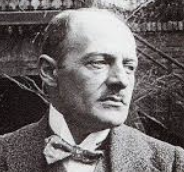
In the ancient notion of love, on the other hand, there is an element of anxiety. The noble fears the descent to the less noble, is afraid of being infected and pulled down. The "sage" of antiquity does not have the same firmness, the same inner certainty of himself and his own value, as the genius and hero of Christian love.
▼
Source
source
L. Coser, trans. (1961), p. 92

5 months 5 days ago
Avoid shame, but do not seek glory: nothing so expensive as glory.
▼
Source
source
Vol. I, ch. 4, pp. 134-135

8 months 1 week ago
A law there is, an oracle of Doom, Of old enacted by the assembled gods, That if a Daemon-such as live for ages- Defile himself with foul and sinful murder, He must for seasons thrice ten thousand roam Far from the Blest; such is the path I tread, I too a wanderer and exile from heaven.
▼
Source
source
tr. Phillip H. De Lacy and Benedict Einarson. Cf. full quotation at Leonard p. 54-55 fr. 115, as paraphrased in Plutarch's Moralia
7 months 1 week ago
It is written, My house shall be called the house of prayer; but ye have made it a den of thieves.
▼
Source
source
21:13 (KJV)

8 months 3 weeks ago
If anything is certain, it is that I myself am not a Marxist.
▼
Source
source
Marx quoted and translated by Engels (in an 1882 letter to Eduard Bernstein) about the peculiar Marxism which arose in France 1882.
7 months 1 week ago
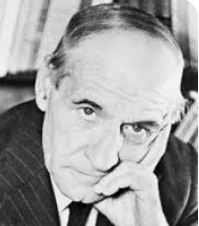
The assurance that we have no means of answering final questions is no valid excuse for callousness towards them. The more deeply should we feel, down to the roots of our being, their pressure and their sting. Whose hunger has ever been sated with the knowledge that he could not eat?
▼
Source
source
p. 15
8 months 1 week ago
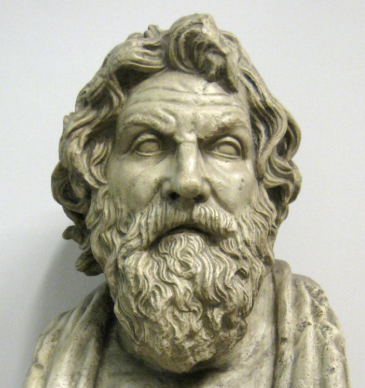
When he was asked what advantage had accrued to him from philosophy, his answer was, "The ability to hold converse with myself."
▼
Source
source
§ 4
9 months 3 weeks ago
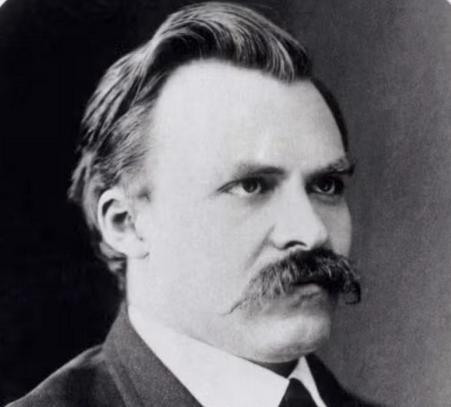
Morality is herd instinct in the individual.
CivilSimian.com created by AxiomaticPanic, CivilSimian, Kalokagathia