


4 months 1 week ago
For a truly religious man nothing is tragic.
▼
Source
source
Conversation of 1930

5 months 1 week ago
The opposite of an idealist is too often a man without love.
4 months 2 weeks ago
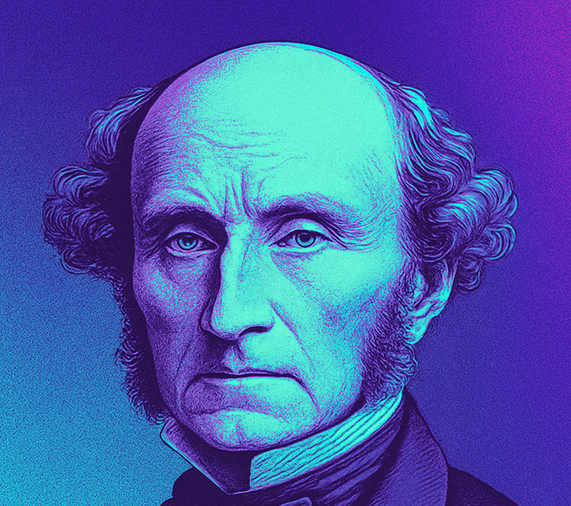
Those only are happy (I thought) who have their minds fixed on some object other than their own happiness; on the happiness of others, on the improvement of mankind, even on some art or pursuit, followed not as a means, but as itself an ideal end. Aiming thus at something else, they find happiness by the way.
▼
Source
source
(p. 142)
5 months ago
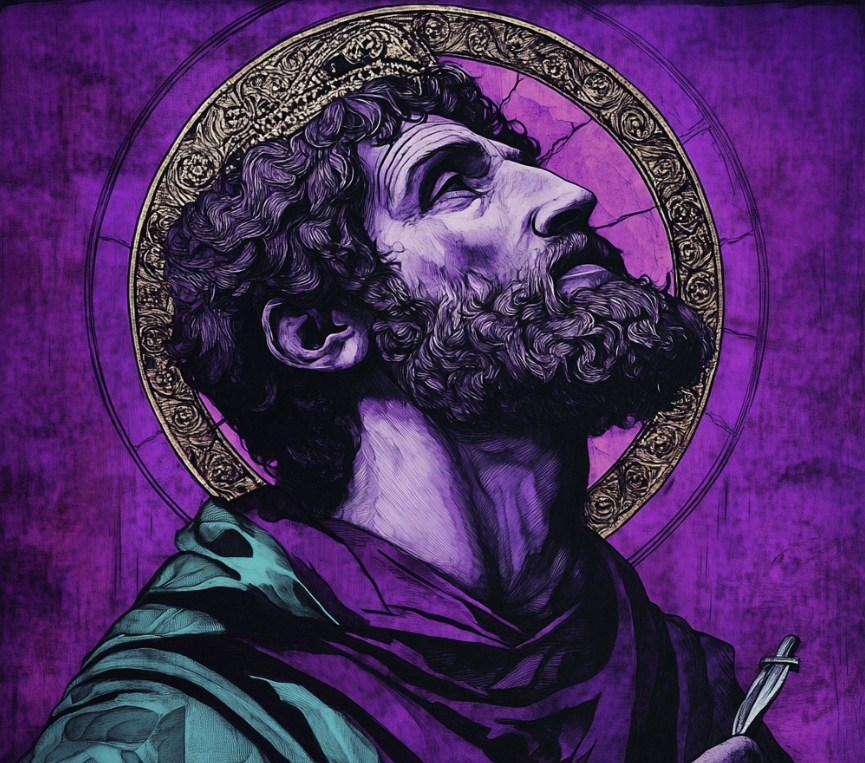
He who created us without our help will not save us without our consent.
▼
Source
source
St. Augustine, Sermo 169, 11, 13: PL 38, 923 as quoted in Fr. Mitch Pacwa, S. J.. Saved: A Bible Study Guide for Catholics (p. 15). Our Sunday Visitor. Kindle Edition.

4 months 1 week ago
It is Christ Himself, not the Bible, who is the true Word of God. The Bible, read in the right spirit and with the guidance of good teachers, will bring us to Him.
▼
Source
source
Letter (8 November 1952); published in Letters of C. S. Lewis (1966), p. 247

4 months 2 weeks ago
Poetry is the mysticism of mankind.
3 months 1 week ago
Man is a creation of desire, not a creation of need.
▼
Source
source
The Psychoanalysis of Fire, ch. 2, "Fire and Reverie"

3 months 1 week ago
Moses because of the hardness of your hearts suffered you to put away your wives: but from the beginning it was not so. And I say unto you, Whosoever shall put away his wife, except it be for fornication, and shall marry another, committeth adultery: and whoso marrieth her which is put away doth commit adultery.
▼
Source
source
19:8-9 (KJV)
5 months 1 week ago
Query: How to contrive not to waste one's time? Answer: By being fully aware of it all the while. Ways in which this can be done: By spending one's days on an uneasy chair in a dentist's waiting room; by remaining on one's balcony all a Sunday afternoon; by travelling by the longest and least-convenient train routes, and of course standing all the way; by queueing at the box-office of theatres and then not booking a seat.
2 weeks ago
Violence breeds violence. Acts of violence committed in "justice" or in affirmation of "rights" or in defense of "peace" do not end violence. They prepare and justify its continuation.
4 months 1 week ago
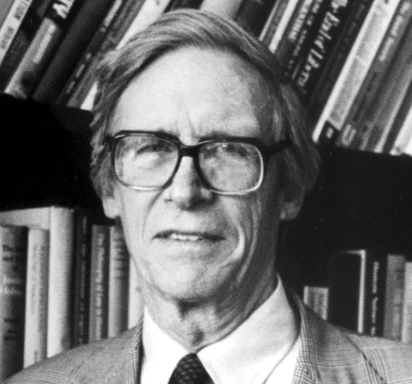
Being happy involves both a certain achievement in action and a rational assurance about the outcome.
▼
Source
source
Chapter IX, Section 83, p. 549

3 months 3 weeks ago
Practice justice in word and deed, and do not get in the habit of acting thoughtlessly about anything.
▼
Source
source
As quoted in Divine Harmony: The Life and Teachings of Pythagoras by John Strohmeier and Peter Westbrook.


5 months 1 week ago
The absurd is the essential concept and the first truth.
2 months 3 days ago
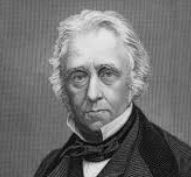
A single breaker may recede; but the tide is evidently coming in.
▼
Source
source
pp. 266-267

3 months 2 weeks ago
Architecture, sculpture, painting, music, and poetry, may truly be called the efflorescence of civilised life.
▼
Source
source
Education: What Knowledge Is of Most Worth?
3 months ago
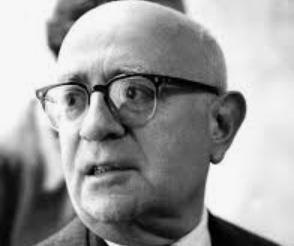
Jazz is the false liquidation of art - instead of utopia becoming reality it disappears from the picture.
▼
Source
source
Perennial fashion - Jazz, as quoted in The Sociology of Rock (1978) by Simon Frith

1 month 5 days ago
The true University of these days is a Collection of Books.
2 months 3 days ago
Let us remember that the government and the society act and react on each other. Sometimes the government is in advance of the society, and hurries the society forward. So urged, the society gains on the government, comes up with the government, outstrips the government, and begins to insist that the government shall make more speed. If the government is wise, it will yield to that just and natural demand. The great cause of revolutions is this, that, while nations move onward, constitutions stand still. The peculiar happiness of England is that here, through many generations, the constitution has moved onward with the nation.
▼
Source
source
Speech in the House of Commons on the Reform Bill (5 July 1831), quoted in Speeches of the Right Honourable T. B. Macaulay, M.P. (1854), p. 25
2 months 2 weeks ago
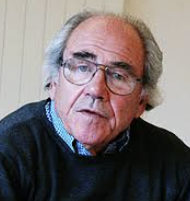
The world is not dialectical -- it is sworn to extremes, not to equilibrium, sworn to radical antagonism, not to reconciliation or synthesis. This is also the principle of evil.
▼
Source
source
Jean Baudrillard in: Eldon Taylor What Does That Mean?: Exploring Mind, Meaning, and Mysteries, Hay House, Inc, 15 January 2010, p. 171

4 months 3 weeks ago
I dare affirm in knowledge of nature, that a little natural philosophy, and the first entrance into it, doth dispose the opinion to atheism; but on the other side, much natural philosophy and wading deep into it, will bring about men's minds to religion; wherefore atheism every way seems to be combined with folly and ignorance, seeing nothing can can be more justly allotted to be the saying of fools than this, "There is no God" Of Atheism.
2 months 1 week ago
Even when the wound is healed, the scar remains.
▼
Source
source
Maxim 236

4 months 2 weeks ago
All for ourselves, and nothing for other people, seems, in every age of the world, to have been the vile maxim of the masters of mankind.
▼
Source
source
Chapter IV, p. 448.
5 months 4 days ago
A scholar who loves comfort is not worthy of the name.

4 months 2 weeks ago
In a social order dominated by capitalist production even the non-capitalist producer is gripped by capitalist conceptions.
▼
Source
source
Vol. III, Ch. I, Cost Price and Profit, p. 39.
2 months 1 week ago
I was forced, through seeing the error of their foundation, to abandon all belief in every religion which had been taught to man. But my religious feelings were immediately replaced by the spirit of universal charity - not for a sect, or a party, or for a country or a colour - but for the human race, and with a real and ardent desire to do good.
▼
Source
source
Life of Robert Owen (1857) his autobiography, as quoted by Jim Herrick, in "Bradlaugh and Secularism: 'The Province of the Real'"
4 months 2 weeks ago
What strikes one here above all is the crudely empirical conception of profit derived from the outlook of the ordinary capitalist, which wholly contradicts the better esoteric understanding of Adam Smith.
▼
Source
source
Vol. II, Ch. X, p. 202.
4 months 5 days ago
Common sense doesn't have the last word in ethics or anywhere else, but it has, as J. L. Austin said about language, the first word: it should be examined before it is discarded.
▼
Source
source
p. 166.

5 months 1 week ago
Civilizations have always been pyramidal in structure. As one climbs toward the apex of the social edifice, there is increased leisure and increasing opportunity to pursue happiness. As one climbs, one finds also fewer and fewer people to enjoy this more and more. Invariably, there is a preponderance of the dispossessed. And remember this, no matter how well off the bottom layers of the pyramid might be on an absolute scale, they are always dispossessed in comparison with the apex.So there is always social friction in ordinary human societies. The action of social revolution and the reaction of guarding against such revolution or combating it once it has begun are the causes of a great deal of the human misery with which history is permeated.

4 months 2 weeks ago
Owing to the identification of religion with virtue, together with the fact that the most religious men are not the most intelligent, a religious education gives courage to the stupid to resist the authority of educated men, as has happened, for example, where the teaching of evolution has been made illegal. So far as I can remember, there is not one word in the Gospels in praise of intelligence; and in this respect ministers of religion follow gospel authority more closely than in some others.
▼
Source
source
p. 110

4 months 1 week ago
Oh. Marx's love for Shakespeare! It is well known. Chris Hani shared the same passion. I have just learned this and I like the idea. Even though Marx more often quotes Timon of Athens, the Manifesto seems to evoke or convoke, right from the start, the first coming of the silent ghost, the apparition of the spirit that does not answer, on those ramparts of Elsinore which is then the old Europe.
▼
Source
source
Injunctions of Marx

3 months 2 weeks ago
All men that are ruined, are ruined on the side of their natural propensities.
▼
Source
source
No. 1, volume v, p. 286

3 months 1 week ago
The worst is not ennui nor despair but their encounter, their collision. To be crushed between the two!
4 months 4 days ago
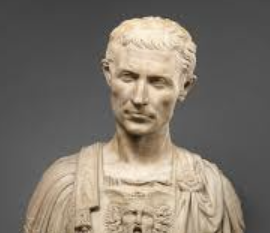
Nay, men, if any of you had heeded what I was ever foretelling and advising, ye would now neither be fearing a single man nor putting your hopes in a single man.
▼
Source
source
Quoted by Plutarch, Life of Cato the Younger, 52 Bernadotte Perrin, ed. Plutarch's Lives, Vol. 8, LCL 100 (1919), pp. 247, 361
5 months 2 weeks ago
It is simplicity that makes the uneducated more effective than the educated when addressing popular audiences.
4 months 2 weeks ago
Science, ever since the time of the Arabs, has had two functions: (1) to enable us to know things, and (2) to enable us to do things.
3 weeks 4 days ago
There are two kinds of openness, the openness of indifference-promoted with the twin purposes of humbling our intellectual pride and letting us be whatever we want to be, just as long as we don't want to be knowers-and the openness that invites us to the quest for knowledge and certitude, for which history and the various cultures provide a brilliant array of examples for examination.
▼
Source
source
p. 41.
2 months 3 weeks ago
Man is always partial and is quite right to be. Even impartiality is partial.
▼
Source
source
F 78
3 months 5 days ago
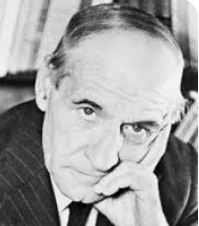
Without a strategic retreat into the self, without vigilant thought, human life is impossible. Call to mind all that mankind owes to certain great withdrawals into the self! It is no chance that all the great founders of religions preceded their apostolates by famous retreats. Buddha withdraws to the forest; Mahomet withdraws to his tent, and even there he withdraws from his tent by wrapping his head in his cloak; above all, Jesus goes apart into the desert for forty days.
▼
Source
source
p. 35

2 months 2 weeks ago
If the immutable character of sex is contested, perhaps this construct called 'sex' is as culturally constructed as gender; indeed, perhaps it was always already gender, with the consequence that the distinction between sex and gender turns out to be no distinction at all.
▼
Source
source
Gender Trouble: Feminism and the Subversion of Identity
4 months 3 weeks ago
If it is pleasing to observe in nature her desire to paint God in all his works, in which we see some traces of him because they are his images, how much more just is it to consider in the productions of minds the efforts which they make to imitate the essential truth, even in shunning it, and to remark wherein they attain it and wherein they wander from it, as I have endeavored to do in this study.
2 weeks 1 day ago
I said only one word, brought only one message: Love. Love - nothing else.
3 months ago
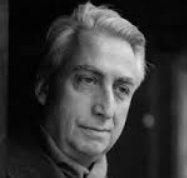
The Text is plural. Which is not simply to say that it has several meanings, but that it accomplishes the very plural of meaning: an irreducible (and not merely an acceptable) plural. The Text is not a co-existence of meanings but a passage, an overcrossing; thus it answers not to an interpretation, even a liberal one, but to an explosion, a dissemination.
▼
Source
source
Proposition 4
4 months 2 weeks ago
The old often envy the young; when they do, they are apt to treat them cruelly.

3 months 2 weeks ago
When... in the course of all these thousands of years has man ever acted in accordance with his own interests?
▼
Source
source
Part 1, Chapter 7
1 week 6 days ago
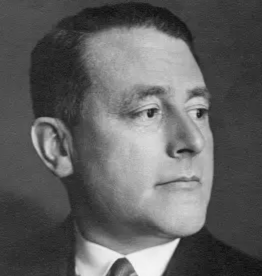
Value has its own logic. In the constitutional state that is most clearly recognizable in the enactment of its constitution.
3 months 1 week ago
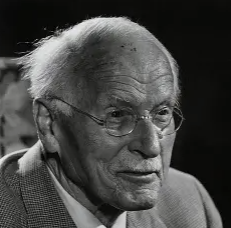
Aion is a child at play, gambling; a child's is the kingship. Telesphorus traverses the dark places of the world, like a star flashing from the deep, leading the way to the gates of the sun and the land of dreams.
▼
Source
source
Combining fragments of Heraclitus and Homer
4 months 3 weeks ago
I am firmly convinced, therefore, that to set up a republic which is to last a long time, the way to set about it is to constitute it as Sparta and Venice were constituted; to place it in a strong position, and so to fortify it that no one will dream of taking it by a sudden assault; and, on the other hand, not to make it so large as to appear formidable to its neighbors. It should in this way be able to enjoy its form of government for a long time. For war is made on a commonwealth for two reasons: to subjugate it, and for fear of being subjugated by it.
▼
Source
source
Book 1, Ch. 6 (as translated by LJ Walker and B Crick)

4 months 3 weeks ago
There never was in the world two opinions alike, no more than two hairs or two grains; the most universal quality is diversity.
▼
Source
source
Book II, Ch. 37. Of the Resemblance of Children to their Fathers
5 months ago
The dominion of bad men is hurtful chiefly to themselves who rule, for they destroy their own souls by greater license in wickedness; while those who are put under them in service are not hurt except by their own iniquity. For to the just all the evils imposed on them by unjust rulers are not the punishment of crime, but the test of virtue. Therefore the good man, although he is a slave, is free; but the bad man, even if he reigns, is a slave, and that not of one man, but, what is far more grievous, of as many masters as he has vices; of which vices when the divine Scripture treats, it says, For of whom any man is overcome, to the same he is also the bond-slave.
▼
Source
source
IV, 3 Variant translation: The good man, though a slave, is free; the wicked, though he reigns, is a slave, and not the slave of a single man, but — what is worse — the slave of as many masters as he has vices.
CivilSimian.com created by AxiomaticPanic, CivilSimian, Kalokagathia