


4 months 2 weeks ago
Wherever Macdonald sits, there is the head of the table.
▼
Source
source
par. 37

4 months 2 weeks ago
There is no rule more invariable than that we are paid for our suspicions by finding what we suspect.
▼
Source
source
Pearls of Thought (1881) p. 254

3 months 1 day ago
Ether is, in effect, a merely hypothetical entity, valuable only in so far as it explains that which by means of it we endeavor to explain - light, electricity, or universal gravitation - and only so far as these facts cannot be explained in any other way. In like manner the idea of God is also an hypothesis, valuable only in so far as it enables us to explain that which by means of it we endeavor to explain - the essence and existence of the Universe - and only so long as these cannot be explained in any other way. And since in reality we explain the Universe neither better nor worse with this idea than without it, the idea of God, the supreme petitio principii, is valueless.
1 month 4 days ago
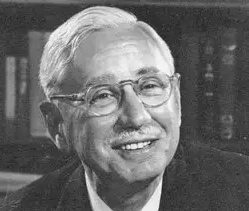
To all Christian governments Christianity was not a rule of means but a means of rule; Christ was for the people, Machiavelli was preferred by the kings. The state in some measure had civilized man, but who would civilize the state?
▼
Source
source
Chapter 6, p. 229
2 months 3 weeks ago
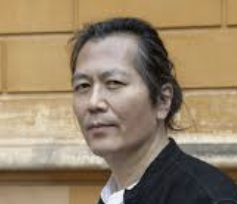
The huge laugh is a most extreme expression of freedom.
4 days ago
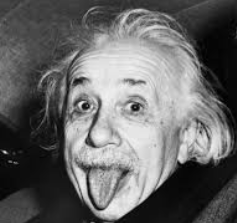
Physical concepts are free creations of the human mind, and are not, however it may seem, uniquely determined by the external world. In our endeavor to understand reality we are somewhat like a man trying to understand the mechanism of a closed watch. He sees the face and the moving hands, even hears its ticking, but he has no way of opening the case. If he is ingenious he may form some picture of a mechanism which could be responsible for all the things he observes, but he may never be quite sure his picture is the only one which could explain his observations. He will never be able to compare his picture with the real mechanism and he cannot even imagine the possibility or the meaning of such a comparison. But he certainly believes that, as his knowledge increases, his picture of reality will become simpler and simpler and will explain a wider and wider range of his sensuous impressions. He may also believe in the existence of the ideal limit of knowledge and that it is approached by the human mind. He may call this ideal limit the objective truth.
▼
Source
source
The Evolution of Physics (1938) (co-written with Leopold Infeld)
3 months 2 weeks ago
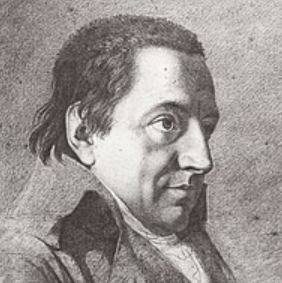
Has woman the same rights in the state which man has? This question may appear ridiculous to many. For if the only ground of all legal rights is reason and freedom, how can a distinction exist between two sexes which possess both the same reason and the same freedom. Nevertheless, it seems that, so long as men have lived, this has been differently held, and the female sex seems not to have been placed on a par with the male sex in the exercise of its rights. Such a universal sentiment must have a ground, to discover which was never a more urgent problem than in our days.
▼
Source
source
P. 439

5 months 2 weeks ago
All that exists that can be denied deserves to be denied; and being truthful means: to believe in an existence that can in no way be denied and which is itself true and without falsehood.
2 months 1 week ago
The individual selectionist would admit that groups do indeed die out, and that whether or not a group goes extinct may be influenced by the behaviour of the individuals in that group. He might even admit that if only the individuals in a group had the gift of foresight they could see that in the long run their own best interests lay in restraining their selfish greed, to prevent the destruction of the whole group. How many times must this have been said in recent years to the working people of Britain? But group extinction is a slow process compared with the rapid cut and thrust of individual competition. Even while the group is going slowly and inexorably downhill, selfish individuals prosper in the short term at the expense of altruists. The citizens of Britain may or may not be blessed with foresight, but evolution is blind to the future.
▼
Source
source
Ch. 1. Why Are People?
5 months 4 days ago
Sincerity is that whereby self-completion is effected, and its way is that by which man must direct himself.
4 months 2 weeks ago
The prejudices of the second species, since they impose upon the intellect by the sensual conditions restricting the mind if it wishes in certain cases to attain to what is intellectual, lurk more deeply. One of them is that which affects knowledge of quantity, the other that affecting knowledge of qualities generally. The former is: every actual multiplicity can be given numerically, and hence, every infinite quantity; the latter, whatever is impossible contradicts itself. In either of them the concept of time, it is true, does not enter into the very notion of the predicate, nor is it attributed as a qualification to the subject. But yet it serves as a means for forming an idea of the predicate, and thus, being a condition, affects the intellectual concept of the subject to the extent that the latter is only attained by its aid.
3 weeks 4 days ago
The restoration of our world-view can come only as a result of inexorably truth-loving and recklessly courageous thought. Such thinking alone is mature enough to learn by experience how the rational, when it thinks itself out to a conclusion, passes necessarily over into the non-rational. World- and life-affirmation and ethics are non-rational. They are not justified by any corresponding knowledge of the nature of the world, but are the disposition in which, through the inner compulsion of our will-to-live, we determine our relation to the world. What the activity of this disposition of ours means in the evolution of the world, we do not know. Nor can we regulate this activity from outside; we must leave entirely to each individual its shaping and its extension. From every point of view, then, world- and life-affirmation and ethics are non-rational, and we must have the courage to admit it.

5 months 1 week ago
My parents, both of whom spoke Russian fluently, made no effort to teach me Russian, but insisted on my learning English as rapidly and as well as possible. They even set about learning English themselves, with reasonable, but limited, success.In a way, I am sorry. It would have been good to know the language of Pushkin, Tolstoy, and Dostoevski. On the other hand, I would not have been willing to let anything get in the way of the complete mastery of English. Allow me my prejudice: surely there is no language more majestic than that of Shakespeare, Milton, and the King James Bible, and if I am to have one language that I know as only a native can know it, I consider myself unbelievably fortunate that it is English.
4 months 2 weeks ago
Patriotism, when it wants to make itself felt in the domain of learning, is a dirty fellow who should be thrown out of doors.
▼
Source
source
Vol. 2, Ch. 21, § 255

4 months 2 weeks ago
But capitalist production begets,with the inexorability of a law of Nature,its own negation. It is the negation of negation.
▼
Source
source
Vol. I, Ch. 32, p. 837.
2 months 4 weeks ago
The new tinge to modern minds is a vehement and passionate interest in the relation of general principles to irreducible and stubborn facts. All the world over and at all times there have been practical men, absorbed in 'irreducible and stubborn facts'; all the world over and at all times there have been men of philosophic temperament, who have been absorbed in the weaving of general principles. It is this union of passionate interest in the detailed facts with equal devotion to abstract generalisation which forms the novelty of our present society.
▼
Source
source
Ch. 1: "The Origins of Modern Science", pp. 3-4
5 months 4 days ago
The way of the superior man may be found, in its simple elements, in the intercourse of common men and women; but in its utmost reaches, it shines brightly through Heaven and Earth.

1 month 5 days ago
The panting breathless haste and vehemence of a man struggling in the thick of battle for life and salvation; this is the mood he is in!



2 weeks ago
I agree with you that it is the duty of every good citizen to use all the opportunities, which occur to him, for preserving documents relating to the history of our country.
▼
Source
source
Letter to Hugh P. Taylor
3 months 5 days ago
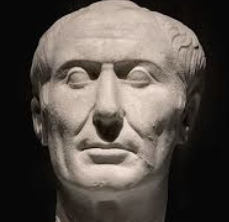
To imagine that Caesar aspired to do something in the way Alexander did it - and this is what almost all historians have believed - is definitely to give up trying to understand him. Caesar is very nearly the opposite of Alexander. ...[I]t is not merely a universal kingdom that Caesar has in view. His purpose is a deeper one. He wants a Roman empire which does not live on Rome, but on the periphery, on the provinces, and this implies the complete supersession of the City-State. It implies a State in which the most diverse peoples collaborate, in regard to which all feel solidarity.
▼
Source
source
Chapter XIV: Who Rules The World?
4 months 2 weeks ago
The more we devote ourselves to observing animals and their behaviour, the more we love them, on seeing how gready they care for their young; in such a context, we cannot even contemplate cruelty to a wolf. Leibnitz put the grub he had been observing back on the tree with its leaf, lest he should be guilty of doing any harm to it. It upsets a man to destroy such a creature for no reason, and this tenderness is subsequently transferred to man.
▼
Source
source
Part II, pp. 212-213

1 week 4 days ago
The man who is honest and good ought to be exactly like a man who smells strong, so that the bystander as soon as he comes near him must smell whether he choose or not.
▼
Source
source
XI, 15
4 months 2 weeks ago
Wealth is like sea-water; the more we drink, the thirstier we become.
▼
Source
source
E. Payne, trans. (1974) Vol. 1, p. 347

4 months 2 weeks ago
An unlearned carpenter of my acquaintance once said in my hearing: "There is very little difference between one man and another; but what little there is, is very important." This distinction seems to me to go to the root of the matter.
▼
Source
source
"The Importance of Individuals"
1 month 4 weeks ago
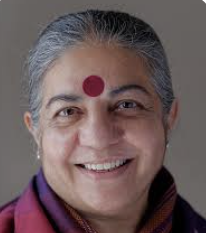
Nuclear power started in weaponry. It was designed for war. And any instrument that has its origins in war always has the potential for war. First because the material you need to make bombs, you're multiplying it though nuclear power, you're taking uranium and turn it into plutonium. Second by equipping governments and private companies with this potential, in society you spread this potential, that here is a weapon of mass destruction available. This is exactly what happened with fertilizers. Chemical fertilizers came from explosive factories are increasingly used in terrorist attacks.
▼
Source
source
On nuclear power, as quoted in "Koodankulam Must Be Stopped: Vandana Shiva", DiaNuke
1 month 5 days ago
For is not a Symbol ever, to him who has eyes for it, some dimmer or clearer revelation of the God-like? B
▼
Source
source
k. III, ch. 3.

3 months ago
"A man thinks he is dying for his country," said Anatole France, "but he is dying for a few industrialists." But even that is saying too much. What one dies for is not even so substantial and tangible as an industrialist.
▼
Source
source
p. 224

3 months 1 week ago
I do not forgive myself for being born. It is as if, creeping into this world, I had profaned a mystery, betrayed some momentous pledge, committed a fault of nameless gravity. Yet in a less assured mood, birth seems a calamity I would be miserable not having known.
2 months 1 week ago
Amid a multitude of projects, no plan is devised.
▼
Source
source
Maxim 319

2 months 4 weeks ago
My own book Women, Race and Class was one of many that were published during that era, including, to name only a few, This Bridge Called My Back, edited by Gloria Anzaldúa and Cherrie Moraga, the work of bell hooks and Michelle Wallace, and the anthology All the Women Are White, All the Blacks Are Men, but Some of Us Are Brave: Black Women's Studies. So behind this concept of intersectionality is a rich history of struggle. A history of conversations among activists within movement formations, and with and among academics as well.
▼
Source
source
Angela Davis Freedom Is a Constant Struggle: Ferguson, Palestine, and the Foundations of a Movement (2015) p 19

3 months 2 weeks ago
Russia was a slave in Europe but would be a master in Asia.
▼
Source
source
As quoted in "Dilemmas of Empire 1850-1918: Power, Territory, Identity" by Dominic Livien in Journal of Contemporary History, Vol. 34, No.2 (April 1999), pp. 180
3 months 1 week ago
The society which projects and undertakes the technological transformation of nature alters the base of domination by gradually replacing personal dependence (of the slave on the master, the serf on the lord of the manor, the lord on the donor of the fief, etc.) with dependence on the "objective order of things" (on economic laws, the market etc.).
▼
Source
source
p. 144
3 months 1 week ago
When you get over an infatuation, to fall for someone ever again seems so inconceivable that you imagine no one, not even a bug, that is not mired in disappointment.
1 month 1 week ago
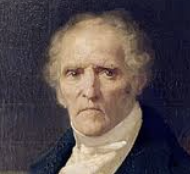
This miracle of social concord would result not from direct conciliation, which would be impossible, but from the development of new interests, and especially from the amazement with which the minds of men would be filled on being convinced of the radical falseness of the civilized social order by comparison with the associative or combined, and of the errors in which the social world has been so long plunged - misled by speculative philosophy, which upholds and extols this order with all its defects to the entire neglect of the study of association.
▼
Source
source
The Theory of Social Organization. Harmonian Man: Selected Writings of Charles Fourier, p. 5.
2 months 3 weeks ago
My own view is that philosophy at its best has always, in every period, included some philosophers who brilliantly represent the moral face of the subject and some philosophers who brilliantly represent the theoretical face, as well as some geniuses whose insights span and unite both sides of the subject. To renounce either the moral ambitions of philosophy or its theoretical ambitions is not just to kill the subject of philosophy; it is to commit intellectual and spiritual suicide.
▼
Source
source
Science and Philosophy
4 months 1 week ago
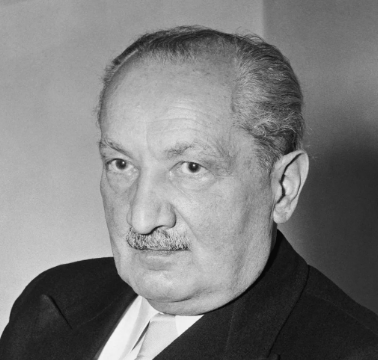
"For many, abstract thinking is toil; for me, on good days, it is feast and frenzy." (XIV, 24) Abstract thinking a feast? The highest form of human existence? ... "The feast implies: pride, exuberance, frivolity; mockery of all earnestness and respectability; a divine affirmation of oneself, out of animal plenitude and perfection-all obviously states to which the Christian may not honestly say Yes. The feast is paganism par excellence." (WM, 916). For that reason, we might add that thinking never takes place in Christianity. That is to say, there is no Christian philosophy. There is no true philosophy that could be determined anywhere else than from within itself.
▼
Source
source
p. 5
4 months 2 weeks ago
What the history of Philosophy shows us is a succession of noble minds, a gallery of heroes of thought, who, by the power of reason, have penetrated into the being of things, of nature and of spirit, into the Being of God, and have won for us by their labours the highest treasure, the treasure of reasoned knowledge.
▼
Source
source
Introduction p. 1 Lectures on the history of philosophy, Translated from German by E. S. Haldane in Three Volumes (1892-96) full text
3 months 2 weeks ago
It was evident that he revived by fits and starts. He would suddenly come to himself from actual delirium for a few minutes; he would remember and talk with complete consciousness, chiefly in disconnected phrases which he had perhaps thought out and learnt by heart in the long weary hours of his illness, in his bed, in sleepless solitude.
▼
Source
source
Part 2, Chapter 10

5 months 2 weeks ago
That which distinguishes the Christian narrow way from the common human narrow way is the voluntary. Christ was not someone who coveted earthly things but had to be satisfied with poverty, no, he chose poverty.

4 months 1 week ago
The interpretation of a case is corroborated only by the successful continuation of a self-formative process, that is by the completion of self-reflection, and not in any unmistakable way by what the patient says or how he behaves.
▼
Source
source
p. 266
4 months 2 weeks ago
Truly, if the preservation of all mankind, as much as in him lies, were every one's persuasion, as indeed it is every one's duty, and the true principle to regulate our religion, politicks and morality by, the world would be much quieter, and better natur'd than it is.
▼
Source
source
Sec. 116
4 months 4 days ago
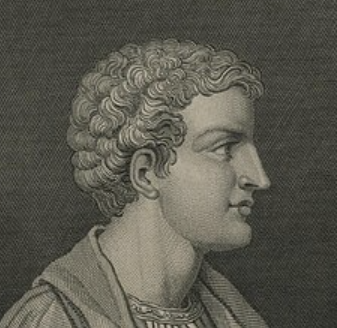
This to the right, that to the left hand strays, and all are wrong, but wrong in different ways.
▼
Source
source
Book II, satire iii, line 50 (trans. Conington)

4 months 1 week ago
The public execution, then, has a juridico-political function. It is a ceremonial by which a momentarily injured sovereignty is reconstituted. It restores that sovereignty by manifesting it at its most spectacular. The public execution, however hasty and everyday, belongs to a whole series of great rituals in which power is eclipsed and restored (coronation, entry of the king into a conquered city, the submission of rebellious subjects); over and above the crime that has placed the sovereign in contempt, it deploys before all eyes an invincible force. Its aim is not so much to re-establish a balance as to bring into play, as its extreme point, the dissymmetry between the subject who has dared to violate the law and the all-powerful sovereign who displays his strength.
▼
Source
source
Chapter One, The Spectacle of the Scaffold
4 months 2 days ago
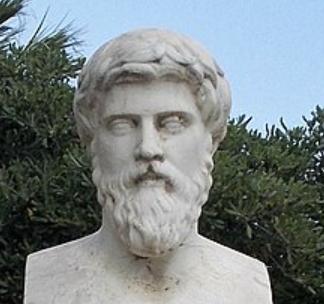
After the battle in Pharsalia, when Pompey was fled, one Nonius said they had seven eagles left still, and advised to try what they would do. "Your advice," said Cicero, "were good if we were to fight jackdaws."
▼
Source
source
Cicero

2 months 1 week ago
Omnipresence has become an ordinary human dimension.
4 months 1 week ago
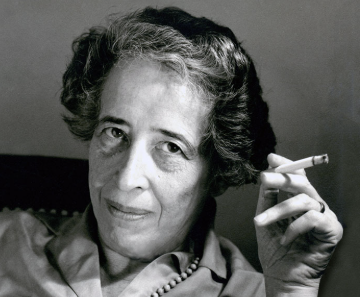
Kant stated defensively that he had "found it necessary to deny knowledge. . . to make room for faith," but he had not made room for faith; he had made room for thought, and he had not "denied knowledge" but separated knowledge from thinking.
▼
Source
source
p. 14
4 months 1 week ago
It is not murder which is forgiven but the killer, his person as it appears in circumstances and intentions. The trouble with the Nazi criminals was precisely that they renounced voluntarily all personal qualities, as if nobody were left to be either punished or forgiven. They protested time and again that they had never done anything out of their own initiative, that they had no intentions whatsoever, good or bad, and that they only obeyed orders.
4 months 1 week ago
The question here is the same as the question I addressed with regard to madness, disease, delinquency and sexuality. In all of these cases, it was not a question of showing how these objects were for a long time hidden before being finally discovered, nor of showing how all these objects are only wicked illusions or ideological products to be dispelled in the light of reason finally having reached its zenith. It was a matter of showing by what conjunctions a whole set of practices-from the moment they become coordinated with a regime of truth-was able to make what does not exist (madness, disease, delinquency, sexuality, etcetera), nonetheless become something.
▼
Source
source
Lecture 1, January 10, 1979, p. 19
CivilSimian.com created by AxiomaticPanic, CivilSimian, Kalokagathia