



3 months 2 weeks ago
. ... the prince says that the world will be saved by beauty! And I maintain that the reason he has such playful ideas is that he is in love.
▼
Source
source
Part 3, Chapter 5
4 months 3 weeks ago
M. Desargues puts me under obligations on account of the pains that it has pleased him to have in me, in that he shows that he is sorry that I do not wish to study more in geometry, but I have resolved to quit only abstract geometry, that is to say, the consideration of questions which serve only to exercise the mind, and this, in order to study another kind of geometry, which has for its object the explanation of the phenomena of nature... You know that all my physics is nothing else than geometry.
▼
Source
source
Letter to Marin Mersenne (July 27, 1638) as quoted by Florian Cajori, A History of Mathematics (1893) letter dated in The Philosophical Writings of Descartes Vol. 3, The Correspondence (1991) ed. John Cottingham, Robert Stoothoff, Dugald Murdoch

3 months 5 days ago
The species with eyes appears suddenly, capriciously as it were, and it is this species which changes the environment by creating its visible aspect. The eye does not come into being because it is needed. Just the contrary; because the eye appears it can henceforth be applied as a serviceable instrument. Each species builds up its stock of useful habits by selecting among, and taking advantage of, the innumerable useless actions which a living being performs out of sheer exuberance.
▼
Source
source
p. 17

1 month 3 weeks ago
[H]uman nature as encoded in our DNA isn't immutable. Mankind's barbaric track-record to date is an unreliable guide to the future. If Homo sapiens' nastier alleles and their more sinister combinations can be silenced or edited out of the genome, and new improved code-sequences inserted instead, then the pessimists will be confounded. A major discontinuity in the development of life lies ahead. Providentially, we've learned that the DNA-driven world isn't written in God-given proprietary code it would be hubris to tamper with, but in bug-ridden open source amenable to improvement.
▼
Source
source
Utopian Pharmacology: Mental Health in the Third Millennium MDMA and Beyond, BLTC Research, last updated 2020
3 weeks 4 days ago
The divergent scales of values scream in discordance, they dazzle and daze us, and in order that it might not be painful we steer clear of all other values, as though from insanity, as though from illusion, and we confidently judge the whole world according to our own home values. Which is why we take for the greater, more painful and less bearable disaster not that which is in fact greater, more painful and less bearable, but that which lies closest to us. Everything which is further away, which does not threaten this very day to invade our threshold - with all its groans, its stifled cries, its destroyed lives, even if it involves millions of victims - this we consider on the whole to be perfectly bearable and of tolerable proportions.

5 months 3 days ago
This happy state can only be obtained by a prudent care of the body, and a steady government of the mind. The diseases of the body are to be prevented by temperance, or cured by medicine, or rendered tolerable by patience.

4 months 3 weeks ago
A faithful and good servant is a real godsend; but truly 'tis a rare bird in the land.
▼
Source
source
156
1 month 5 days ago
Normal science, the puzzle-solving activity we have just examined, is a highly cumulative enterprise, eminently successful in its aim, the steady extension of the scope and precision of scientific knowledge. In all these respects it fits with great precision the most usual image of scientific work. Yet one standard product of the scientific enterprise is missing. Normal science does not aim at novelties of fact or theory and, when successful, finds none.
▼
Source
source
p. 52

4 months 4 weeks ago
We were ensnared by the wisdom of the serpent; we are set free by the foolishness of God.
▼
Source
source
1:14 Latin: Serpentis sapientia decepti sumus, Dei stultitia liberamur.
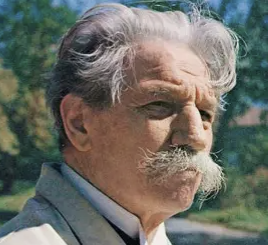
3 weeks 4 days ago
Never for a moment do we lay aside our mistrust of the ideals established by society, and of the convictions which are kept by it in circulation. We always know that society is full of folly and will deceive us in the matter of humanity. ... humanity meaning consideration for the existence and the happiness of individual human beings.
▼
Source
source
Chapter 26
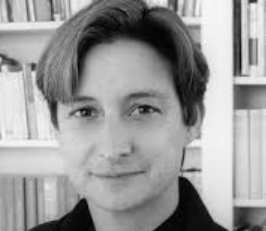
2 months 2 weeks ago
The ethical and political practice of nonviolence can rely neither exclusively on the dyadic encounter, nor on the bolstering of a prohibition; it requires a political opposition to the biopolitical forms of racism and war logics that rely on phantasmagoric inversions that occlude the binding and interdependent character of the social bond. It requires, as well, an account of why, and under what conditions, the frameworks for understanding violence and nonviolence, or violence and self-defense, seem to invert into one another, causing confusion about how best to pin down those terms.
▼
Source
source
p. 62

4 months 1 week ago
The world is the totality of facts, not things.
▼
Source
source
(1.1) Original German: Die Welt ist die Gesamtheit der Tatsachen, nicht der Dinge

2 months 4 weeks ago
Another response to racism has been the establishment of unlearning racism workshops, which are often led by white women. These workshops are important, yet they tend to focus primarily on cathartic individual psychological personal prejudice without stressing the need for corresponding change in political commitment and action. A woman who attends an unlearning racism workshop and learns to acknowledge that she is racist is no less a threat than one who does not. Acknowledgment of racism is significant when it leads to transformation.

2 months 3 weeks ago
The 'intense life' advertised by the neoliberal regime is in truth simply a life of intense consumption.

1 month 3 weeks ago
The irony of scientific progress is that in solving human problems it creates problems that are not humanly soluble. Science has given humans a kind of power over the natural world achieved by no other animal. It has not given humans the ability to remodel the planet according to their wishes. The Earth is not a clock that can be wound up and stopped at will. A living system, the planet will surely rebalance itself. It will do so, however, without any regard for humans.
▼
Source
source
Sweet Morality (p. 212)

3 months 6 days ago
Suffer little children, and forbid them not, to come unto me: for of such is the kingdom of heaven.
▼
Source
source
19:14 (KJV)
3 months 6 days ago
Every plant, which my heavenly Father hath not planted, shall be rooted up. Let them alone: they be blind leaders of the blind. And if the blind lead the blind, both shall fall into the ditch.
▼
Source
source
15:13-14 (KJV)
1 month 3 weeks ago
Rather than trying to escape violence, human beings more often become habituated to it. History abounds with long conflicts - the Thirty Years' War in early seventeenth-century Europe, the Time of Troubles in Russia, twentieth-century guerrilla conflicts - in which continuous slaughter has been accepted as normal. Famously adaptable, the human animal quickly learns to live with violence and soon comes to find satisfaction in it.
▼
Source
source
In the Puppet Theatre: Roof Gardens, Feathers and Human Sacrifice (p. 80)
2 months 4 weeks ago
My own book Women, Race and Class was one of many that were published during that era, including, to name only a few, This Bridge Called My Back, edited by Gloria Anzaldúa and Cherrie Moraga, the work of bell hooks and Michelle Wallace, and the anthology All the Women Are White, All the Blacks Are Men, but Some of Us Are Brave: Black Women's Studies. So behind this concept of intersectionality is a rich history of struggle. A history of conversations among activists within movement formations, and with and among academics as well.
▼
Source
source
Angela Davis Freedom Is a Constant Struggle: Ferguson, Palestine, and the Foundations of a Movement (2015) p 19

4 months 2 weeks ago
In a word, human life is more governed by fortune than by reason; is to be regarded more as a dull pastime than as a serious occupation; and is more influenced by particular humour, than by general principles. Shall we engage ourselves in it with passion and anxiety? It is not worthy of so much concern. Shall we be indifferent about what happens? We lose all the pleasure of the game by our phlegm and carelessness. While we are reasoning concerning life, life is gone; and death, though perhaps they receive him differently, yet treats alike the fool and the philosopher.
▼
Source
source
Part I, Essay 18: The Sceptic

4 months 3 weeks ago
States as great engines move slowly.
▼
Source
source
Book II

4 months 4 days ago
Fortune is lavish with her favors, but not to be depended on. Nature on the other hand is self-sufficing, and therefore with her feebler but trustworthy [resources] she wins the greater [meed] of hope.

4 months 2 weeks ago
In the deepest heart of all of us there is a corner in which the ultimate mystery of things works sadly.
▼
Source
source
"Is Life Worth Living?"

5 months 2 weeks ago
We produce these representations in and from ourselves with the same necessity with which the spider spins. If we are forced to comprehend all things only under these forms, then it ceases to be amazing that in all things we actually comprehend nothing but these forms. For they must all bear within themselves the laws of number, and it is precisely number which is most astonishing in things. All that conformity to law, which impresses us so much in the movement of the stars and in chemical processes, coincides at bottom with those properties which we bring to things. Thus it is we who impress ourselves in this way

3 months 2 weeks ago
And now I ask, whether, with this map of misgovernment before me, I can suppose myself bound by my vote to continue, upon any principles of pretended public faith, the management of these countries in those hands? If I kept such a faith (which in reality is no better than a fides latronum) with what is called the Company, I must break the faith, the covenant, the solemn, original, indispensable oath, in which I am bound, by the eternal frame and constitution of things, to the whole human race.
▼
Source
source
Speech in the House of Commons on India (1 December 1783), quoted in The Parliamentary Register: Or, History of the Proceedings and Debates of the House of Commons, Volume XII (1782), p. 247

5 months 1 week ago
I recognize the necessity of animal experiments with my mind but not with my heart.

4 months 2 weeks ago
Every parting gives a foretaste of death, every reunion a hint of the resurrection.
▼
Source
source
Vol. 2, Ch. 26, § 310, as translated by Eric F. J. Payne

4 months 2 weeks ago
I am as desirous of being a good neighbor as I am of being a bad subject.
3 months 5 days ago
Man must not only make himself: the weightiest thing he has to do is to determine what he is going to be. He is causa sui to the second power.
▼
Source
source
As quoted in Existentialism from Dostoevsky to Sartre, p. 155
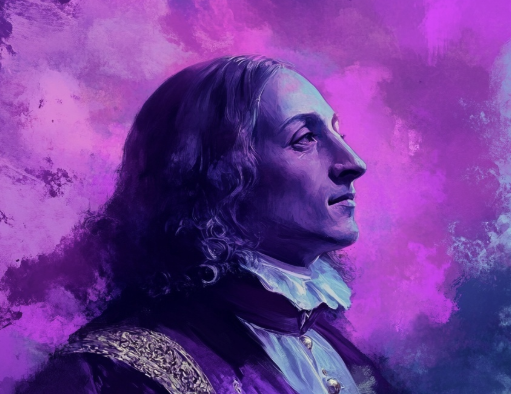
4 months 3 weeks ago
All the excesses, all the violence, and all the vanity of great men, come from the fact that they know not what they are: it being difficult for those who regard themselves at heart as equal with all men... For this it is necessary for one to forget himself, and to believe that he has some real excellence above them, in which consists this illusion that I am endeavoring to discover to you.

3 months 1 week ago
Imaginary pains are by far the most real we suffer, since we feel a constant need for them and invent them because there is no way of doing without them.

2 months 2 weeks ago
The vocation of every man and woman is to serve other people.
▼
Source
source
What Is To Be Done? (1886) Chap. XL

4 months 2 weeks ago
It is not by prayer and humility that you cause things to go as you wish, but by acquiring a knowledge of natural laws.
4 months 2 weeks ago
My life is like a stroll upon the beach, As near the ocean's edge as I can go.
▼
Source
source
"The Fisher's Boy", in Edmund Clarence Stedman (ed.) An American Anthology, 1787-1900, Boston and New York: Houghton, Mifflin and Co., 1900

3 months 1 week ago
Sometimes I had an overwhelming urge to speak, not about that, but only to hint that there were some curious things about me which no one knew of. I wanted to find out whether other people had undergone similar experiences. I never succeeded in discovering so much as a trace of them in others. As a result, I had the feeling that I was either outlawed or elect, accursed or blessed.
▼
Source
source
p. 41

1 month 5 days ago
We are firm believers in the maxim that for all right judgment of any man or thing it is useful, nay, essential, to see his good qualities before pronouncing on his bad.
▼
Source
source
Goethe.

4 months 1 week ago
In writing a history of madness, Foucault has attempted-and this is the greatest merit, but also the very infeasibility of his book-to write a history of madness itself. Itself.
▼
Source
source
Of madness itself. That is by letting madness speak for itself. Cogito and The History of Madness, p.37 (Routledge classics edition)

5 months 2 weeks ago
Nature does not do anything in vain.
4 months 2 weeks ago
What are the earth and all its interests beside the deep surmise which pierces and scatters them?
3 months ago
Hegel ... destroyed the illusion of the subject's being-in-itself and showed that the subject is itself an aspect of social objectivity. ... However, ... we must ask this question: is this objectivity which we have shown to be a necessary condition and which subsumes abstract subjectivity in fact the higher factor? Does it not rather remain precisely what Hegel reproached it with being in his youth, namely pure externality, the coercive collective? Does not the retreat to this supposedly higher authority signify the regression of the subject, which had earlier won its freedom only with the greatest efforts, with infinite pains?
▼
Source
source
p. 16

3 months 3 weeks ago
Avoid doing what you would blame others for doing.
▼
Source
source
As quoted in Diogenes Laërtius, The Lives and Opinions of Eminent Philosophers, I, 36 Cf. Golden Rule

3 months 2 weeks ago
Humanity may endure the loss of everything: all its possessions may be torn away without infringing its true dignity; - all but the possibility of improvement.
▼
Source
source
"The Vocation of the Scholar" (1794), as translated by William Smith, in The Popular Works of Johann Gottlieb Fichte (1889), Vol. I, Lecture IV, p. 188.

1 month 1 week ago
Beginning in the 1970s, however, the techniques and organizational form of industrial production shifted toward smaller and more mobile labor units and more flexible structures of production, a shift often labeled as a move from Fordist to post-Fordist production.
▼
Source
source
82
3 weeks 4 days ago
It is especially important for Westerners to understand that high lamas, Zen masters, and Hindu gurus in the discipline of yoga are human beings, not supermen. We must not put them, as we have put Jesus Christ, on pedestals of reverence so high that we automatically exclude ourselves from their states of consciousness.
▼
Source
source
Foreward to The Secret Oral Teachings in the Tibetan Buddhist Sects (1964)], by Alexandra David Neel
3 months 4 weeks ago
Soul, indeed, is a certain medium between an impartible essence, and an essence which is divisible about bodies. But intellect is an impartible essence alone. And qualities and material forms are divisible about bodies. Not everything which acts on another, effects that which it does effect by approximation and contact; but those natures which effect any thing by approximation and contact, use approximation accidentally.
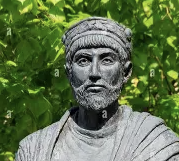
3 weeks 2 days ago
But how many are the final causes of union, the most beautiful, which this deity contains within himself? The Sun, that is, Apollo, is "Leader of the Muses;" and inasmuch as he completes our life with good order, he produces in the world Æsculapius; for even before the world was, he had the latter by his side. But were one to discuss the numerous other qualities belonging to this god, he would never arrive to the end of them.

2 months ago
We have always thought that Mr. Darwin has unnecessarily hampered himself by adhering so strictly to his favourite "Natura non facit saltum." We greatly suspect that she does make considerable jumps in the way of variation now and then, and that these saltations give rise to some of the gaps which appear to exist in the series of known forms.
CivilSimian.com created by AxiomaticPanic, CivilSimian, Kalokagathia