


7 months 1 week ago
In matters that are so obscure and far beyond our vision, we find in Holy Scripture passages which can be interpreted in very different ways without prejudice to the faith we have received. In such cases, we should not rush in headlong and so firmly take our stand on one side that, if further progress in the search for truth justly undermines this position, we too fall with it.
▼
Source
source
I, xviii, 37. Modern translation by J.H. Taylor
3 months 1 week ago
Before I became old I tried to live well; now that I am old, I shall try to die well; but dying well means dying gladly.
▼
Source
source
Line 2.


6 months 2 weeks ago
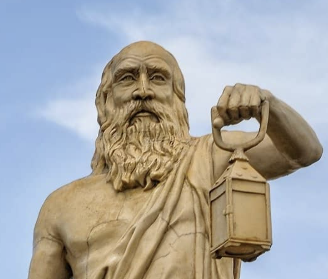
When Alexander the Great addressed him with greetings, and asked if he wanted anything, Diogenes replied "Yes, stand a little out of my sunshine."
▼
Source
source
From Plutarch, Alexander, 14. Cf. Diogenes Laërtius, vi. 38, Cicero, Tusculan Disputations, v. 32

6 months 3 days ago
Men that look no further than their outsides, think health an appurtenance unto life, and quarrel with their constitutions for being sick; but I that have examined the parts of man, and know upon what tender filaments that fabric hangs, do wonder that we are not always so; and considering the thousand doors that lead to death, do thank my God that we can die but once.
▼
Source
source
Section 44 Compare: "I know death hath ten thousand several doors / For men to take their exits.", John Webster, Duchess of Malfi (1623); Act IV, scene ii.
5 months 1 week ago
I believe that freedom is not a constant attribute that "we have" or "we don't have"; perhaps there is only one reality: the act of liberating ourselves in the process of using choices. Every step in life that heightens the maturity of man heightens his ability to choose the freeing alternative. I believe that "freedom of choice" is not always equal for all men at every moment. The man with an exclusively necrophilic orientation; who is narcissistic; or who is symbiotic-incestuous, can only make a regressive choice. The free man, freed from irrational ties, can no longer make a regressive choice.

2 months 3 weeks ago
Remember that neither the future nor the past pains thee, but only the present. But this is reduced to a very little, if thou only circumscribest it, and chidest thy mind, if it is unable to hold out against even this.
▼
Source
source
VIII, 36
7 months 2 days ago
Consumption is the sole end and purpose of all production; and the interest of the producer ought to be attended to, only so far as it may be necessary for promoting that of the consumer.
▼
Source
source
Chapter VIII, p. 719.
6 months 3 days ago
I could never divide myself from any man upon the difference of an opinion, or be angry with his judgement for not agreeing with me in that, from which perhaps within a few days I should dissent myself.
▼
Source
source
Section 6

7 months 6 days ago
What does it mean to have a god? or, what is God? Answer: A god means that from which we are to expect all good and to which we are to take refuge in all distress, so that to have a God is nothing else than to trust and believe Him from the [whole] heart; as I have often said that the confidence and faith of the heart alone make both God and an idol. If your faith and trust be right, then is your god also true; and, on the other hand, if your trust be false and wrong, then you have not the true God; for these two belong together faith and God. That now, I say, upon which you set your heart and put your trust is properly your god.
▼
Source
source
Large Catechism 1.1-3, F. Bente and W.H.T. Dau, tr. Triglot Concordia: The Symbolical Books of the Ev. Lutheran Church(St. Louis: Concordia Publishing House, 1921), 565.
5 months 3 weeks ago
The old dualistic notion of mind and matter, so prominent in Cartesianism, as two radically different kinds of substance, will hardly find defenders to-day. Rejecting this, we are driven to some form of hylopathy, otherwise called monism.
5 months 1 week ago
Many things about our bodies would not seem to us so filthy and obscene if we did not have the idea of nobility in our heads.
▼
Source
source
D 6
5 months 2 weeks ago
The 'public' is a phantom, the phantom of an opinion supposed to exist in a vast number of persons who have no effective interrelation and though the opinion is not effectively present in the units. Such an opinion is spoken of as 'public opinion,' a fiction which is appealed to by individuals and by groups as supporting their special views. It is impalpable, illusory, transient; "'tis here, 'tis there, 'tis gone"; a nullity which can nevertheless for a moment endow the multitude with power to uplift or destroy.
6 months 1 week ago
We have two ears and one mouth, so we should listen more than we say.
▼
Source
source
As quoted in Diogenes Laërtius Lives and Opinions of Eminent Philosophers, vii. 23.

6 months 4 weeks ago
Merely to come into the world the heir of a fortune is not to be born, but to be still-born, rather. To be supported by the charity of friends, or a government-pension, - provided you continue to breathe, - by whatever fine synonymes you describe these relations, is to go into the almshouse.
▼
Source
source
p. 487

6 months 4 weeks ago
Whatever bitterness and hate may be found in the movements which we are to examine, it is not bitterness or hate, but love, that is their mainspring. It is difficult not to hate those who torture the objects of our love. Though difficult, it is not impossible; but it requires a breadth of outlook and a comprehensiveness of understanding which are not easy to preserve amid a desperate contest. If ultimate wisdom has not always been preserved by Socialists and Anarchists, they have not differed in this from their opponents; and in the source of their inspiration they have shown themselves superior to those who acquiesce ignorantly or supinely in the injustices and oppressions by which the existing system is preserved.
▼
Source
source
Introduction, p. 10.
6 months 3 days ago
Half our days we pass in the shadow of the earth; and the brother of death exacteth a third part of our lives.
3 months 1 week ago
There is no sorrow in the world, when we have escaped from the fear of death.

2 months 3 weeks ago
How much more damage anger and grief do than the things that cause them.
▼
Source
source
(Hays translation) XI, 18
5 months 2 weeks ago
The realer religion is, so much the more it means its own overcoming. It wills to cease to be the special domain "Religion" and wills to become life. It is concerned in the end not with specific religious acts, but with redemption from all that is specific.
▼
Source
source
p. 34

2 months 3 weeks ago
Men do not lead the revolution; it is the Revolution that uses men. They are right when they say it goes all alone. This phrase means that never has the Divinity shown itself so clearly in any human event. If the vilest instruments are employed, punishment is for the sake of regeneration.
▼
Source
source
Chapter I, p. 8
6 months 4 weeks ago
The conception of the necessary unit of all that is resolves itself into the poverty of the imagination, and a freer logic emancipates us from the straitwaistcoated benevolent institution which idealism palms off as the totality of being.
▼
Source
source
p. 9
2 months 3 weeks ago
Not to display anger or other emotions. To be free of passion and yet full of love.
▼
Source
source
(Hays translation) I, 9

11 months 3 days ago
Canned laughter: After some supposedly funny or witty remark you can hear the laughter and applause included in the soundtrack of the show itself - here we have the exact counterpart of the Chorus in classical tragedy; it is here that we have to look for 'living Antiquity.' That is to say, why this laughter? The first possible answer - that it serves to remind us when to laugh - is interesting enough, because it implies the paradox that laughter is a matter of duty and not of some spontaneous feeling; but this answer is not sufficient because we do not usually laugh. The only correct answer would be that the Other - embodied in the television set - is relieving us even of our duty to laugh - is instead laughing for us. So even if, tired from a hard days stupid work, all evening we did nothing but gaze drowsily into the television screen, we can say afterwards that objectively, through the medium of the other, we had a really good time.

6 months 4 weeks ago
When a whole nation is roaring Patriotism at the top of its voice, I am fain to explore the cleanness of its hands and purity of its heart.
▼
Source
source
December 10, 1824
2 months 3 weeks ago
For it has been truly observed by a great philosopher, that truth does more easily emerge out of error than confusion.
4 months 3 weeks ago
Each new technology is a reprogramming of sensory life.
▼
Source
source
(p. 33)
6 months 4 weeks ago
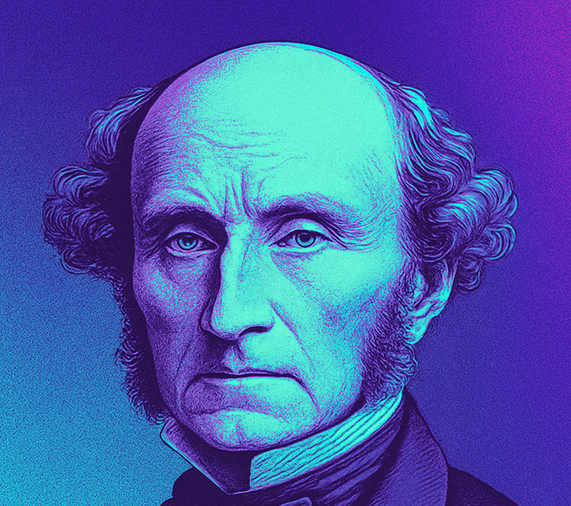
My father impressed upon me from the first, that the manner in which the world came into existence was a subject on which nothing was known: that the question, "Who made me?" cannot be answered, because we have no experience or authentic information from which to answer it; and that any answer only throws the difficulty a step further back, since the question immediately presents itself, "Who made God?"
▼
Source
source
(pp. 42-43)

5 months 1 week ago
In classroom settings I have often listened to groups of students tell me that racism really no longer shapes the contours of our lives, that there is no such thing as racial difference, that "we are all just people." Then a few minutes later I give them an exercise. I ask if they were about to die and could choose to come back as a white male, a white female, a black female, or a black male, which identity would they choose. Each time I do this exercise, most individuals, irrespective of gender or race invariably choose whiteness, and most often male whiteness. Black females are the least chosen. When I ask students to explain their choice they proceed to do a sophisticated analysis of privilege based on race (with perspectives that take gender and class into consideration).
▼
Source
source
Teaching Community: A Pedagogy of Hope

3 months 2 weeks ago
It must have been in his teens, perhaps rather early, that he and his elder brother John, with William Bell (afterwards of Wylie Hill, and a noted drover) and his brother, all met in the kiln at Eelief to play cards. The corn was dried then at home. There was a fire, therefore, aud perhaps it was both heat and light. The boys had played, perhaps, often enough for trifling stakes, and always parted in good humor. One night they came to some disagreement. My father spoke out what was in him about the folly, the sinfulness, of quarreling over a perhaps sinful amusement. The earnest mind persuaded other minds. They threw the cards into the fire, and (I think the younger Bell told my brother James) no one of the four ever touched a card again through life. My father certainly never hinted at such a game since I knew him. I cannot remember that I, at that age, had any such force of belief. Which of us can?
3 months 1 week ago
A large part of mankind is angry not with the sins, but with the sinners.
▼
Source
source
De Ira (On Anger): Book 2, cap. 28, line 8
2 months 2 weeks ago
Why does this magnificent applied science which saves work and makes life easier bring us so little happiness? The simple answer runs: Because we have not yet learned to make sensible use of it. In war it serves that we may poison and mutilate each other. In peace it has made our lives hurried and uncertain. Instead of freeing us in great measure from spiritually exhausting labor, it has made men into slaves of machinery, who for the most part complete their monotonous long day's work with disgust and must continually tremble for their poor rations. ... It is not enough that you should understand about applied science in order that your work may increase man's blessings. Concern for the man himself and his fate must always form the chief interest of all technical endeavours; concern for the great unsolved problems of the organization of labor and the distribution of goods in order that the creations of our mind shall be a blessing and not a curse to mankind. Never forget this in the midst of your diagrams and equations.
▼
Source
source
Speech to students at the California Institute of Technology, in [http://select.nytimes.com/gst/abstract.html?res=F50A1FFF3F5E1B7A93C5A81789D85F458385F9&scp=4&sq=&st=p "Einstein Sees Lack in Applying Science"], The New York Times (16 February 1931)

5 months 1 week ago
You must go to Mahometanism, to Buddhism, to the East, to the Sufis & Fakirs, to Pantheism, for the right growth of mysticism.
▼
Source
source
Letter (2 March 1853), quoted in Suggestions for Thought : Selections and Commentaries (1994), edited by Michael D. Calabria and Janet A. MacRae, p. xiii
6 months 4 weeks ago
Truth, Goodness, Beauty - those celestial thrins, Continually are born; e'en now the Universe, With thousand throats, and eke with greener smiles, Its joy confesses at their recent birth.
▼
Source
source
June 14, 1838
4 months 3 weeks ago
The new science of communication is percept, not concept.
▼
Source
source
(p. 259)
6 months 4 weeks ago
In the Catholic Church, especially, they go into chancery, make a clean confession, give up all, and think to start again. Thus men will lie on their backs, talking about the fall of man, and never make an effort to get up.
▼
Source
source
p. 487
5 months 2 weeks ago
By abstaining from all definite content, whether as formal logic and theory of science or as the legend of Being beyond all beings, philosophy declared its bankruptcy regarding concrete social goals.
▼
Source
source
p. 6
7 months 1 day ago
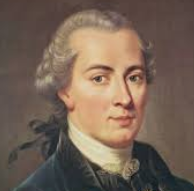
Through laziness and cowardice a large part of mankind, even after nature has freed them from alien guidance, gladly remain immature. It is because of laziness and cowardice that it is so easy for others to usurp the role of guardians. It is so comfortable to be a minor!

5 months 3 weeks ago
No position is so false as having understood and still remaining alive.
3 months 1 week ago
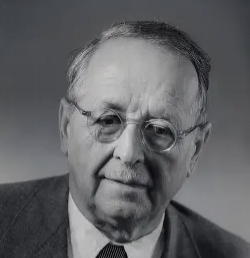
Recognition of the subjectivity of the qualities of sense is found in Galilei (and also in Descartes and Hobbes) in a form closely related to the principle underlying the constructive mathematical method of our modern physics which repudiates" qualities".
▼
Source
source
Introduction
7 months 2 days ago
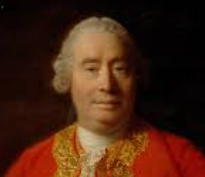
The slaving Poor are incapable of any Principles: Gentlemen may be converted to true Principles, by Time and Experience. The middling Rank of Men have Curiosity and Knowledge enough to form Principles, but not enough to form true ones, or correct any Prejudices that they may have imbib'd: And 'tis among the middling Rank, that Tory Principles do at present prevail most in England.
▼
Source
source
Part I, Essay 9: Of The Parties of Great Britain; final lines of this essay in the 1741 and 1742 editions of Essays, Moral and Political, they were not included in later editions.

2 months 4 weeks ago
We took the liberty to make some enquiries concerning the ground of their pretentions to make war upon nations who had done them no injury, and observed that we considered all mankind as our friends who had done us no wrong, nor had given us any provocation.

5 months 2 weeks ago
Warmth, warmth, more warmth! for we are dying of cold and not of darkness. It is not the night that kills, but the frost.
5 months 4 weeks ago
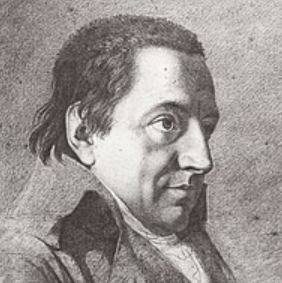
Who am I? Subject and object in one - contemplating and contemplated, thinking and thought of. As both must I have become what I am.
▼
Source
source
Jane Sinnett, trans 1846 p. 71
5 months ago
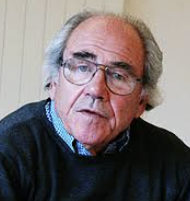
Never would the humanities or psychoanalysis have existed if it had been miraculously possible to reduce man to his "rational" behaviors.
▼
Source
source
"The Animals: Territory and Metamorphoses," p. 132

4 months 1 week ago
Whenever we engage in consumption or production patterns which take more than we need, we are engaging in violence.
▼
Source
source
(p116)

5 months 4 weeks ago
It is not as a child that I believe and confess Jesus Christ. My hosanna is born of a furnace of doubt.
▼
Source
source
As quoted in Kierkegaard, the Melancholy Dane (1950) by Harold Victor Martin.
6 months 4 weeks ago
My father was as well aware as anyone that Christians do not, in general, undergo the demoralizing consequences which seem inherent in such a creed, in the manner or to the extent which might have been expected from it. The same slovenliness of thought, and subjection of the reason to fears, wishes, and affections, which enable them to accept a theory involving a contradiction in terms, prevents them from perceiving the logical consequences of the theory. Such is the facility with which mankind believe at one and the same time things inconsistent with one another, and so few are those who draw from what they receive as truths, any consequences but those recommended to them by their feelings, that multitudes have held the undoubting belief in an Omnipotent Author of Hell, and have nevertheless identified that being with the best conception they were able to form of perfect goodness.
▼
Source
source
(pp. 41-42)
CivilSimian.com created by AxiomaticPanic, CivilSimian, Kalokagathia