

2 months 2 weeks ago
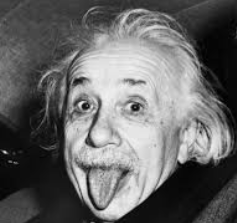
Every man knows that in his work he does best and accomplishes most when he has attained a proficiency that enables him to work intuitively. That is, there are things which we come to know so well that we do not know how we know them. So it seems to me in matters of principle. Perhaps we live best and do things best when we are not too conscious of how and why we do them.
7 months ago
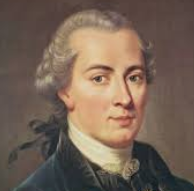
A metaphysics of morals is therefore indispensably necessary, not merely because of a motive to speculation - for investigating the source of the practical basic principles that lie a priori in our reason - but also because morals themselves remain subject to all sorts of corruption as long as we are without that clue and supreme norm by which to appraise them correctly...

2 months 3 weeks ago
In your actions, don't procrastinate. In your conversations, don't confuse. In your thoughts, don't wander. In your soul, don't be passive or aggressive. In your life, don't be all about business.
▼
Source
source
VIII. 51:209

7 months 1 week ago
O pitiable minds of men, O blind intelligences! In what gloom of life, in how great perils is passed all your poor span of time! not to see that all nature barks for is this, that pain be removed away out of the body, and that the mind, kept away from care and fear, enjoy a feeling of delight!
▼
Source
source
Book II, lines 14-19 (tr. Rouse)

6 months 2 weeks ago
Coition is a slight attack of apoplexy. For man gushes forth from man, and is separated by being torn apart with a kind of blow.
▼
Source
source
Freeman (1948), p. 150
4 months 4 weeks ago
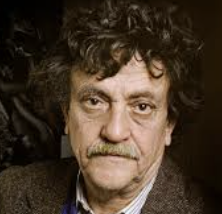
The telling of jokes is an art of its own, and it always rises from some emotional threat. The best jokes are dangerous, and dangerous because they are in some way truthful.
▼
Source
source
Interviewed by J. Rentilly, "The Best Jokes Are Dangerous", McSweeny's




6 months 3 weeks ago
There has been an inversion in the hierarchy of the two principles of antiquity, "Take care of yourself" and "Know yourself." In Greco-Roman culture, knowledge of oneself appeared as the consequence of the care of the self. In the modern world, knowledge of oneself constitutes the fundamental principle.
▼
Source
source
"Technologies of the Self," Ethics, Subjectivity and Truth (1994), p. 228
8 months ago
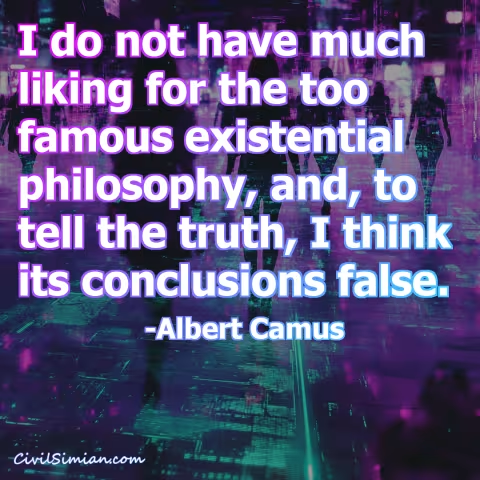
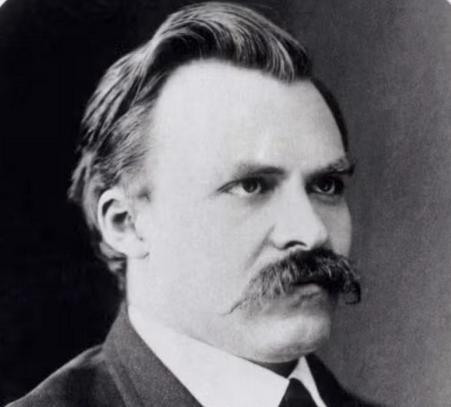
Where there have been powerful governments, societies, religions, public opinions, in short wherever there has been tyranny, there the solitary philosopher has been hated; for philosophy offers an asylum to a man into which no tyranny can force it way, the inward cave, the labyrinth of the heart.

7 months 5 days ago
As to why some are touched by the law and others not, so that some receive and others scorn the offer of grace...[this is the] hidden will of God, Who, according to His own counsel, ordains such persons as He wills to receive and partake of the mercy preached and offered.
▼
Source
source
p. 169

4 months 4 days ago
The evidence of science and history is that humans are only ever partly and intermittently rational, but for modern humanists the solution is simple: human beings must in future be more reasonable. These enthusiasts for reason have not noticed that the idea that humans may one day be more rational requires a greater leap of faith than anything in religion. Since it requires a miraculous breach in the order of things, the idea that Jesus returned from the dead is not as contrary to reason as the notion that human beings will in future be different from how they have always been.
▼
Source
source
An Old Chaos: Humanism and Flying Saucers (p. 75)

3 months 2 weeks ago
Religion in most countries, more or less in every country, is no longer what it was, and should be,-a thousand-voiced psalm from the heart of Man to his invisible Father, the fountain of all Goodness, Beauty, Truth, and revealed in every revelation of these; but for the most part, a wise prudential feeling grounded on mere calculation; a matter, as all others now are, of Expediency and Utility; whereby some smaller quantum of earthly enjoyment may be exchanged for a far larger quantum of celestial enjoyment. Thus Religion too is Profit, a working for wages; not Reverence, but vulgar Hope or Fear.

6 months 3 weeks ago
There is no history of mankind, there is only an indefinite number of histories of all kinds of aspects of human life. And one of these is the history of political power. This is elevated into the history of the world. But this, I hold, is an offence against every decent conception of mankind. It is hardly better than to treat the history of embezzlement or of robbery or of poisoning as the history of mankind. For the history of power politics is nothing but the history of international crime and mass murder (including it is true, some of the attempts to suppress them). This history is taught in schools, and some of the greatest criminals are extolled as heroes.
▼
Source
source
Vol 2, Ch. 25 "Has History any Meaning?" Variant: There is no history of mankind, there are only many histories of all kinds of aspects of human life. And one of these is the history of political power. This is elevated into the history of the world.


6 months 4 weeks ago
Let me suggest a theme for you: to state to yourself precisely and completely what that walk over the mountains amounted to for you, - returning to this essay again and again, until you are satisfied that all that was important in your experience is in it. Give this good reason to yourself for having gone over the mountains, for mankind is ever going over a mountain. Don't suppose that you can tell it precisely the first dozen times you try, but at 'em again, especially when, after a sufficient pause, you suspect that you are touching the heart or summit of the matter, reiterate your blows there, and account for the mountain to yourself. Not that the story need be long, but it will take a long while to make it short.
▼
Source
source
Letter to Harrison Blake, November 16, 1857

5 months 2 weeks ago
All liberation depends on the consciousness of servitude, and the emergence of this consciousness is always hampered by the predominance of needs and satisfactions which, to a great extent, have become the individual's own.
▼
Source
source
p. 7
3 months 2 weeks ago
Who is the happiest of men? He who values the merits of others, And in their pleasure takes joy, even as though 'twere his own. Not in the morning alone, not only at mid-day he charmeth; Even at setting, the sun is still the same glorious planet.
▼
Source
source
Distichs in The Poems of Goethe (1853) as translated in the original metres by Edgar Alfred Bowring
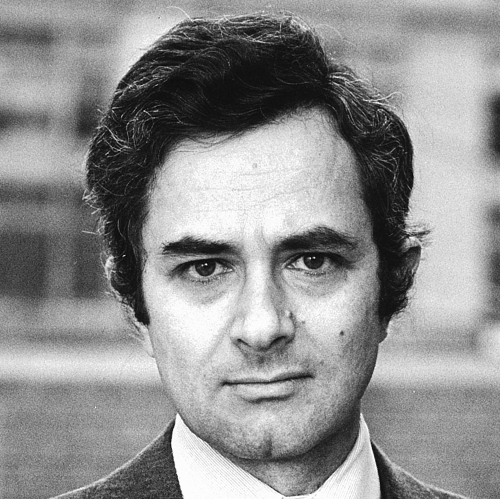
6 months 2 weeks ago
Philosophy is the childhood of the intellect, and a culture that tries to skip it will never grow up.
▼
Source
source
p. 12.
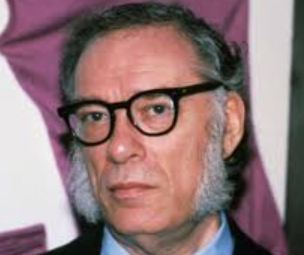
7 months 3 weeks ago
If you suspect that my interest in the Bible is going to inspire me with sudden enthusiasm for Judaism and make me a convert of mountain‐moving fervor and that I shall suddenly grow long earlocks and learn Hebrew and go about denouncing the heathen — you little know the effect of the Bible on me. Properly read, it is the most potent force for atheism ever conceived.
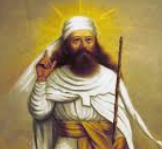
6 months 2 weeks ago
I will now tell you who are assembled here the wise sayings of Mazda, the praises of Ahura and the hymns of the Good Spirit, the sublime truth which I see rising out of these flames. You shall therefore harken to the Soul of Nature. Contemplate the beams of fire with a most pious mind. Every one, both men and women, ought to-day to choose his creed. Ye offspring of renowned ancestors, awake to agree with us. So preached Zoroaster, the proph of the Parsis, in one of his earliest sermons nearly 3,500 years ago.
▼
Source
source
p. 15 (Introduction), S. A. Kapadia

6 months 4 weeks ago
Men are what their mothers made them.
▼
Source
source
Fate

6 months 3 weeks ago
There is no more miserable human being than one in whom nothing is habitual but indecision.
▼
Source
source
Ch. 4

6 months 4 weeks ago
We are thus led to a somewhat vague distinction between what we may call "hard" data and "soft" data. This distinction is a matter of degree, and must not be pressed; but if not taken too seriously it may help to make the situation clear. I mean by "hard" data those which resist the solvent influence of critical reflection, and by " soft " data those which, under the operation of this process, become to our minds more or less doubtful.
▼
Source
source
p. 70
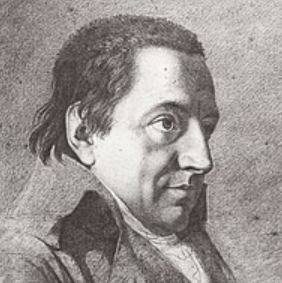
5 months 3 weeks ago
Among other men Reason awakes in another form-as the impulse towards Personal Freedom, which, although it never opposes the mild rule of the inward Instinct which it loves, yet rises in rebellion against the pressure of a stranger Instinct which has usurped its rights; and in this awakening it breaks the chains,-not of Reason as Instinct itself, but of the Instinct of foreign natures clothed in the garb of external power.
▼
Source
source
p. 8

6 months 2 weeks ago
When Demaratus was asked whether he held his tongue because he was a fool or for want of words, he replied, "A fool cannot hold his tongue."
▼
Source
source
Of Demaratus
7 months 2 weeks ago
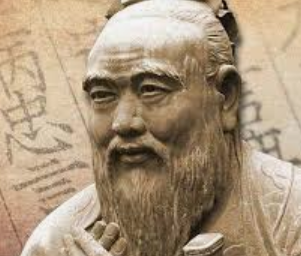
Men all say, "We are wise"; but being driven forward and taken in a net, a trap, or a pitfall, they know not how to escape. Men all say, "We are wise"; but happening to choose the course of the Mean, they are not able to keep it for a round month.
7 months 3 weeks ago
No matter how various the subject matter I write on, I was a science-fiction writer first and it is as a science-fiction writer that I want to be identified.

4 months 3 weeks ago
Government is violence, Christianity is meekness, non-resistance, love. And, therefore, government cannot be Christian, and a man who wishes to be a Christian must not serve government.
▼
Source
source
Letter to Dr. Eugen Heinrich Schmitt (October 12, 1896), translated by Nathan Haskell Dole
6 months 4 weeks ago
Everything intercepts us from ourselves.
▼
Source
source
1833

6 months 3 weeks ago
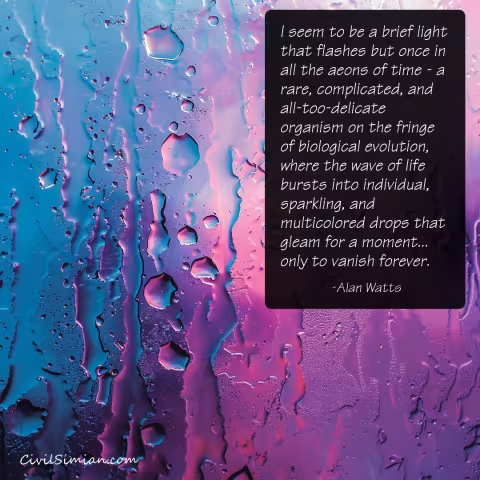
...the prisoner's dreams is the guard's spirituality.
▼
Source
source
p. 400

6 months 4 weeks ago
Intellect is invisible to the man who has none.
▼
Source
source
Our Relation to Others, § 23

5 months 4 weeks ago
Arms are not yet taken up; but virtually, you are in a civil war. You are not people of differing opinions in a public council;-you are enemies, that must subdue or be subdued, on the one side or the other. If your hands are not on your swords, their knives will be at your throats. There is no medium,-there is no temperament,-there is no compromise with Jacobinism.
▼
Source
source
Letter to William Windham (30 December 1794), quoted in R. B. McDowell (ed.)

5 months 1 week ago
Ninety percent of our lives is governed by emotion. Our brains merely register and act upon what is telegraphed to them by our bodily experience. Intellect is to emotion as our clothes are to our bodies; we could not very well have civilized life without clothes, but we would be in a poor way if we had only clothes without bodies.
▼
Source
source
Ch. 29, June 10, 1943.
7 months 2 weeks ago
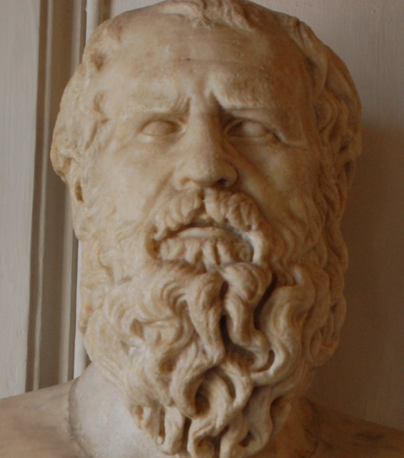
A lifetime is a child playing, playing checkers; the kingdom belongs to a child.
6 months 4 weeks ago
There is no rule more invariable than that we are paid for our suspicions by finding what we suspect.
▼
Source
source
Pearls of Thought (1881) p. 254

5 months 2 weeks ago
In fact, for a voluntarist like Schopenhauer, a theory so sanely and cautiously empirical and rational as that of Darwin, left out of account the inward force, the essential motive, of evolution. For what is, in effect, the hidden force, the ultimate agent, which impels organisms to perpetuate themselves and to fight for their persistence and propagation? Selection, adaptation, heredity, these are only external conditions. This inner, essential force has been called will on the supposition that there exists also in other beings that which we feel in ourselves as a feeling of will, the impulse to be everything, to be others as well as ourselves yet without ceasing to be what we are.



7 months 1 week ago
These five rules [above] form all that is necessary to render proofs convincing, immutable, and to say all, geometrical; and the eight rules together render them even more perfect.
4 months 3 weeks ago
The savage recognizes life only in himself and his personal desires. His interest in life is concentrated on himself alone. The highest happiness for him is the fullest satisfaction of his desires. The motive power of his life is personal enjoyment. His religion consists in propitiating his deity and in worshiping his gods, whom he imagines as persons living only for their personal aims.
▼
Source
source
Chapter IV, Christianity Misunderstood by Men of ScienceChapter IV, Christianity Misunderstood by Men of Science

3 months 2 weeks ago
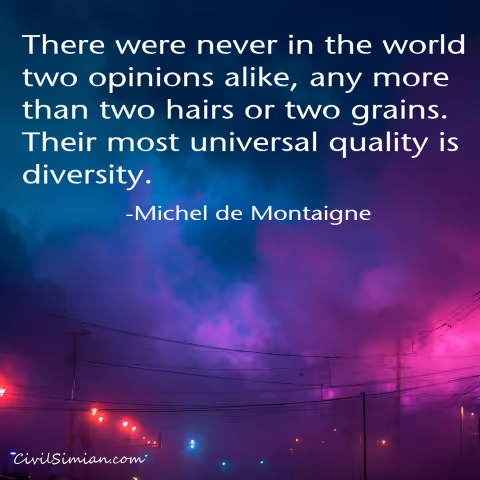
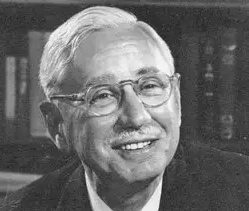
Human progress having reached a high level through respect for the liberty and dignity of men, it has become desirable to re-affirm these evident truths: That differences of race, color, and creed are natural, and that diverse groups, institutions, and ideas are stimulating factors in the development of man; That to promote harmony in diversity is a responsible task of religion and statesmanship; That since no individual can express the whole truth, it is essential to treat with understanding and good will those whose views differ from our own; That by the testimony of history intolerance is the door to violence, brutality and dictatorship; and That the realization of human interdependence and solidarity is the best guard of civilization.
7 months 1 week ago
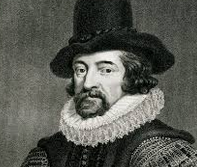
The human understanding when it has once adopted an opinion (either as being the received opinion or as being agreeable to itself) draws all things else to support and agree with it. And though there be a greater number and weight of instances to be found on the other side, yet these it either neglects and despises, or else by some distinction sets aside and rejects, in order that by this great and pernicious predetermination the authority of its former conclusions may remain inviolate.
▼
Source
source
Aphorism 46
5 months 1 week ago
A culture is in its finest flower before it begins to analyze itself.
▼
Source
source
Ch. 22, August 17, 1941.
CivilSimian.com created by AxiomaticPanic, CivilSimian, Kalokagathia