


5 months 3 weeks ago
We obtain the concept, as we do the form, by overlooking what is individual and actual; whereas nature is acquainted with no forms and no concepts, and likewise with no species, but only with an X which remains inaccessible and undefinable for us.
5 months 3 weeks ago
Whoever has overthrown an existing law of custom has hitherto always first been accounted a bad man: but when, as did happen, the law could not afterwards be reinstated and this fact was accepted, the predicate gradually changed: - history treats almost exclusively of these bad men who subsequently became good men!
1 month 2 weeks ago
Unless our ideas are questioned, they become part of the furniture of eternity.
▼
Source
source
Ch. IV: "The Line of Least Resistance", p. 51
4 months 1 week ago
Not only can logos be seen in absolutely all animals, but in many of them it has the groundwork for being perfected.
▼
Source
source
3, 2, 4
1 month 4 days ago
Every individual is a unique manifestation of the Whole, as every branch is a particular outreaching of the tree. To manifest individuality, every branch must have a sensitive connection with the tree, just as our independently moving and differentiated fingers must have a sensitive connection with the whole body. The point, which can hardly be repeated too often, is that differentiation is not separation. The head and the feet are different, but not separate, and though man is not connected to the universe by exactly the same physical relation as branch to tree or feet to head, he is nonetheless connected-and by physical relations of fascinating complexity. The death of the individual is not disconnection but simply withdrawal. The corpse is like a footprint or an echo-the dissolving trace of something which the Self has ceased to do.
▼
Source
source
p. 60

4 months 2 weeks ago
Someone who knows too much finds it hard not to lie.
▼
Source
source
p. 64e
3 months 3 weeks ago
When we speak of the commerce with our [American] colonies, fiction lags after truth, invention is unfruitful, and imagination cold and barren.
3 months 3 weeks ago
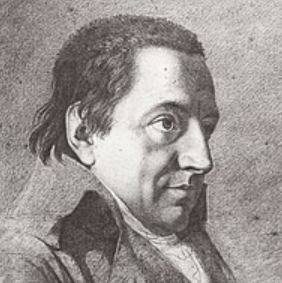
An act of the mind of which we are conscious, as such, is called freedom. An act without consciousness of action is called spontaneity. I by no means assume as necessary any immediate consciousness of the act, but merely, that on subsequent reflection thou shouldst perceive it to be an act. The higher question of what it is that prevents any such state of indecision, or any consciousness of the act, we may perhaps subsequently be able to solve. This act of the mind is called thought and it is said that thought is a spontaneous act, to distinguish it from sensation, in which the mind is merely receptive and passive.
▼
Source
source
Jane Sinnett, trans 1846 p. 44

2 months 2 weeks ago
We don't need fossils - the case for evolution is watertight without them; so it is paradoxical to use gaps in the fossil record as though they were evidence against evolution.
▼
Source
source
The Greatest Show on Earth: The Evidence for Evolution (2009) (p. 164)
5 months 1 day ago
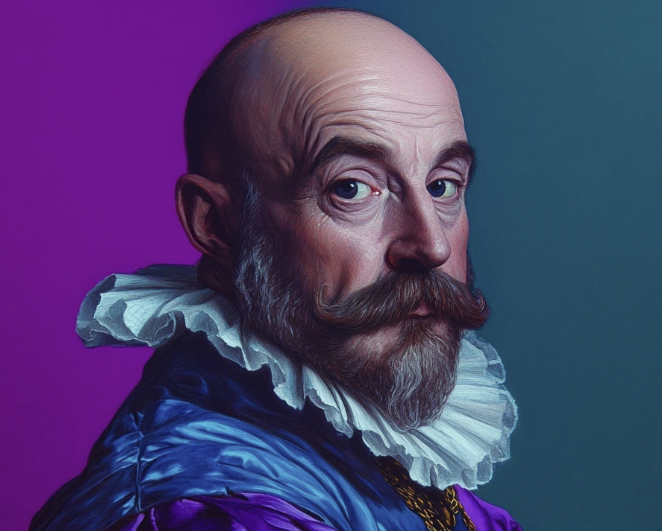
In this present that God has made us, there is nothing unworthy our care; we stand accountable for it even to a hair; and is it not a commission to man, to conduct man according to his condition; 'tis express, plain, and the very principal one, and the Creator has seriously and strictly prescribed it to us. Authority has power only to work in regard to matters of common judgment, and is of more weight in a foreign language; therefore let us again charge at it in this place.
▼
Source
source
Ch. 13
1 month 1 week ago
Tell me what to avoid, what to seek, by what studies to strengthen my tottering mind, how I may rebuff the waves that strike me abeam and drive me from my course, by what means I may be able to cope with all my evils, and by what means I can be rid of the calamities that have plunged in upon me and those into which I myself have plunged. Teach me how to bear the burden of sorrow without a groan on my part, and how to bear prosperity without making others groan; also, how to avoid waiting for the ultimate and inevitable end, and to beat a retreat of my own free will, when it seems proper to me to do so.
3 months 2 days ago
Broadly stated, the task is to replace the global rationality of economic man with a kind of rational behavior that is compatible with the access to information and the computational capacities that are actually possessed by organisms, including man, in the kinds of environments in which such organisms exist.
▼
Source
source
Simon (1955) "A behavioral model of rational choice", The Quarterly Journal of Economics, Vol. 69 (1); As cited in: Gustavo Barros (2010, p. 462).
5 months 3 weeks ago
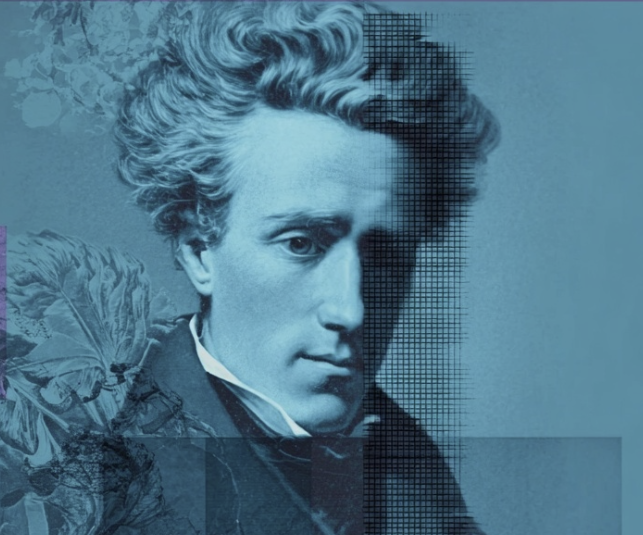
It occurs to me that artists go forward by going backward, something which I have nothing against intrinsically when it is a reproduced retreat - as is the case with the better artists. But it does not seem right that they stop with the historical themes already given and, so to speak, think that only these are suitable for poetic treatment, because these particular themes, which intrinsically are no more poetic than others, are now again animated and inspirited by a great poetic nature. In this case the artists advance by marching on the spot. - Why are modern heroes and the like not just as poetic? Is it because there is so much emphasis on clothing the content in order that the formal aspect can be all the more finished?

4 months 3 weeks ago
If the many, the specialists, gain the day, it will be the end of science as we know it - of great science. It will be a spiritual catastrophe comparable in its consequences to nuclear armament.
▼
Source
source
K. Popper, The Myth of the Framework, London: Routledge. As quoted in The Cambridge Companion to Karl Popper (2016) by J. Shearmur, G. Stokes
4 months 3 weeks ago
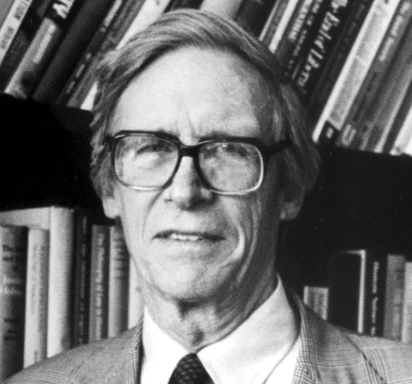
Intuitionism is not constructive, perfectionism is unacceptable.
▼
Source
source
Chapter I, Section 9, pg. 52
3 months 6 days ago
"What I believe" is a process rather than a finality. Finalities are for gods and governments, not for the human intellect. While it may be true that Herbert Spencer's formulation of liberty is the most important on the subject, as a political basis of society, yet life is something more than formulas. In the battle for freedom, as Ibsen has so well pointed out, it is the struggle for, not so much the attainment of, liberty, that develops all that is strongest, sturdiest and finest in human character.
2 months 3 weeks ago
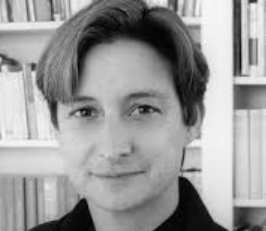
Preserving seeks to secure the life that already is; safeguarding secures and reproduces the conditions of becoming, of living, of futurity, where the content of that life, that living, can be neither prescribed nor predicted, and where self-determination emerges as a potential.
▼
Source
source
p. 94

4 months 3 weeks ago
There are many things of which a wise man might wish to be ignorant.
▼
Source
source
Demonology
5 months 1 week ago
Since love grows within you, so beauty grows. For love is the beauty of the soul.
5 months 3 weeks ago
There are many aspects of the universe that still cannot be explained satisfactorily by science; but ignorance only implies ignorance that may someday be conquered. To surrender to ignorance and call it God has always been premature, and it remains premature today.
5 months 1 week ago
The way of the superior man may be compared to what takes place in traveling, when to go to a distance we must first traverse the space that is near, and in ascending a height, when we must begin from the lower ground.
4 months 3 weeks ago
I did not know the way in which, among the ordinary English, the absence of interest in things of an unselfish kind, except occasionally in a special thing here and there, and the habit of not speaking to others, nor much even to themselves, about the things in which they do feel interest, causes both their feelings and their intellectual faculties to remain undeveloped, or to develope themselves only in some single and very limited direction; reducing them, considered as spiritual beings, to a kind of negative existence.
▼
Source
source
(p. 59)
1 month 1 week ago
But no wall can be erected against Fortune which she cannot take by storm; let us strengthen our inner defences. If the inner part be safe, man can be attacked, but never captured.

1 month 2 weeks ago
It must have been in his teens, perhaps rather early, that he and his elder brother John, with William Bell (afterwards of Wylie Hill, and a noted drover) and his brother, all met in the kiln at Eelief to play cards. The corn was dried then at home. There was a fire, therefore, aud perhaps it was both heat and light. The boys had played, perhaps, often enough for trifling stakes, and always parted in good humor. One night they came to some disagreement. My father spoke out what was in him about the folly, the sinfulness, of quarreling over a perhaps sinful amusement. The earnest mind persuaded other minds. They threw the cards into the fire, and (I think the younger Bell told my brother James) no one of the four ever touched a card again through life. My father certainly never hinted at such a game since I knew him. I cannot remember that I, at that age, had any such force of belief. Which of us can?
4 months 3 weeks ago
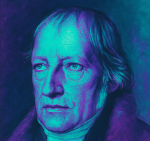
The destiny of the spiritual World, and, - since this is the substantial World, while the physical remains subordinate to it, or, in the language of speculation, has no truth as against the spiritual, - the final cause of the World at large, we allege to be the consciousness of its own freedom on the part of Spirit, and ipso facto, the reality of that freedom.
1 month 1 week ago
You must lay aside the burdens of the mind; until you do this, no place will satisfy you.
4 months 3 weeks ago
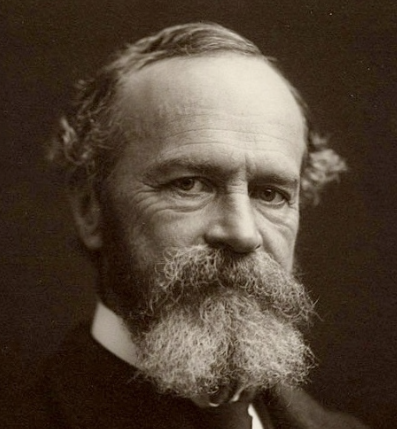
I myself believe that the evidence for God lies primarily in inner personal experiences.
▼
Source
source
Lecture III, Some Metaphysical Problems Pragmatically Considered
4 months 3 weeks ago
Self-trust is the first secret of success.
▼
Source
source
Success
4 months 3 weeks ago
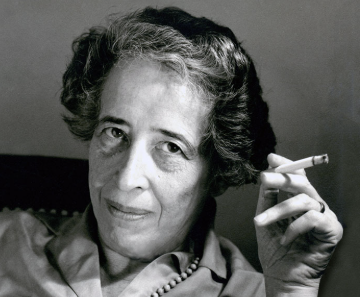
Thinking withdraws radically and for its own sake from this world and its evidential nature, whereas science profits from a possible withdrawal for the sake of specific results.
▼
Source
source
p. 56
3 months 3 weeks ago
The illustrious archbishop of Cambray was of more worth than his chambermaid, and there are few of us that would hesitate to pronounce, if his palace were in flames, and the life of only one of them could be preserved, which of the two ought to be preferred ... Supposing the chambermaid had been my wife, my mother or my benefactor. This would not alter the truth of the proposition. The life of Fenelon would still be more valuable than that of the chambermaid; and justice, pure, unadulterated justice, would still have preferred that which was most valuable. Justice would have taught me to save the life of Fenelon at the expence of the other. What magic is there in the pronoun "my", to overturn the decisions of everlasting truth?
▼
Source
source
Vol.1, bk. 2, ch. 2

3 months 2 weeks ago
The mind advances only when it has the patience to go in circles, in other words, to deepen.
3 months 2 weeks ago
This is the pure form of servitude: to exist as an instrument.
▼
Source
source
p. 33
1 month 1 day ago
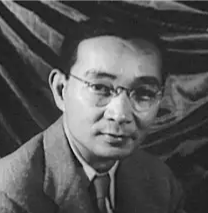
My faith in human dignity consists in the belief that man is the greatest scamp on earth. Human dignity must be associated with the idea of a scamp and not with that of an obedient, disciplined and regimented soldier.
▼
Source
source
Ch. I : The Awakening, p. 12
3 months 2 days ago
Definition of design = Everyone designs who devise courses of action aimed at changing existing situations into preferred ones. The intellectual activity that produces material artifacts is no different fundamentally from the one that prescribes remedies for a sick patient or the one that devises a new sales plan for a company or a social welfare policy for a state.
▼
Source
source
p. 130.

3 weeks 2 days ago
Delay is preferable to error.
▼
Source
source
Letter to George Washington

4 months 5 days ago
Repentance deserveth Pardon.
3 months 5 days ago
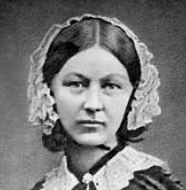
The martyr sacrifices herself (himself in a few instances) entirely in vain. Or rather not in vain; for she (or he) makes the selfish more selfish, the lazy more lazy, the narrow narrower.
▼
Source
source
As quoted in Forever Yours (1990) by Martha Vicinus and Bea Nergaard , p. 275. Letter, c. 1867, to the scholar Benjamin Jowett.
5 months 2 weeks ago
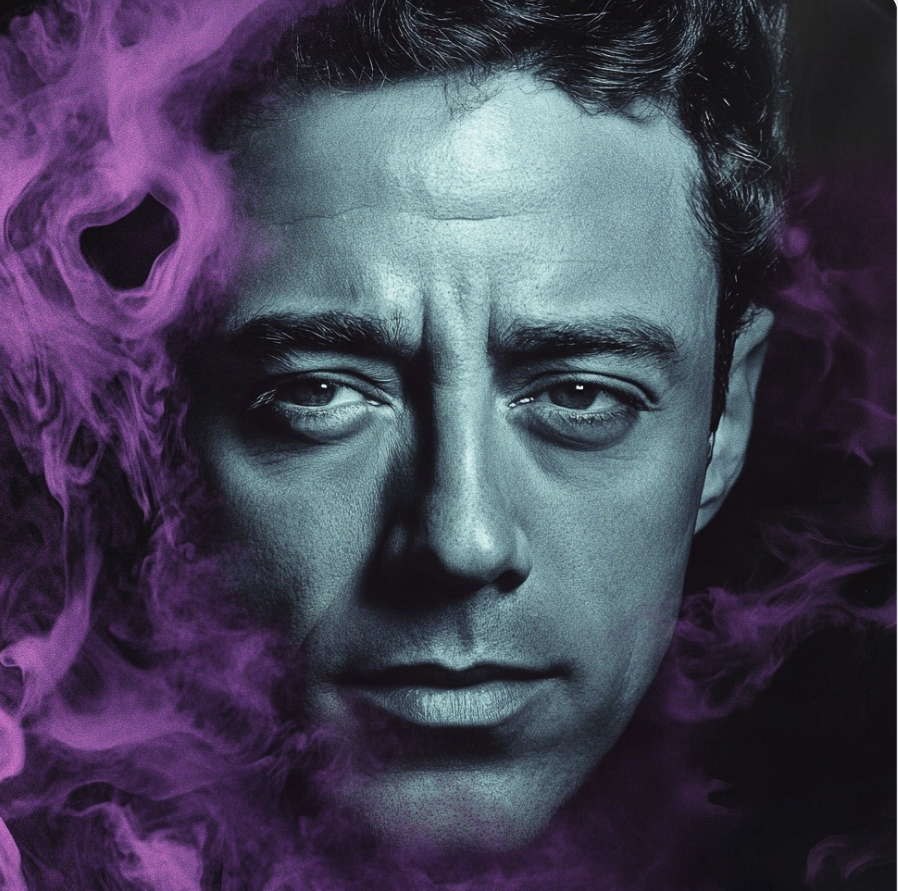
O light! This is the cry of all the characters of ancient drama brought face to face with their fate. This last resort was ours, too, and I knew it now. In the middle of winter I at last discovered that there was in me an invincible summer. Return to Tipasa (1954) Variant translation: In the depths of winter, I finally learned that within me there lay an invincible summer.
3 months 1 week ago
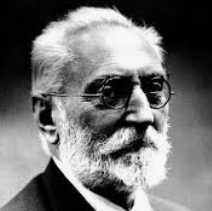
Not without reason did he who had the right to do so speak of the foolishness of the cross. Foolishness, without a doubt, foolishness. And the American humorist, Oliver Wendell Holmes, was not altogether wide of the mark in making one of the characters in his ingenious conversations say that he thought better of those who were confined in a lunatic asylum on account of religious mania than of those who, while professing the same religious principles, kept their wits and appeared to enjoy life very well outside the asylums. But those who are at large, are they not really, thanks to God, mad too? Are there not mild madnesses, which not only permit us to mix with our neighbors without danger to society, but which rather enable us to do so, for by means of them we are able to attribute a meaning and finality to life and society?
5 months 1 day ago
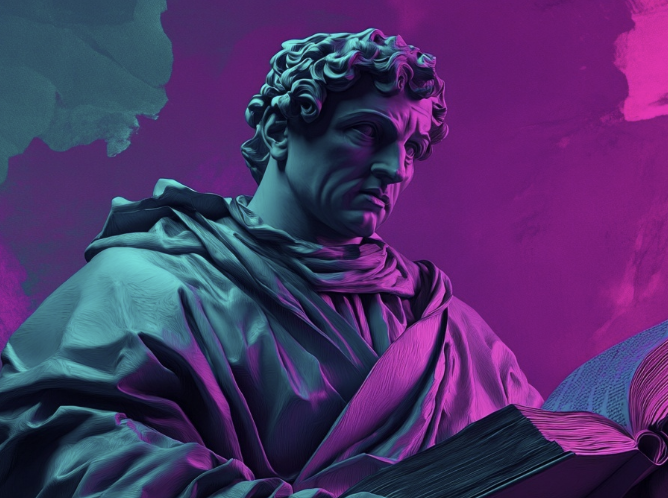
To say that the cross emblazoned with the papal coat of arms, and set up by the indulgence preachers, is equal in worth to the cross of Christ is blasphemy.
▼
Source
source
Thesis 79

3 weeks 2 days ago
Small farms make economic sense. They also produce more happiness, more beauty, more health-those things that aren't so quantifiable...
3 months 2 weeks ago
What are you waiting for in order to give up?
4 months 3 weeks ago
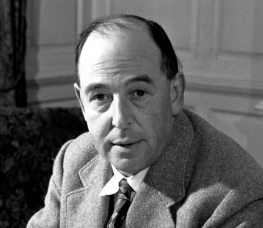
Eating and reading are two pleasures that combine admirably.
1 month 1 day ago
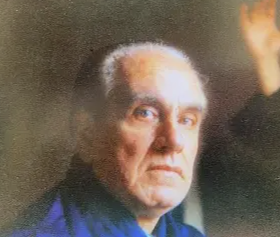
The Americans' "open-mindedness", which is sometimes cited in their favor, is the other side of their interior formlessness. The same goes for their "individualism". Individualism and personality are not the same: the one belongs to the formless world of quantity, the other to the world of quality and hierarchy. The Americans are the living refutation of the Cartesian axiom, "I think, therefore I am": Americans do not think, yet they are. The American "mind", puerile and primitive, lacks characteristic form and is therefore open to every kind of standardization.
▼
Source
source
American "Civilization" (1945) · Excerpts

4 months 3 weeks ago
Some modern philosophers have gone so far as to say that words should never be confronted with facts but should live in a pure, autonomous world where they are compared only with other words. When you say, 'the cat is a carnivorous animal,' you do not mean that actual cats eat actual meat, but only that in zoology books the cat is classified among carnivora. These authors tell us that the attempt to confront language with fact is 'metaphysics' and is on this ground to be condemned. This is one of those views which are so absurd that only very learned men could possibly adopt them.
▼
Source
source
p. 110
1 month 1 week ago
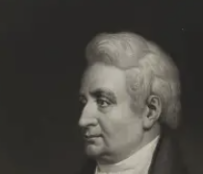
The truth is, that most men want knowledge, not for itself, but for the superiority which knowledge confers; and the means they employ to secure this superiority, are as wrong as the ultimate object, for no man can ever end with being superior, who will not begin with being inferior.
▼
Source
source
Lecture IX : On the Conduct of the Understanding
4 months 5 days ago
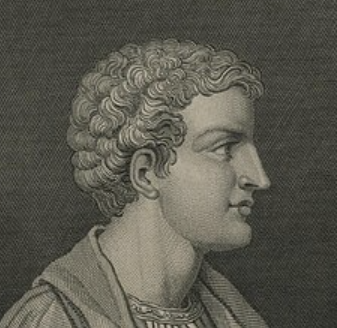
When a reasonable Soul forsaketh his divine nature, and becometh beast-like, it dieth. For though the substance of the Soul be incorruptible: yet, lacking the use of Reason, it is reputed dead; for it loseth the Intellective Life.
4 months 1 week ago
It is your concern when your neighbor's wall is on fire.
▼
Source
source
Book I, epistle xviii, line 84
1 month 2 weeks ago
The rudest heathen that worshipped Canopus, or the Caabah Black-Stone, he, as we saw, was superior to the horse that worshipped nothing at all! Nay there was a kind of lasting merit in that poor act of his; analogous to what is still meritorious in Poets: recognition of a certain endless divine beauty and significance in stars and all natural objects whatsoever.
1 month 1 day ago
The creative imagination of the Hindus has conceived no loftier and holier character than Sita; the literature of the world has not produced a higher ideal of womanly love, womanly truth, and womanly devotion.
▼
Source
source
The Wisdom Of China And India by ) Lin Yutang
CivilSimian.com created by AxiomaticPanic, CivilSimian, Kalokagathia