

3 months 1 week ago
Whether nature gives me a right, or whether God, the people's choice, etc., does so, all of that is the same foreign right, a right that I do not give or take to myself. Thus the Communists say, equal labour entitles man to equal enjoyment. [...] No, equal labour does not entitle you to it, but equal enjoyment alone entitles you to equal enjoyment. Enjoy, then you are entitled to enjoyment. But, if you have laboured and let the enjoyment be taken from you, then - 'it serves you right.' If you take the enjoyment, it is your right; if, on the contrary, you only pine for it without laying hands on it, it remains as before, a, 'well-earned right' of those who are privileged for enjoyment. It is their right, as by laying hands on it would become your right.
▼
Source
source
Cambridge 1995, p. 170, 171

2 months 3 weeks ago
Choose not to be harmed-and you won't feel harmed. Don't feel harmed-and you haven't been.
▼
Source
source
(Hays translation) IV, 7
2 months 3 weeks ago
According to the technical language of old writers, a thing and its qualities are described as subject and attributes; and thus a man's faculties and acts are attributes of which he is the subject. The mind is the subject in which ideas inhere. Moreover, the man's faculties and acts are employed upon external objects; and from objects all his sensations arise. Hence the part of a man's knowledge which belongs to his own mind, is subjective: that which flows in upon him from the world external to him, is objective.
▼
Source
source
Part I Of Ideas, Book I Of Ideas in General, Chap. 4 Of the Difference and Opposition of Sensation and Ideas

6 months 4 weeks ago
The state of nature has a law of nature to govern it, which obliges every one: and reason, which is that law, teaches all mankind, who will but consult it, that being all equal and independent, no one ought to harm another in his life, health, liberty, or possessions.
▼
Source
source
Second Treatise of Government, Ch. II, sec. 6
6 months 1 week ago
All things are full of gods.
▼
Source
source
As quoted in Aristotle, De Anima, 411a
2 months 2 weeks ago
The scientific organization and comprehensive exposition in accessible form of the Talmud has a twofold importance for us Jews. It is important in the first place that the high cultural values of the Talmud should not be lost to modern minds among the Jewish people nor to science, but should operate further as a living force. In the second place, The Talmud must be made an open book to the world, in order to cut the ground from under certain malevolent attacks, of anti-Semitic origin, which borrow countenance from the obscurity and inaccessibility of certain passages in the Talmud. To support this cultural work would thus mean an important achievement for the Jewish people.

3 months 2 weeks ago
Instruction, that mysterious communing of Wisdom with Ignorance, is no longer an indefinable tentative process, requiring a study of individual aptitudes, and a perpetual variation of means and methods, to attain the same end; but a secure, universal, straightforward business, to be conducted in the gross, by proper mechanism.
7 months 1 day ago
When profit diminishes, merchants are very apt to complain that trade decays; though the diminution of profit is the natural effect of its prosperity, or of a greater stock being employed in it than before.
▼
Source
source
Chapter IX

6 months 3 weeks ago
All the thoughts of a turtle are turtle.
▼
Source
source
1855

3 months 1 week ago
Our plans miscarry because they have no aim. When a man does not know what harbour he is making for, no wind is the right wind.
▼
Source
source
Line 2 Alternate translation: If one does not know to which port one is sailing, no wind is favorable. (translator unknown).

6 months 4 weeks ago
Change is one thing, progress is another.
4 months 3 weeks ago
Even a single hair casts its shadow.
▼
Source
source
Maxim 228

3 months 3 weeks ago
Liberalism is... a protection of human autonomy.
▼
Source
source
11:06
6 months 2 days ago
Happiest are the people who give most happiness to others.
▼
Source
source
As quoted in Happyology by Harald W. Tietze, p. 28

6 months 4 weeks ago
Newspapers are the second hand of history. This hand, however, is usually not only of inferior metal to the other hands, it also seldom works properly.
▼
Source
source
Vol. 2, Ch. 19, § 233

5 months 2 weeks ago
The operations of understanding thus divide the world into numberless polarities, and Hegel uses the expression 'isolated reflection' (isolierte Reflection) to characterize the manner in which understanding forms and connects its polar concepts. The rise and spread of this kind of thinking Hegel connects with the origin and prevalence of crucial relationships in human life. The antagonisms of 'isolated reflections' express real antagonisms. .... Isolation and opposition are not, however, the final state of affairs. The world must not remain a complex of fixed disparates. The unity that underlies the antagonisms must be grasped and realized by reason, which has the task of reconciling the opposites and 'sublimating' them in a true unity.
▼
Source
source
P. 45

5 months 2 weeks ago
Simon Peter said to Him, "Let Mary leave us, for women are not worthy of Life." Jesus said, "I myself shall lead her in order to make her male, so that she too may become a living spirit resembling you males. For every woman who will make herself male will enter the Kingdom of Heaven."

6 months 3 weeks ago
[Mortals] say of some temporal suffering, "No future bliss can make up for it," not knowing Heaven, once attained, will work backwards and turn even that agony into a glory. And of some sinful pleasure they say "Let me have but this and I'll take the consequences": little dreaming how damnation will spread back and back into their past and contaminate the pleasure of the sin. Both processes begin even before death.
▼
Source
source
Ch. 9
7 months 1 day ago
By this means all knowledge degenerates into probability; and this probability is greater or less, according to our experience of the veracity or deceitfulness of our understanding, and according to the simplicity or intricacy of the question.
▼
Source
source
Part 4, Section 1
3 months 2 weeks ago
Flimsy, desultory readers, who fly from foolish book to foolish book, and get good of none, and mischief of all-are not these as foolish, unhealthy eaters, who mistake their superficial false desire after spiceries and confectioneries for their real appetite, of which even they are not destitute, though it lies far deeper, far quieter, after solid nutritive food?
6 months 3 weeks ago
We are always getting ready to live, but never living.
▼
Source
source
April 12, 1834

5 months 3 weeks ago
Chaos is rejecting all you have learned. Chaos is being yourself.

5 months 2 weeks ago
In books of psychology written from the spiritualist point of view, it is customary to begin the discussion of the existence of the soul as a simple substance, separable from the body, after this style: There is in me a principle which thinks, wills and feels... Now this implies a begging of the question. For it is far from being an immediate truth that there is in me such a principle; the immediate truth is that I think, will and feel. And I - the I that thinks, wills and feels - am immediately my living body with the states of consciousness which it sustains. It is my living body that thinks, wills and feels.
5 months 2 weeks ago
Just as eunuchs will never know aesthetics as applied to the selection of beautiful women, so neither will pure rationalists ever know ethics, nor will they ever succeed in defining happiness, for happiness is a thing that is lived and felt, not a thing that is reasoned or defined.

7 months 5 days ago
A strong memory is commonly coupled with infirm judgment.
▼
Source
source
Ch. 9. Of Liars, tr. Cotton, rev. W. Carew Hazlitt, 1877

5 months 1 week ago
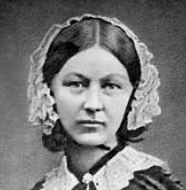
Like a plague, the mad spirit is sweeping the country, infesting the clearest heads and staunchest hearts with the deathly germ of militarism.
5 months 1 week ago
Why have women passion, intellect, moral activity - these three - and a place in society where no one of the three can be exercised? Men say that God punishes for complaining. No, but men are angry with misery. They are irritated with women for not being happy. They take it as a personal offence. To God alone may women complain without insulting Him!

5 months 4 weeks ago
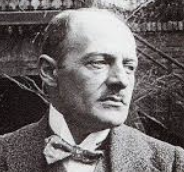
Neither a person nor a nation can exist without some higher idea. And there is only one higher idea on earth, and it is the idea of the immortality of the human soul, for all other "higher" ideas of life by which humans might live derive from that idea alone.
▼
Source
source
A Writer's Diary, Vol. 1: 1873-1876, ed. Kenneth Lantz (1994), p. 734
5 months 2 weeks ago
Even after his conversion, the true 'apostate' is not primarily committed to the positive contents of his new belief and to the realization of its aims. He is motivated by the struggle against the old belief and lives on for its negation. The apostate does not affirm his new convictions for their own sake; he is engaged in a continuous chain of acts of revenge against his own spiritual past. In reality he remains a captive of this past, and the new faith is merely a handy frame of reference for negating and rejecting the old. As a religious type, the apostate is therefore at the opposite pole from the 'resurrected,' whose life is transformed by a new faith which is full of intrinsic meaning and value.
▼
Source
source
L. Coser, trans. (1973), pp. 66-67
5 months 3 weeks ago
If you don't want to explode with rage, leave your memory alone, abstain from burrowing there.
3 months 3 weeks ago
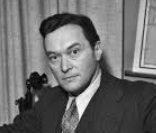
The totalitarian states, whether of the fascist or the communist persuasion, are more than superficially alike as dictatorships, in the suppression of dissent, and in operating planned and directed economies. They are profoundly alike.
▼
Source
source
Ch. V: "The Totalitarian Regimes", §7, p. 89
5 months 1 week ago
How very little can be done under the spirit of fear.
▼
Source
source
As quoted in The Book of Positive Quotations (2007) by John Cook, p. 479

5 months 1 week ago
All science must start with some assumptions as to the ultimate analysis of the facts with which it deals. These assumptions are justified partly by their adherence to the types of occurrence of which we are directly conscious, and partly by their success in representing the observed facts with a certain generality, devoid of ad hoc suppositions.
▼
Source
source
Ch. 8: "The Quantum Theory", p. 189

4 months 2 weeks ago
The picture of modern philosophy as centered in epistemology and driven by the desire to ground our representations is so tenacious that some philosophers are prepared to bite the bullet and declare the effort simply wasted. Rorty, for example, finds it easier to reject modern philosophy altogether than to reject the standard accounts of its history. His narrative is more polemical than most, but it's a polemical version of the story told in most philosophy departments in the second half of the twentieth century. The story is one of tortuously decreasing interest. Philosophy, like some people, was prepared to accept boredom in exchange for certainty as it grew to middle age.
5 months 2 weeks ago
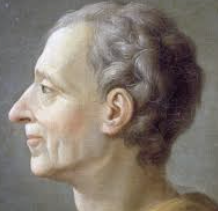
Useless laws weaken the necessary laws.
▼
Source
source
Book XXIX: Of the Manner of Composing Laws, Chapter 16: Things to be Observed in the Composing of Laws



6 months 4 weeks ago
The atheist who affects to reason, and the fanatic who rejects reason, plunge themselves alike into inextricable difficulties. The one perverts the sublime and enlightening study of natural philosophy into a deformity of absurdities by not reasoning to the end. The other loses himself in the obscurity of metaphysical theories, and dishonours the Creator, by treating the study of his works with contempt. The one is a half-rational of whom there is some hope, the other a visionary to whom we must be charitable.
▼
Source
source
A Discourse, &c. &c.
7 months 1 day ago
In public, as well as in private expences, great wealth may, perhaps, frequently be admitted as an apology for great folly.
▼
Source
source
Chapter V, p. 563.
5 months 1 week ago
This perversion of the ethical values soon crystallized into the all-dominating slogan of the Communist Party: THE END JUSTIFIES ALL MEANS. Similarly in the past the Inquisition and the Jesuits adopted this motto and subordinated to it all morality. It avenged itself upon the Jesuits as it did upon the Russian Revolution. In the wake of this slogan followed lying, deceit, hypocrisy and treachery, murder, open and secret. It should be of utmost interest to students of social psychology that two movements as widely separated in time and ideas as Jesuitism and Bolshevism reached exactly similar results in the evolution of the principle that the end justifies all means. The historic parallel, almost entirely ignored so far, contains a most important lesson for all coming revolutions and for the whole future of mankind.
3 months 2 weeks ago
To me, in these circumstances, that of "Hero-worship" becomes a fact inexpressibly precious; the most solacing fact one sees in the world at present. There is an everlasting hope in it for the management of the world. Had all traditions, arrangements, creeds, societies that men ever instituted, sunk away, this would remain. The certainty of Heroes being sent us; our faculty, our necessity, to reverence Heroes when sent: it shines like a polestar through smoke-clouds, dust-clouds, and all manner of down-rushing and conflagration.

6 months 4 weeks ago
But, in my state of mind, this appearance of superiority to illusion added to the effect which Bentham's doctrines produced on me, by heightening the impression of mental power, and the vista of improvement which he did open was sufficiently large and brilliant to light up my life, as well as to give a definite shape to my aspirations.
▼
Source
source
(p. 67)

5 months 1 week ago
Traditional philosophy's claim to totality, culminating in the thesis that the real is rational, is indistinguishable from apologetics.
▼
Source
source
p. 7
4 months 3 weeks ago
The greatest of empires, is the empire over one's self.
▼
Source
source
Maxim 891

4 months 1 week ago
Good communication is as stimulating as black coffee, and just as hard to sleep after.
▼
Source
source
Variant: Good communication is just as stimulating as...
5 months 2 weeks ago
The distinction between true and false consciousness, real and immediate interest still is meaningful. But this distinction itself must be validated. Men must come to see it and to find their way from false to true consciousness, from their immediate to their real interest. They can do so only if they live in need of changing their way of life, of denying the positive, of refusing. It is precisely this need which the established society manages to repress to the degree to which it is capable of "delivering the goods" on an increasingly large scale, and using the scientific conquest of nature for the scientific conquest of man.
▼
Source
source
pp. xlv-xlvi

6 months 4 weeks ago
As the chosen people bore in their features the sign manual of Jehovah, so the division of labour brands the manufacturing workman as the property of capital.
▼
Source
source
Vol. I, Ch. 14, Section 5, pg. 396.
5 months 1 week ago
Nature gets credit which should in truth be reserved for ourselves: the rose for its scent: the nightingale for his song: and the sun for his radiance. The poets are entirely mistaken. They should address their lyrics to themselves, and should turn them into odes of self-congratulation on the excellency of the human mind.
▼
Source
source
Ch. 3: "The Century of Genius", p. 77
3 months 1 week ago
Now I'm sure that most of you know the old story about the astronaut, who went far out into space, and was asked on his return whether he'd been to heaven and seen God. And he said: "Yes". And so they said to him: "Well, what about God?" And he said: "She's Black".
▼
Source
source
The Nature of God
4 months 2 weeks ago
We do not merely study the past: we inherit it, and inheritance brings with it not only the rights of ownership, but the duties of trusteeship. Things fought for and died for should not be idly squandered. For they are the property of others, who are not yet born.
CivilSimian.com created by AxiomaticPanic, CivilSimian, Kalokagathia