


2 months 3 weeks ago
Sentimentality, like pornography, is fragmented emotion; a natural consequence of a high visual gradient in any culture.

4 months 3 weeks ago
Monotheistic religions alone furnish the spectacle of religious wars, religious persecutions, heretical tribunals, that breaking of idols and destruction of images of the gods, that razing of Indian temples and Egyptian colossi, which had looked on the sun 3,000 years: just because a jealous god had said, 'Thou shalt make no graven image.'

3 months 1 week ago
In a sense, all explanation must end in an ultimate arbitrariness.
▼
Source
source
Ch. 5: "The Romantic Reaction", p. 130

4 months 3 weeks ago
I conceive that the description so often given of a Benthamite, as a mere reasoning machine, though extremely inapplicable to most of those who have been designated by that title, was during two or three years of my life not altogether untrue of me. ...There is nothing very extraordinary in this fact: no youth of the age I then was, can be expected to be more than one thing, and this was the thing I happened to be. Ambition and desire of distinction, I had in abundance; and zeal for what I thought the good of mankind was my strongest sentiment, mixing with and colouring all others. But my zeal was as yet little else, at that period of my life, than zeal for speculative opinions. It had not its root in genuine benevolence, or sympathy with mankind; though these qualities held their due place in my ethical standard. Nor was it connected with any high enthusiasm for ideal nobleness.
▼
Source
source
(pp. 109-110)
3 months 1 week ago
Revolutionary feminism embraces men who are able to change, who are capable of responding mutually in a subject-to-subject encounter where desire and fulfillment are in no way linked to coercive subjugation. This feminist vision of the sexual imaginary is the space few men seem able to enter.
3 months 2 weeks ago
Industry controlled by society as a whole, and operated according to a plan, presupposes well-rounded human beings, their faculties developed in balanced fashion, able to see the system of production in its entirety.
2 months 3 weeks ago
There was a brief moment after 9/11 when Colin Powell said "we should not rush to satisfy the desire for revenge." It was a great moment, an extraordinary moment, because what he was actually asking people to do was to stay with a sense of grief, mournfulness, and vulnerability.
▼
Source
source
Interview with Judith Butler. in: The Believer. May 2003

3 months 3 days ago
It is a question whether, when we break a murderer on the wheel, we do not fall into the error a child makes when it hits the chair it has bumped into.
▼
Source
source
J 146

4 months 3 weeks ago
A gun gives you the body, not the bird.
▼
Source
source
Quoted by Ralph Waldo Emerson, in C. J. Woodbury (ed.) Talks with Ralph Waldo Emerson, 1890

4 months 3 weeks ago
I'm afraid of losing my obscurity. Genuineness only thrives in the dark. Like celery.
▼
Source
source
Those Barren Leaves, 1925

2 months ago
While the Marxist faith in central planning is now confined to a few dingy sects, a quasi-religious belief in free markets continues to shape the policies of governments.Many writers have pointed to the havoc and ruin that have accompanied the imposition of free markets across the world. Whether in Africa, Asia, Latin America or post-communist Europe, policies of wholesale privatisation and structural adjustment have led to declining economic activity and social dislocation on a massive scale.
▼
Source
source
"The end of the world as we know it," The Guardian
2 months 2 days ago
... our descendants may recognize that we are the sociopathic emotional primitives in the grip of an affective psychosis. Jealousy, envy, resentment, ridicule, hate, anger, disgust, spite, contempt, schadenfreude and a whole gamut of nameless but mean-spirited states we undergo each day are a toxic legacy of our Darwinian past. More commonly, perhaps, our genetic make-up ensures we simply feel indifference to the plight of all but a handful of significant others in our lives. Right now, for instance, one knows dimly at some level that there is frightful and preventable suffering in the world. Yet most of us feel no overpowering moral urgency to do anything about it.
▼
Source
source
"Utopian Pharmacology: Mental Health in the Third Millennium MDMA and Beyond", BLTC Research, last updated 2020
1 month 1 week ago
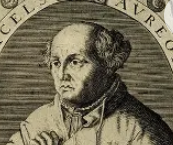
Consider that we shouldn't call our brother a fool, since we don't know ourselves what we are.

3 months 4 weeks ago
There is no good father who would want to resemble our Heavenly Father.
▼
Source
source
No. 51
1 month 2 weeks ago
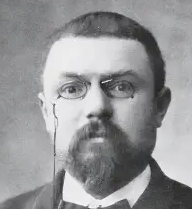
Yet when we speak of time... do we not unconsciously adopt this hypothesis... and put ourselves in the place of this imperfect god... Do not even the atheists put themselves in the place where god would be..?

3 months 1 week ago
We must needs believe in the other life, in the eternal life beyond the grave. ...And we must needs believe in that other life, perhaps, in order that we may deserve it, in order that we may obtain it, for it may be that he neither deserves it nor will obtain it who does not passionately desire it above reason and, if need be, against reason.


3 weeks 2 days ago
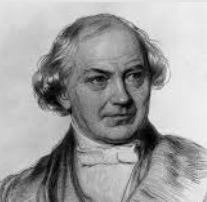
'Induction' is a term applied to describe the 'process' of a true Colligation of Facts by means of an exact and appropriate Conception. 'An Induction' is also employed to denote the 'proposition' which results from this process. An Induction is not the mere sum of the Facts which are colligated. The Facts are not only brought together, but seen in a new point of view. 'The Consilience of Inductions' takes place when an Induction, obtained from one class of facts, coincides with an Induction, obtained from another different class.

2 months 3 weeks ago
Familiarity breeds contempt.
5 months 1 week ago
Better a diamond with a flaw than a pebble without.

3 months 2 weeks ago
The third category of which I come now to speak is precisely that whose reality is denied by nominalism. For although nominalism is not credited with any extraordinarily lofty appreciation of the powers of the human soul, yet it attributes to it a power of originating a kind of ideas the like of which Omnipotence has failed to create as real objects, and those general conceptions which men will never cease to consider the glory of the human intellect must, according to any consistent nominalism, be entirely wanting in the mind of Deity.
▼
Source
source
Lecture II : The Universal Categories, §3. Laws: Nominalism, CP 5.62
2 weeks 6 days ago
Remember this- that there is a proper dignity and proportion to be observed in the performance of every act of life.
▼
Source
source
IV, 32

3 months 6 days ago
No artist can develop without increasing his self-knowledge; but self-knowledge supposes a certain preoccupation with the meaning of human life and the destiny of man. A definite set of beliefs - Methodist Christianity, for example - may only be a hindrance to development; but it is not more so than Beckett's refusal to think at all. Shaw says somewhere that all intelligent men must be preoccupied with either religion, politics, or sex. (He seems to attribute T. E. Lawrence's tragedy to his refusal to come to grips with any of them.) It is hard to see how an artist could hope to achieve any degree of self-knowledge without being deeply concerned with at least one of the three.
▼
Source
source
p. 197
1 month 4 days ago
Now, you see, if you understand what I'm saying, with your intelligence, and then take the next step and say "But I understood it now, but I didn't feel it." Then, next I raise the question: Why do you want to feel it? You say: "I want something more", because that's again that spiritual greed. And you could only say that because you didn't understand it.
▼
Source
source
Intellectual Yoga
1 month 4 days ago
It must be obvious... that there is a contradiction in wanting to be perfectly secure in a universe whose very nature is momentariness and fluidity.
4 months 3 weeks ago
An intolerant sect has no right to complain when it is denied an equal liberty. ... A person's right to complain is limited to principles he acknowledges himself.
▼
Source
source
p. 217
3 months 2 weeks ago
All his life he [the American] jumps into the train after it has started and jumps out before it has stopped; and he never once gets left behind, or breaks a leg.
▼
Source
source
"Materialism and Idealism" p. 175 (Hathi Trust)

4 months 2 weeks ago
Without some redistribution of wealth and power, downward mobility and debilitating poverty will continue to drive people into desperate channels. And without principled opposition to xenophobias from above and below, these desperate channels will produce a cold-hearted and mean-spirited America no longer worth fighting for or living in.
▼
Source
source
(p79)
1 month 1 week ago
Bourgeois civilization has built railroads and electric power plants, has invented explosives and airplanes, in order to create wealth. Imperialism has placed the tools of peace in the service of destruction. With modern means it would be easy to wipe out humanity at one blow.
▼
Source
source
p. 252
2 months ago
Rather than trying to escape violence, human beings more often become habituated to it. History abounds with long conflicts - the Thirty Years' War in early seventeenth-century Europe, the Time of Troubles in Russia, twentieth-century guerrilla conflicts - in which continuous slaughter has been accepted as normal. Famously adaptable, the human animal quickly learns to live with violence and soon comes to find satisfaction in it.
▼
Source
source
In the Puppet Theatre: Roof Gardens, Feathers and Human Sacrifice (p. 80)

3 months 2 weeks ago
To win the guilty kiss of a saint, I'd welcome the plague as a blessing

4 months 3 weeks ago
Religion should be .... successively freed from all statutes based on history, and one purely moral religion rule over all, in order that God might be all in all. The veil must fall. The leading-string of sacred tradition with all its appendices becomes by degrees useless, and at last a fetter ... The humiliating difference between laymen and clergymen must disappear, and equality spring from true liberty. All this, however, must not be expected from an exterior revolution, which acts violently, and depends upon fortune In the principle of pure moral religion, which is a sort of divine revelation constantly taking place in the soul of man, must be sought the ground for a passage to the new order of things, which will be accomplished by slow and successive reforms.
▼
Source
source
As quoted in German Thought, From The Seven Years' War To Goethe's Death : Six Lectures (1880) by Karl Hillebrand, p. 208
3 months 2 weeks ago
I find in myself as much evil as in anyone, but detesting action - mother of all vices - I am the cause of no one's suffering.
2 months 2 weeks ago
There's something that remains barbarous in educated people, and lately I've more and more had the feeling that we are nonwondering primitives. And why is it that we no longer marvel at these technological miracles? They've become the external facts of every life. We've all been to the university, we've had introductory courses in everything, and therefore we have persuaded ourselves that if we had the time to apply ourselves to these scientific marvels, we would understand them. But of course that's an illusion. It couldn't happen. Even among people who have had careers in science. They know no more about how it all works than we do. So we are in the position of savage men who, however, have been educated into believing that they are capable of understanding everything. Not that we actually do understand, but that we have the capacity.
▼
Source
source
"A Half Life" (1990), pp. 302-303
3 months 1 week ago
When I contemplate the green serenity of the fields or look into the depths of clear eyes through which shines a fellow-soul, my consciousness dilates, I feel the diastole of the soul and am bathed in the flood of the life that flows about me, and I believe in my future; but instantly the voice of mystery whispers to me, "Thou shalt cease to be!" the angel of Death touches me with his wing, and the systole of the soul floods the depth of my spirit with the blood of divinity.
5 months 2 days ago
Truth will sooner come out from error than from confusion.
▼
Source
source
Aphorism 20

4 months 3 weeks ago
The rulers of Great Britain have, for more than a century past, amused the people with the imagination that they possessed a great empire on the west side of the Atlantic. This empire, however, has hitherto existed in imagination only.
▼
Source
source
Chapter III, Part V, p. 1032 (Last Page).
2 months 3 weeks ago
For me any of the little gestures I make are all tentative probes. That's why I feel free to make them sound as outrageous or extreme as possible. Until you make it extreme, the probe is not very efficient.
▼
Source
source
Marshall McLuhan: the man and his message, edited by George Sanderson and Frank MacDonald, Fulcrum, 1989, p. 32
3 months 6 days ago
The 'open' mind of the poet and artist can sense realities beyond the reach of our normal senses. The real problem is that our materialistic assumptions have a number of false premises built into them: it is only when we recognize this that we see there is no sharp dividing line between the everyday world and the invisible world of the clairvoyant.
▼
Source
source
p. 294
1 month 1 day ago
All too often people forget that spirituality is essentially a way of life and that its measure does not consist of notions, theories, and ideas that have been stored in one's head. Spirituality is actually what has been successfully actualized and translated into a sense of superiority which is experienced inside by the soul, and a noble demeanor, which is expressed in the body.
▼
Source
source
Meditations on the Peaks: Mountain Climbing as Metaphor for the Spiritual Quest

4 months 3 weeks ago
We are and irrefutable arbiters of value, and in the world of value Nature is only a part. Thus in this world we are greater than Nature. In the world of values, Nature in itself is neutral, neither good nor bad deserving of neither admiration nor censure. It is we who create value and our desires which confer value. In this realm we are kings, and we debase our kingship if we bow down to Nature. It is for us to determine our good life, not for Nature - not even for Nature personified as God.

4 months 3 weeks ago
A commodity appears, at first sight, a very trivial thing, and easily understood.Its analysis shows that it is, in reality, a very queer thing, abounding in metaphysical subtleties and theological niceties.
▼
Source
source
Vol. I, Ch. 1, Section 4, pg. 81.

5 months 1 day ago
Man is forming thousands of ridiculous relations between himself and God.
▼
Source
source
Ch. 12
4 months 3 weeks ago
Reason nevertheless prevails in world history.

5 months 2 weeks ago
There is but one truly serious philosophical problem and that is suicide. Judging whether life is or is not worth living amounts to answering the fundamental question of philosophy. All the rest, whether or not the world has three dimensions, whether the mind has nine or twelve categories comes afterwards. These are games; one must first answer. And if it is true, as Nietzsche claims, that a philosopher, to deserve our respect, must preach by example, you can appreciate the importance of that reply, for it will precede the definitive act. These are facts the heart can feel; yet they call for careful study before they become clear to the intellect. If I ask myself how to judge that this question is more urgent than that, I reply that one judges by the actions it entails. I have never seen anyone die for the ontological argument.
▼
Source
source
Absurdity and Suicide

5 months 3 weeks ago
Well, it was healthy to miss once in a while. It kept self-confidence balanced at a point safely short of arrogance.
3 months 4 weeks ago
Gaiety - a quality of ordinary men. Genius always presupposes some disorder in the machine.
▼
Source
source
"Diseases"

5 months 3 weeks ago
I do not know, my listener, what your crime, your guilt, your sins are, but surely we are all more or less of the guilt of loving only little. Take comfort, then, in these words just as I take comfort in them.
5 months 1 day ago
For truth itself does not have the privilege to be employed at any time and in every way; its use, noble as it is, has its circumscriptions and limits.
▼
Source
source
Ch. 13

4 months 3 weeks ago
Great geniuses have the shortest biographies.
▼
Source
source
Plato; or, The Philosopher
CivilSimian.com created by AxiomaticPanic, CivilSimian, Kalokagathia