


2 months 3 weeks ago
He felt neither guilt nor distress at the pleasure with which he was now filled by the proximity of this young creature, and when he discovered in himself even physical symptoms of his inclination he did not take fright, but continued cheerfully and serenely to see Nick whenever the ordinary run of his duties suggested it, congratulating himself upon the newly achieved solidity and rational calm of his spiritual life.
▼
Source
source
The Bell (1958) p. 91
3 months 3 weeks ago
If things emerged from a spaceship which we could not be sure were machines or conscious beings, what we were wondering about would have an answer even if the things were so different from anything we were familiar with that we could never discover it. It would depend on whether there was something it was like to be them, not on whether behavioral similarities warranted our saying so. ... [W]e need ... to ask whether experience is present in [the] alien thing[s], ... whether there is something it is like to be them, and ... the answer to that question is what determines whether they are conscious.
▼
Source
source
"Panpsychism" (1979), pp. 191-193.

4 months 5 days ago
But capitalist production begets,with the inexorability of a law of Nature,its own negation. It is the negation of negation.
▼
Source
source
Vol. I, Ch. 32, p. 837.

1 day ago
Whatsoever any man either doth or saith, thou must be good; not for any man's sake, but for thine own nature's sake; as if either gold, or the emerald, or purple, should ever be saying to themselves, Whatsoever any man either doth or saith, I must still be an emerald, and I must keep my colour.
▼
Source
source
VII, 12

3 months 2 weeks ago
Place is the greatest thing, as it contains all things.
▼
Source
source
As quoted in Diogenes Laërtius, The Lives and Opinions of Eminent Philosophers, I, 35
2 months 2 weeks ago
The metaphysical apologia at least betrayed the injustice of the established order through the incongruence of concept and reality. The impartiality of scientific language deprived what was powerless of the strength to make itself heard and merely provided the existing order with a neutral sign for itself. Such neutrality is more metaphysical than metaphysics.
▼
Source
source
E. Jephcott, trans., p. 17

3 months 4 days ago
There are only Epicureans, either crude or refined; Christ was the most refined.
▼
Source
source
Act I.

2 months 4 days ago
To be good and lead a good life means to give to others more than one takes from them.
▼
Source
source
Ch. VII

3 months 1 week ago
I can cure the gout or stone in some, sooner than Divinity, Pride, or Avarice in others.
▼
Source
source
Section 9
4 months 5 days ago
The inclination to act as the laws command, a virtue, is a synthesis in which the law ... loses its universality and the subject its particularity; both lose their opposition, while in the Kantian conception of virtue this opposition remains, and the universal becomes the master and the particular the mastered.

3 months 2 weeks ago
A good Soul hath neither too great joy, nor too great sorrow: for it rejoiceth in goodness; and it sorroweth in wickedness. By the means whereof, when it beholdeth all things, and seeth the good and bad so mingled together, it can neither rejoice greatly; nor be grieved with over much sorrow.

2 months 3 weeks ago
In a free nation, it matters not whether individuals reason well or ill; it is sufficient that they do reason. Truth arises from the collision and from hence springs liberty, which is a security from the effects of reasoning.
▼
Source
source
Quoted by Thomas Erskine in the trial of Thomas Paine, 1792

4 months 1 week ago
God the Almighty has made our rulers mad; they actually think they can do-and order their subjects to do-whatever they please. And the subjects make the mistake of believing that they, in turn, are bound to obey their rulers in everything.
▼
Source
source
p. 83

3 months ago
Even when nothing happens, everything seems too much for me. What can be said, then, in the presence of an event, any event?

4 months 3 days ago
Hitler never intended to defend 'the West' against Bolshevism but always remained ready to join 'the Reds' for the destruction of the West, even in the middle of the struggle against Soviet Russia.
▼
Source
source
Part 3, Ch. 10



2 months 2 weeks ago
Since the war began, miles of paper and oceans of ink have been used to prove the barbarity, the cruelty, the oppression of Prussian militarism. Conservatives and radicals alike are giving their support to the Allies for no other reason than to help crush that militarism, in the presence of which, they say, there can be no peace or progress in Europe. But though America grows fat on the manufacture of munitions and war loans to the Allies to help crush Prussians the same cry is now being raised in America which, if carried into national action, would build up an American militarism far more terrible than German or Prussian militarism could ever be, and that because nowhere in the world has capitalism become so brazen in its greed and nowhere is the state so ready to kneel at the feet of capital.
3 months ago
The tendency to regard continuity, in the sense in which I shall define it, as an idea of prime importance in philosophy conveniently may be be termed synechism. The present paper is intended chiefly to show what synechism is, and what it leads to.

2 months 1 week ago
It is indeed a matter of great difficulty to discover, and effectually to distinguish, the true motions of particular bodies from the apparent; because the parts of that immovable space, in which those motions are performed, do by no means come under the observation of our senses. Yet the thing is not altogether desperate; for we have some arguments to guide us, partly from the apparent motions, which are the differences of the true motions; partly from the forces, which are the causes and effects of the true motions.
▼
Source
source
Definitions - Scholium
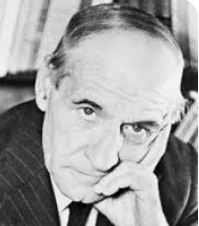
2 months 3 weeks ago
The history of the Roman Empire is also the history of the uprising of the Empire of the Masses, who absorb and annul the directing minorities and put themselves in their place. Then, also, is produced the phenomenon of agglomeration, of "the full." For that reason, as Spengler has very well observed, it was necessary, just as in our day, to construct enormous buildings. The epoch of the masses is the epoch of the colossal.
▼
Source
source
Chap.II: The Rise Of The Historic Level
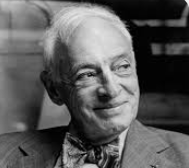
1 month 3 weeks ago
We mustn't forget how quickly the visions of genius become the canned goods of intellectuals.
▼
Source
source
Herzog (1964) [Penguin Classics, 2003, ISBN 0-142-43729-8], p. 82
3 months ago
Vague a l'ame - melancholy yearning for the end of the world.
3 months ago
Self-conscious rejection of the absolute is the best way to resist God; thus illusion, the substance of life, is saved.

2 months 1 week ago
Dualism makes the problem insoluble; materialism denies the existence of any phenomenon to study, and hence of any problem.
▼
Source
source
Consciousness and Language (2002) p. 47.

4 days ago
The selfish spirit of commerce knows no country, and feels no passion or principle but that of gain.
▼
Source
source
Letter to Larkin Smith
2 months 2 weeks ago
A young delicate tree, that is being clipped and cut by the gardener in order to give it an artificial form, will never reach the majestic height and the beauty as when allowed to grow in nature and freedom.
4 days ago
A free people claim their rights, as derived from the laws of nature, and not as the gift of their chief magistrate.

1 month 1 week ago
The modern world inherits the Christian view in which salvation is played out in history. In Christian myth human events follow a design known only to God; the history of humankind is an ongoing story of redemption. This is an idea that informs virtually all of western thought - not least when it is intensely hostile to religion. From Christianity onwards, human salvation would be understood (at least in the west) as involving movement through time. All modern philosophies in which history is seen as a process of human emancipation - whether through revolutionary change or incremental improvement - are garbled versions of this Christian narrative, itself a garbled version of the original message of Jesus.
▼
Source
source
The Faith of Puppets: The Revelation of Philip K. Dick (p. 60)
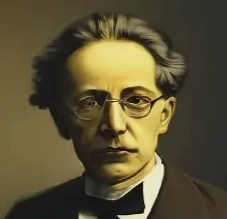
2 weeks 6 days ago
If the press was to be free, nothing would be so important as precisely its liberation from every coercion that could be put on it in the name of a law. And, that it might come to that, I my own self should have to have absolved myself from obedience to the law.
▼
Source
source
Cambridge 1995, p. 249
3 months ago
The fear of your own solitude, of its vast surface and its infinity... Remorse is the voice of solitude. And what does this whispering voice say? Everything in us that is not human anymore.
4 days ago
From the nature of things, every society must at all times possess within itself the sovereign powers of legislation. The feelings of human nature revolt against the supposition of a state so situated as that it may not in any emergency provide against dangers which perhaps threaten immediate ruin. While those bodies are in existence to whom the people have delegated the powers of legislation, they alone possess and may exercise those powers; but when they are dissolved by the lopping off one or more of their branches, the power reverts to the people, who may exercise it to unlimited extent, either assembling together in person, sending deputies, or in any other way they may think proper.
3 months 2 weeks ago
It is not proper either to have a blunt sword or to use freedom of speech ineffectually. Neither is the sun to be taken from the world, nor freedom of speech from erudition.
▼
Source
source
As quoted in the translation of Thomas Taylor
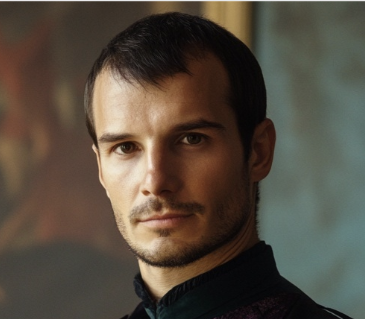
4 months 1 week ago
Cunning and deceit will every time serve a man better than force to rise from a base condition to great fortune.
▼
Source
source
Book 2, Ch. 13

1 week 5 days ago
A vague uncritical idealism always lends itself to ridicule and too much of it might be a danger to mankind, leading it round in a futile wild-goose chase for imaginary ideals.
▼
Source
source
Ch. I : The Awakening, p. 4
2 months 3 weeks ago
Of all kind of authors there are none I despise more than compilers, who search every where for shreds of other men's works, which they join to their own, like so many pieces of green turf in a garden: they are not at all superior to compositors in a printing house, who range the types, which, collected together, make a book, towards which they contribute nothing but the labours of the hand. I would have original writers respected, and it seems to me a kind of profanation to take those pieces from the sanctuary in which they reside, and to expose them to a contempt they do not deserve. When a man hath nothing new to say, why does not he hold his tongue? What business have we with this double employment?"
▼
Source
source
No. 66.

2 months 3 weeks ago
But if ether is nothing but an hypothesis explanatory of light, air on the other hand, is a thing that is directly felt; and even if it did not enable us to explain the phenomenon of sound, we should nevertheless always be directly aware of it, and above all, of the lack of it in moments of suffocation or air-hunger. And in the same way God Himself, not the idea of God, may become a reality that is immediately felt; and even though the idea of God does not enable us to explain either the existence or essence of the Universe, we have at times the direct feeling of God, above all in moments of spiritual suffocation. And the feeling, mark it well, for all that is tragic in it and the whole tragic sense of life is founded upon this - this feeling is a feeling of hunger for God, of the lack of God. To believe in God is, in the first instance... to wish that there may be a God, to be unable to live without Him.

4 months 4 days ago
The unitive knowledge of the Divine Ground has, as its necessary condition, self-abnegation and charity. Only by means of self-abnegation and charity can we clear away the evil, folly and ignorance which constitute the thing we call our personality and prevent us from becoming aware of the spark of divinity illuminating the inner man.

4 months 3 days ago
Diversity makes critical argument fruitful. ...[P]artners in an argument must share ...the wish to know, and the readiness to learn from the other ...by severely criticizing his views... and hearing... [the] reply. ...the so-called method of science consists in this kind of criticism.

4 months 1 week ago
After experience had taught me that all the usual surroundings of social life are vain and futile; seeing that none of the objects of my fears contained in themselves anything either good or bad, except in so far as the mind is affected by them, I finally resolved to inquire whether there might be some real good having power to communicate itself, which would affect the mind singly, to the exclusion of all else: whether, in fact, there might be anything of which the discovery and attainment would enable me to enjoy continuous, supreme, and unending happiness.
▼
Source
source
I, 1
4 days ago
Happy in the prospect of a restoration of primitive Christianity, I must leave to younger athletes to encounter and lop off the false branches which have been engrafted into it by the mythologists of the middle and modern ages.
▼
Source
source
Letter to Doctor Waterhouse
2 months 2 weeks ago
The cravings of love and sex are met with absolute ignorance by the majority of parents, who consider it as something indecent and improper, something disgraceful, almost criminal, to be suppressed and fought like some terrible disease. The love and tender feelings in the young plant are turned into vulgarity and coarseness through the stupidity of those surrounding it, so that everything fine and beautiful is either crushed altogether or hidden in the innermost depths, as a great sin, that dares not face the light.

4 months ago
The aim of the book is to set a limit to thought, or rather - not to thought, but to the expression of thoughts: for in order to be able to set a limit to thought, we should have to find both sides of the limit thinkable (i.e. we should have to be able to think what cannot be thought). It will therefore only be in language that the limit can be set, and what lies on the other side of the limit will simply be nonsense.
1 day ago
Search men's governing principles, and consider the wise, what they shun and what they cleave to.
▼
Source
source
IV, 38
4 months 3 days ago
I have no faith in precision: ...simplicity and clarity are values in themselves, but not... [of] precision or exactness...
2 months 1 week ago
The simulacrum now hides, not the truth, but the fact that there is none, that is to say, the continuation of Nothingness.
1 month 1 week ago
Is there really someone who, searching for a group of wise and sensitive persons to regulate him for his own good, would choose that group of people that constitute the membership of both houses of Congress?
▼
Source
source
Ch. 2 : The State of Nature; Protective Associations, p. 14

3 weeks 4 days ago
Every noble crown is, and on earth will forever be, a crown of thorns.
▼
Source
source
Bk. III, ch. 7.
4 months 1 week ago
It is enough to ask somebody for his weapons without saying 'I want to kill you with them', because when you have his weapons in hand, you can satisfy your desire.
▼
Source
source
Book 1, Ch 44 (as translated by Julia Conaway Bondanella and Peter Bondanella)

3 months 3 weeks ago
I would rather discover one cause than gain the kingdom of Persia.
▼
Source
source
Freeman (1948), p. 155
CivilSimian.com created by AxiomaticPanic, CivilSimian, Kalokagathia