

8 months 2 weeks ago
How many we know who have fled the sweetness of a tranquil life in their homes, among their friends, to seek the horror of uninhabitable deserts; who have flung themselves into humiliation, degradation, and the contempt of the world, and have enjoyed these and even sought them out.
▼
Source
source
Ch. 14 (tr. Donald M. Frame)

8 months 2 weeks ago
My whole heart and soul are stirred and incensed against the Turks and Mohammed, when I see this intolerable raging of the Devil. Therefore I shall pray and cry to God, nor rest until I know that my cry is heard in heaven.
▼
Source
source
Statement while being confined to residence at Coburg, as quoted in History of the Christian Church, (1910) by Philip Schaff, Vol. VII

4 months 4 weeks ago
There is an irrepressible tendency in every man to develop himself according to the magnitude which Nature has made him of; to speak out, to act out, what nature has laid in him. This is proper, fit, inevitable; nay it is a duty, and even the summary of duties for a man. The meaning of life here on earth might be defined as consisting in this: To unfold your self, to work what thing you have the faculty for.

4 months 3 weeks ago
A trifling debt makes a man your debtor; a large one makes him an enemy.
▼
Source
source
Line 11.
6 months 3 weeks ago
Feminism is the struggle to end sexist oppression. Therefore, it is necessarily a struggle to eradicate the ideology of domination that permeates Western culture on various levels, as well as a commitment to reorganizing society so that the self-development of people can take precedence over imperialism, economic expansion, and material desires.
6 months 3 weeks ago
A child might be overawed by a great city, but a civil engineer knows that he might demolish it and rebuild it himself. Husserl's philosophy has the same aim: to show us that, although we may have been thrust into this world without a 'by your leave,' we are mistaken to assume that it exists independently of us. It is true that reality exists apart from us; but what we mistake for the world is actually a world constituted by us, selected from an infinitely complex reality.
▼
Source
source
p. 63
7 months 1 day ago
True poetry is a function of awakening. It awakens us, but it must retain the memory of previous dreams.
▼
Source
source
Introduction
6 months 3 weeks ago
In a free nation, it matters not whether individuals reason well or ill; it is sufficient that they do reason. Truth arises from the collision and from hence springs liberty, which is a security from the effects of reasoning.
▼
Source
source
Quoted by Thomas Erskine in the trial of Thomas Paine, 1792
8 months 2 weeks ago
All the world knows me in my book, and my book in me.
▼
Source
source
Book III, Ch. 5. Upon some Verses of Virgil
8 months 2 weeks ago
Whatever can be done another day can be done today.
▼
Source
source
Ch. 20. Of the Force of Imagination (tr. Donald M. Frame)


7 months 1 week ago
The formula 'two plus two equals five' is not without its attractions.
▼
Source
source
Part 1, Chapter 9 (tr. ?)

7 months 1 day ago
To the degree to which they correspond to the given reality, thought and behavior express a false consciousness, responding to and contributing to the preservation of a false order of facts. And this false consciousness has become embodied in the prevailing technical apparatus which in turn reproduces it.
▼
Source
source
p. 145
6 months 1 week ago
For it is with the same imperialism that present-day simulators try to make the real, all of the real, coincide with their simulation models.
▼
Source
source
"The Precession of Simulacra," pp. 1-2
7 months 1 day ago
Ideas are refined and multiplied in the commerce of minds. In their splendor, images effect a very simple communion of souls.
▼
Source
source
Introduction, sect. 4

8 months 3 weeks ago
Mahomet established a religion by putting his enemies to death; Jesus Christ, by commanding his followers to lay down their own lives.
▼
Source
source
Thoughts on Religion and Philosophy (W. Collins, 1838), Ch. XVI, p. 202

8 months 1 week ago
The original scriptures of most religions are poetical and unsystematic. Theology, which generally takes the form of a reasoned commentary on the parables and aphorisms of the scriptures, tends to make its appearance at a later stage of religious history. The Bhagavad-Gita occupies an intermediate position between scripture and theology; for it combines the poetical qualities of the first with the clear-cut methodicalness of the second... one of the clearest and most comprehensive summaries of the Perennial Philosophy ever to have been made. Hence its enduring value, not only for Indians, but for all mankind.
7 months 4 weeks ago
For why do you hasten to remove things that hurt your eyes, but if anything gnaws your mind, defer the time of curing it from year to year?
▼
Source
source
Book I, epistle ii, lines 37-39; translation by C. Smart
6 months 3 weeks ago
The progress of human knowledge depends on maintaining that touch of scepticism even about the most "unquestionable" truths. A century ago, Darwin's theory of evolution by natural selection was regarded as scientifically unshakeable; today, most biologists have their reservations about it. Fifty years ago, Freud's sexual theory of neurosis was accepted by most psychiatrists; today, it is widely recognized that his methods were highly questionable. At the turn of this century, a scientist who questioned Newton's theory of gravity would have been regarded as insane; twenty years later, it had been supplanted by Einstein's theory, although, significantly, few people actually understood it. It seems perfectly conceivable that our descendants of the twenty-second century will wonder how any of us could have been stupid enough to have been taken in by Darwin, Freud or Einstein.
▼
Source
source
p. 4

7 months 5 days ago
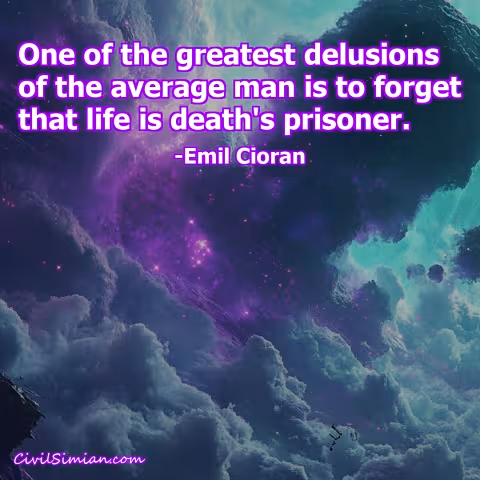
My faculty for disappointment surpasses understanding. It is what lets me comprehend Buddha, but also what keeps me from following him.
9 months 1 week ago
The life-giving Spirit is the very one who slays you; the first thing the life-giving Spirit says is that you must enter into death, that you must die to, it is this way in order that you many not take Christianity in vain. A life-giving Spirit, that is the invitation; who would not willingly take hold of it! But die first, that is the halt!
7 months 6 days ago
Ministers become a sort of miniature kings in their turn. Though they have the greatest opportunity of observing the impotence and unmeaningness of the character, they envy it. It is their trade perpetually to extol the dignity and importance of the master they serve; and men cannot long anxiously endeavor to convince others of the truth of any proposition without becoming half convinced themselves.
▼
Source
source
Book V, Ch. 5

8 months 3 days ago
The soul is the prison of the body.
▼
Source
source
Discipline and Punish (1977) as translated by Alan Sheridan, p. 30
8 months 1 week ago
The poet is, etymologically, the maker. Like all makers, he requires a stock of raw materials - in his case, experience. Now experience is not a matter of having actually swum the Hellespont, or danced with the dervishes, or slept in a doss-house. It is a matter of sensibility and intuition, of seeing and hearing the significant things, of paying attention at the right moments, of understanding and co-ordinating. Experience is not what happens to a man; it is what a man does with what happens to him. It is a gift for dealing with the accidents of existence, not the accidents themselves. By a happy dispensation of nature, the poet generally possesses the gift of experience in conjunction with that of expression. What he says so well is therefore intrinsically of value.
▼
Source
source
p. 5
7 months 5 days ago
Lord, give me the capacity of never praying, spare me the insanity of all worship, let this temptation of love pass from me which would deliver me forever unto You. Let the void spread between my heart and heaven! I have no desire to people my deserts by Your presence, to tyrannize my nights by Your light, to dissolve my Siberias beneath Your sun.
4 months 1 week ago
I learn with great satisfaction that you are about committing to the press the valuable historical and State papers you have been so long collecting. Time and accident are committing daily havoc on the originals deposited in our public offices. The late war has done the work of centuries in this business. The last cannot be recovered, but let us save what remains; not by vaults and locks which fence them from the public eye and use in consigning them to the waste of time, but by such a multiplication of copies, as shall place them beyond the reach of accident.
▼
Source
source
Letter to Mr. Hazard
7 months 2 weeks ago
By Silence, the discretion of a man is known: and a fool, keeping Silence, seemeth to be wise.
6 months 1 week ago
For nothing can be greater than seduction itself, not even the order that destroys it.
▼
Source
source
Seduction
3 months 4 weeks ago
The state of mind which enables a man to do work of this kind is akin to that of the religious worshiper or the lover; the daily effort comes from no deliberate intention or program, but straight from the heart.
7 months 1 week ago
To prove cannot mean anything other than to bring the other person to my own conviction. The truth lies only in the unification of "I" and "You." The Other of pure thought, however, is the sensuous intellect in general. In the field of philosophy, proof therefore consists only in the fact that the contradiction between sensuous intellect and pure thought is disposed, so that thought is true not only for itself but also for its opposite.
▼
Source
source
Z. Hanfi, trans., in The Fiery Brook (1972), p. 75

6 months 6 days ago
Radio comes to us ostensibly with person to person directness that is private and intimate, while in more urgent fact, it is really a subliminal echo chamber of magic power to touch remote and forgotten chords.
▼
Source
source
(p. 302).

8 months 4 days ago
The human body is the best picture of the human soul.
▼
Source
source
Pt II, p. 178
8 months 1 week ago
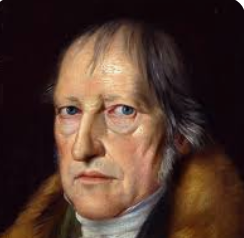
The Philosophy of Nature takes up the material, prepared for it by physics out of experience, at the point to which physics has brought it, and again transforms it, without basing it ultimately on the authority of experience. Physics therefore must work into the hands of philosophy, so that the latter may translate into a true comprehension (Begriff) the abstract universal transmitted to it, showing how it issues from that comprehension as an intrinsically necessary whole.

7 months 1 week ago
This day I heard from Laurence who has sent me papers confirming the portentous State of France-where the Elements which compose Human Society seem all to be dissolved, and a world of Monsters to be producd in the place of it-where Mirabeau presides as the Grand Anarch; and the late Grand Monarch makes a figure as ridiculous as pitiable.
▼
Source
source
Letter to Richard Burke (c. 10 October 1789), quoted in Alfred Cobban and Robert A. Smith (eds.), The Correspondence of Edmund Burke, Volume VI: July 1789-December 1791 (1967), p. 30
8 months 2 weeks ago
...so it is with human reason, which strives not against faith, when enlightened, but rather furthers and advances it.
▼
Source
source
On Justification CCXCIV
7 months 1 day ago
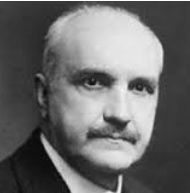
Fanaticism consists in redoubling your efforts when you have forgotten your aim.
8 months 1 week ago
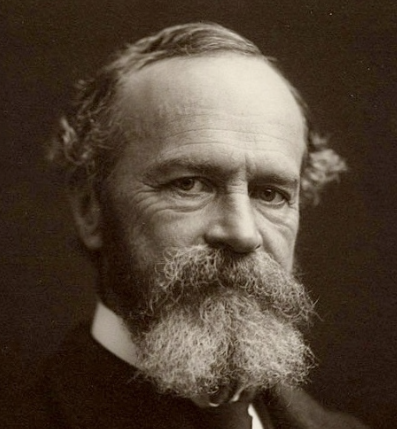
Is dogmatic or scholastic theology less doubted in point of fact for claiming, as it does, to be in point of right undoubtable? And if not, what command over truth would this kind of theology really lose if, instead of absolute certainty, she only claimed reasonable probability for her conclusions? If we claim only reasonable probability, it will be as much as men who love the truth can ever at any given moment hope to have within their grasp. Pretty surely it will be more than we could have had, if we were unconscious of our liability to err.
▼
Source
source
Lectures XIV and XV, "The Value of Saintliness"
4 months 3 weeks ago
You will thus understand that what you fear is either insignificant or short-lived.
8 months 1 week ago
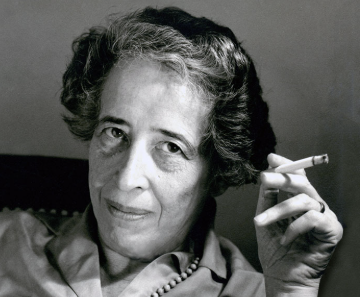
The totalitarian movements aim at and succeed in organizing masses-not classes, like the old interest parties of the Continental nation-states; not citizens with opinions about, interests in, the handling of public affairs, like the parties of Anglo-Saxon countries.
▼
Source
source
Part 3, Ch. 10
8 months 1 week ago
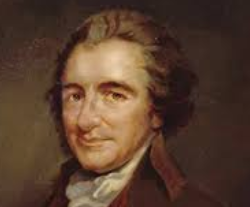
Whether, then, all ought not immediately to discontinue and renounce it, with grief and abhorrence? Should not every society bear testimony against it, and account obstinate persisters in it bad men, enemies to their country, and exclude them from fellowship; as they often do for much lesser faults?
6 months 5 days ago
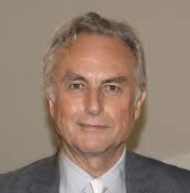
The world becomes full of organisms that have what it takes to become ancestors. That, in a sentence, is Darwinism.
6 months 3 weeks ago
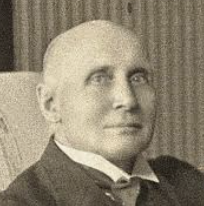
There is something between the gross specialised values of the mere practical man, and the thin specialised values of the mere scholar. Both types have missed something; and if you add together the two sets of values, you do not obtain the missing elements.
▼
Source
source
Ch. 13: "Requisites for Social Progress", p. 279
8 months 3 weeks ago
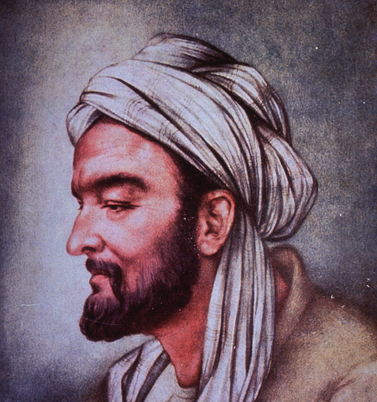
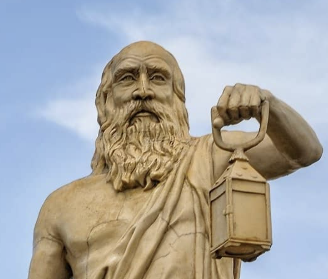
I prefer a short life with width to a narrow one with length.
7 months 4 weeks ago
Poverty is a virtue which one can teach oneself.
▼
Source
source
Stobaeus, iv. 32a. 19
4 months 6 days ago
Long live the king,' cry the loving and the loyal, beside themselves with joy. 'Long live the king,' responds the republican hypocrite in dire terror. What does it matter? There is only one cry. And the king is crowned.
▼
Source
source
Chapter IX, p. 79
8 months 2 weeks ago
He who establishes his argument by noise and command shows that his reason is weak.

8 months 3 weeks ago
Cease therefore to be dismayed by the mere novelty and so to reject reason from your mind with loathing: weigh the questions rather with keen judgment and if they seem to you to be true, surrender, or if the thing is false, gird yourself to the encounter.
▼
Source
source
Book II, lines 1040-1043 (tr. Munro)
4 months 1 week ago
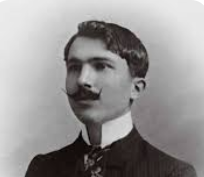
We do not struggle for ourselves, nor for our race, not even for humanity. We do not struggle for Earth, nor for ideas. All these are the precious yet provisional stairs of our ascending God, and they crumble away as soon as he steps upon them in his ascent. In the smallest lightning flash of our lives, we feel all of God treading upon us, and suddenly we understand: if we all desire it intensely, if we organize all the visible and invisible powers of earth and fling them upward, if we all battle together like fellow combatants eternally vigilant - then the Universe might possibly be saved. It is not God who will save us - it is we who will save God, by battling, by creating, and by transmuting matter into spirit.
CivilSimian.com created by AxiomaticPanic, CivilSimian, Kalokagathia