

9 months 1 week ago
The cautious seldom err.

8 months 3 weeks ago
Good and evil, reward and punishment, are the only motives to a rational creature: these are the spur and reins whereby all mankind are set on work, and guided.
▼
Source
source
Sec. 54

5 months 1 week ago
There is an irrepressible tendency in every man to develop himself according to the magnitude which Nature has made him of; to speak out, to act out, what nature has laid in him. This is proper, fit, inevitable; nay it is a duty, and even the summary of duties for a man. The meaning of life here on earth might be defined as consisting in this: To unfold your self, to work what thing you have the faculty for.

7 months 4 days ago
Marcus Garvey, Elijah Muhammad, Malcolm X, Martin Luther King, Stokely Carmichael, Amiri Baraka and other black male leaders have righteously supported patriarchy. They have all argued that it is absolutely necessary for black men to relegate black women to a subordinate position both in the political sphere and in home life.
5 months 6 days ago
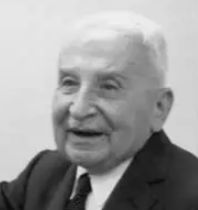
The only certain fact about Russian affairs under the Soviet regime with regard to which all people agree is: that the standard of living of the Russian masses is much lower than ... the paragon of capitalism, the United States of America. If we were to regard the Soviet regime as an experiment, we would have to say that the experiment has clearly demonstrated the superiority of capitalism and the inferiority of socialism.
8 months 1 week ago
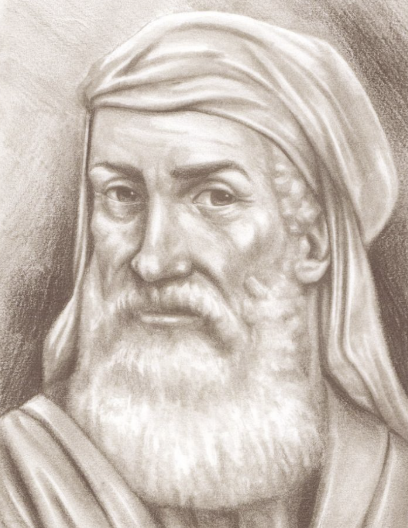
From such honor and such a height of fortune am I, thus fallen to earth, cast down amongst mortals.
▼
Source
source
fr. 119
7 months 3 weeks ago
India is pre-eminently distinguished for the many traits of original grandeur of thought and of the wonderful remains of immediate knowledge.
▼
Source
source
quoted in Londhe, S. (2008). A tribute to Hinduism: Thoughts and wisdom spanning continents and time about India and her culture. New Delhi: Pragun Publication.

9 months ago
The world thought well of my schoolmaster guardian, because he was neither a liar, nor a scamp, nor a gambler; but he was coarse, avaricious, and ignorant; he knew nothing beyond the confused lessons which he taught to his classes. He imagined that in forcing a youth to become a monk he would be offering a sacrifice acceptable to God. He used to boast of the many victims which he devoted annually to Dominic and Francis and Benedict.
▼
Source
source
As quoted in Life and Letters of Erasmus: Lectures Delivered at Oxford 1893-4 (1899) by James Anthony Froude
4 months 2 weeks ago
Reductionism (ultimately, the empirical explanability of everything and a cornerstone of science), has uses that are appropriate, and it also can be used inappropriately. It is appropriately used as a way (one way) of understanding what is empirically known or empirically knowable. When it becomes merely an intellectual "position" confronting what is not empirically known or knowable, then it becomes very quickly absurd, and also grossly desensitizing and false.
8 months 2 days ago
As long as Man continues to be the ruthless destroyer of lower living beings, he will never know health or peace. For as long as men massacre animals, they will kill each other. Indeed, he who sows the seed of murder and pain cannot reap joy and love.
▼
Source
source
Attribution to Pythagoras by Ovid, as quoted in The Extended Circle: A Dictionary of Humane Thought (1985) by Jon Wynne-Tyson, p. 260; also in Vegetarian Times, No. 168 (August 1991), p. 4

8 months 2 weeks ago
As we take, in fact, a general view of the wonderful stream of our consciousness, what strikes us first is this different pace of its parts. Like a bird's life, it seems to be made of an alternation of flights and perchings.
▼
Source
source
Ch. 9
4 months 2 weeks ago
Do not think me gentle because I speak in praise of gentleness, or elegant because I honor the grace that keeps this world. I am a man crude as any, gross of speech, intolerant, stubborn, angry, full of fits and furies. That I may have spoken well at times, is not natural. A wonder is what it is.
▼
Source
source
A Warning To My Readers

4 months 2 weeks ago
Every bureaucracy, therefore, in accord with the peculiar emphasis on its own position, tends to generalize its own experience and to overlook the fact that the realm of administration and of smoothly functioning order represents only a part of the total political reality. Bureaucratic thought does not deny the possibility of the science of politics, but regards it as identical with the science of administration. Thus irrational factors are overlooked, and when these nevertheless force themselves to the fore, they are treated as "routine matters of state."
5 months 1 week ago
On the dust of our heroic ancestors we too sit ballot-boxing, saying to one another, It is well, it is well! By inheritance of their noble struggles, we have been permitted to sit slothful so long. By noble toil, not by shallow laughter and vain talk, they made this English Existence from a savage forest into an arable inhabitable field for us; and we, idly dreaming it would grow spontaneous crops forever,-find it now in too questionable a state.
8 months 2 weeks ago
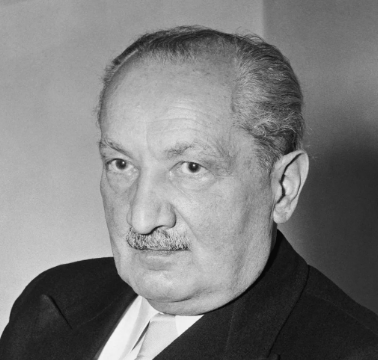
Everything functions. That is exactly what is uncanny. Everything functions and the functioning drives us further and further to more functioning, and technology tears people away and uproots them from the Earth more and more. I don't know if you are scared; I was certainly scared when I recently saw the photographs of the Earth taken from the Moon. We don't need an atom bomb at all; the uprooting of human beings is already taking place. We only have purely technological conditions left. It is no longer an earth on which human beings live today.

8 months 2 weeks ago
I, for my part, do not conceive an act as having causes, and I consider myself satisfied when I have found in it not its 'factors' but the general themes which it organizes: for our decisions gather into new syntheses and on new occasions the leitmotif that governs our life
▼
Source
source
p. 461

7 months 2 weeks ago
Born in a prison, with burdens on our shoulders and our thoughts, we could not reach the end of a single day if the possibilities of ending it all did not incite us to begin the next day all over again.
8 months 3 weeks ago
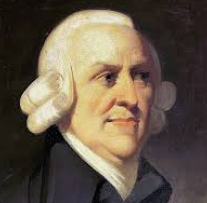
Our merchants and master-manufacturers complain much of the bad effects of high wages in raising the price, and thereby lessening the sale of their goods both at home and abroad. They say nothing concerning the bad effects of high profits. They are silent with regard to the pernicious effects of their own gains. They complain only of those of other people.
▼
Source
source
Chapter IX, p. 117.

8 months 3 weeks ago
Under the ideal measure of values there lurks the hard cash.
▼
Source
source
Vol. I, Ch. 3, Section 1, pg. 116.
8 months 2 weeks ago
It is too early to love. We will buy the right to do so by shedding blood.
▼
Source
source
Act 1
8 months 3 weeks ago
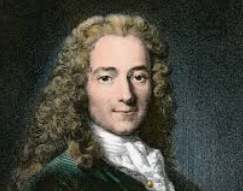
I opened with that which good Catholics have more than once made to Huguenots. "My dear sir," said I, "were you ever baptized?" "No, friend," replied the Quaker, "nor any of my brethren." "Zounds!" said I to him, "you are not Christians then!" "Friend," replied the old man, in a soft tone of voice, "do not swear; we are Christians, but we do not think that sprinkling a few drops of water on a child's head makes him a Christian." "My God!" exclaimed I, shocked at his impiety, "have you then forgotten that Christ was baptized by St. John?" "Friend," replied the mild Quaker, "once again, do not swear. Christ was baptized by John, but He Himself never baptized any one; now we profess ourselves disciples of Christ, and not of John." "Mercy on us," cried I, "what a fine subject you would be for the holy inquisitor! In the name of God, my good old man, let me baptize you."
▼
Source
source
Voltaire's account of his conversations with Andrew Pit
4 months 2 weeks ago
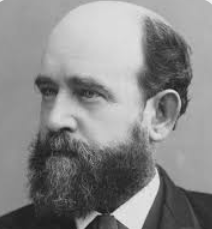
How can a man be said to have a country where he has no right to a square inch of soil...
▼
Source
source
Ch. 2 : Political Dangers
6 months 3 weeks ago
The very ideology of "cultural production" is antithetical to all culture, as is that of visibility and of the polyvalent space: culture is a site of the secret, of seduction, of initiation, of a restrained and highly ritualized symbolic exchange.
▼
Source
source
"The Beaubourg Effect," p. 64
5 months 1 week ago
Our true Deity is Mechanism. It has subdued external Nature for us, and we think it will do all other things. We are Giants in physical power: in a deeper than metaphorical sense, we are Titans, that strive, by heaping mountain on mountain, to conquer Heaven also.
7 months 2 weeks ago
One does not inhabit a country; one inhabits a language. That is our country, our fatherland - and no other. Variant translation: We inhabit a language rather than a country.
9 months 1 week ago
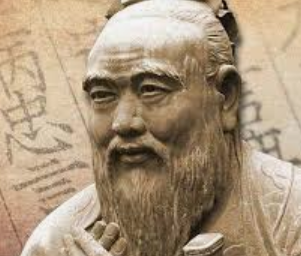
When a country is well governed, poverty and a mean condition are things to be ashamed of. When a country is ill governed, riches and honor are things to be ashamed of.
4 months 2 weeks ago
The great work of the present for every man, and every organization of men, who would improve social conditions, is the work of education - the propagation of ideas. It is only as it aids this that anything else can avail. And in this work every one who can think may aid - first by forming clear ideas himself, and then by endeavoring to arouse the thought of those with whom he comes in contact.
▼
Source
source
Ch. 21 : Conclusion
5 months 1 week ago
Bukharin, like Lenin, regarded the system of basing economic life on mass terror not as a transient necessity but as a permanent principle of socialist organization. He did not shrink from justifying all means of coercion and held, like Trotsky at the same period, that the new system called essentially for the militarization of labour - i.e. the use of police and military force to compel the whole population to work in such places and conditions as the state might arbitrarily decree. Indeed, once the market is abolished there is no longer any free sale of labour or competition between workers, and police coercion is therefore the only means of allocating "human resources". If hired labour is eliminated, only compulsory labour remains. In other words, socialism - as conceived by both Trotsky and Bukharin at this time - is a permanent, nation-wide labour camp.
▼
Source
source
(pg. 28-9)
8 months 2 weeks ago
We are in hell and I will have my turn!
▼
Source
source
Inès warns Garcin and Estelle not to make love in her presence, Act 1, sc. 5

8 months 1 week ago
A prating barber asked Archelaus how he would be trimmed. He answered, "In silence."
▼
Source
source
33 Archelaus

7 months 1 week ago
Man must not only make himself: the weightiest thing he has to do is to determine what he is going to be. He is causa sui to the second power.
▼
Source
source
As quoted in Existentialism from Dostoevsky to Sartre, p. 155
5 months 1 week ago
Carnap made a detailed analysis of Heidegger's statement, "Nothing nihilates," in order to show that it is purely verbal, devoid of empirical meaning. (Incidentally, this is the only sentence from existentialist philosophy the majority of contemporary positivists appear familiar with.)
▼
Source
source
Chapter Eight, Logical Empiricism, p. 187

8 months 2 weeks ago
Philosophical problems can be compared to locks on safes, which can be opened by dialing a certain word or number, so that no force can open the door until just this word has been hit upon, and once it is hit upon any child can open it.
▼
Source
source
Ch. 9 : Philosophy, p. 175
7 months 1 week ago
I do not think discursively. It is not so much that I arrive at truth as that I take my start from it.
▼
Source
source
Introduction
8 months 3 weeks ago
It is high time that Communists should openly, in the face of the whole world, publish their views, their aims, their tendencies, and meet this nursery tale of the spectre of Communism with a Manifesto of the party itself.
▼
Source
source
Preamble, paragraph 3.
9 months 2 weeks ago
First, there must be an end to war and national rivalry and only then could one turn to the internal miseries that, after all, had external conflict as their chief cause.

8 months 3 weeks ago
Natural religion supplies still all the facts which are disguised under the dogma of popular creeds. The progress of religion is steadily to its identity with morals.
▼
Source
source
p. 223
7 months 2 weeks ago
Not wise does it seem to attempt comprehending and understanding a Human World without full perfected Humanity. No talent must sleep; and if all are not alike active, all must be alert, and not oppressed and enervated. As we see a future Painter in the boy who fills every wall with sketches and variedly adds colour to figure; so we see a future Philosopher in him who restlessly traces and questions all natural things, pays heed to all, brings together whatever is remarkable, and rejoices when he has become master and possessor of a new phenomenon, of a new power and piece of knowledge.

4 months 2 weeks ago
Whatever is in any way beautiful hath its source of beauty in itself, and is complete in itself; praise forms no part of it. So it is none the worse nor the better for being praised. Variant: That which is really beautiful has no need of anything.
▼
Source
source
(trans. George Long) IV, 20

7 months 3 weeks ago
Accept suffering and achieve atonement through it - that is what you must do.
8 months 3 weeks ago
Actions may be laudable or blameable; but they cannot be reasonable: Laudable or blameable, therefore, are not the same with reasonable or unreasonable. The merit and demerit of actions frequently contradict, and sometimes controul our natural propensities. But reason has no such influence. Moral distinctions, therefore, are not the offspring of reason. Reason is wholly inactive, and can never be the source of so active a principle as conscience, or a sense of morals.
▼
Source
source
Part 1, Section 1

7 months 2 weeks ago
The supporters of the Development Hypothesis... can show that any existing species-animal or vegetable-when placed under conditions different from its previous ones, immediately begins to undergo certain changes fitting it for the new conditions. They can show that in successive generations these changes continue; until, ultimately, the new conditions become the natural ones. They can show that in cultivated plants, in domesticated animals, and in the several races of men, such alterations have taken place. They can show that the degrees of difference so produced are often, as in dogs, greater than those on which distinctions of species are in other cases founded.
8 months 2 weeks ago
What has to be accepted, the given, is - so one could say - forms of life.
▼
Source
source
Pt II, p. 226 of the 1968 English edition

7 months 5 days ago
We do not require elaborate training merely in order to refrain from embarking upon intricate trains of inference. Such abstinence is only too easy.
▼
Source
source
Symbolism: Its Meaning and Effect (1927).
9 months 2 weeks ago
Great novelists are philosopher-novelists who write in images instead of arguments.
8 months 4 weeks ago
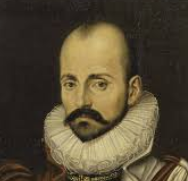
If you press me to say why I loved him, I can say no more than it was because he was he, and I was I. Variants: If a man urge me to tell wherefore I loved him, I feel it cannot be expressed but by answering: Because it was he, because it was myself. If a man should importune me to give a reason why I loved him, I find it could no otherwise be expressed, than by making answer: because it was he, because it was I.
▼
Source
source
Ch. 28
5 months 1 week ago
Literature is the Thought of thinking Souls.
5 months 1 day ago
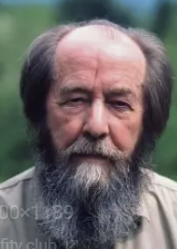
The divergent scales of values scream in discordance, they dazzle and daze us, and in order that it might not be painful we steer clear of all other values, as though from insanity, as though from illusion, and we confidently judge the whole world according to our own home values. Which is why we take for the greater, more painful and less bearable disaster not that which is in fact greater, more painful and less bearable, but that which lies closest to us. Everything which is further away, which does not threaten this very day to invade our threshold - with all its groans, its stifled cries, its destroyed lives, even if it involves millions of victims - this we consider on the whole to be perfectly bearable and of tolerable proportions.
CivilSimian.com created by AxiomaticPanic, CivilSimian, Kalokagathia