


4 months 3 weeks ago
Far from New England's blustering shore,New England's worm her hulk shall bore,And sink her in the Indian seas,Twine, wine, and hides, and China teas.
▼
Source
source
"Though All the Fates Should Prove Unkind", st. 2
4 months 3 weeks ago
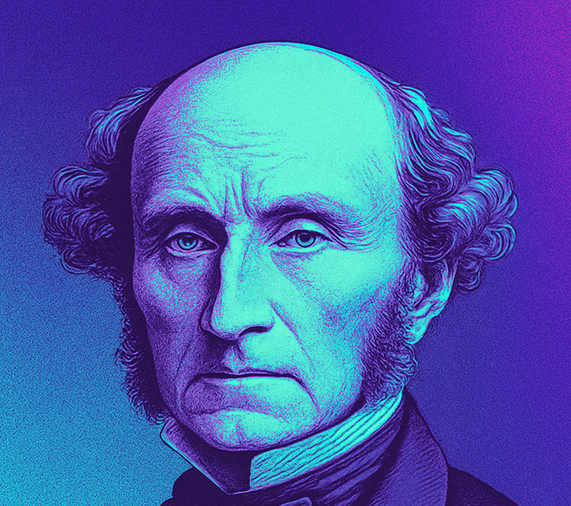
It is the character of the British people, or at least of the higher and middle classes who pass muster for the British people, that to induce them to approve of any change, it is necessary that they should look upon it as a middle course: they think every proposal extreme and violent unless they hear of some other proposal going still farther, upon which their antipathy to extreme views may discharge itself. So it proved in the present instance; my proposal was condemned, but any scheme for Irish Land reform, short of mine, came to be thought moderate by comparison.
▼
Source
source
(pp. 294-295)
2 months 2 weeks ago
Speech is a mirror of the soul; as a man speaks, so is he.
▼
Source
source
Maxim 1073
3 months 2 weeks ago
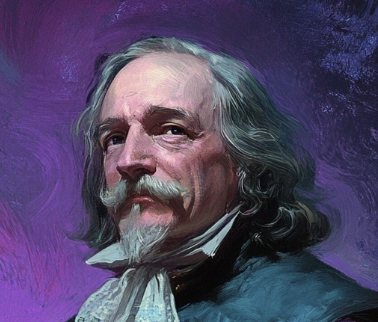
And this Feare of things invisible, is the naturall Seed of that, which every one in himself calleth Religion; and in them that worship, or feare that Power otherwise than they do, Superstition.
▼
Source
source
The First Part, Chapter 11, p. 51
2 months 2 weeks ago
When Fortune flatters, she does it to betray.
▼
Source
source
Maxim 277
3 months 3 weeks ago
The God of the Christians is a father who makes much of his apples, and very little of his children.
▼
Source
source
No. 16

5 months 1 week ago
What Heaven has conferred is called The Nature; an accordance with this nature is called The Path of duty; the regulation of this path is called Instruction. The path may not be left for an instant. If it could be left, it would not be the path. On this account, the superior man does not wait till he sees things, to be cautious, nor till he hears things, to be apprehensive.
5 months 3 weeks ago
That body is heavier than another which, in an equal bulk, moves downward quicker.
4 months 2 weeks ago
If we compare the third-person attitude of someone who simply says how things stand (this is the attitude of the scientist, for example) with the performative attitude of someone who tries to understand what is said to him (this is the attitude of the interpreter, for example), the implications ... become clear. ... First, interpreters relinquish superiority that observers have by virtue of their privileged position, in that they themselves are drawn, at least potentially, into negotiations about the meaning and validity of utterances. By taking part in communicative action, they accept in principle the same status as those whose utterances they are trying to understand. ... It is impossible to decide a priori who is to learn from whom.
▼
Source
source
p. 26

4 months 3 weeks ago
When you live alone you no longer know what it is to tell a story: the plausible disappears at the same time as the friends. You let events flow by too: you suddenly see people appear who speak and then go away; you plunge into stories of which you can't make head or tail: you'd make a terrible witness.
▼
Source
source
Diary entry of Tuesday, 30 January

3 months 1 week ago
In the most secret chamber of the spirit of him who believes himself convinced that death puts an end to his personal consciousness, his memory, for ever, and all unknown to him perhaps, there lurks a shadow, a vague shadow, a shadow of uncertainty, and while he says within himself, "Well, let us live this life that passes away, for there is no other!" the silence of this secret chamber speaks to him and murmurs, "Who knows!... " These voices are like the humming of a mosquito when the south-west wind roars through the trees in the wood; we cannot distinguish this faint humming, yet nevertheless, merged in the clamor of the storm, it reaches the ear.

1 month 2 weeks ago
Sarcasm I now see to be, in general, the language of the Devil; for which reason I have, long since, as good as renounced it.
▼
Source
source
Bk. II, ch. 4.

3 weeks 2 days ago
Our laws, language, religion, politics, & manners are so deeply laid in English foundations, that we shall never cease to consider their history as a part of ours, and to study ours in that as it's origin.
▼
Source
source
Letter to William Duane
2 months 3 weeks ago
Materialism ends up denying the existence of any irreducible subjective qualitative states of sentience or awareness.
▼
Source
source
Consciousness and Language (2002) p. 47.
3 months 2 weeks ago
Not official revolutionary commissars in any sort of sashes, but rather revolutionary propagandists are to be dispatched into all the provinces and communes and particularly among the peasants who cannot be revolutionised by principles, nor by the decrees of any dictatorship, but only by the act of revolution itself, that is to say, by the consequences that will inevitably ensure in every commune from complete cessation of the legal and official existence of the state.

4 months 3 weeks ago
I die adoring God, loving my friends, not hating my enemies, and detesting superstition.
▼
Source
source
Déclaration de Voltaire, note to his secretary, Jean-Louis Wagnière, 28 February 1778
3 months 1 week ago
May we not say, perhaps, that the evil man is annihilated because he wished to be annihilated, or that he did not wish strongly enough to eternalize himself because he was evil? May we say that it is not believing in the other life which causes a man to be good, but rather that being good causes him believe in it? And what is being good and being evil? These states belong to the sphere of ethics, not of religion; or rather, does not the doing good though being evil pertain to ethics, and the being good [forgivable] though doing evil, to religion?
2 months 1 week ago
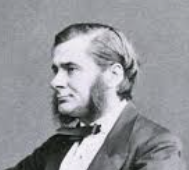
If Man be separated by no greater structural barrier from the brutes than they are from one another-then it seems to follow that if any process of physical causation can be discovered by which the genera and families of ordinary animals have been produced, that process of causation is amply sufficient to account for the origin of Man.
▼
Source
source
Ch.2, p. 125
4 months 3 weeks ago
My thought is me: that's why I can't stop. I exist because I think ... and I can't prevent myself from thinking.
▼
Source
source
Lundi ("Monday")
1 month 2 weeks ago
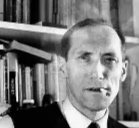
But the philosophy that killed off truth proclaims unlimited tolerance for the "language games" (i.e., opinions, beliefs and doctrines) that people find useful. The outcome is expressed in the words of Karl Kraus: "Alles ist wahr und auch das Gegenteil." "Everything is true, and also its opposite."
▼
Source
source
"Our Merry Apocalypse" (1997), as quoted in Is God Happy? Selected Essays (Basic Books, 2013), p. 318

2 months 3 weeks ago
Invention is the mother of all necessities.
1 month 1 day ago
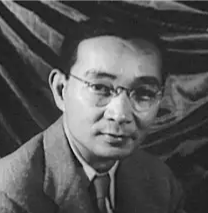
The greatest ideal that man can aspire to is not to be a show-case of virtue, but just to be a genial, likable and reasonable human being.
▼
Source
source
p. 242
1 month 3 days ago
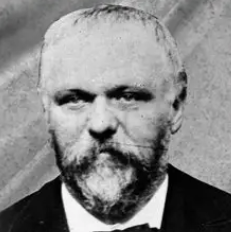
Thus proletarian violence has become an essential factor in Marxism. Let us add once more that, if properly conducted, it will have the result of suppressing parliamentary socialism, which will no longer be able to pose as the leader of the working classes and as the guardian of order.
▼
Source
source
p. 79
2 months 2 weeks ago
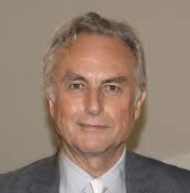
Another force driving progressive evolution is the so-called "arms-race." Prey animals evolve faster running speeds because predators do. Consequently predators have to evolve even faster running speeds, and so on, in an escalating spiral. Such arms races probably account for the spectacularly advanced engineering of eyes, ears, brains, bat "radar" and all the other high-tech weaponry that animals display.
4 months 1 week ago
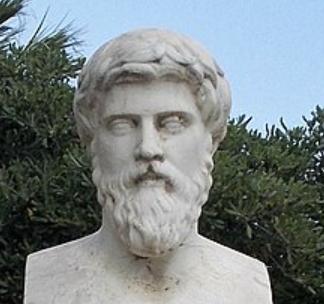
Alcibiades had a very handsome dog, that cost him seven thousand drachmas; and he cut off his tail, "that," said he, "the Athenians may have this story to tell of me, and may concern themselves no further with me."
▼
Source
source
50 Alcibiades
2 months 6 days ago
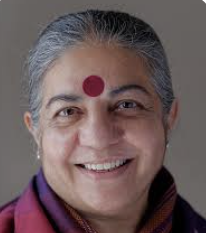
What could be a better indication of man's continued dependence on nature than the fact that today's so-called post-industrial societies satisfy most of their food needs through imports from so-called underdeveloped countries?
▼
Source
source
Staying Alive: Women, Ecology, and Development

3 months 1 week ago
The universities are schools of education, and schools of research. But the primary reason for their existence is not to be found either in the mere knowledge conveyed to the students or in the mere opportunities for research afforded to the members of the faculty. Both these functions could be performed at a cheaper rate, apart from these very expensive institutions. Books are cheap, and the system of apprenticeship is well understood. So far as the mere imparting of information is concerned, no university has had any justification for existence since the popularization of printing in the fifteenth century. Yet the chief impetus to the foundation of universities came after that date, and in more recent times has even increased. The justification for a university is that it preserves the connection between knowledge and the zest of life, by uniting the young and the old in the imaginative consideration of learning.
4 months 3 weeks ago
So that is what hell is. I would never have believed it. You remember: the fire and brimstone, the torture. Ah! the farce. There is no need for torture: Hell is other people.
▼
Source
source
Garcin, Act 1, sc. 5
1 month 1 week ago
Political freedom means this: that the polis, the state, is free; religious freedom this: that religion is free, just as freedom of conscience indicates that conscience is free; thus, it does not that I am free from state, from religion, from conscience, or that I am rid of them. It does not mean my freedom, but the freedom of a power that rules and vanquishes me; it means that one of my oppressors, like state, religion, conscience, is free.
▼
Source
source
Landstreicher, p. 76

3 months 1 week ago
There is only one thing that can form a bond between men, and that is gratitude...we cannot give someone else greater power over us than we have ourselves.
▼
Source
source
No. 104. (Usbek writing to Ibben)
5 months 3 weeks ago
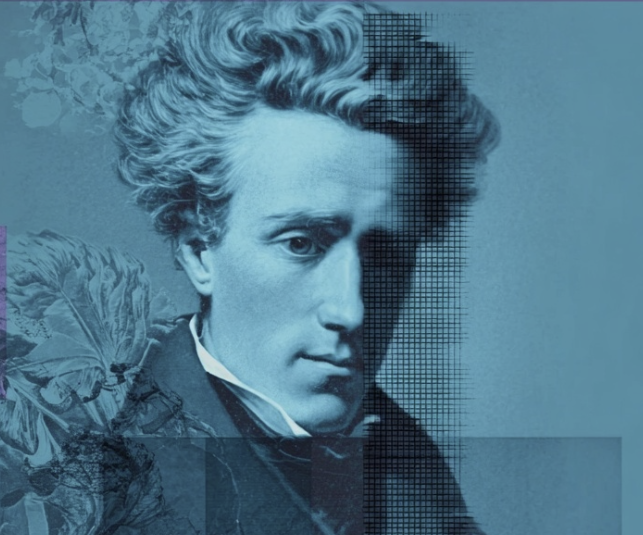
What is asked of a man that he may be able to pray for his enemies? To pray for one's enemies is the hardest thing of all. That is why it exasperates us so much in our present day situation.
4 months 3 weeks ago
I exist, that is all, and I find it nauseating.

3 months 2 weeks ago
The tangible source of exploitation disappears behind the façade of objective rationality.
▼
Source
source
p. 32
3 months 3 weeks ago
It cannot be denied that the early Indians possessed knowledge of God. All their writings are replete with sentiments and expressions, noble, clear, severely grand, as deeply conceived in any human language in which men have spoken of their God.
▼
Source
source
quoted in Knapp, Stephen Proof of Vedic Culture s Global Existence. Published byThe World Relief Network Detroit 2000. p. vii as quoted in Londhe, S. (2008)
3 months 2 weeks ago
Tell me to what you pay attention and I will tell you who you are.
▼
Source
source
p. 94.
4 months 3 weeks ago
Because people have no thoughts to deal in, they deal cards, and try and win one another's money. Idiots!
4 months 2 weeks ago
The bourgeois public sphere may be conceived above all as the sphere of private people come together as a public; they soon claimed the public sphere regulated from above against the public authorities themselves, to engage them in a debate over the general rules governing relations in the basically privatized but publicly relevant sphere of commodity exchange and social labor.
▼
Source
source
p. 27
2 weeks 6 days ago
The wiser nations are, the more public spirit they possess, the more perfect their political constitution, the fewer constitutional laws they have, for these laws are only props, and a building only needs props when it has become out of plumb or when it has been violently shaken by an external force. The most perfect constitution of antiquity was without contradiction that of Sparta, and Sparta has not left us a single line of its public law. It justly boasted of having written its laws only in the hearts of its children.
▼
Source
source
p. 84
5 months 3 weeks ago
It's gravity is the cause; and that which is heavy abides in the middle, and the earth is in the middle: in like manner also, the infinite will abide in itself, through some other cause... and will itself support itself. ..The places of the whole and the part are of the same species; as of the whole earth and a clod, the place is downward; and of the whole of fire, and a spark, the place is upward. So that if the place of the infinite is in itself, there will be the same place also of a part of the infinite.
1 month 4 days ago
Every individual is a unique manifestation of the Whole, as every branch is a particular outreaching of the tree. To manifest individuality, every branch must have a sensitive connection with the tree, just as our independently moving and differentiated fingers must have a sensitive connection with the whole body. The point, which can hardly be repeated too often, is that differentiation is not separation. The head and the feet are different, but not separate, and though man is not connected to the universe by exactly the same physical relation as branch to tree or feet to head, he is nonetheless connected-and by physical relations of fascinating complexity. The death of the individual is not disconnection but simply withdrawal. The corpse is like a footprint or an echo-the dissolving trace of something which the Self has ceased to do.
▼
Source
source
p. 60

4 months 3 weeks ago
Three passions, simple but overwhelmingly strong, have governed my life: the longing for love, the search for knowledge, and unbearable pity for the suffering of mankind. These passions, like great winds, have blown me hither and thither, in a wayward course, over a deep ocean of anguish, reaching to the very verge of despair.
4 months 1 week ago
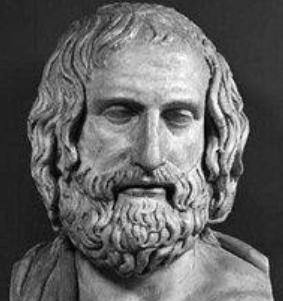
All things were together, infinite both in number and in smallness; for the small too was infinite.
▼
Source
source
Frag. B 1, quoted in John Burnet's Early Greek Philosophy, (1920), Chapter 6.
4 months 3 weeks ago
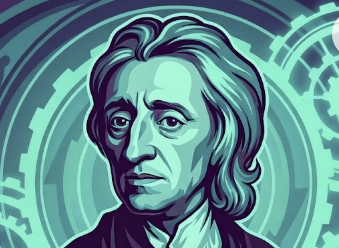
How much education may reconcile young people to pain and sufference, the examples of Sparta do sufficiently shew; and they who have once brought themselves not to think bodily pain the greatest of evils, or that which they ought to stand most in fear of, have made no small advance toward virtue.
▼
Source
source
Sec. 115

3 months 3 weeks ago
The main business of religions is to purify, control, and restrain that excessive and exclusive taste for well-being which men acquire in times of equality.
▼
Source
source
Book One, Chapter V.
4 months 1 week ago
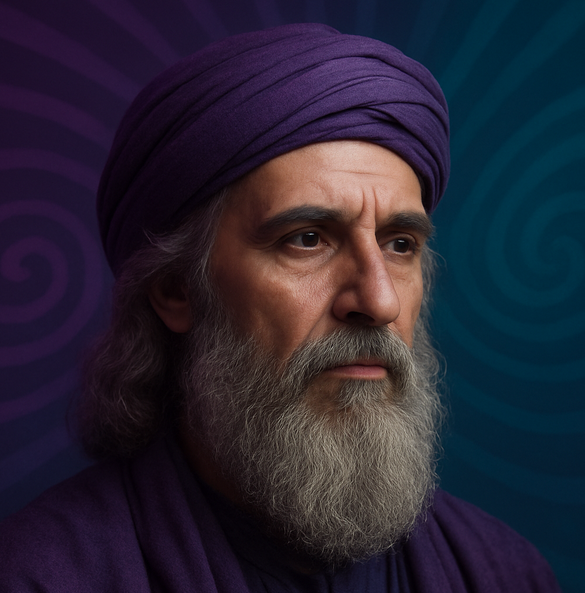
Thus to the Lord doth Asha, the Truth, reply:"No guide is known who can shelter the world from woe, None who knows what moves and works Thy lofty plans."
▼
Source
source
Ahunuvaiti Gatha; Yasna 29, 3.

3 months 2 weeks ago
I don't understand how people can believe in God, even when I myself think of him everyday.

3 months 5 days ago
A girl, if she has any pride, is so ashamed of having anything she wishes to say out of the hearing of her own family, she thinks it must be something so very wrong, that it is ten to one, if she have the opportunity of saying it, that she will not. And yet she is spending her life, perhaps, in dreaming of accidental means of unrestrained communion.
4 months 3 weeks ago
Government has no other end than the preservation of property.
▼
Source
source
Second Treatise of Government, Ch. VII. sec. 94
3 months 2 weeks ago
Life is not, and death is a dream. Suffering has invented them both as self-justification. Man alone is torn between an unreality and an illusion.
CivilSimian.com created by AxiomaticPanic, CivilSimian, Kalokagathia