


5 months 2 days ago
Zeus, the god of gods, who rules according to law, and is able to see into such things, perceiving that an honourable race was in a woeful plight, and wanting to inflict punishment on them, that they might be chastened and improve, collected all the gods into their most holy habitation, which, being placed in the centre of the world, beholds all created things.

4 months 6 days ago
It is error only, and not truth, that shrinks from inquiry.

3 months 5 days ago
A great revolution is on the point of being accomplished. It is a revolution not in human affairs, but in man himself.
▼
Source
source
p. 2

4 months 1 week ago
I need not repeat, that the most savage of the savage tribes in the forest, live among each other in amity. Lions show no fierceness to the lion race. The boar does not brandish his deadly tooth against his brother boar. The lynx lives in peace with the lynx. The serpent shews no venom in his intercourse with his fellow serpent; and the loving kindness of wolf to wolf is proverbial.

4 months 2 weeks ago
Anger is a weed; hate is the tree.
▼
Source
source
58 Alternate versions: Anger is a stem, hate is a trunk. Anger is the mote, hate is the beam.

2 months 4 days ago
The inherent contradiction of human life has now reached an extreme degree of tension: on the one side there is the consciousness of the beneficence of the law of love, and on the other the existing order of life which has for centuries occasioned an empty, anxious, restless, and troubled mode of life, conflicting as it does with the law of love and built on the use of violence. This contradiction must be faced, and the solution will evidently not be favourable to the outlived law of violence, but to the truth which has dwelt in the hearts of men from remote antiquity: the truth that the law of love is in accord with the nature of man. But men can only recognize this truth to its full extent when they have completely freed themselves from all religious and scientific superstitions and from all the consequent misrepresentations and sophistical distortions by which its recognition has been hindered for centuries.
▼
Source
source
VI

4 months 1 week ago
The Idols of the Cave are the idols of the individual man. For everyone (besides the errors common to human nature in general) has a cave or den of his own, which refracts and discolors the light of nature, owing either to his own proper and peculiar nature; or to his education and conversation with others; or to the reading of books, and the authority of those whom he esteems and admires; or to the differences of impressions, accordingly as they take place in a mind preoccupied and predisposed or in a mind indifferent and settled; or the like. So that the spirit of man (according as it is meted out to different individuals) is in fact a thing variable and full of perturbation, and governed as it were by chance. Whence it was well observed by Heraclitus that men look for sciences in their own lesser worlds, and not in the greater or common world.
▼
Source
source
Aphorism 42


2 months 3 weeks ago
Science is the knowledge of Consequences, and dependence of one fact upon another: by which, out of that we can presently do, we know how to do something else when we will, or the like, another time.
▼
Source
source
The First Part, Chapter 5, p. 21
4 months 3 weeks ago
Lifetime is a child at play, moving pieces in a game.
4 months 1 week ago
It is the principle of antipathy which leads us to speak of offences as deserving punishment. It is the corresponding principle of sympathy which leads us to speak of certain actions as meriting reward. This word merit can only lead to passion and error. It is effects good or bad which we ought alone to consider.
▼
Source
source
MSS 29, 32, University College Collection
1 week 6 days ago
Is it not absurd when a human being tries to find happiness somewhere outside himself, and thinks that wealth and birth and the influence of friends...is of the utmost importance?
▼
Source
source
Oration to the Uneducated Cynics

4 days ago
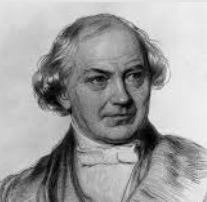
When a series of progressive numbers is given as the result of observation, it may generally be reduced to law by combinations of arithmetical and geometrical progressions. A true formula for a progressive series of numbers cannot commonly be obtained from a narrow range of observations.
4 months 5 days ago
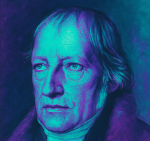
It is because the method of physics does not satisfy the comprehension that we have to go on further.

3 months 4 days ago
No nation which has sunk into this state of dependence can raise itself out of it by the means which have usually been adopted hitherto. Since resistance was useless to it when it was still in possession of all its powers, what can such resistance avail now that it has been deprived of the greater part of them?
▼
Source
source
Introduction p. 9-10

1 month 2 weeks ago
Just like Chief Seattle talked about being in the web of life, in India we talk about vasudhaiva kutumbkam, which means the earth family. Indian cosmology has never separated the human from the non-human-we are a continuum.

4 days ago
No one has a natural right to the trade of a money lender, but he who has the money to lend. Let those then among us who have a moneyed capital and who prefer employing it in loans rather than otherwise, set up banks and give cash or national bills for the notes they discount. Perhaps, to encourage them, a larger interest than is legal in the other cases might be allowed them, on the condition of their lending for short periods only.
▼
Source
source
ME 13:277

4 months 1 week ago
Saturninus said, "Comrades, you have lost a good captain to make him an ill general."
▼
Source
source
Book III, Ch. 9. Of Vanity

2 months 2 days ago
Omnipresence has become an ordinary human dimension.

4 months 5 days ago
He asked my religion and I replied 'agnostic'. He asked how to spell it, and remarked with a sigh: 'Well, there are many religions, but I suppose they all worship the same God. This remark kept me cheerful for about a week.

8 months 1 week ago
Tibetan prayer wheels: you write a prayer on a paper, put the rolled paper on a wheel, and turn it automatically, without thinking. In this way, the wheel itself is praying for me, instead of me - or more precisely, I myself am praying through the medium of the wheel. The beauty of it all is that in my psychological inferiority I can think about whatever I want, I can yield to the most dirty and obscene fantasies, and it does not matter because - to use a good old Stalinist expression - 'whatever I am thinking, objectively I am praying.'
2 months 1 week ago
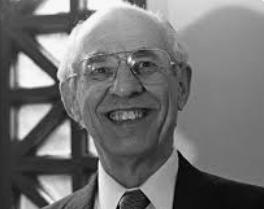
The problem with all this--the problem I discussed in the first lecture--is that if the causes/background conditions distinction is fundamentally subjective, not descriptive of the world in itself, then current philosophical explanations of the metaphysical nature of reference are bankrupt.
▼
Source
source
Lecture II: Realism and Reasonableness

3 months 1 week ago
No man can justly censure or condemn another, because indeed no man truly knows another.
▼
Source
source
Section 4

4 months 3 days ago
All that is not eternal is eternally out of date.
▼
Source
source
"Charity"

4 months 1 week ago
Tis evident, that sympathy, or the communication of passions, takes place among animals, no less than among men. Fear, anger, courage and other affections are frequently communicated from one animal to another [...] And 'tis remarkable, that tho' almost all animals use in play the same member, and nearly the same action as in fighting; a lion, a tyger, a cat their paws; an ox his homs; a dog his teeth; a horse his heels: Yet they most carefully avoid harming their companion, even tho' they have nothing to fear from his resentment; which is an evident proof of the sense brutes have of each other's pain and pleasure.
▼
Source
source
Part 2, Section 12
4 months 5 days ago
Philosophy, from the earliest times, has made greater claims, and achieved fewer results, than any other branch of learning.
▼
Source
source
Lecture I, Current Tendencies, p. 11, New American Library edition, 1960

5 months 1 week ago
One may certainly admire man as a mighty genius of construction, who succeeds in piling an infinitely complicated dome of concepts upon an unstable foundation, and, as it were, on running water. Of course, in order to be supported by such a foundation, his construction must be like one constructed of spiders' webs: delicate enough to be carried along by the waves, strong enough not to be blown apart by every wind.

4 months 1 week ago
There are two kinds of truths: those of reasoning and those of fact. The truths of reasoning are necessary and their opposite is impossible; the truths of fact are contingent and their opposites are possible.
▼
Source
source
La monadologie (33).
3 months ago
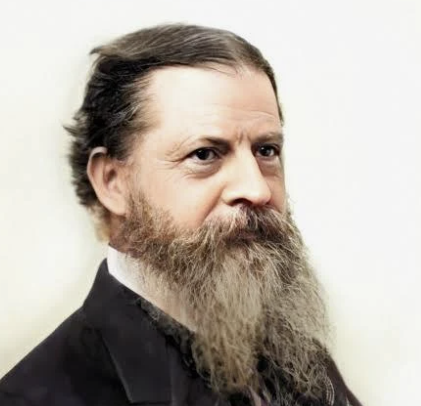
Now, let there be an indefinite succession of these inferential acts of comparative perception; and it is plain that the last moment will contain objectively the whole series. Let there be, not merely an indefinite succession, but a continuous flow of inference through a finite time; and the result will be a mediate objective consciousness of the whole time in the last moment. In this last moment, the whole series will be recognized, or known as known before.

1 day ago
In a sense, people are our proper occupation. Our job is to do them good and put up with them. But when they obstruct our proper tasks, they become irrelevant to us--like sun, wind, and animals. Our actions may be impeded by them, but there can be no impeding our intentions or our dispositions. Because we can accommodate and adapt. The mind adapts and converts to its own purposes the obstacle to our acting. The impediment to action advances action. What stands in the way becomes the way.
▼
Source
source
(Hays translation) V.20
4 months 5 days ago
The fundamental concept in social science is Power, in the same sense in which Energy is the fundamental concept in physics.
▼
Source
source
Ch. 1: The Impulse to Power
4 months 3 days ago
I am almost inclined to set it up as a canon that a children's story which is enjoyed only by children is a bad children's story. The good ones last. A waltz which you can like only when you are waltzing is a bad waltz.
▼
Source
source
"On Three Ways of Writing for Children" (1952) - in Of Other Worlds: Essays and Stories (1967), p. 24
3 months 2 days ago
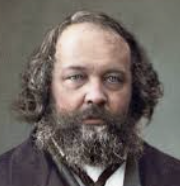
Unity is the great goal toward which humanity moves irresistibly. But it becomes fatal, destructive of the intelligence, the dignity, the well-being of individuals and peoples whenever it is formed without regard to liberty, either by violent means or under the authority of any theological, metaphysical, political, or even economic idea. That patriotism which tends toward unity without regard to liberty is an evil patriotism, always disastrous to the popular and real interests of the country it claims to exalt and serve. Often, without wishing to be so, it is a friend of reaction - an enemy of the revolution, i.e., the emancipation of nations and men.
2 months 1 week ago
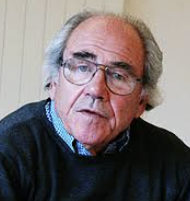
Yet there is a certain solitude like no other - that of the man preparing his meal in public on a wall, or on the hood of his car, or along a fence, alone. You see that all the time here. It is the saddest sight in the world. Sadder than destitution, sadder than the beggar is the man who eats alone in public. Nothing more contradicts the laws of man or beast, for animals always do each other the honour of sharing or disputing each other's food. He who eats alone is dead (but not he who drinks alone. Why is this?).
▼
Source
source
New York (p. 15)
4 weeks ago
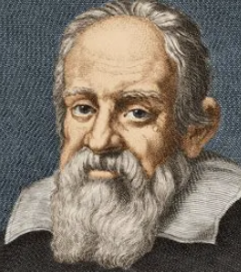
It has been observed that missiles and projectiles describe a curved path of some sort; however no one has pointed out the fact that this path is a parabola. But this and other facts, not few in number or less worth knowing, I have succeeded in proving; and what I consider more important, there have been opened up to this vast and most excellent science, of which my work is merely the beginning, ways and means by which other minds more acute than mine will explore its remote corners.
▼
Source
source
Author, Third Day. Change of Position
4 months 5 days ago
In democratic countries, the most important private organizations are economic. Unlike secret societies, they are able to exercize their terrorism without illegality, since they do not threaten to kill their enemies, but only to starve them.
▼
Source
source
Ch. 12: Powers and forms of governments


4 months 6 days ago
In the sphere of thought, absurdity and perversity remain the masters of the world, and their dominion is suspended only for brief periods.
▼
Source
source
"The Art of Controversy" as translated by T. Bailey Saunders
3 months 1 week ago
Aristotle whilst he labours to refute the ideas of Plato, falls upon one himself: for his summum bonum, is a Chimera, and there is no such thing as his Felicity.
▼
Source
source
Section 15
4 months ago
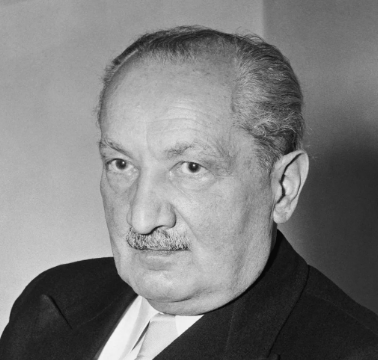
The will to the "true world" in the sense of Plato and Christianity ... is in truth a no-saying to our present world, precisely the one in which art is at home.
▼
Source
source
p. 74
2 weeks 1 day ago
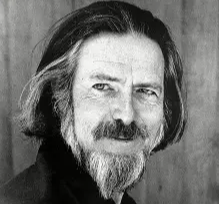
If I first see a tree in the winter, I might assume that it is not a fruit-tree. But when I return in the summer to find it covered with plums, I must exclaim, 'Excuse me! You were a fruit-tree after all.' Imagine, then, that a billion years ago some beings from another part of the galaxy made a tour through the solar system in their flying saucer and found no life. They would dismiss it as 'Just a bunch of old rocks!' But if they returned today, they would have to apologize: 'Well - you were peopling rocks after all!' You may, of course, argue that there is no analogy between the two situations. The fruit-tree was at one time a seed inside a plum, but the earth - much less the solar system or the galaxy - was never a seed inside a person. But, oddly enough, you would be wrong.
▼
Source
source
p. 74
4 months 1 week ago
For I find that even those that have sought knowledge for itself and not for benefit, or ostentation, or any practical enablement in the course of their life, have nevertheless propounded to themselves a wrong mark, namely, satisfaction, which men call truth, and not operation. For as in the courts and services of princes and states, it is a much easier matter to give satisfaction than to do the business; so in the inquiring of causes and reasons it is much easier to find out such causes as will satisfy the mind of man, and quiet objections, than such causes as will direct him and give him light to new experiences and inventions.
▼
Source
source
Valerius Terminus: Of the Interpretation of Nature (ca. 1603), in Works, Vol. 1; The Works of Francis Bacon (1857), Vol. 3, p. 232

4 months 4 days ago
Act as if what you do makes a difference. It does.
▼
Source
source
Correspondence with Helen Keller, 1908, in The Correspondence of William James: April 1908-August 1910, Vol. 12
4 days ago
Your favour of July 31, was duly received, and was read with peculiar pleasure. The sentiments breathed through the whole do honor to both the head and heart of the writer. Mine on the subject of slavery of negroes have long since been in possession of the public, and time has only served to give them stronger root. The love of justice and the love of country plead equally the cause of these people, and it is a moral reproach to us that they should have pleaded it so long in vain, and should have produced not a single effort, nay I fear not much serious willingness to relieve them & ourselves from our present condition of moral & political reprobation.
3 months 5 days ago
There is, however, a limit at which forbearance ceases to be a virtue.
▼
Source
source
Observations on a Late Publication on the Present State of the Nation (1769), volume i, p. 273
1 day ago
Though thou be destined to live three thousand years and as many myriads besides, yet remember that no man loseth other life than that which he liveth, nor liveth other than that which he loseth.
▼
Source
source
II, 14
3 days ago
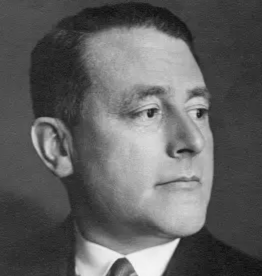
War as the most extreme political means discloses the possibility which underlies every political idea, namely, the distinction of friend and enemy.
4 months 4 days ago
In its widest possible sense, however, a man's Self is the sum total of all that he can call his, not only his body and his psychic powers, but his clothes and his house, his wife and children, his ancestors and friends, his reputation and works, his lands and horses, and yacht and bank-account. All these things give him the same emotions. If they wax and prosper, he feels triumphant; if they dwindle and die away, he feels cast down.
▼
Source
source
Ch. 10
2 months 3 weeks ago
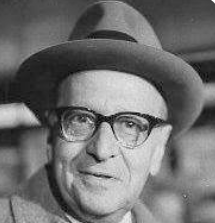
The quality of the human that precludes identifying the individual with the class is 'metaphysical' and has no place in empiricist epistemology. The pigeon hole into which a man is shoved circumscribes his fate.
▼
Source
source
p. 23.
CivilSimian.com created by AxiomaticPanic, CivilSimian, Kalokagathia