


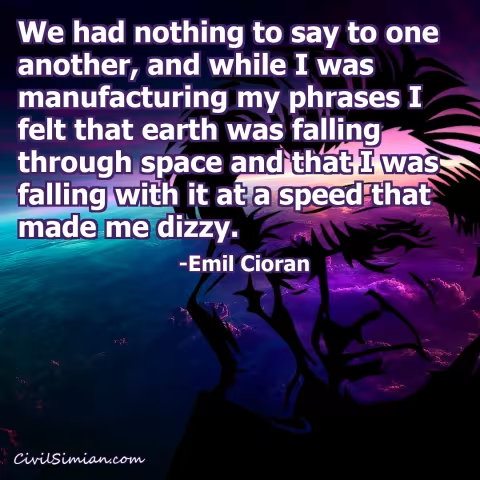

5 months 1 day ago
The self-surmounter can never put up with the man who has ceased to be dissatisfied with himself.
▼
Source
source
p. 139
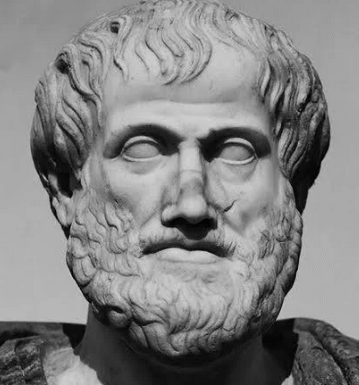
7 months 2 weeks ago
If a man knows what it is right to do, he does not require a formal reason. And a person that has been thus trained, either possesses these first principles already, or can easily acquire them.
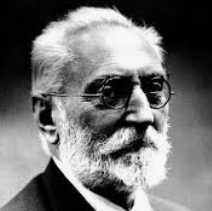
5 months 5 days ago
I hope, reader, that some time while our tragedy is still playing, in some interval between acts, we shall meet again. And we shall recognize one another. And forgive me if I have troubled you more than was needful and inevitable, more than I intended to do when I took up my pen proposing to distract you from your distractions. And may God deny you peace, but give you glory!
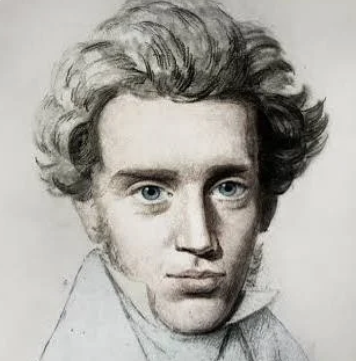
7 months 2 weeks ago
An authorship that began with Either/Or and advanced step by step seeks here its decisive place of rest, at the foot of the altar, where the author, personally most aware of his own imperfections and guilt, certainly does not call himself a truth-witness but only a singular kind of poet and thinker who, without authority, has had nothing new to bring but “has wanted once again to read through, if possible in a more inward way, the original text handed down from the fathers.

3 months 1 week ago
Sure enough, America is a great, and in many respects a blessed and hopeful phenomenon. Sure enough, these hardy millions of Anglo-Saxon men prove themselves worthy of their genealogy; and, with the axe and plough and hammer, if not yet with any much finer kind of implements, are triumphantly clearing out wide spaces, seedfields for the sustenance and refuge of mankind, arenas for the future history of the world; doing, in their day and generation, a creditable and cheering feat under the sun. But as to a Model Republic, or a model anything, the wise among themselves know too well that there is nothing to be said.

6 months 2 weeks ago
It is not by recognizing the want of courage in someone else that you acquire courage yourself.
▼
Source
source
p. 44e
5 months 1 week ago
The neo-conservative critics of leftist critics of mass culture ridicule the protest against Bach as background music in the kitchen, against Plato and Hegel, Shelley and Baudelaire, Marx and Freud in the drugstore. Instead, they insist on recognition of the fact that the classics have left the mausoleum and come to life again, that people are just so much more educated. True, but coming to life as classics, they come to life as other than themselves; they are deprived of their antagonistic force, of the estrangement which was the very dimension of their truth.
▼
Source
source
p. 64

5 months 2 weeks ago
To dream of an enterprise of demolition that would spare none of the traces of the original Big Bang.

6 months 2 weeks ago
The best lightning-rod for your protection is your own spine.
▼
Source
source
p. 236
2 months 2 weeks ago
How much pain have cost us the evils which have never happened.
5 months 3 weeks ago
In order to shake a hypothesis, it is sometimes not necessary to do anything more than push it as far as it will go.
▼
Source
source
No. 50

6 months 1 week ago
By convention sweet is sweet, bitter is bitter, hot is hot, cold is cold, color is color; but in truth there are only atoms and the void.
▼
Source
source
(trans. Durant 1939), Ch. XVI, §II, p. 353; citing C. Bakewell, Sourcebook in Ancient Philosophy, New York, 1909, "Fragment O" (Diels), p. 60
2 months 1 week ago
I refuse to make money out of my science. My laurel is not for sale like so many bales of cotton.
5 months 1 day ago
To die is to wander.
3 months 3 weeks ago
It is because human needs are contradictory that no human life can be perfect. That does not mean that human life is imperfect. It means that the idea of perfection has no meaning.
▼
Source
source
'Modus Vivendi' (p.29)
2 months 2 weeks ago
Our legislators are not sufficiently apprized of the rightful limits of their power; that their true office is to declare and enforce only our natural rights and duties, and to take none of them from us. No man has a natural right to commit aggression on the equal rights of another; and this is all from which the laws ought to restrain him; every man is under the natural duty of contributing to the necessities of the society; and this is all the laws should enforce on him; and, no man having a natural right to be the judge between himself and another, it is his natural duty to submit to the umpirage of an impartial third. When the laws have declared and enforced all this, they have fulfilled their functions, and the idea is quite unfounded, that on entering into society we give up any natural right.
▼
Source
source
Letter to Francis W. Gilmer (27 June 1816); The Writings of Thomas Jefferson edited by Ford, vol. 10, p. 32

4 months 2 weeks ago
The TV camera has no shutter. It does not deal with aspects or facets of objects in high resolution. It is a means of direct pick-up by the electrical groping over surfaces.
▼
Source
source
Arts in society, Volume 3, 1964, p. 242
3 months 1 week ago
In books lies the soul of the whole Past Time; the articulate audible voice of the Past, when the body and material substance of it has altogether vanished like a dream.
5 months 4 days ago
It suffices to remember how many sorrows he is spared who no longer thinks too many thoughts, how much more "in accordance with reality" a person behaves when he affirms that the real is the right, how much more capacity to use the machinery falls to the person who integrates himself with it uncomplainingly.
▼
Source
source
p. 286
4 months 2 weeks ago
The global village is a place of very arduous interfaces and very abrasive situations.

6 months 3 weeks ago
Holy Christendom has, in my judgment, no better teacher after the apostles than St. Augustine.
▼
Source
source
Luther's Works, American Ed., Robert H. Fischer, Helmut T. Lehman, eds., Concordia Publishing House/Fortress Press, 1959, ISBN 0800603370 (Word and Sacrament III), vol. 37:107

5 months 1 week ago
Thou shalt love the Lord thy God with all thy heart, and with all thy soul, and with all thy mind. This is the first and great commandment. And the second is like unto it, Thou shalt love thy neighbour as thyself. On these two commandments hang all the law and the prophets.
▼
Source
source
22:37-40 (KJV)

6 months 2 weeks ago
The survival of democracy depends on the ability of large numbers of people to make realistic choices in the light of adequate information.
▼
Source
source
Chapter 6 (p. 47)
5 months 2 weeks ago
The modern state, in its essence and objectives, is necessarily a military state, and a military state necessarily becomes an aggressive state. If it does not conquer others it will itself be conquered, for the simple reason that wherever force exists, it absolutely must be displayed or put into action. From this again it follows that the modern state must without fail be huge and powerful; that is the indispensable condition for its preservation.
7 months 2 weeks ago
Can one be a saint without God?, that's the problem, in fact the only problem, I'm up against today.

5 months 2 weeks ago
Modern man may assert that he can dispense with them, and he may bolster his opinion by insisting that there is no scientific evidence of their truth. But since we are dealing with invisible and unknowable things (for God is beyond human understanding, and there is no mean of proving immortality), why should we bother with evidence?
▼
Source
source
p. 75-76

5 months 3 weeks ago
Thus is man that great and true Amphibium, whose nature is disposed to live not only like other creatures in diverse elements, but in divided and distinguished worlds.
▼
Source
source
Section 34

6 months 2 weeks ago
Everyone has a goal which appears to be great, at least to himself, and is great when deepest conviction, the innermost voice of the heart, pronounces it great. ... This voice, however, is easily drowned out, and what we thought to be inspiration may have been created by the fleeting moment and again perhaps destroyed by it. ... We must seriously ask ourselves, therefore, whether we are really inspired about a vocation, whether an inner voice approves of it, or whether the inspiration was a deception, whether that which we took as the Deity's calling to us was self-deceit. But how else could we recognize this except by searching for the source of our inspiration?
▼
Source
source
Writings of the Young Marx on Philosophy and Society, L. Easton, trans. (1967), p. 36
5 months 1 week ago
Behold, we go up to Jerusalem; and the Son of man shall be betrayed unto the chief priests and unto the scribes, and they shall condemn him to death, And shall deliver him to the Gentiles to mock, and to scourge, and to crucify him: and the third day he shall rise again.
▼
Source
source
20:18-19 (KJV)
3 months 3 weeks ago
From a Darwinian point of view, human beliefs are adaptations to our part of the world. No doubt much of what we believe must be roughly accurate, or else we would not have survived. But the beliefs we have evolved might latch on to the world only enough to help us stumble our way through it, and then only for the time being. Human belief-systems could be useful illusions, appearing and disappearing as they prove to be more or less advantageous in the random walk of natural selection. Might not evolution be one of these illusions? Scientific naturalism is the theory that human beliefs are evolutionary adaptations whose survival has nothing to do with their truth. But in that case scientific naturalism is self-defeating, since on its own premises scientific theories cannot be known to be true.
▼
Source
source
Cross-correspondences (p. 69)
6 months 2 weeks ago
Religion may be purified. This great work was begun two hundred years ago: but men can only bear light to come in upon them by degrees.
▼
Source
source
The critical review, or annals of literature, Volume XXVI, by A Society of Gentlemen (1768) p. 450
3 months 3 weeks ago
The whole world is in some ways better than it's ever been in the past. And, indeed, I think for many people the meaning of their lives really depends on that belief. If you strip out that belief in progress, if you start thinking of the world in the way in which the ancient pre-Christian Europeans did, or the Buddhists and the Hindus or the Taoists of China do, many people think that's a kind of despair. I don't know how many times I've been told "If I thought that, John, I wouldn't get up in the morning" and "If I agreed with you, John, that history had no pattern of that kind, I wouldn't get up in the morning." I said, "Well, stay in bed a bit longer, you might find a better reason for getting up."
▼
Source
source
Quoted in John Gray at the Writers' Festival, part 1," The Philosopher's Zone, a discussion with Alan Saunders on ABC Radio National
5 months 5 days ago
The truth is sum, ergo cogito - I am, therefore I think, although not everything that is thinks. Is not consciousness of thinking above all consciousness of being? Is pure thought possible, without consciousness of self, without personality? Can there exist pure knowledge without feeling, without that species of materiality which feelings lends to it? Do we not perhaps feel thought, and do we not feel ourselves in the act of knowing and willing? Could not the man in the stove [Descartes] have said: "I feel, therefore I am"? or "I will, therefore I am"? And to feel oneself, is it not perhaps to feel oneself imperishable?
6 months 2 weeks ago
Despotic government supports itself by abject civilization, in which debasement of the human mind, and wretchedness in the mass of the people, are the chief criterions. Such governments consider man merely as an animal; that the exercise of intellectual faculty is not his privilege; that he has nothing to do with the laws but to obey them; and they politically depend more upon breaking the spirit of the people by poverty, than they fear enraging it by desperation.
▼
Source
source
Means by Which the Fund Is to Be Created
5 months 2 weeks ago
Life inspires more dread than death - it is life which is the great unknown.
5 months 2 weeks ago
In the case of colors, there is a tridimensional spread of feelings. Originally all feelings may have been connected in the same way, and the presumption is that the number of dimensions was endless. For development essentially involves a limitation of possibilities. But given a number of dimensions of feeling, all possible varieties are obtainable by varying the intensities of the different elements.
2 months 2 weeks ago
War as the most extreme political means discloses the possibility which underlies every political idea, namely, the distinction of friend and enemy.
6 months 3 weeks ago
And as every present state of a simple substance is naturally a consequence of its preceding state, so its present is pregnant with its future.
▼
Source
source
La monadologie (22).
7 months 2 weeks ago
To succeed, planning alone is insufficient. One must improvise as well.

4 months 2 weeks ago
The only thing that we know is that we know nothing - and that is the highest flight of human wisdom.
▼
Source
source
Book V, Ch. I
5 months 1 week ago
Every living creature is happy when he fulfills his destiny, that is, when he realizes himself, when he is being that which in truth he is. For this reason, Schlegel, inverting the relationship between pleasure and destiny, said, "We have a genius for what we like." Genius, man's superlative gift for doing something, always carries a look of supreme pleasure.
▼
Source
source
pp. 16-17
4 months 4 weeks ago
What I do not like about our definitions of genius is that there is in them nothing of the day of judgment, nothing of resounding through eternity and nothing of the footsteps of the Almighty.
▼
Source
source
E 92

6 months 2 weeks ago
In the Catholic Church, especially, they go into chancery, make a clean confession, give up all, and think to start again. Thus men will lie on their backs, talking about the fall of man, and never make an effort to get up.
▼
Source
source
p. 487
7 months 2 weeks ago
Of all the schools of patience and lucidity, creation is the most effective. It is also the staggering evidence of man's sole dignity: the dogged revolt against his condition, perseverance in an effort considered sterile. It calls for a daily effort, self-mastery, a precise estimate of the limits of truth, measure, and strength. It constitutes an ascesis. All that "for nothing," in order to repeat and mark time. But perhaps the great work of art has less importance in itself than in the ordeal it demands of a man and the opportunity it provides him of overcoming his phantoms and approaching a little closer to his naked reality.
4 months 4 weeks ago
He who is enamored of himself will at least have the advantage of being inconvenienced by few rivals.
▼
Source
source
H 10 Variant translation: He who is in love with himself has at least this advantage - he won't encounter many rivals.
5 months 2 weeks ago
We must now turn to the question of how the existence of archetypes can be proved. Since archetypes are supposed to produce certain psychic forms, we must discuss how and where one can get hold of the material demonstrating these forms. The main source, then, is dreams, which have the advantage of being involuntary, spontaneous products of nature not falsified by any conscious purpose. By questioning the individual one can ascertain which of the motifs appearing in the dream are known to him... Consequently, we must look for motifs which could not possibly be known to the dreamer and yet behave functionally of the archetype known from historical sources.
▼
Source
source
p. 48
6 months 2 weeks ago
The career a young man should choose should be one that is most consonant with our dignity, one that is based on ideas of whose truth we are wholly convinced, one that offers us largest scope in working for humanity and approaching that general goal towards which each profession offers only one of the means: the goal of perfection ... If he works only for himself he can become a famous scholar, a great sage, an excellent imaginative writer [Dichter], but never a perfected, a truly great man.
▼
Source
source
in Karl Marx and World Literature (1976) by S. S. Prawer, p. 2.
CivilSimian.com created by AxiomaticPanic, CivilSimian, Kalokagathia