


5 months 1 week ago
As far as I am concerned, I resign from humanity. I no longer want to be, nor can still be, a man. What should I do? Work for a social and political system, make a girl miserable? Hunt for weaknesses in philosophical systems, fight for moral and aesthetic ideals? It's all too little. I renounce my humanity even though I may find myself alone. But am I not already alone in this world from which I no longer expect anything?

2 months 2 weeks ago
The object of walking is to relax the mind. You should therefore not permit yourself even to think while you walk; but divert your attention by the objects surrounding you. Walking is the best possible exercise. Habituate yourself to walk very far. The Europeans value themselves on having subdued the horse to the uses of man; but I doubt whether we have not lost more than we have gained, by the use of this animal. No one has occasioned so much, the degeneracy of the human body. An Indian goes on foot nearly as far in a day, for a long journey, as an enfeebled white does on his horse; and he will tire the best horses. There is no habit you will value so much as that of walking far without fatigue.

6 months 1 week ago
Philosophy is like trying to open a safe with a combination lock: each little adjustment of the dials seems to achieve nothing, only when everything is in place does the door open.
▼
Source
source
Philosophical Occasions 1912-1951 (1993) edited by James Carl Klagge and Alfred Nordmann

5 months 3 days ago
And what is its moral proof? We may formulate it thus: Act so that in your own judgment and in the judgment of others you may merit eternity, act so that you may become irreplaceable, act so that you may not merit death. Or perhaps thus: Act as if you were to die tomorrow, but to die in order to survive and be eternalized. The end of morality is to give personal, human finality to the Universe; to discover the finality that belongs to it - if indeed it has any finality - and to discover it by acting.

6 months 2 weeks ago
Similarly, individual acts of aristocratic generosity do not eliminate pauperism; they perpetuate it.
▼
Source
source
p. 219

4 months 4 weeks ago
In fact, we had a number of extreme leftists and trade unionists among us, and they seemed to take it for granted that we all agreed that the rich must somehow be forced to surrender their ill-gotten gains. Yet there was an air of good humor about their idealism that made me feel they would not be too offended if I admitted that I regard socialists as well-meaning but muddle-headed brigands.
▼
Source
source
p. 30

6 months 2 weeks ago
While there are manners and compliments we do not meet, we do not teach one another the lessons of honesty and sincerity that the brutes do, or of steadiness and solidity that the rocks do. The fault is commonly mutual, however; for we do not habitually demand any more of each other.
▼
Source
source
p. 490

5 months 1 week ago
For it all depends on how we look at things, and not on how they are in themselves. The least of things with a meaning is worth more in life than the greatest of things without it.
▼
Source
source
p. 67

2 months 1 week ago
All things are interwoven with one another; a sacred bond unites them; there is scarcely one thing that is isolated from another. Everything is coordinated, everything works together in giving form to one universe. The world-order is a unity made up of multiplicity: God is one, pervading all things; all being is one, all law is one (namely, the common reason which all thinking persons possess) and all truth is one- if, as we believe, there can be but one path to perfection for beings that are alike in kind and reason.
▼
Source
source
VII. 9, trans. Maxwell Staniforth

5 months 1 week ago
The foxes have holes, and the birds of the air have nests; but the Son of man hath not where to lay his head.
▼
Source
source
8:20 (KJV)

6 months 2 weeks ago
Truth that is naked is the most beautiful, and the simpler its expression the deeper is the impression it makes; this is partly because it gets unobstructed hold of the hearer's mind without his being distracted by secondary thoughts, and partly because he feels that here he is not being corrupted or deceived by the arts of rhetoric, but that the whole effect is got from the thing itself.

4 months 2 weeks ago
Cartoons drove the photo back to myth and dream screen.

6 months 2 weeks ago
The safest road to Hell is the gradual one - the gentle slope, soft underfoot, without sudden turnings, without milestones, without signposts.
▼
Source
source
Letter XII
4 months ago
I do not allow myself to be overcome by hopelessness, no matter how tough the situation. I believe that if you just do your little bit without thinking of the bigness of what you stand against, if you turn to the enlargement of your own capacities, just that in itself creates new potential.

6 months 3 weeks ago
Virtue refuses facility for her companion ... the easy, gentle, and sloping path that guides the footsteps of a good natural disposition is not the path of true virtue. It demands a rough and thorny road.
▼
Source
source
Ch. 11. Of Cruelty (tr. Donald M. Frame)
5 months 2 weeks ago
Each individual imagines that he can exist, live, think, and act for himself, and believes that he himself is the thinking principle of his thoughts; whereas in truth he is but a single ray of the ONE universal and necessary Thought.
▼
Source
source
p. 21
6 months 2 weeks ago
It was his peculiar doctrine that a man has a perfect right to interfere by force with the slaveholder, in order to rescue the slave. I agree with him. They who are continually shocked by slavery have some right to be shocked by the violent death of the slaveholder, but no others.
3 months 1 week ago
In places where men are used to differences they inevitably become tolerant.
▼
Source
source
Ch. IV: "The Line of Least Resistance", p. 52
7 months 6 days ago
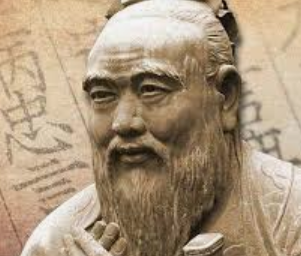
The wise find pleasure in water; the virtuous find pleasure in hills. The wise are active; the virtuous are tranquil. The wise are joyful; the virtuous are long-lived.

6 months 2 weeks ago
In fact of course, this 'productive' worker cares as much about the crappy shit he has to make as does the capitalist himself who employs him, and who also couldn't give a damn for the junk.
▼
Source
source
Notebook II, The Chapter on Capital, p. 193.
6 months 2 weeks ago
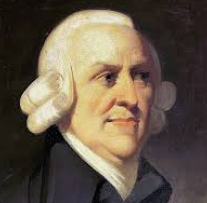
Whenever the legislature attempts to regulate the differences between masters and their workmen, its counsellors are always the masters. When the regulation, therefore, is in favor of the workmen, it is always just and equitable; but it is sometimes otherwise when in favor of the masters.
▼
Source
source
Chapter x, Part II, p. 168.
2 months 3 weeks ago
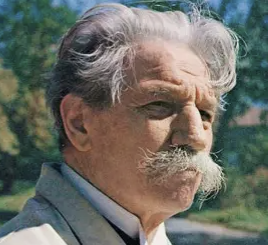
Not less strong than the will to truth must be the will to sincerity. Only an age, which can show the courage of sincerity, can possess truth, which works as a spiritual force within it.

5 months 3 weeks ago
Burden not the back of Aries, Leo, or Taurus, with thy faults, nor make Saturn, Mars, or Venus, guilty of thy Follies.
▼
Source
source
Part III, Section VII
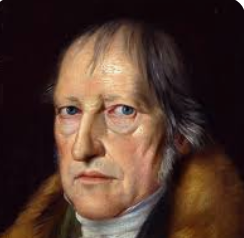
6 months 2 weeks ago
That man should think of God as nothingness must at first sight seem astonishing, must appear to us a most peculiar idea. But, considered more closely, this determination means that God is absolutely nothing determined. He is the Undetermined; no determinateness of any kind pertains to God; He is the Infinite. This is equivalent to saying that God is the negation of all particularity.
▼
Source
source
Hegel, Georg Wilhelm Friedrich, Lectures on the philosophy of religion, together with a work on the proofs of the existence of God. Vol 2 Translated from the 2d German ed. 1895 Ebenezer Brown Speirs 1854-1900, and J Burdon Sanderson p. 51
5 months 3 days ago
And the soul, my soul at least, longs for something else, not absorption, not quietude, not peace, not appeasement, it longs ever to approach and never to arrive, it longs for the never-ending longing, for an eternal hope which is eternally renewed but never wholly fulfilled. And together with all this, it longs for an eternal lack of something and an eternal suffering. A suffering, a pain, thanks to which it grows without ceasing in consciousness and longing. Do not write upon the gate of heaven that sentence which Dante placed over the threshold of hell, Lasciate ogni speranza! [Lasciate ogne speranza, voi ch'intrate: All hope abandon, ye who enter in] Do not destroy time!

6 months 3 weeks ago
Besides, you also have many Jews living in the country, who do much harm... You should know the Jews blaspheme and violate the name of our Savior day for day... for that reason you, Milords and men of authority, should not tolerate but expel them. They are our public enemies and incessantly blaspheme our Lord Jesus Christ, they call our Blessed Virgin Mary a harlot and her Holy Son a bastard and to us they give the epithet of changelings and abortions. Therefore deal with them harshly as they do nothing but excruciatingly blaspheme our Lord Jesus Christ, trying to rob us of our lives, our health, our honor and belongings.
▼
Source
source
Sermon at Eisleben, a few days before his death, February, 1546. See The Jews by Zuhdī Fātiḥ, 1972
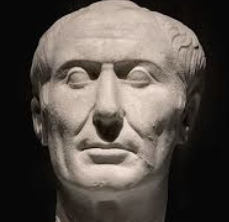
4 months 2 weeks ago
It is only the ignorant who despise education.
▼
Source
source
Maxim 571
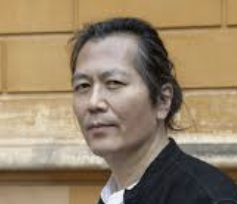
4 months 4 weeks ago
God is nothingness: He is 'beyond all speech.'
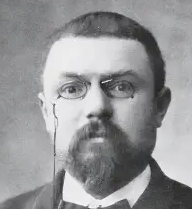
3 months 1 week ago
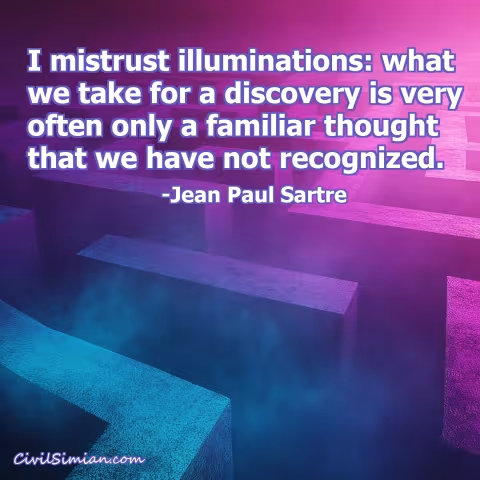
It is by logic that we prove, but by intuition that we discover. To know how to criticize is good, to know how to create is better.
▼
Source
source
Part II. Ch. 2 : Mathematical Definitions and Education, p. 129
3 months 1 week ago
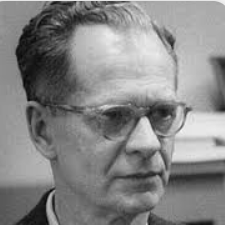
I do not admire myself as a person. My successes do not override my shortcomings.
▼
Source
source
Journal of Humanistic Psychology (Spring 1991) Vol. 31 No. 2, p. 112
3 months 1 week ago
Scientists work from models acquired through education and through subsequent exposure to the literature often without quite knowing or needing to know what characteristics have given these models the status of community paradigms.
▼
Source
source
p. 46
2 months 3 weeks ago
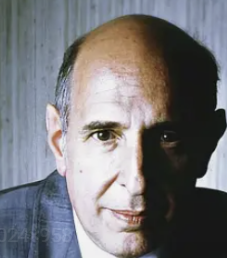
The old view was that delicacy of language was part of the nature, the sacred nature, of eros and that to speak about it in any other way would be to misunderstand it. What has disappeared is the risk and the hope of human connectedness embedded in eros. Ours is a language that reduces the longing for an other to the need for individual, private satisfaction and safety.
▼
Source
source
pp. 13-14.

6 months 1 week ago
We are observing ourselves being observed by the painter, and made visible to his eyes by the same light that enables us to see him. And just as we are about to apprehend ourselves, transcribed by his hand as though in a mirror, we find that we can in fact apprehend nothing of that mirror but its lusterless back. The other side of a psyche.
▼
Source
source
Las Menias

7 months 2 weeks ago
I wouldn't give an astrologer the time of day.
5 months 2 weeks ago
Man consists in Truth. If he exposes Truth, he exposes himself. If he betrays Truth, he betrays himself. We speak not here of lies, but of acting against Conviction.

6 months 2 weeks ago
The prejudices of the second species, since they impose upon the intellect by the sensual conditions restricting the mind if it wishes in certain cases to attain to what is intellectual, lurk more deeply. One of them is that which affects knowledge of quantity, the other that affecting knowledge of qualities generally. The former is: every actual multiplicity can be given numerically, and hence, every infinite quantity; the latter, whatever is impossible contradicts itself. In either of them the concept of time, it is true, does not enter into the very notion of the predicate, nor is it attributed as a qualification to the subject. But yet it serves as a means for forming an idea of the predicate, and thus, being a condition, affects the intellectual concept of the subject to the extent that the latter is only attained by its aid.
6 months 2 weeks ago
There is only one inborn erroneous notion ... that we exist in order to be happy ... So long as we persist in this inborn error ... the world seems to us full of contradictions. For at every step, in great things and small, we are bound to experience that the world and life are certainly not arranged for the purpose of maintaining a happy existence ... hence the countenances of almost all elderly persons wear the expression of ... disappointment.
▼
Source
source
Vol II "On the Road to Salvation"

5 months 2 days ago
Liberty, taking the word in its concrete sense, consists in the ability to choose.
▼
Source
source
Ch. 3, Liberty


6 months 2 weeks ago
I think modern educational theorists are inclined to attach too much importance to the negative virtue of not interfering with children, and too little to the positive merit of enjoying their company.
▼
Source
source
Ch. 12: Education and Discipline
5 months 1 week ago
The capabilities (intellectual and material) of contemporary society are immeasurably greater than ever before-which means that the scope of society's domination over the individual is immeasurably greater than ever before. Our society distinguishes itself by conquering the centrifugal social forces with Technology rather than Terror, on the dual basis of an overwhelming efficiency and an increasing standard of living.
▼
Source
source
p. xliii

5 months 1 week ago
And as in other things, so in men, not the seller, but the buyer determines the Price.
▼
Source
source
The First Part, Chapter 10, p. 42
CivilSimian.com created by AxiomaticPanic, CivilSimian, Kalokagathia