


5 months 1 week ago
See the foundations of the most celebrated cities hardly now to be discerned; they were ruined by anger. See deserts extending for many miles without an inhabitant: they have been desolated by anger.

9 months 3 days ago
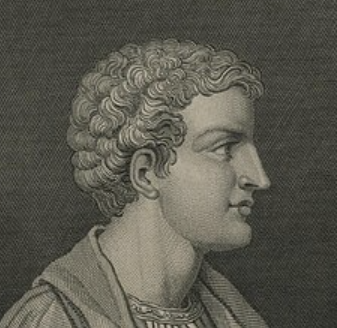
Whatever you see in the more material part of yourself, learn to refer to God and to the invisible part of yourself. In that way, whatever offers itself to the senses will become for you an occasion for the practice of piety.
▼
Source
source
The Erasmus Reader (1990), p. 141.
8 months 2 weeks ago
Do you count your birthdays with gratitude?
▼
Source
source
Book II, epistle ii, line 210

4 months 3 weeks ago
Her reverence for the divine, her generosity, her inability not only to do wrong but even to conceive of doing it. And the simple way she lived-not in the least like the rich.
▼
Source
source
(Hays translation) I, 3
9 months 1 week ago
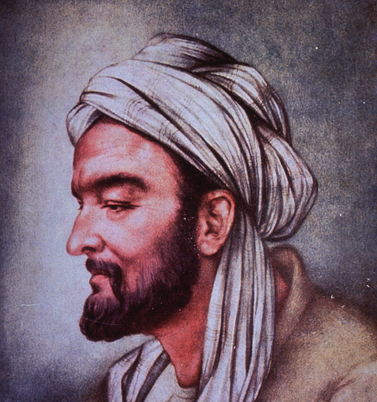
I prefer a short life with width to a narrow one with length.

9 months 1 week ago
What is it, in your opinion, to be a great nobleman? It is to be master of several objects that men covet, and thus to be able to satisfy the wants and the desires of many. It is these wants and these desires that attract them towards you, and that make them submit to you: were it not for these, they would not even look at you; but they hope, by these services... to obtain from you some part of the good which they desire, and of which they see that you have the disposal.
6 months 3 weeks ago
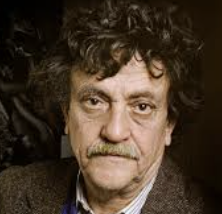
What television does is rent us friends and relatives who are quite satisfactory. The child watching TV loves these people, you know -- they're in color, and they're talking to the child. Why wouldn't a child relate to these people? And you know, if you can't sleep at 3 o'clock in the morning, you can turn on a switch, and there are your friends and relatives, and they obviously like you. And they're charming. Who wouldn't want Peter Jennings for a relative? This is quite something, to rent artificial friends and relatives right inside the house.
▼
Source
source
Interviewed by Frank Houston, "The Salon Interview: Kurt Vonnegut", Salon
7 months 3 weeks ago
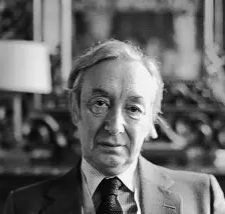
The ground for taking ignorance to be restrictive of freedom is that it causes people to make choices which they would not have made if they had seen what the realization of their choices involved.
▼
Source
source
"The Concept of Freedom".
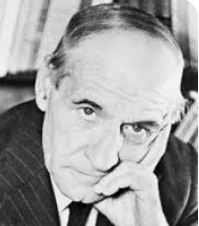
7 months 2 weeks ago
Scientific truth is characterized by its exactness and the certainty of its predictions. But these admirable qualities are contrived by science at the cost of remaining on a plane of secondary problems. leaving intact the ultimate and decisive questions. ... Yet science is but a small part of the human mind and organism. Where it stops, man does not stop.
▼
Source
source
p. 13
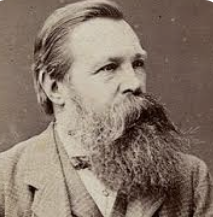
7 months 2 weeks ago
The way in which the vast mass of the poor are treated by modern society is truly scandalous. They are herded into great cities where they breathe a fouler air than in the countryside which they have left.



8 months 3 weeks ago
I had better never see a book than to be warped by its attraction clean out of my own orbit, and made a satellite instead of a system. The one thing in the world, of value, is the active soul.
▼
Source
source
par. 15
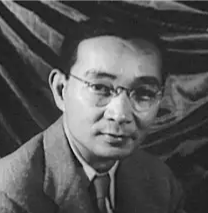
5 months 2 days ago
He who perceives death perceives a sense of the human comedy, and quickly becomes a poet.
▼
Source
source
pp. 39-40
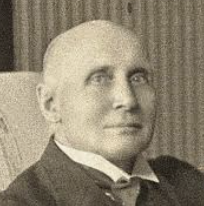
7 months 1 week ago
A philosopher of imposing stature doesn't think in a vacuum. Even his most abstract ideas are, to some extent, conditioned by what is or is not known in the time when he lives.
▼
Source
source
Ch. 29, June 10, 1943.

7 months 1 week ago
The truth is sum, ergo cogito - I am, therefore I think, although not everything that is thinks. Is not consciousness of thinking above all consciousness of being? Is pure thought possible, without consciousness of self, without personality? Can there exist pure knowledge without feeling, without that species of materiality which feelings lends to it? Do we not perhaps feel thought, and do we not feel ourselves in the act of knowing and willing? Could not the man in the stove [Descartes] have said: "I feel, therefore I am"? or "I will, therefore I am"? And to feel oneself, is it not perhaps to feel oneself imperishable?
8 months 3 weeks ago
Thought is all light, and publishes itself to the universe. It will speak, though you were dumb, by its own miraculous organ. It will flow out of your actions, your manners, and your face. It will bring you friendships. It will impledge you to truth by the love and expectation of generous minds. By virtue of the laws of that Nature, which is one and perfect, it shall yield every sincere good that is in the soul, to the scholar beloved of earth and heaven.
7 months 2 weeks ago
When language is used without true significance, it loses its purpose as a means of communication and becomes an end in itself.
6 months 1 day ago
In ancient Europe, Stoics asserted that a slave could be freer than a master who suffers from self-division. In China, Daoists imagined a type of sage who responded to the flow of events without weighing alternatives. Disciples of monotheistic faiths have believed something similar: freedom, they say, is obeying God's will. What those who follow these traditions want most is not any kind of freedom of choice. Instead, what they long for is freedom from choice.
▼
Source
source
The Faith of Puppets: The Freedom of the Marionette (p. 6-7)

7 months 2 weeks ago
Pursued by our origins...we all are.

9 months 2 days ago
Besides, you also have many Jews living in the country, who do much harm... You should know the Jews blaspheme and violate the name of our Savior day for day... for that reason you, Milords and men of authority, should not tolerate but expel them. They are our public enemies and incessantly blaspheme our Lord Jesus Christ, they call our Blessed Virgin Mary a harlot and her Holy Son a bastard and to us they give the epithet of changelings and abortions. Therefore deal with them harshly as they do nothing but excruciatingly blaspheme our Lord Jesus Christ, trying to rob us of our lives, our health, our honor and belongings.
▼
Source
source
Sermon at Eisleben, a few days before his death, February, 1546. See The Jews by Zuhdī Fātiḥ, 1972

8 months 3 weeks ago
And all the time - such is the tragi-comedy of our situation - we continue to clamor for those very qualities we are rendering impossible. You can hardly open a periodical without coming across the statement that what our civilization needs is more "drive", or dynamism, or self-sacrifice, or "creativity". In a sort of ghastly simplicity we remove the organ and demand the function. We make men without chests and expect of them virtue and enterprise. We laugh at honour and are shocked to find traitors in our midst. We castrate and bid the geldings be fruitful.

7 months 1 week ago
It seemed perfectly possible that, in spite of my certainty of my own genius, I might die of some illness, or perhaps even in a street accident, before I had ever glimpsed the meaning of life. My moods of happiness and self-confidence convinced me that I had a "destiny" to become a famous writer, and to be remembered as one of the most important thinkers of the century.
▼
Source
source
p. 67
7 months 3 weeks ago
Poetry heals the wounds inflicted by reason.
▼
Source
source
As quoted in Quote, Unquote (1989) by Jonathan Williams, p. 136

5 months 2 weeks ago
In all European countries, especially in England, one class of Captains and commanders of men, recognizable as the beginning of a new real and not imaginary "Aristocracy," has already in some measure developed itself: the Captains of Industry;-happily the class who above all, or at least first of all, are wanted in this time. In the doing of material work, we have already men among us that can command bodies of men. And surely, on the other hand, there is no lack of men needing to be commanded: the sad class of brother-men whom we had to describe as "Hodge's emancipated horses," reduced to roving famine,-this too has in all countries developed itself; and, in fatal geometrical progression, is ever more developing itself, with a rapidity which alarms every one. On this ground, if not on all manner of other grounds, it may be truly said, the "Organization of Labor" (not organizable by the mad methods tried hitherto) is the universal vital Problem of the world.

5 months 5 days ago
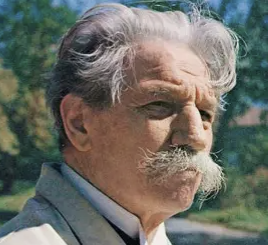
The ethic of Reverence for Life prompts us to keep each other alert to what troubles us and to speak and act dauntlessly together in discharging the responsibility that we feel. It keeps us watching together for opportunities to bring some sort of help to animals in recompense for the great misery that men inflict upon them, and thus for a moment we escape from the incomprehensible horror of existence.
9 months 3 weeks ago
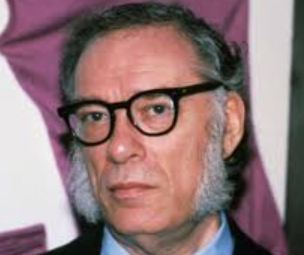
By 1204, the only place where the entire body of Greek learning existed, still intact, was Constantinople. As a result of the crusaders' conquest, however, Constantinople was ruthlessly pillaged and destroyed and almost all the great treasures of ancient Greek learning were lost forever. It is because of that sack, for instance, that we have only seven plays left out of the better than one hundred written by Sophocles. The tragedy of 1204 can never be undone and for all of time, only bits and pieces of the marvelous Greek world can be known to us.

8 months 1 week ago
Soul, indeed, is a certain medium between an impartible essence, and an essence which is divisible about bodies. But intellect is an impartible essence alone. And qualities and material forms are divisible about bodies. Not everything which acts on another, effects that which it does effect by approximation and contact; but those natures which effect any thing by approximation and contact, use approximation accidentally.
4 months 3 weeks ago
How can anyone see the only way the world can be saved and not be forced to weep?
7 months 3 weeks ago
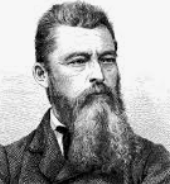
Speculative philosophy as the realisation of God is the positing of God, and at the same time his cancellation or negation; theism and at the same time atheism: for God - in the sense of theology - is God only as long as he is taken to be a being distinguished from and independent of the being of man as well as of nature. The theism that as the positing of God is simultaneously his negation or, conversely, as the negation of God equally his affirmation, is pantheism. Theological theism - that is, theism properly speaking - is nothing other than imaginary pantheism which itself is nothing other than real and true theism.
▼
Source
source
Part I, Section 14

7 months 3 weeks ago
Justice was in all countries originally administered by the priesthood; nor indeed could laws in their first feeble state have either authority or sanction, so as to compel men to relinquish their natural independence, had they not appeared to come down to them enforced by beings of more than human power. The first openings of civility have been everywhere made by religion. Amongst the Romans, the custody and interpretation of the laws continued solely in the college of the pontiffs for above a century.
▼
Source
source
An Essay towards an Abridgment of English History (1757-c. 1763), quoted in The Works of the Right Honourable Edmund Burke, Vol. VI (1856), p. 196
9 months 3 weeks ago
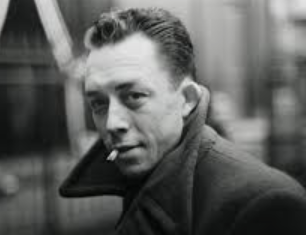
Perhaps we cannot prevent this world from being a world in which children are tortured. But we can reduce the number of tortured children. And if you don't help us, who else in the world can help us do this?

8 months 3 weeks ago
A genuine first-hand religious experience like this is bound to be a heterodoxy to its witnesses, the prophet appearing as a mere lonely madman. If his doctrine prove contagious enough to spread to any others, it becomes a definite and labeled heresy. But if it then still prove contagious enough to triumph over persecution, it becomes itself an orthodoxy; and when a religion has become an orthodoxy, its day of inwardness is over: the spring is dry; the faithful live at second hand exclusively and stone the prophets in their turn. The new church, in spite of whatever human goodness it may foster, can be henceforth counted on as a staunch ally in every attempt to stifle the spontaneous religious spirit, and to stop all later bubblings of the fountain from which in purer days it drew its own supply of inspiration.
▼
Source
source
Lectures XIV and XV, "The Value of Saintliness"

4 months 3 weeks ago
If there is a revelation, it can not then contradict nature.
7 months 2 weeks ago
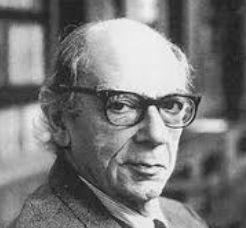
Injustice, poverty, slavery, ignorance - these may be cured by reform or revolution. But men do not live only by fighting evils. They live by positive goals, individual and collective, a vast variety of them, seldom predictable, at times incompatible.
8 months 3 weeks ago
People do not deserve to have good writing, they are so pleased with bad.
▼
Source
source
1841
5 months 1 week ago
Who is everywhere is nowhere. When a person spends all his time in foreign travel, he ends by having many acquaintances, but no friends.
▼
Source
source
Line 2.
6 months 1 week ago
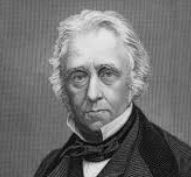
We know of no great revolution which might not have been prevented by compromise early and graciously made... [I]n all movements of the human mind which tend to great revolutions there is a crisis at which moderate concession may amend, conciliate, and preserve.
▼
Source
source
'Hallam', The Edinburgh Review (September 1828), quoted in T. B. Macaulay, Critical and Historical Essays Contributed to The Edinburgh Review, Vol. I (1843), p. 216

7 months 2 weeks ago
Have ye not read what David did, when he was an hungred, and they that were with him; How he entered into the house of God, and did eat the shewbread, which was not lawful for him to eat, neither for them which were with him, but only for the priests? Or have ye not read in the law, how that on the sabbath days the priests in the temple profane the sabbath, and are blameless? But I say unto you, That in this place is one greater than the temple. But if ye had known what this meaneth, I will have mercy, and not sacrifice, ye would not have condemned the guiltless.
▼
Source
source
For the Son of man is Lord even of the sabbath day. 12:3-8 (KJV) Said to some Pharisees.
9 months 1 week ago
As soon as the soul has been made to perceive that a thing can conduct it to that which it loves supremely, it must inevitably embrace it with joy.

8 months 3 weeks ago
One right-thinking man thinks like all other right-thinking men of his time-that is to say, in most cases, like some wrong-thinking man of another time.
▼
Source
source
"One and Many," p. 12
7 months 2 weeks ago
Three in the morning. I realize this second, then this one, then the next: I draw up the balance sheet for each minute. And why all this? Because I was born. It is a special type of sleeplessness that produces the indictment of birth.
7 months 2 weeks ago
Obviously God was a solution, and obviously none so satisfactory that will ever be found again.
5 months 2 days ago
It is not when he is working in the office but when he is lying idly on the sand that his soul utters, "Life is beautiful."
▼
Source
source
Ch. I : The Awakening, p. 2
7 months 3 weeks ago
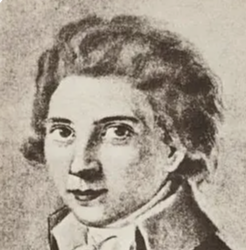
Where there is politics or economics, there is no morality.
▼
Source
source
"Selected Ideas (1799-1800)", Dialogue on Poetry and Literary Aphorisms, Ernst Behler and Roman Struc, trans. (1968) #101

7 months 1 week ago
In order to be exercised, the intelligence requires to be free to express itself without control by any authority. There must therefore be a domain of pure intellectual research, separate but accessible to all, where no authority intervenes. The human soul has need of some solitude and privacy and also of some social life.The human soul has need of both personal property and collective property.
9 months 1 week ago
The propositions which are true and evident must of necessity be employed even by those who contradict them.
▼
Source
source
Book II, ch. 20, 1

8 months 3 weeks ago
Thus, because Christian morals leave animals out of consideration ... therefore in philosophical morals they are of course at once outlawed; they are merely "things," simply means to ends of any sort; and so they are good for vivisection, for deer-stalking, bull-fights, horse-races, etc., and they may be whipped to death as they struggle along with heavy quarry carts. Shame on such a morality ... which fails to recognize the Eternal Reality immanent in everything that has life, and shining forth with inscrutable significance from all eyes that see the sun!
▼
Source
source
Part II, Ch. VI, pp. 94-95
CivilSimian.com created by AxiomaticPanic, CivilSimian, Kalokagathia