

3 months 3 weeks ago
It does not matter whether the right to govern is hereditary or obtained with the consent of the governed. A State is absolute in the sense which I have in mind when it claims the right to a monopoly of all the force within the community, to make war, to make peace, to conscript life, to tax, to establish and dis-establish property, to define crime, to punish disobedience, to control education, to supervise the family, to regulate personal habits, and to censor opinions. The modern State claims all of these powers, and, in the matter of theory, there is no real difference in the size of the claim between communists, fascists, and democrats.
▼
Source
source
Ch. V: "The Breakdown of Authority", §5, p. 80.
7 months 3 weeks ago
They do not know the penalty of unrighteousness, which is the thing they most ought to know. For it is not what they think it is scourgings and death, which they sometimes escape entirely when they have done wrong but a penalty which it is impossible to escape. Two patterns, my friend, are set up in the world, the divine, which is most blessed, and the godless, which is most wretched, and their silliness and extreme foolishness blind them to the fact that through their unrighteous acts they are made like the one and unlike the other. They therefore pay the penalty for this by living a life that conforms to the pattern they resemble.

6 months 2 days ago
The main business of religions is to purify, control, and restrain that excessive and exclusive taste for well-being which men acquire in times of equality.
▼
Source
source
Book One, Chapter V.

6 months 2 weeks ago
It is easy for us to criticize the prejudices of our grandfathers, from which our fathers freed themselves. It is more difficult to search for prejudices among the beliefs and values that we hold.
▼
Source
source
Ch. 3: Equality for Animals? (p. 49)
3 months 6 days ago
Is it not absurd when a human being tries to find happiness somewhere outside himself, and thinks that wealth and birth and the influence of friends...is of the utmost importance?
▼
Source
source
Oration to the Uneducated Cynics
4 months 1 week ago
Science has taught... me to be careful how I adopt a view which jumps with my preconceptions, and to require stronger evidence for such belief than for one to which I was previously hostile. My business is to teach my aspirations to conform themselves to fact, not to try and make facts harmonise with my aspirations.
7 months 1 day ago
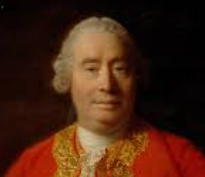
Nature has pointed out a mixed kind of life as most suitable to the human race, and secretly admonished them to allow none of these biases to draw too much, so as to incapacitate them for other occupations and entertainments. Indulge your passion for science, says she, but let your science be human, and such as may have a direct reference to action and society. Abstruse thought and profound researches I prohibit, and will severely punish, by the pensive melancholy which they introduce, by the endless uncertainty in which they involve you, and by the cold reception which your pretended discoveries shall meet with, when communicated. Be a philosopher; but, amidst all your philosophy, be still a man.
▼
Source
source
Section 1 : Of The Different Species of Philosophy
7 months 3 weeks ago
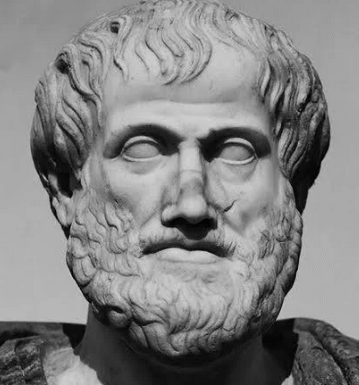
Knowledge of the fact differs from knowledge of the reason for the fact.
6 months 3 weeks ago
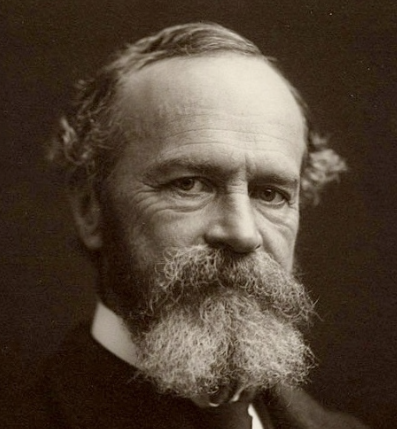
But such a straight identification of religion with any and every form of happiness leaves the essential peculiarity of religious happiness out. The more commonplace happinesses which we get are 'reliefs,' occasioned by our momentary escapes from evils either experienced or threatened. But in its most characteristic embodiments, religious happiness is no mere feeling of escape. It cares no longer to escape. It consents to the evil outwardly as a form of sacrifice - inwardly it knows it to be permanently overcome. ... In the Louvre there is a picture, by Guido Reni, of St. Michael with his foot on Satan's neck. The richness of the picture is in large part due to the fiend's figure being there. The richness of its allegorical meaning also is due to his being there - that is, the world is all the richer for having a devil in it, so long as we keep our foot upon his neck.
▼
Source
source
Lecture II, "Circumscription of the Topic"
5 months 1 week ago
The petit-bourgeois is a man unable to imagine the Other. If he comes face to face with him, he blinds himself, ignores and denies him, or else transforms him into himself.
▼
Source
source
p. 151

3 months 2 weeks ago
"The people may eat grass": hasty words, which fly abroad irrevocable-and will send back tidings.
▼
Source
source
Pt. I, Bk. III, ch. 9.

2 months 3 weeks ago
The rule, acknowledged or not, seems to be that if we have great power we must use it. We would use a steam shovel to pick up a dime. We have experts who can prove there is no other way to do it.
▼
Source
source
The Loss of the Future

5 months 3 weeks ago
If they drive God from the earth, we shall shelter Him underground.
6 months 1 day ago
I believe in God, although I live very happily with atheists... It is very important not to mistake hemlock for parsley; but not at all so to believe or not in God.
▼
Source
source
As quoted in Against the Faith (1985) by Jim Herrick, p. 75
7 months 1 week ago
Show that you know this only, how you may never either fail to get what you desire or fall into what you avoid.
▼
Source
source
Book II, ch. 1, 37
6 months 4 weeks ago
The necessities of the time have accorded to the petty interests of every day life such overwhelming attention : the deep interests of actuality and the strife respecting these have engrossed all the powers and the forces of the mind - as also the necessary means - to so great an extent, that no place has been left to the higher inward life, the intellectual operations of a purer sort; and the better natures have thus been stunted in their growth, and in great measure sacrificed.
▼
Source
source
p. x Inaugural Address, delivered at Heidelberg on the 28th October(1816), Lectures on the history of philosophy, translated from German by E. S. Haldane in Three Volumes (1892-96) full text.
5 months 3 weeks ago
The preposterous distinction of rank, which render civilization a curse, by dividing the world between voluptuous tyrants and cunning envious dependents, corrupt, almost equally, every class of people, because respectability is not attached to the discharge of the relative duties of life, but to the station, and when the duties are not fulfilled, the affections cannot gain sufficient strength to fortify the virtue of which they are the natural reward. Still there are some loop-holes out of which a man may creep, and dare to think and act for himself; but for a woman it is an herculean task, because she has difficulties peculiar to her sex to overcome, which require almost super-human powers.
▼
Source
source
Ch. 9
3 months 1 week ago
A genius doesn't adjust his treatment of a theme to a tyrant's taste.

7 months 1 week ago
The Heavenly City outshines Rome, beyond comparison. There, instead of victory, is truth; instead of high rank, holiness; instead of peace, felicity; instead of life, eternity.
▼
Source
source
Book II, Chapter 29
5 months 3 weeks ago
All writers, not ours alone but foreigners also, who have sought to represent Absolute Beauty, were unequal to the task, for it is an infinitely difficult one. The beautiful is the ideal ; but ideals, with us as in civilized Europe, have long been wavering. There is in the world only one figure of absolute beauty: Christ. That infinitely lovely figure is, as a matter of course, an infinite marvel.
▼
Source
source
Letter to his Niece Sofia Alexandrovna, Geneva, January 1, 1868. Ethel Golburn Mayne, Letters of Fyodor Michailovitch Dostoyevsky to His Family and Friends (1879), Dostoevsky's Letters XXXIX, p. 136


6 months 3 weeks ago
If it be said, that an Omnipotent Creator, though under no necessity of employing contrivances such as man must use, thought fit to use them in order to leave traces that would enable man to recognize his creative hand, the answer is that this equally implies a limit to his omnipotence. For if he wanted men to know that they themselves and the world are his work, he, being omnipotent, had only to will that they should be aware of it.
▼
Source
source
pages 177-178;Early Modern Texts page 16

6 months 3 weeks ago
You could attach prices to thoughts. Some cost a lot, some a little. And how does one pay for thoughts? The answer, I think, is: with courage.
▼
Source
source
p. 52e

6 months 3 weeks ago
It comes, it comes!' they sang. 'Sleepers awake! It comes, it comes, it comes.' One dreadful glance over my shoulder I essayed - not long enough to see (or did I see?) the rim of the sunrise that shoots Time dead with golden arrows and puts to flight all phantasmal shapes. Screaming, I buried my face in the fold of the Teacher's robe. 'The morning! The morning!' I cried. 'I am caught by the morning and I am a ghost.'
▼
Source
source
Ch. 14
7 months 3 weeks ago
The gods had condemned Sisyphus to ceaselessly rolling a rock to the top of a mountain, whence the stone would fall back of its own weight. They had thought with some reason that there is no more dreadful punishment than futile and hopeless labor.
6 months 1 week ago
By the air which I breathe, and by the water which I drink, I will not endure to be blamed on account of this discourse.
▼
Source
source
As reported by Heraclides Ponticus (c. 360 BC), and Diogenes Laërtius, in Lives and Opinions of Eminent Philosophers, "Pythagoras", Sect. 6, in the translation of C. D. Yonge

6 months 3 weeks ago
The constitution of madness as mental illness, at the end of the eighteenth century, bears witness to a rupture in a dialogue, gives the separation as already enacted, and expels from the memory all those imperfect words, of no fixed syntax, spoken falteringly, in which the exchange between madness and reason was carried out. The language of psychiatry, which is a monologue by reason about madness, could only have come into existence in such a silence.
▼
Source
source
Preface to 1961 edition

5 months 1 week ago
A philosopher of imposing stature doesn't think in a vacuum. Even his most abstract ideas are, to some extent, conditioned by what is or is not known in the time when he lives.
▼
Source
source
Ch. 29, June 10, 1943.
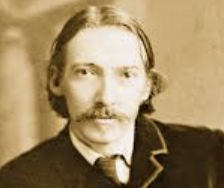
4 months 3 weeks ago
Youth is wholly experimental.
▼
Source
source
Letter to a Young Gentleman Scribner's Magazine (September 1888).
3 months 1 week ago
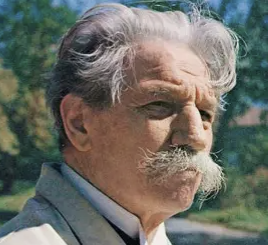
At sunset of the third day, near the village of Igendja, we moved along an island set in the middle of the wide river. On a sandback to our left, four hippopotamuses and their young plodded along in our same direction. Just then, in my great tiredness and discouragement, the phrase "Reverence for Life" struck me like a flash. As far as I knew, it was a phrase I had never heard nor ever read. I realized at once that it carried within itself the solution to the problem that had been torturing me. Now I knew that a system of values which concerns itself only with our relationship to other people is incomplete and therefore lacking in power for good. Only by means of reverence for life can we establish a spiritual and humane relationship with both people and all living creatures within our reach. Only in this fashion can we avoid harming others, and, within the limits of our capacity, go to their aid whenever they need us.
7 months 1 day ago
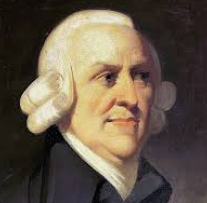
We rarely hear, it has been said, of the combinations of masters, though frequently of those of the workman. But whoever imagines, upon this account, that masters rarely combine, is as ignorant of the world as of the subject.
▼
Source
source
Chapter VIII, p. 80.
5 months 1 week ago
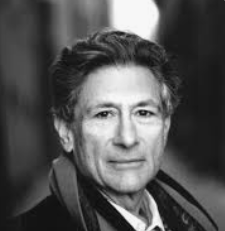
Theory is taught so as to make the student believe that he or she can become a Marxist, a feminist, an Afrocentrist, or a deconstructionist with about the same effort and commitment required in choosing items from a menu.
▼
Source
source
Chap 4, Sect 2
3 months 1 week ago
Life is to be fortified by many friendships. To love, and to be loved, is the greatest happiness of existence. If I lived under the burning sun of the equator, it would be a pleasure to me to think that there were many human beings on the other side of the world who regarded and respected me; I could and would not live if I were alone upon the earth, and cut off from the remembrance of my fellow-creatures. It is not that a man has occasion often to fall back upon the kindness of his friends; perhaps he may never experience the necessity of doing so; but we are governed by our imaginations, and they stand there as a solid and impregnable bulwark against all the evils of life.
▼
Source
source
Vol. I, ch. 6, "Of Friendship", p. 178
6 months 2 weeks ago
Nay, men, if any of you had heeded what I was ever foretelling and advising, ye would now neither be fearing a single man nor putting your hopes in a single man.
▼
Source
source
Quoted by Plutarch, Life of Cato the Younger, 52 Bernadotte Perrin, ed. Plutarch's Lives, Vol. 8, LCL 100 (1919), pp. 247, 361

6 months 3 weeks ago
Life consists with wildness. The most alive is the wildest. Not yet subdued to man, its presence refreshes him.

3 months 1 week ago
Who, then, can be more ignorant of nature than he who classes this cruel and hurtful vice as belonging to her best and most polished work?
7 months 2 weeks ago
If I hear the Way [of truth] in the morning, I am content even to die in that evening.
2 months 3 weeks ago
Faith is nothing else than reason grown courageous - reason raised to its highest power, expanded to its widest vision.
▼
Source
source
"Religious Perplexities" (1922), his Hibbert Lecture.
5 months 3 weeks ago
Every man has some reminiscences which he would not tell to everyone, but only to his friends. He has others which he would not reveal even to his friends, but only to himself, and that in secret. But finally there are still others which a man is even afraid to tell himself, and every decent man has a considerable number of such things stored away. That is, one can even say that the more decent he is, the greater the number of such things in his mind.
▼
Source
source
Part 1, Chapter 11

6 months 3 weeks ago
Suppose that I wish to deserve the title of "robber of remorse" and that I place in myself all the townspeople's repentence?
▼
Source
source
Orestes to Electra, Act 2
6 months 3 weeks ago
The Grecian are youthful and erring and fallen gods, with the vices of men, but in many important respects essentially of the divine race. In my Pantheon, Pan still reigns in his pristine glory, with his ruddy face, his flowing beard, and his shaggy body, his pipe and his crook, his nymph Echo, and his chosen daughter Iambe; for the great god Pan is not dead, as was rumored. No god ever dies. Perhaps of all the gods of New England and of ancient Greece, I am most constant at his shrine.
3 months 2 weeks ago
His Religion is not an easy one: with rigorous fasts, lavations, strict complex formulas, prayers five times a day, and abstinence from wine, it did not "succeed by being an easy religion." As if indeed any religion, or cause holding of religion, could succeed by that! It is a calumny on men to say that they are roused to heroic action by ease, hope of pleasure, recompense, - sugar-plums of any kind, in this world or the next! In the meanest mortal there lies something nobler.

2 months 3 weeks ago
Always take the short cut; and that is the rational one. Therefore say and do everything according to soundest reason.
▼
Source
source
IV, 51

5 months 1 week ago
The everyday world demands our attention, and prevents us from sinking into ourselves. As a romantic, I have always resented this: I like to sink into myself. The problems and anxieties of living make it difficult. Well, now I had an anxiety that referred to something inside of me, and it reminded me that my inner world was just as real and important as the world around me.
▼
Source
source
p. 39
2 months 3 weeks ago
You don't love yourself enough. Or you'd love your nature too, and what it demands of you. People who love what they do wear themselves down doing it, they even forget to wash or eat. Do you have less respect for your own nature than the engraver does for engraving, the dancer for the dance, the miser for money or the social climber for status? When they're really possessed by what they do, they'd rather stop eating and sleeping than give up practicing their arts. Is helping others less valuable to you? Not worth your effort?
▼
Source
source
(Hays translation) V, 1
3 months 2 weeks ago
In this sense Marxism performs the function of a religion, and its efficacy is of a religious character. But it is a caricature and a bogus form of religion, since it presents its temporal eschatology as a scientific system, which religious mythologies do not purport to be.
▼
Source
source
Epilogue, p. 1208
5 months 6 days ago
One has to do something new in order to see something new.
▼
Source
source
J 1770
5 months 1 week ago
Shakespeare wrote better poetry for not knowing too much; Milton, I think, knew too much finally for the good of his poetry.
▼
Source
source
Ch. 43, November 11, 1947.

6 months 2 weeks ago
Men have made an idol of luck as an excuse for their own thoughtlessness. Luck seldom measures swords with wisdom. Most things in life quick wit and sharp vision can set right.
CivilSimian.com created by AxiomaticPanic, CivilSimian, Kalokagathia