

5 months 3 weeks ago
This opinion... appears to be ancient... that the one, excess and defect, are the principles of things... It is not... probable that there are more than three principles... Essence is one certain genus of being: so that principles will differ from each other in prior and posterior alone, but not in genus, for in one genus there is always one contrariety, and all contrarieties appear to be referred to one. That there is neither one element, therefore, nor more than two or three, is evident.

4 months 3 weeks ago
The more we learn about the world, and the deeper our learning, the more conscious, specific, and articulate will be our knowledge of what we do not know, our knowledge of our ignorance. For this, indeed, is the main source of our ignorance - the fact that our knowledge can be only finite, while our ignorance must necessarily be infinite. Variant translation: The more we learn about the world, and the deeper our learning, the more conscious, clear, and well-defined will be our knowledge of what we do not know, our knowledge of our ignorance. The main source of our ignorance lies in the fact that our knowledge can only be finite, while our ignorance must necessarily be infinite.

4 months 3 weeks ago
The difference between the first- and second-best things in art absolutely seems to escape verbal definition - it is a matter of a hair, a shade, an inward quiver of some kind - yet what miles away in the point of preciousness!
▼
Source
source
To Henry Rutgers Marshall, 7 February 1899
4 months 3 weeks ago
The scene should be gently open'd, and his entrance made step by step, and the dangers pointed out that attend him from several degrees, tempers, designs, and clubs of men. He should be prepared to be shocked by some, and caress'd by others; warned who are like to oppose, who to mislead, who to undermine him, and who to serve him. He should be instructed how to know and distinguish them; where he should let them see, and when dissemble the knowledge of them and their aims and workings.
▼
Source
source
Sec. 94
3 months 2 weeks ago
True poetry is a function of awakening. It awakens us, but it must retain the memory of previous dreams.
▼
Source
source
Introduction
4 months 3 weeks ago
Freedom is only necessity understood.
▼
Source
source
The Dilemma of Determinism, 1884

3 weeks 1 day ago
I think myself that we have more machinery of government than is necessary, too many parasites living on the labor of the industrious.
▼
Source
source
Letter to William Ludlow
4 months 3 weeks ago
The most any one can do is to confess as candidly as he can the grounds for the faith that is in him, and leave his example to work on others as it may.
▼
Source
source
The Dilemma of Determinism, 1884
3 weeks 1 day ago
I am not afraid to appeal to the nation at large, to posterity, and still less to that Being Who sees Himself our motives, Who will judge us from His own knowledge of them.
▼
Source
source
Writings (1904), Vol. XI, p. 44, to Abigail Adams on July 22, 1804.
1 month 1 week ago
Here and everywhere is the struggle for existence, life inextricably enmeshed with war. All life living at the expense of life, every organism eating other organisms forever.
▼
Source
source
Ch. 4 : On Old Age

4 months 3 weeks ago
What do you want to do with the [Communist] Party? A racing stable? What good is it to sharpen a knife every day if you never use it for slicing? A party is never more than a means. There is only one objective: power.
▼
Source
source
Hoederer to Hugo, Act 5, sc. 3

4 months 1 week ago
For a thinking man is where Wisdom is at home.
▼
Source
source
Ahunuvaiti Gatha; Yasna 30, 9.

3 months 4 weeks ago
Times before you, when even the living men were Antiquities; when the living might exceed the dead, and to depart this world, could not be properly said, to go unto the greater number. Dedication

5 months 1 day ago
The obliteration of the evil hath been practised by two means, some kind of redemption or expiation of that which is past, and an inception or account de novo for the time to come. But this part seemeth sacred and religious, and justly; for all good moral philosophy (as was said) is but a handmaid to religion.
▼
Source
source
Book II, xxii, 14

5 months ago
Why may not a goose say thus: "All the parts of the universe I have an interest in: the earth serves me to walk upon, the sun to light me; the stars have their influence upon me; I have such an advantage by the winds and such by the waters; there is nothing that yon heavenly roof looks upon so favourably as me. I am the darling of Nature! Is it not man that keeps and serves me?"
▼
Source
source
Book II, Ch. 12. Apology for Raimond Sebond

4 months 3 weeks ago
Great men, great nations, have not been boasters and buffoons, but perceivers of the terror of life, and have manned themselves to face it.
▼
Source
source
Fate
3 months 5 days ago
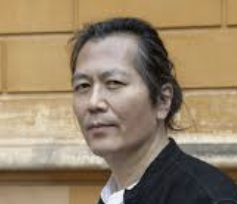
Every religious practice is an exercise in attention. A temple is the highest degree of attention.
2 months 2 weeks ago
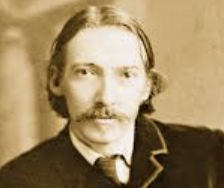
Them that die will be the lucky ones!
▼
Source
source
Ch. 20, Silver's Embassy.

2 months 3 weeks ago
And therefore just as a brigand caught in broad daylight in the act cannot persuade us that he did not lift his knife in order to rob his victim of his purse, and had no thought of killing him, we too, it would seem, cannot persuade ourselves or others that the soldiers and policemen around us are not to guard us, but only for defense against foreign foes, and to regulate traffic and fetes and reviews; we cannot persuade ourselves and others that we do not know that the men do not like dying of hunger, bereft of the right to gain their subsistence from the earth on which they live; that they do not like working underground, in the water, or in the stifling heat, for ten to fourteen hours a day, at night in factories to manufacture objects for our pleasure. One would imagine it impossible to deny what is so obvious. Yet it is denied.
▼
Source
source
Chapter XII, Conclusion-Repent Ye, for the Kingdom of Heaven is at Hand
2 months 2 weeks ago
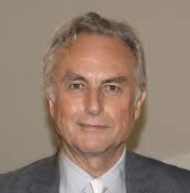
Eternity is best spent under a general anesthetic - which is what is going to happen.
▼
Source
source
Interview with Joe Rogan on The Joe Rogan Experience (2019);
1 month 3 weeks ago
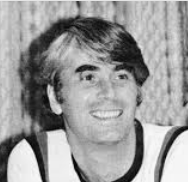
Though the framework is libertarian and laissez-faire, individual communities within it need not be, and perhaps no community within it will choose to be so. Thus, the characteristics of the framework need not pervade the individual communities. In this laissez-faire system it could turn out that though they are permitted, there are no actually functioning "capitalist" institutions; or that some communities have them and others don't or some communities have some of them, or what you will.
▼
Source
source
Ch. 10 : A Framework for Utopia; The Framework as Utopian Common Ground, p. 320
4 months 1 week ago
From Richard McKeon and Robert Brumsbaugh I learned to view the history of philosophy as a series, not of alternative solutions to the same problems, but of quite different sets of problems. From Rudolph Carnap and Carl Hempel I learned how pseudo-problems could be revealed as such by restarting them in the formal mode of speech. From Charles Hartshorne and Paul Weiss I learned how they could be so revealed by being translated into Whiteheadian or Hegelian terms.
▼
Source
source
Preface
2 months 2 weeks ago
What I can't understand is why you can't see the extraordinary beauty of the idea that life started from nothing - that is such a staggering, elegant, beautiful thing, why would you want to clutter it up with something so messy as a God?
▼
Source
source
" During his conversation with the Archbishop of Canterbury, Dr. Rowan Williams, as quoted in The Telegraph, in 2012-02-24. In "Richard Dawkins: I can't be sure God does not exist"
1 month 2 weeks ago
He who exerts his mind to the utmost knows his nature.
▼
Source
source
7A:1, as translated by Wing-tsit Chan in A Source Book in Chinese Philosophy (1963), p. 62
5 months 2 weeks ago
What a human being believes, however, no matter with what ardor, is not necessarily objective truth.
2 months 1 day ago
Our present-day neurochemical cocktail, we are asked to believe, is the medium through which alien realms of consciousness can be grasped and neutrally appraised from a third-person perspective. Empirical research suggests this optimism is at best naïve.
▼
Source
source
Storming Heaven: LSD and the American Dream, BLTC Research

3 months 2 weeks ago
Nothing is a better proof of how far humanity has regressed than the impossibility of finding a single nation, a single tribe, among whom birth still provokes mourning and lamentations.

2 months 2 weeks ago
The telegraph press mosaic is acoustic space as much as an electric circus.
2 months 2 weeks ago
It is a bad plan that admits of no modification.
▼
Source
source
Maxim 469

5 months 1 week ago
Life is one long struggle in the dark.
▼
Source
source
Book II, line 54 (tr. Rouse)

1 month 1 week ago
I here, on the very threshold, protest against it in reference to Paganism, and to all other isms by which man has ever for a length of time striven to walk in this world. They have all had a truth in them, or men would not have taken them up. Quackery and dupery do abound; in religions, above all in the more advanced decaying stages of religions, they have fearfully abounded: but quackery was never the originating influence in such things; it was not the health and life of such things, but their disease, the sure precursor of their being about to die! Let us never forget this.
2 months 1 day ago
In future, nerve cell responsiveness to naturally occurring endogenous opioids can be increased via receptor enrichment in the brain too. In principle, we can modulate their lifelong "overexpression", intermittently heightened (or gently diminished) by whatever kinds of personal and environmental contingencies we judge fit. Both functionally and anatomically, our reward pathways can be made "bigger and better". But intelligent emotional self-mastery will involve re-engineering the mind-brain so we derive the most intense rewards from activities we deem most lastingly worthwhile: i.e. prioritising our higher-order desires over legacy first-order appetites. Natural selection has "encephalised" our emotions to benefit our genes. Rational agents can "re-encephalise" our emotions to benefit us.
▼
Source
source
Utopian Neuroscience, BLTC Research, 2019

4 months 3 weeks ago
We love those who hate our enemies, and if we had no enemies there would be very few people whom we should love. All this, however, is only true so long as we are concerned solely with attitudes towards other human beings. You might regard the soil as your enemy because it yields reluctantly a niggardly subsistence. You might regard Mother Nature in general as your enemy, and envisage human life as a struggle to get the better of Mother Nature. If men viewed life in this way, cooperation of the whole human race would become easy. And men could easily be brought to view life in this way if schools, newspapers, and politicians devoted themselves to this end. But schools are out to teach patriotism; newspapers are out to stir up excitement; and politicians are out to get re-elected. None of the three, therefore, can do anything towards saving the human race from reciprocal suicide.
3 months 3 weeks ago
We have busied ourselves and contented ourselves long enough with speaking and writing; now at last we demand that the word become flesh, the spirit matter; we are as sick of political as we are of philosophical idealism; we are determined to become political materialists.
▼
Source
source
Lecture I, Occasion and Context

3 months 3 weeks ago
It was not only that I could not become spiteful, I did not know how to become anything; neither spiteful nor kind, neither a rascal nor an honest man, neither a hero nor an insect. Now, I am living out my life in my corner, taunting myself with the spiteful and useless consolation that an intelligent man cannot become anything seriously, and it is only the fool who becomes anything.
▼
Source
source
Part 1, Chapter 1
5 months 2 weeks ago
There are many aspects of the universe that still cannot be explained satisfactorily by science; but ignorance only implies ignorance that may someday be conquered. To surrender to ignorance and call it God has always been premature, and it remains premature today.
1 month 3 days ago
The individual who is subordinate to an objective law feels himself determined by it, while he, in turn, in no way determines the law, and has no possibility of reacting to it in a manner which could influence it-quite in contrast to even the most miserable slave, who, in some fashion at last, can still in this sense react to his master.
▼
Source
source
"Domination" (1908), in On Individuality and Social Forms (1971), pp. 113-114

3 months 2 weeks ago
The Kingdom is like a wise fisherman who cast his net into the sea and drew it up from the sea full of small fish. Among them the wise fisherman found a fine large fish. He threw all the small fish back into the sea and chose the large fish without difficulty. Whoever has ears to hear, let him hear.

2 weeks 5 days ago
The mind, like the body, has its contagious diseases and its scurvy. …We catch everything from those with whom we come in contact; their gestures, their accent, etc.
2 months 2 weeks ago
Any new technology is an evolutionary and biological mutation opening doors of perception and new spheres of action to mankind.
▼
Source
source
(p. 67)
3 months 2 weeks ago
Master, we saw one casting out devils in thy name; and we forbad him, because he followeth not with us. And Jesus said unto him, Forbid him not: for he that is not against us is for us.
▼
Source
source
Luke 9:49-50 (KJV)
1 month 3 days ago
Zen does not confuse spirituality with thinking about God while one is peeling potatoes. Zen spirituality is just to peel the potatoes. Paraphrase of original text which reads "It does not confuse spirituality with thinking about God while one is peeling potatoes. Zen spirituality is just to peel the potatoes.
▼
Source
source
The Way of Zen, Pt. 2, Ch. 2
3 months 2 weeks ago
Professional philosophers are usually only apologists: that is, they are absorbed in defending some vested illusion or some eloquent idea. Like lawyers or detectives, they study the case for which they are retained.
▼
Source
source
pp. 48-49

4 months 3 weeks ago
The heavens are as deep as our aspirations are high.
▼
Source
source
Quoted in Maturin M. Ballou (ed.) Pearls of Thought (Boston: Houghton, Mifflin and Co., 1881) p. 21

3 months 1 week ago
For what is specific in the Catholic religion is immortalization and not justification, in the Protestant sense. Rather is this latter ethical. It is from Kant, in spite of what orthodox Protestants may think of him, that Protestantism derived its penultimate conclusions - namely, that religion rests upon morality, and not morality upon religion, as in Catholicism.
5 months ago
My life has been full of terrible misfortunes most of which never happened.
3 weeks 1 day ago
They have retired into the Judiciary as a stronghold. There the remains of federalism are to be preserved and fed from the Treasury; and from that battery all the works of republicanism are to be beaten down and erased.
▼
Source
source
Letter to J. Dickinson

4 months 3 weeks ago
He [the child] does not despise real woods because he has read of enchanted woods: the reading makes all real woods a little enchanted.
▼
Source
source
"On Three Ways of Writing for Children", 1952
3 months 3 weeks ago
Just as when a man commits suicide ne negates the body, this rational limit of subjectivity, so when he lapses into fantastic and trascendental practice he associates himself with embodied divine and ghostly appearances, namely, he negates in practise the difference between imagination and perception.
▼
Source
source
Part III, Section 29
3 weeks 1 day ago
Among the sayings and discourses imputed to him [Jesus] by his biographers, I find many passages of fine imagination, correct morality, and of the most lovely benevolence; and others again of so much ignorance, so much absurdity, so much untruth, charlatanism, and imposture, as to pronounce it impossible that such contradictions should have proceeded from the same being. I separate, therefore, the gold from the dross; restore to Him the former, and leave the latter to the stupidity of some, and roguery of others of His disciples. Of this band of dupes and impostors, Paul was the great Coryphaeus, and first corruptor of the doctrines of Jesus. These palpable interpolations and falsifications of His doctrines, led me to try to sift them apart.
▼
Source
source
Letter to William Short
CivilSimian.com created by AxiomaticPanic, CivilSimian, Kalokagathia