


3 months 3 weeks ago
So long as man remains free he strives for nothing so incessantly and so painfully as to find some one to worship.
1 month 1 week ago
"New friends, however, will not be the same." No, nor will you yourself remain the same; you change with every day and every hour.
4 months 3 weeks ago
People who live in society have learned how to see themselves in mirrors as they appear to their friends. I have no friends. Is that why my flesh is so naked?
▼
Source
source
Diary entry of Friday (2 February)

3 months 2 weeks ago
This is how I recognize an authentic poet: by frequenting him, living a long time in the intimacy of his work, something changes in myself, not so much my inclinations or my tastes as my very blood, as if a subtle disease had been injected to alter its course, its density and nature. To live around a true poet is to feel your blood run thin, to dream a paradise of anemia, and to hear, in your veins, the rustle of tears.

4 months 3 weeks ago
Oh providence! Oh nature! Treasure of the poor, resource of the unfortunate. The person who feels, knows your holy laws and trusts them, the person whose heart is at peace and whose body does not suffer, thanks to you is not entirely prey to adversity.
▼
Source
source
Second Dialogue; translated by Judith R. Bush, Christopher Kelly, Roger D. Masters
5 months 1 week ago
People travel to wonder at the height of mountains, at the huge waves of the sea, at the long courses of rivers, at the vast compass of the ocean, at the circular motion of the stars; and they pass by themselves without wondering.
▼
Source
source
Variant: Men go abroad to admire the heights of mountains, the mighty billows of the sea, the broad tides of rivers, the compass of the ocean, and the circuits of the stars, and pass themselves by. X
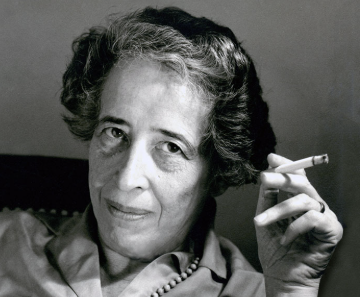
4 months 3 weeks ago
Political questions are far too serious to be left to the politicians.
▼
Source
source
Men in Dark Times
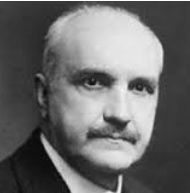
3 months 2 weeks ago
No system would have ever been framed if people had been simply interested in knowing what is true, whatever it may be. What produces systems is the interest in maintaining against all comers that some favourite or inherited idea of ours is sufficient and right.
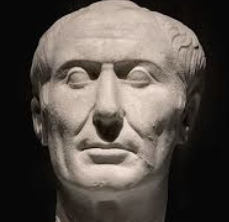
2 months 2 weeks ago
Patience is a remedy for every sorrow.
▼
Source
source
Maxim 170
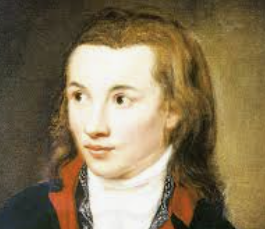
3 months 2 weeks ago
The normal present connects the past and the future through limitation. Contiguity results, crystallization by means of solidification. There also exists, however, a spiritual present that identifies past and future through dissolution, and this mixture is the element, the atmosphere of the poet.
▼
Source
source
Fragment No. 109

5 months 1 day ago
Death is a friend of ours; and he that is not ready to entertain him is not at home.
▼
Source
source
An Essay on Death, published in The Remaines of the Right Honourable Francis Lord Verulam (1648), which may not have been written by Bacon
1 month 2 weeks ago
The destructive work of totalitarian machinery, whether or not this word is used, is usually supported by a special kind of primitive social philosophy. It proclaims not only that the common good of 'society' has priority over the interests of individuals, but that the very existence of individuals as persons is reducible to the existence of the social 'whole'; in other words, personal existence is, in a strange sense, unreal. This is a convenient foundation for any ideology of slavery.
▼
Source
source
"Totalitarianism and the Virtue of the Lie", as quoted in Is God Happy? Selected Essays (2013), Basic Books, p. 57

5 months 3 weeks ago
Are designations congruent with things? Is language the adequate expression of all realities? It is only by means of forgetfulness that man can ever reach the point of fancying himself to possess a "truth" of the grade just indicated. If he will not be satisfied with truth in the form of tautology, that is to say, if he will not be content with empty husks, then he will always exchange truths for illusions.
2 months 2 weeks ago
Since Sputnik there is no Nature. Nature is an item contained in a man-made environment of satellites and information.
3 months 5 days ago
For this is our central human problem: that we are almost constantly the victims of our emotions, always being swept up and down on a kind of inner-switchback. We possess a certain control over them; we can 'direct our thoughts' -- or feelings -- in such a way as to intensify them. This is certainly our most remarkable human characteristic: imagination. Animals require actual physical stimuli to trigger their experience. A man can retreat into a book -- or a daydream -- and live through certain experiences quite independent of the physical world. He can even, for example, imagine a sexual encounter, and not only experience all the appropriate physical responses, but even the sexual climax. Such a curious ability is far beyond the power of any animal.
▼
Source
source
p. 23
4 months 1 week ago
He will through life be master of himself and a happy man who from day to day can have said, "I have lived: tomorrow the Father may fill the sky with black clouds or with cloudless sunshine."
▼
Source
source
Book III, ode xxix, line 41

4 months 2 weeks ago
This aristocratic thesis is... the demos, the people, are the most numerous... also comprised of the most ordinary, and... even the worst, citizens. Therefore... what is best for the demos cannot be what is best for the polis... the city.
4 months 3 weeks ago
It is an odd circumstance that neither the old nor the new, by itself, is interesting; the absolutely old is insipid; the absolutely new makes no appeal at all. The old in the new is what claims the attention,-the old with a slightly new turn.
▼
Source
source
Chapter XI: Attention
3 weeks 1 day ago
If the debt which the banking companies owe be a blessing to anybody, it is to themselves alone, who are realizing a solid interest of eight or ten per cent on it. As to the public, these companies have banished all our gold and silver medium, which, before their institution, we had without interest, which never could have perished in our hands, and would have been our salvation now in the hour of war; instead of which they have given us two hundred million of froth and bubble, on which we are to pay them heavy interest, until it shall vanish into air... We are warranted, then, in affirming that this parody on the principle of 'a public debt being a public blessing,' and its mutation into the blessing of private instead of public debts, is as ridiculous as the original principle itself. In both cases, the truth is, that capital may be produced by industry, and accumulated by economy; but jugglers only will propose to create it by legerdemain tricks with paper.
▼
Source
source
ME 13:423
3 months 1 week ago
The prestige which constitutes three-fourths of might is first of all made up of that superb indifference which the powerful have for the weak, an indifference so contagious that it is communicated even to those who are its object.
▼
Source
source
in The Simone Weil Reader, p. 168
4 months 3 weeks ago
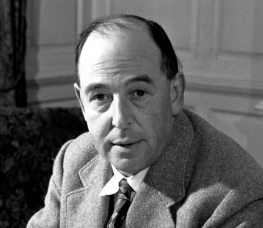
Every story of conversion is the story of a blessed defeat.
▼
Source
source
Foreword to Joy Davidman's Smoke on the Mountain, 1954
4 months 3 weeks ago
The "through-and-through" universe seems to suffocate me with its infallible impeccable all-pervasiveness. Its necessity, with no possibilities; its relations, with no subjects, make me feel as if I had entered into a contract with no reserved rights ... It seems too buttoned-up and white-chokered and clean-shaven a thing to speak for the vast slow-breathing unconscious Kosmos with its dread abysses and its unknown tides.
▼
Source
source
Essays in Radical Empiricism (1912), Ch. 12 : Absolutism and Empiricism
3 months 2 weeks ago
Happiness is the only sanction of life; where happiness fails, existence remains a mad and lamentable experiment.
3 months 1 week ago
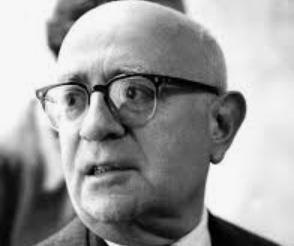
The conflicts that tear society apart resemble the distinction between the concept and the particular facts subordinated to it. ... Whatever refuses to abide by the unity imposed by the principle of dominion manifests itself not as something indifferent to that principle, but as an infringement of logic: as a contradiction.
▼
Source
source
p. 169

4 months 3 weeks ago
As geological time goes, it is but a moment since the human race began and only the twinkling of an eye since the arts of civilization were first invented. In spite of some alarmists, it is hardly likely that our species will completely exterminate itself. And so long as man continues to exist, we may be pretty sure that, whatever he may suffer for a time, and whatever brightness may be eclipsed, he will emerge sooner or later, perhaps strengthened and reinvigorated by a period of mental sleep. The universe is vast and men are but tiny specks on an insignificant planet. But the more we realize our minuteness and our impotence in the face of cosmic forces, the more astonishing becomes what human beings have achieved.
▼
Source
source
"If We are to Survive this Dark Time", The New York Times Magazine, 9/3/1950

1 month 1 week ago
There is clear truth in the idea that a struggle from the lower classes of society, towards the upper regions and rewards of society, must ever continue. Strong men are born there, who ought to stand elsewhere than there.

4 months 1 week ago
Man is a universe in little [Microcosm].
▼
Source
source
Freeman (1948), p. 150
1 month 1 week ago
A great soul, any sincere soul, knows not what he is,-alternates between the highest height and the lowest depth; can, of all things, the least measure-Himself! What others take him for, and what he guesses that he may be; these two items strangely act on one another, help to determine one another. With all men reverently admiring him; with his own wild soul full of noble ardors and affections, of whirlwind chaotic darkness and glorious new light; a divine Universe bursting all into godlike beauty round him, and no man to whom the like ever had befallen, what could he think himself to be?
4 months 3 weeks ago
The Chinese are a great nation, incapable of permanent suppression by foreigners. They will not consent to adopt our vices in order to acquire military strength; but they are willing to adopt our virtues in order to advance in wisdom. I think they are the only people in the world who quite genuinely believe that wisdom is more precious than rubies. That is why the West regards them as uncivilized.
▼
Source
source
The Problem of China (1922), Ch. XIII: Higher education in China
2 months 2 weeks ago
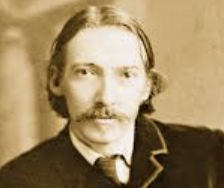
Decisive actions are often taken in a moment and without any conscious deliverance from the rational parts of man.
▼
Source
source
The Rajah's Diamond, Story of the Young Man in Holy Orders.
4 months 3 weeks ago
The Value of myth is that it takes all the things you know and restores to them the rich significance which has been hidden by the veil of familiarity.
▼
Source
source
p. 90

4 months 3 weeks ago
The Upanishads and the Vedas haunt me. In them I have found eternal compensation, unfathomable power, unbroken peace.
▼
Source
source
Quoted in S. Londhe, A Tribute to Hinduism, 2008
3 months 3 weeks ago
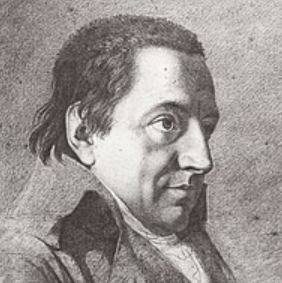
It is the destiny of our race to become united into one great body, thoroughly connected in all its parts, and possessed of similar culture. Nature, and even the passions and vices of Man, have from the beginning tended towards this end. A great part of the way towards it is already passed, and we may surely calculate that it will in time be reached.
▼
Source
source
Jane Sinnett, trans 1846 p. 88
1 month 1 week ago
Mahomet can work no miracles; he often answers impatiently: I can work no miracles. I? "I am a Public Preacher;" appointed to preach this doctrine to all creatures. Yet the world, as we can see, had really from of old been all one great miracle to him. Look over the world, says he; is it not wonderful, the work of Allah; wholly "a sign to you," if your eyes were open!
4 months 3 weeks ago
The normal process of life contains moments as bad as any of those which insane melancholy is filled with, moments in which radical evil gets its innings and takes its solid turn. The lunatic's visions of horror are all drawn from the material of daily fact. Our civilization is founded on the shambles, and every individual existence goes out in a lonely spasm of helpless agony. If you protest, my friend, wait till you arrive there yourself! ... Here on our very hearths and in our gardens the infernal cat plays with the panting mouse, or holds the hot bird fluttering in her jaws. Crocodiles and rattlesnakes and pythons are at this moment vessels of life as real as we are; their loathsome existence fills every minute of every day that drags its length along; and whenever they or other wild beasts clutch their living prey, the deadly horror which an agitated melancholiac feels is the literally right reaction on the situation.
▼
Source
source
Lectures VI and VII, "The Sick Soul"
2 weeks 5 days ago
Thou sufferest justly: for thou choosest rather to become good to-morrow than to be good to-day.
▼
Source
source
VIII, 22

4 months 3 weeks ago
What would become of history, had we not a dependence on the veracity of the historian, according to the experience, what we have had of mankind?
▼
Source
source
§ 8.18
4 months 3 weeks ago
Capitalist production does not exist at all without foreign commerce.
▼
Source
source
Vol. II, Ch. XX, p. 474 (See also...David Ricardo, The Principles of Political Economy and Taxation, Ch. VII, p. 81).

2 months 1 day ago
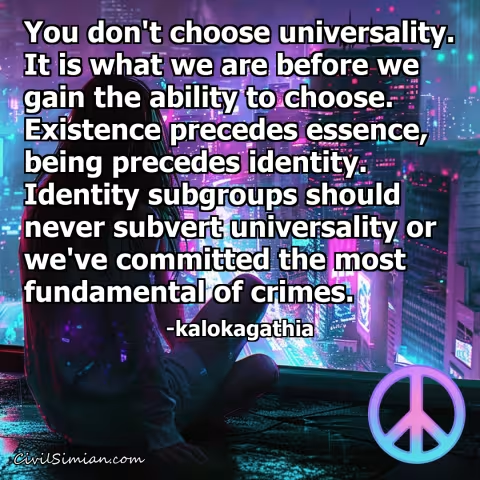
Universal Humanism:
1) Preserve Life (end)
Precludes those who think they get to decide who lives and who dies.
2) Avoid and limit suffering (means)
Precludes those who use absurd exceptions to turn their backs on functional rules.
5 months 1 week ago
They are such fools that they seem to expect that, though the Republic is lost, their fish-ponds will be safe.
▼
Source
source
Letters to Atticus, Book I, 18.

3 months 3 weeks ago
I believe the world grows near its end, yet is neither old nor decayed, nor will ever perish upon the ruins of its own principles.
▼
Source
source
Section 45
1 month 3 days ago
One sees that all explicit opposites are implicit allies-correlative in the sense that they "gowith" each other and cannot exist apart. This, rather than any miasmic absorption of differences into acontinuum of ultimate goo, is the metaphysical unity underlying the world. For this unity is not mere one-ness as opposed to multiplicity, since these two terms are themselves polar. The unity, or inseparability, of one and many is therefore referred to in Vedanta philosophy as "nonduality" (advaita) to distinguish it from simple uniformity.
▼
Source
source
p. 107-108

3 months 3 weeks ago
Strong as it looks at the outset, State-agency perpetually disappoints every one. Puny as are its first stages, private efforts daily achieve results that astound the world.
▼
Source
source
Vol. 3, Ch. VII, Over-Legislation
4 months 3 weeks ago
Wherever you are it is your own friends who make your world.
▼
Source
source
As quoted in The Thought and Character of William James (1935) by Ralph Barton Perry, Vol. II, ch. 91
4 months 3 weeks ago
The offender never forgives.
▼
Source
source
Émile et Sophie, ou Les Solitaires, "Lettre Première", 1781
1 month 1 week ago
We shall either learn to know a Hero, a true Governor and Captain, somewhat better, when we see him; or else go on to be forever governed by the Unheroic;-had we ballot-boxes clattering at every street-corner, there were no remedy in these.

4 months 3 weeks ago
We should be considerate to the living; to the dead we owe only the truth.
▼
Source
source
Letter to M. de Grenonville, 1719
4 months 3 weeks ago
In reality, the labourer belongs to capital before he has sold himself to capital.
▼
Source
source
Vol. I, Ch. 23, pg. 633.
CivilSimian.com created by AxiomaticPanic, CivilSimian, Kalokagathia