


6 months 2 weeks ago
Because of your unbelief: for verily I say unto you, If ye have faith as a grain of mustard seed, ye shall say unto this mountain, Remove hence to yonder place; and it shall remove; and nothing shall be impossible unto you. Howbeit this kind goeth not out but by prayer and fasting.
▼
Source
source
17:20-21 (KJV)
8 months 3 weeks ago
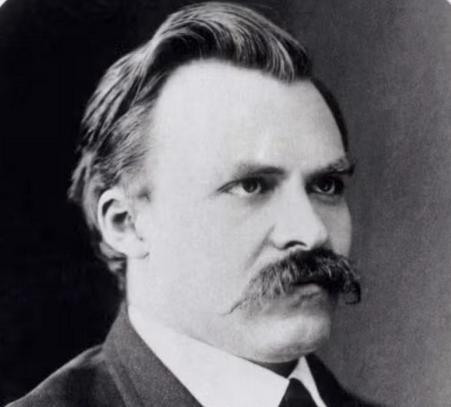
Whereas the man of action binds his life to reason and its concepts so that he will not be swept away and lost, the scientific investigator builds his hut right next to the tower of science so that he will be able to work on it and to find shelter for himself beneath those bulwarks which presently exist. And he requires shelter, for there are frightful powers which continuously break in upon him, powers which oppose scientific "truth" with completely different kinds of "truths" which bear on their shields the most varied sorts of emblems.

8 months 2 days ago
We seek and offer ourselves to be gulled.
▼
Source
source
Book III, Ch. 11. Of Cripples

3 months 3 weeks ago
A Natural Group is steadily fixed, though not precisely limited; it is given in position, though not circumscribed; it is determined, not by a boundary without, but by a central point within; -not by what it strictly excludes, but by what it eminently includes; - by a Type, not by a Definition.

8 months 1 week ago
Thus the sum of things is ever being renewed, and mortal creatures live dependent one upon another. Some species increase, others diminish, and in a short space the generations of living creatures are changed and, like runners, pass on the torch of life.
▼
Source
source
Book II, line 75 (tr. Rouse)
6 months 1 week ago
In most men, the conscious and the unconscious being hardly ever make contact; consequently the conscious aim is to make himself as comfortable as possible with as little effort as possible. But there are other men, whom we have been calling, for convenience, 'Outsiders', whose conscious and unconscious being keep in closer contact, and the conscious mind is forever aware of the urge to care about 'more abundant life', and care less about comfort and stability and the rest of the notions that are so dear to the bourgeois.
▼
Source
source
Chapter Nine, Breaking the Circuit

5 months 3 weeks ago
One of the many effects of television on radio has been to shift radio from an entertainment medium into a kind of nervous information system.
▼
Source
source
(p. 298)

4 months 1 week ago
The shortest way to wealth is through the contempt of wealth.

7 months 3 weeks ago
Mathematics, rightly viewed, possesses not only truth, but supreme beauty - a beauty cold and austere, like that of sculpture, without appeal to any part of our weaker nature, without the gorgeous trappings of painting or music, yet sublimely pure, and capable of a stern perfection such as only the greatest art can show. The true spirit of delight, the exaltation, the sense of being more than Man, which is the touchstone of highest excellence, is to be found in mathematics as surely as in poetry. What is best in mathematics deserves not merely to be learnt as a task, but to be assimilated as a part of daily thought, and brought again and again before the mind with ever-renewed encouragement.

7 months 3 weeks ago
But supposing one tries to live by Pantheistic philosophy? Does it lead to a complacent Hegelian optimism?
▼
Source
source
Pilgrim's Regress 132-133
5 months 2 weeks ago
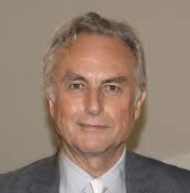
I am very conscious that you can't condemn people of an earlier era by the standards of ours. Just as we don't look back at the 18th and 19th centuries and condemn people for racism in the same way as we would condemn a modern person for racism, I look back a few decades to my childhood and see things like caning, like mild pedophilia, and can't find it in me to condemn it by the same standards as I or anyone would today.
▼
Source
source
Giles Whittell, "The world according to Richard Dawkins" (2013-09-07), The Times
6 months 1 week ago
This in turn suggests an answer to our question: what happened between the birth of De Sade and the birth of Krafft-Ebbing? The rise of the novel taught Europe to use its imagination. And when imagination was applied to sex, the result was the rise of pornography -- and of "sexual perversion."
▼
Source
source
p. 86
4 months 1 week ago
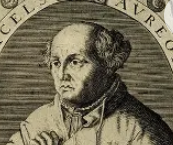
We have Divine Wisdom in the mortal body.Whatever does harm to the body, ruins the House of the Eternal.
6 months 1 week ago
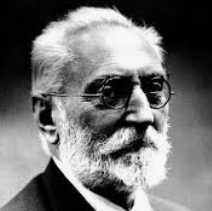
Proceeding from ourselves, from our own human consciousness, the only consciousness which we feel from within and in which feeling is identical with being, we attribute some sort of consciousness, more or less dim, to all living things, and even to the stones themselves, for they also live. And the evolution of organic beings is simply the struggle to realize fullness of consciousness through suffering, a continual aspiration to be others without ceasing to be themselves, to break and yet to preserve their proper limits.
3 months 2 weeks ago
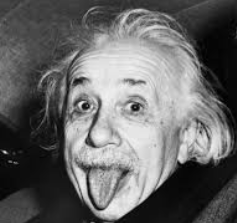
Why does this magnificent applied science which saves work and makes life easier bring us so little happiness? The simple answer runs: Because we have not yet learned to make sensible use of it. In war it serves that we may poison and mutilate each other. In peace it has made our lives hurried and uncertain. Instead of freeing us in great measure from spiritually exhausting labor, it has made men into slaves of machinery, who for the most part complete their monotonous long day's work with disgust and must continually tremble for their poor rations. ... It is not enough that you should understand about applied science in order that your work may increase man's blessings. Concern for the man himself and his fate must always form the chief interest of all technical endeavours; concern for the great unsolved problems of the organization of labor and the distribution of goods in order that the creations of our mind shall be a blessing and not a curse to mankind. Never forget this in the midst of your diagrams and equations.
▼
Source
source
Speech to students at the California Institute of Technology, in [http://select.nytimes.com/gst/abstract.html?res=F50A1FFF3F5E1B7A93C5A81789D85F458385F9&scp=4&sq=&st=p "Einstein Sees Lack in Applying Science"], The New York Times (16 February 1931)
3 months 2 weeks ago
Every man knows that in his work he does best and accomplishes most when he has attained a proficiency that enables him to work intuitively. That is, there are things which we come to know so well that we do not know how we know them. So it seems to me in matters of principle. Perhaps we live best and do things best when we are not too conscious of how and why we do them.
5 months 2 weeks ago
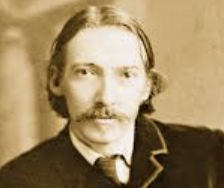
A happy man or woman is a better thing to find than a five-pound note. He or she is a radiating focus of goodwill; and their entrance into a room is as though another candle had been lighted. We need not care whether they could prove the forty-seventh proposition; they do a better thing than that, they practically demonstrate the great Theorem of the Liveableness of Life.
▼
Source
source
An Apology for Idlers.
6 months 2 weeks ago
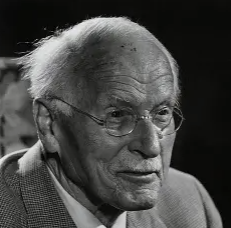
I know every numbskull will babble on about "black man," "maneater," "chance," and "retrospective interpretation," in order to banish something terribly inconvenient that might sully the familiar picture of childhood innocence. Ah, these good, efficient, healthy-minded people, they always remind me of those optimistic tadpoles who bask in a puddle in the sun, in the shallowest of waters, crowding together and amiably wriggling their tails, totally unaware that the next morning the puddle will have dried up and left them stranded. On a phallic dream he had as a young child.
▼
Source
source
p. 14
7 months 6 days ago
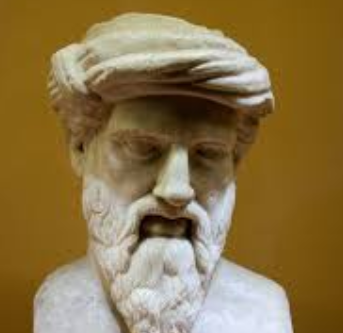
Govern your tongue before all other things, following the gods.
▼
Source
source
Symbol 7
7 months 3 weeks ago
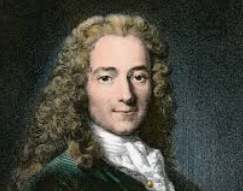
Every sensible man, every honorable man, must hold the Christian sect in horror.
▼
Source
source
Examen important de milord Bolingbroke (1736): Conclusion
6 months 2 weeks ago
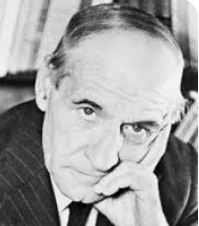
Spontaneous social action will be broken up over and over again by State intervention; no new seed will be able to fructify. Society will have to live for the State, man for the governmental machine. And as, after all, it is only a machine whose existence and maintenance depend on the vital supports around it, the State, after sucking out the very marrow of society, will be left bloodless, a skeleton, dead with that rusty death of machinery, more gruesome than the death of a living organism. Such was the lamentable fate of ancient civilisation. ... Already in the times of the Antonines (IInd Century), the State overbears society with its anti-vital supremacy. Society begins to be enslaved, to be unable to live except in the service of the State. The whole of life is bureaucratised. What results? The bureaucratisation of life brings about its absolute decay in all orders.
▼
Source
source
Chapter XIII: The Greatest Danger, The State
7 months 4 weeks ago
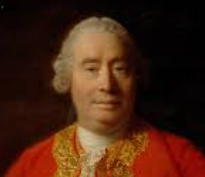
Eloquence, when at its highest pitch, leaves little room for reason or reflection; but addressing itself entirely to the fancy or the affections, captivates the willing hearers, and subdues their understanding. Happily, this pitch it seldom attains. But what a Tully or a Demosthenes could scarcely effect over a Roman or Athenian audience, every Capuchin, every itinerant or stationary teacher can perform over the generality of mankind, and in a higher degree, by touching such gross and vulgar passions.
▼
Source
source
Section 10 : Of Miracles Pt. 2
7 months 3 weeks ago
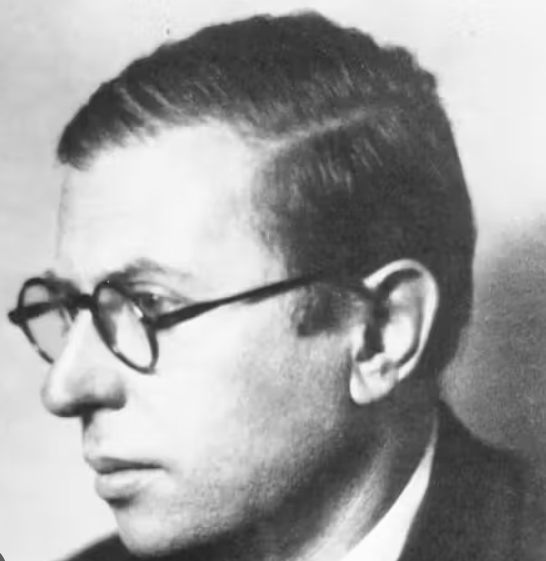
...the reality of society involves the socialization of certain unrealities.
▼
Source
source
p. 455
7 months 2 weeks ago
Think to yourself that every day is your last; the hour to which you do not look forward will come as a welcome surprise.
▼
Source
source
Book I, epistle iv, line 13-14
7 months 6 days ago
It is only necessary to make war with five things; with the maladies of the body, the ignorances of the mind, with the passions of the body, with the seditions of the city and the discords of families.
▼
Source
source
As quoted in The Biblical Museum: A Collection of Notes Explanatory, Homiletic, and Illustrative on the Holy Scriptures, Especially Designed for the Use of Ministers, Bible-students, and Sunday-school Teachers (1873) by James Comper Gray, Vol. V
7 months 3 weeks ago
And we feel that the hero has lived all the details of this night like annunciations, promises, or even that he lived only those that were promises, blind and deaf to all that did not herald adventure. We forget that the future was not yet there; the man was walking in the night without forethought, a night which offered him a choice of dull rich prizes, and he did not make his choice.
▼
Source
source
Diary entry of Saturday noon (10 February?)

6 months 2 weeks ago
By all evidence we are in the world to do nothing.
5 months 1 week ago
I ... understand why the saints were rarely married women. I am convinced it has nothing inherently to do, as I once supposed, with chastity or children. It has primarily to do with distractions ... Women's normal occupations in general run counter to creative life, or contemplative life or saintly life.
▼
Source
source
Ch. 2
8 months 2 weeks ago
It is impossible to live a pleasant life without living wisely and honorably and justly, and it is impossible to live wisely and honorably and justly without living pleasantly. Whenever any one of these is lacking, when, for instance, the man is not able to live wisely, though he lives honorably and justly, it is impossible for him to live a pleasant life.
3 months 2 weeks ago
Everything should be made simple as possible but no simpler.

6 months 3 weeks ago
All men that are ruined, are ruined on the side of their natural propensities.
▼
Source
source
No. 1, volume v, p. 286
8 months 3 weeks ago
The important thing isn't the soundness or otherwise of the argument, but for it to make you think.
6 months 2 weeks ago
Men do not sufficiently realise that their future is in their own hands. Theirs is the task of determining first of all whether they want to go on living or not. Theirs is the responsibility, then, for deciding if they want merely to live, or intend to make just the extra effort required for fulfilling, even on their refractory planet, the essential function of the universe, which is a machine for the making of gods.
7 months 4 weeks ago
The qualities most useful to ourselves are, first of all, superior reason and understanding, by which we are capable of discerning the remote consequences of all our actions, and of foreseeing the advantage or detriment which is likely to result from them: and secondly, self-command, by which we are enabled to abstain from present pleasure or to endure present pain, in order to obtain a greater pleasure or to avoid a greater pain in some future time. In the union of those two qualities consists the virtue of prudence, of all the virtues that which is most useful to the individual.
▼
Source
source
Chap. II.

6 months 4 weeks ago
It is almost never when a state of things is the most detestable that it is smashed, but when, beginning to improve, it permits men to breathe, to reflect, to communicate their thoughts with each other, and to gauge by what they already have the extent of their rights and their grievances. The weight, although less heavy, seems then all the more unbearable.
▼
Source
source
Letter to Pierre Freslon, 23 September 1853 Selected Letters, p. 296 as cited in Toqueville's Road Map p. 103
7 months 3 weeks ago
He who knows only his own side of the case, knows little of that. His reasons may be good, and no one may have been able to refute them. But if he is equally unable to refute the reasons on the opposite side; if he does not so much as know what they are, he has no ground for preferring either opinion.
▼
Source
source
Ch. II: Of the Liberty of Thought and Discussion

7 months 3 weeks ago
A nation never falls but by suicide.
▼
Source
source
1861
8 months 3 weeks ago
There is merely bad luck in not being loved; there is misfortune in not loving. All of us, today, are dying of this misfortune. For violence and hatred dry up the heart itself; the long fight for justice exhausts the love that nevertheless gave birth to it.
6 months 2 weeks ago
Sooner or later, each desire must encounter its lassitude: its truth . . .

7 months 3 weeks ago
If you feel irritated by the absurd remarks of two people whose conversation you happen to overhear, you should imagine that you are listening to a dialogue of two fools in a comedy.
▼
Source
source
T. B. Saunders, trans., § 38
7 months 3 weeks ago
Some part of life - perhaps the most important part - must be left to the spontaneous action of individual impulse, for where all is system there will be mental and spiritual death.
6 months 3 weeks ago
The divine life that underlies all appearance reveals itself never as a fixed and known entity, but as something that is to be; and after it has become what it was to be, it will reveal itself again to all eternity as something that is to be.
▼
Source
source
General Nature of New Eduction p. 45
8 months 1 week ago
Be bold to look towards God and say, "Use me henceforward for whatever you want; I am of one mind with you; I am yours; I refuse nothing that seems good to you; lead me where you will; wrap me in what clothes you will."
▼
Source
source
Book II, ch. 16, 42

7 months 3 weeks ago
This freedom from absolute, arbitrary power, is so necessary to, and closely joined with a man's preservation, that he cannot part with it, but by what forfeits his preservation and life together: for a man, not having the power of his own life, cannot, by compact, or his own consent, enslave himself to any one, nor put himself under the absolute, arbitrary power of another, to take away his life, when he pleases.
▼
Source
source
Second Treatise of Civil Government, Ch. IV, sec. 23
7 months 3 weeks ago
Every time you make a choice you are turning the central part of you, the part of you that chooses, into something a little different from what it was before. And taking your life as a whole, with all your innumerable choices, all your life long you are slowly turning this central thing either into a heavenly creature or into a hellish creature: either into a creature that is in harmony with God, and with other creatures, and with itself, or else into one that is in a state of war and hatred with God, and with its fellow-creatures, and with itself. To be the one kind of creature is heaven: that is, it is joy and peace and knowledge and power. To be the other means madness, horror, idiocy, rage, impotence, and eternal loneliness. Each of us at each moment is progressing to the one state or the other.
▼
Source
source
Book III, Chapter 4, "Morality and Psychoanalysis"
6 months 2 weeks ago
Metaphysical assertions, however, are statements of the psyche, and are therefore psychological. ... Whenever the Westerner hears the word "psychological," it always sounds to him like "only psychological."
▼
Source
source
Psyche and Symbol (1958), p. 285
CivilSimian.com created by AxiomaticPanic, CivilSimian, Kalokagathia