

1 month 1 week ago
Sixty years ago I knew everything. Now I know nothing. Education is a progressive discovery of our own ignorance.
▼
Source
source
Quoted in "Teachers: The Essence of the Centuries", Time magazine, 13 August 1965

3 months 2 weeks ago
How I wish I didn't know anything about myself and this world!

1 month 1 week ago
In all European countries, especially in England, one class of Captains and commanders of men, recognizable as the beginning of a new real and not imaginary "Aristocracy," has already in some measure developed itself: the Captains of Industry;-happily the class who above all, or at least first of all, are wanted in this time. In the doing of material work, we have already men among us that can command bodies of men. And surely, on the other hand, there is no lack of men needing to be commanded: the sad class of brother-men whom we had to describe as "Hodge's emancipated horses," reduced to roving famine,-this too has in all countries developed itself; and, in fatal geometrical progression, is ever more developing itself, with a rapidity which alarms every one. On this ground, if not on all manner of other grounds, it may be truly said, the "Organization of Labor" (not organizable by the mad methods tried hitherto) is the universal vital Problem of the world.
2 months 2 weeks ago
All human accomplishment has the same origin, identically. Imagination is a force of nature. Is this not enough to make a person full of ecstasy? Imagination, imagination, imagination. It converts to actual. It sustains, it alters, it redeems!
▼
Source
source
Henderson the Rain King (1959) [Viking/Penguin, 1984, ISBN 0-140-07269-1], ch. XVIII, p. 271


2 months 2 weeks ago
Everybody needs his memories. They keep the wolf of insignificance from the door.
▼
Source
source
Mr. Sammler's Planet (1970) [Penguin Classics, 2004, ISBN 0-142-43783-2], p. 156

4 months 3 weeks ago
A sect or party is an elegant incognito devised to save a man from the vexation of thinking.
▼
Source
source
June 20, 1831
1 month 1 week ago
It is always a genial laughter. Not at mere weakness, at misery or poverty; never. No man who can laugh, what we call laughing, will laugh at these things. It is some poor character only desiring to laugh, and have the credit of wit, that does so. Laughter means sympathy.

5 months 1 day ago
Among the celestial bodies that are revolving over our heads, though the motions are not the same, and though the force is not equal, yet they move, and ever have moved, without clashing, and in perfect harmony.
4 months 3 weeks ago
Born for success he seemed, With grace to win, with heart to hold, With shining gifts that took all eyes.
▼
Source
source
In Memoriam E. B. E.

2 weeks 5 days ago
What is divine is full of Providence. Even chance is not divorced from nature, from the inweaving and enfolding of things governed by Providence. Everything proceeds from it.
▼
Source
source
(Hays translation) All that is from the gods is full of Providence. II, 3

4 months 3 weeks ago
The atheist who affects to reason, and the fanatic who rejects reason, plunge themselves alike into inextricable difficulties. The one perverts the sublime and enlightening study of natural philosophy into a deformity of absurdities by not reasoning to the end. The other loses himself in the obscurity of metaphysical theories, and dishonours the Creator, by treating the study of his works with contempt. The one is a half-rational of whom there is some hope, the other a visionary to whom we must be charitable.
▼
Source
source
A Discourse, &c. &c.
2 weeks 5 days ago
Rememberest the gods, and that they wish not to be flattered, but wish all reasonable beings to be made like themselves; and... rememberest that what does the work of a fig-tree is a fig-tree, and that what does the work of a dog is a dog, and that what does the work of a bee is a bee, and that what does the work of a man is a man.
▼
Source
source
X, 8

3 months 1 week ago
The necessity for power is obvious, because life cannot be lived without order; but the allocation of power is arbitrary because all men are alike, or very nearly. Yet power must not seem to be arbitrarily allocated, because it will not then be recognized as power. Therefore prestige, which is illusion, is of the very essence of power.
▼
Source
source
p. 235

4 months 3 weeks ago
Men rush to California and Australia as if the true gold were to be found in that direction; but that is to go to the very opposite extreme to where it lies. They go prospecting farther and farther away from the true lead, and are most unfortunate when they think themselves most successful.
▼
Source
source
p. 489
1 month 1 week ago
Books-there is a good kind of a book and a bad kind of a book. I am not to assume that you are all ill acquainted with this; but I may remind you that it is a very important consideration at present. It casts aside altogether the idea that people have that if they are reading any book-that if an ignorant man is reading any book, he is doing rather better than nothing at all.

5 months 2 weeks ago
There are many aspects of the universe that still cannot be explained satisfactorily by science; but ignorance only implies ignorance that may someday be conquered. To surrender to ignorance and call it God has always been premature, and it remains premature today.
3 months 3 weeks ago
The world is the house of the strong. I shall not know until the end what I have lost or won in this place, in this vast gambling den where I have spent more than sixty years, dicebox in hand, shaking the dice.
▼
Source
source
Conclusion
3 months 1 week ago
The simultaneous existence of opposite virtues in the soul - like pincers to catch hold of God.
▼
Source
source
p. 92

3 months 2 weeks ago
I am the way and the truth and the life. No one comes to the Father except through me.
▼
Source
source
14:06
3 months 2 weeks ago
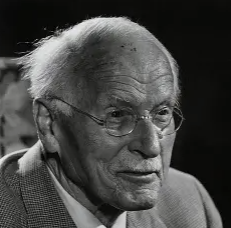
In all chaos there is a cosmos, in all disorder a secret order.
▼
Source
source
p. 32 (1981 edition) Originally presented at an Eranos conference.

2 months 1 day ago
[L]ike nonhuman animals in human factory farms, free-living nonhumans who are starving - or being disembowelled, asphyxiated or eaten alive - cannot console themselves by chanting the Four Noble Truths of Buddhism. The moral case for helping other sentient beings, regardless or race or species, does not rest on the distress their plight does (or doesn't) cause spectators.
▼
Source
source
Reply to Meet the people who want to turn predators into herbivores, TreeHugger, 2 Apr. 2015
5 months 2 weeks ago
The fall of Empire, gentlemen, is a massive thing, however, and not easily fought. It is dictated by a rising bureaucracy, a receding initiative, a freezing of caste, a damming of curiosity, a hundred other factors. It has been going on, as I have said, for centuries, and it is too majestic and massive a movement to stop.

4 months 2 weeks ago
But if you say: "How am I to know what he means, when I see nothing but the signs he gives?" then I say: "How is he to know what he means, when he has nothing but the signs either?"
▼
Source
source
§ 504

3 weeks 1 day ago
And even should the cloud of barbarism and despotism again obscure the science and libraries of Europe, this country remains to preserve and restore light and liberty to them. In short, the flames kindled on the fourth of July, 1776, have spread over too much of the globe to be extinguished by the feeble engines of despotism; on the contrary, they will consume these engines and all who work them.
▼
Source
source
Letter to John Adams, 12 September 1821

4 months 3 weeks ago
Some part of life - perhaps the most important part - must be left to the spontaneous action of individual impulse, for where all is system there will be mental and spiritual death.

3 months 4 days ago
Jesus Christ raised women above the condition of mere slaves, mere ministers to the passions of the man, raised them by His sympathy, to be Ministers of God. He gave them moral activity. But the Age, the World, Humanity, must give them the means to exercise this moral activity, must give them intellectual cultivation, spheres of action.
3 months 2 weeks ago
If I used to ask myself, over a coffin, "what good did it do the occupant to be born?" I now put the same question about anyone alive.

4 months 3 weeks ago
Every man, as the Stoics used to say, is first and principally recommended to his own care; and every man is certainly, in every respect, fitter and abler to take care of himself than of any other person. Every man feels his own pleasures and his own pains more sensibly than those of other people. The former are the original sensations; the latter the reflected or sympathetic images of those sensations. The former may be said to be the substance; the latter the shadow.
▼
Source
source
Section II, Chap. I.

4 months 3 weeks ago
Genet is a man-failure: he wills the impossible in order to derive from the tragic grandeur of this defeat the assurance that there is something other than the possible.
▼
Source
source
p. 213
1 month 1 day ago
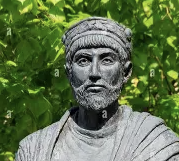
Nature loves to hide her secrets, and she does not suffer the hidden truth about the essential nature of the gods to be flung in naked words to the ears of the profane...
▼
Source
source
Oration to the Cynic Heracleios
3 months 3 weeks ago
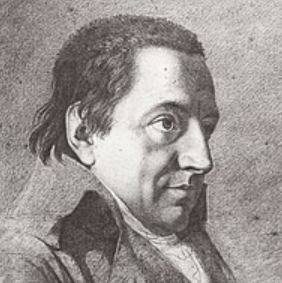
Every other art,-as poetry, music, painting,-may be practised without the process showing forth the rules according to which it is conducted ;-but in the self-cognizant art of the philosopher, no step can be taken without declaring the grounds upon which it proceeds.
▼
Source
source
p. 14
3 months 2 weeks ago
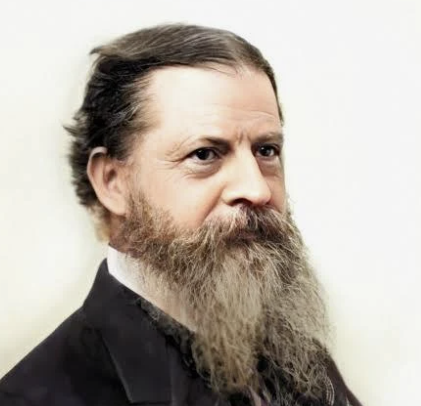
The law of habit exhibits a striking contrast to all physical laws in the character of its commands. A physical law is absolute. What it requires is an exact relation. Thus, a physical force introduces into a motion a component motion to be combined with the rest by the parallelogram of forces; but the component motion must actually take place exactly as required by the law of force. On the other hand, no exact conformity is required by the mental law. Nay, exact conformity would be in downright conflict with the law ; since it would instantly crystallise thought and prevent all further formation of habit. The law of mind only makes a given feeling more likely to arise. It thus resembles the "non-conservative" forces of physics, such as viscosity and the like, which are due to statistical uniformities in the chance encounters of trillions of molecules.

2 months 3 weeks ago
'BUT science and art! You are denying science and art: that is you are denying that by which humanity lives.' People constantly make this rejoinder to me, and they employ: this method in order to reject my arguments without examination. 'He rejects science and art, he wishes man to revert to a state of savagery - why listen to him or discuss with him?' But this is unjust. Not only do I not repudiate science, that is, the reasonable activity of humanity, and art - the expression of that reasonable activity - but it is just on behalf of that reasonable activity and its expression that I speak, only that It may be possible for mankind to escape from the savage state into which it is rapidly lapsing thanks to the false teaching of our time. It is only on that account that I speak as I do.
2 months 3 weeks ago
High school is closer to the core of the American experience than anything else I can think of.
▼
Source
source
Introduction to Our Time Is Now: Notes From the High School Underground, John Birmingham, ed.

3 months 5 days ago
Perhaps power is never free from a feeling of lack.
4 months 3 weeks ago
I know only one Church: it is the society of men.
▼
Source
source
Act 1


8 months 3 weeks ago
The age of philosophy in the sense again that we are confronted more and more often with philosophical problems at an everyday level. It is not that you withdraw from daily life into a world of philosophical contemplation. On the contrary, you cannot find your way around daily life itself without answering certain philosophical questions. It is a unique time when everyone is, in a way, forced to be some kind of philosopher.

1 month 1 week ago
It would be some consolation for the feebleness of our selves and our works, if all things should perish as slowly as they come into being; but as it is, increases are of sluggish growth, but the way to ruin is rapid.
3 months 2 weeks ago
If we could sleep twenty-four hours a day, we would soon return to the primordial slime, the beatitude of that perfect torpor before Genesis-the dream of every consciousness sick of itself.

4 months 3 weeks ago
Two conflicting types of educational systems spring from these conflicting aims. One is public and common to many, the other private and domestic. If you wish to know what is meant by public education, read Plato's Republic. Those who merely judge books by their titles take this for a treatise on politics, but it is the finest treatise on education ever written. In popular estimation the Platonic Institute stands for all that is fanciful and unreal. For my own part I should have thought the system of Lycurgus far more impracticable had he merely committed it to writing. Plato only sought to purge man's heart; Lycurgus turned it from its natural course. The public institute does not and cannot exist, for there is neither country nor patriot. The very words should be struck out of our language. The reason does not concern us at present, so that though I know it I refrain from stating it.

3 months 2 weeks ago
I am a strange compound of weakness and resolution! However, if I must suffer, I will endeavour to suffer in silence. There is certainly a great defect in my mind - my wayward heart creates its own misery - Why I am made thus I cannot tell; and, till I can form some idea of the whole of my existence, I must be content to weep and dance like a child - long for a toy, and be tired of it as soon as I get it.
▼
Source
source
Undated letter to Joseph Johnson (October? 1792), published in The Collected Letters of Mary Wollstonecraft (2004), edited by Janet Todd, p. 206.


3 weeks 1 day ago
In the effort to tell a whole story, to see it whole and clear, I have had to imagine more than I have known.
▼
Source
source
"Imagination in Place"

3 months 5 days ago
The God idea is growing more impersonal and nebulous in proportion as the human mind is learning to understand natural phenomena and in the degree that science progressively correlates human and social events.
3 months 2 weeks ago
In the fact of being born there is such an absence of necessity that when you think about it a little more than usual, you are left-ignorant how to react-with a foolish grin
2 months 2 weeks ago
Another force driving progressive evolution is the so-called "arms-race." Prey animals evolve faster running speeds because predators do. Consequently predators have to evolve even faster running speeds, and so on, in an escalating spiral. Such arms races probably account for the spectacularly advanced engineering of eyes, ears, brains, bat "radar" and all the other high-tech weaponry that animals display.
CivilSimian.com created by AxiomaticPanic, CivilSimian, Kalokagathia