

6 months ago
The first condition of unity is a subjective principle; and this principle in the Positive system is the subordination of the intellect to the heart: Without this the unity that we seek can never be placed on a permanent basis, whether individually or collectively. It is essential to have some influence sufficiently powerful to produce convergence amid the heterogeneous and often antagonistic tendencies of so complex an organism as ours.
▼
Source
source
p. 24

5 months 3 weeks ago
Man needed one moral constitution to fit him for his original state; he needs another to fit him for his present state; and he has been, is, and will long continue to be, in process of adaptation. And the belief in human perfectibility merely amounts to the belief that, in virtue of this process, man will eventually become completely suited to his mode of life. Progress, therefore, is not an accident, but a necessity. Instead of civilization being artificial, it is part of nature; all of a piece with the development of the embryo or the unfolding of a flower. The modifications mankind have undergone, and are still undergoing, result from a law underlying the whole organic creation; and provided the human race continues, and the constitution of things remains the same, those modifications must end in completeness.
▼
Source
source
Pt. I, Ch. 2 : The Evanescence of Evil, concluding paragraph

5 months 3 weeks ago
I posit myself as rational, that is, as free. In doing so I have the representation of freedom. In the same undivided act I posit other free beings. Hence, I describe through my power of imagination a sphere of freedom, which these many separate beings divide amongst themselves. I do not ascribe to myself all the freedom which I have posited, because I must also posit other free beings, and must ascribe part of it to them. Thus, in appropriating freedom to myself, I at the same time restrict myself, by leaving freedom to others.
▼
Source
source
P. 7-8
3 months 2 weeks ago
At forty, I had attained the unperturbed mind.
▼
Source
source
"Discipline and Character", no. 41

5 months 3 weeks ago
I could show, that the same faction has, in one reign, promoted popular seditions, and, in the next, been a patron of tyranny; I could show, that they have all of them betrayed the public safety at all times, and have very frequently with equal perfidy made a market of their own cause, and their own associates. I could show how vehemently they have contended for names, and how silently they have passed over things of the last importance.

6 months ago
The best laws cannot make a constitution work in spite of morals; morals can turn the worst laws to advantage. That is a commonplace truth, but one to which my studies are always bringing me back. It is the central point in my conception. I see it at the end of all my reflections.
▼
Source
source
De la supériorité des mœurs sur les lois (1831) Oeuvres complètes, vol. VIII, p. 286.
11 months 3 weeks ago
No subgroup, race, nationalism, religious group, gender based groups or other identity essence based groups will ever be more important than, and should never ethically take precedence over the existence based universal group, the human group. Universal identity takes precedence over subgroup identity, and when we are forced to subgroup in reaction to injustice, that is the only ethical subgroup.

5 months 5 days ago
Do not commence your exercises in philosophy in those regions where an error can deliver you over to the executioner.
▼
Source
source
C 16

3 months 2 weeks ago
A great soul, any sincere soul, knows not what he is,-alternates between the highest height and the lowest depth; can, of all things, the least measure-Himself! What others take him for, and what he guesses that he may be; these two items strangely act on one another, help to determine one another. With all men reverently admiring him; with his own wild soul full of noble ardors and affections, of whirlwind chaotic darkness and glorious new light; a divine Universe bursting all into godlike beauty round him, and no man to whom the like ever had befallen, what could he think himself to be?
2 months 3 weeks ago
Comrades, I've voyaged long and far on sea and soul,my eyes have seen disease, gods, ghosts, and men, and yetin no land have I seen a more false, murderous sirenthan that wind-headed, babbling, blind bitch-hound called Hope!
▼
Source
source
Odysseus, Book X, line 892
2 months 3 weeks ago
It is impossible to read the works of the economists who since the time of Smith have endeavored to build up and elucidate the science of political economy without seeing how, over and over again, they stumble over the law of wages without once recognizing it. Yet, "if it were a dog it would bite them!" Indeed, it is difficult to resist the impression that some of them really saw this law of wages, but, fearful of the practical conclusions to which it would lead, preferred to ignore and cover it up, rather than use it as the key to problems which without it are so perplexing. A great truth to an age which has rejected and trampled on it, is not a word of peace, but a sword!
3 months 4 weeks ago
Our main conclusions about the state are that a minimal state, limited, to the narrow functions of protection against force, theft, fraud, enforcement of contracts, and so on, is justified, but any more extensive state will violate persons' rights not to be forced to do certain things, and is unjustified; and that the minimal state is inspiring as well as right.
▼
Source
source
Preface, p. ix

4 months 3 weeks ago
The telegraph press mosaic is acoustic space as much as an electric circus.
5 months 1 week ago
Creatures inveterately wrong in their inductions have a pathetic but praiseworthy tendency to die before reproducing their kind.
▼
Source
source
"Natural Kinds", in Ontological Relativity and Other Essays (1969), p. 126

6 months 3 weeks ago
Quietism is the attitude of people who say, "let others do what I cannot do." The doctrine I am presenting before you is precisely the opposite of this, since it declares that there is no reality except in action. It goes further, indeed, and adds, "Man is nothing else but what he purposes, he exists only in so far as he realizes himself, he is therefore nothing else but the sum of his actions, nothing else but what his life is." Hence we can well understand why some people are horrified by our teaching.
▼
Source
source
p. 41

5 months 3 weeks ago
The source of an emotion is very difficult to grasp, but it comes to just that. That holds for all phenomena, for faith, etc. Why did it begin, how did it develop? and so forth-only he who has the gift of divination can perceive where it really comes from. But it is not accessible to reflection.
5 months 3 weeks ago
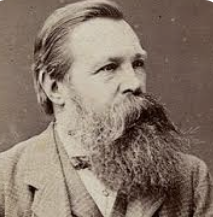
The class of the wholly propertyless, who are obliged to sell their labor to the bourgeoisie in order to get, in exchange, the means of subsistence for their support. This is called the class of proletarians, or the proletariat.
3 months 1 week ago
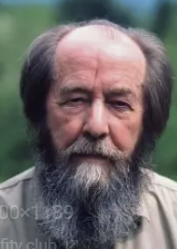
It is almost always impossible to evaluate at the time events which you have already experienced, and to understand their meaning with the guidance of their effects. All the more unpredictable and surprising to us will be the course of future events.
▼
Source
source
Autobiographical sketch (1970), at Nobelprize.org

4 months 5 days ago
There is no disease so destructive as lust.
5 months 3 weeks ago
The writers against religion, whilst they oppose every system, are wisely careful never to set up any of their own.
▼
Source
source
Preface
2 months 2 weeks ago
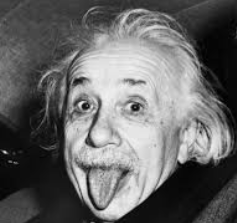
We Jews have been too adaptable. We have been too eager to sacrifice our idiosyncrasies for the sake of social conformity. ... Even in modern civilization, the Jew is most happy if he remains a Jew.

5 months 1 week ago
School children and students who love God should never say: "For my part I like mathematics"; "I like French"; "I like Greek." They should learn to like all these subjects, because all of them develop that faculty of attention which, directed toward God, is the very substance of prayer.
5 months 2 weeks ago
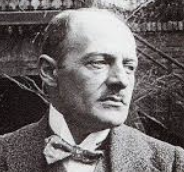
When we are told, in the same tone, that these people will be rewarded in "heaven" for their distress, and that "heaven" is the exact reverse of the earthly order ("the first shall be last"), we distinctly feel how the ressentiment-laden man transfers to God the vengeance he himself cannot wreak on the great. In this way, he can satisfy his revenge at least in imagination, with the aid of an other-worldly mechanism of rewards and punishments.
▼
Source
source
L. Coser, trans. (1961), p. 97

6 months 3 weeks ago
Human beings are not born identical. There are many different temperaments and constitutions; and within each psycho-physical class one can find people at very different stages of spiritual development. Forms of worship and spiritual discipline which may be valuable for one individual maybe useless or even positively harmful for another belonging to a different class and standing, within that class, at a lower or higher level of development.
3 months 3 weeks ago
Friendship ... receives its real sustenance from an equality that, to proceed without a limp, must have its two limbs equal.
▼
Source
source
Part 3

6 months 3 weeks ago
Talents differ; all is well and wisely put; If I cannot carry forests on my back, Neither can you crack a nut.
▼
Source
source
Fable

6 months 2 weeks ago
Then take, good sir, your pleasure while you may; With life so short 'twere wrong to lose a day.
▼
Source
source
Book II, satire viii, line 96 (trans. Conington)
2 months 3 weeks ago
The mechanical mind has a passion for control - of everything except itself. Beyond the control it has won over the forces of nature it would now win control over the forces of society of stating the problem and producing the solution, with social machinery to correspond.
▼
Source
source
Revolt Against Mechanism (1933).
6 months 3 weeks ago
I think that there is nothing, not even crime, more opposed to poetry, to philosophy, ay, to life itself, than this incessant business.
▼
Source
source
p. 485

6 months 3 weeks ago
It is an odd circumstance that neither the old nor the new, by itself, is interesting; the absolutely old is insipid; the absolutely new makes no appeal at all. The old in the new is what claims the attention,-the old with a slightly new turn.
▼
Source
source
Chapter XI: Attention
3 months 1 week ago
Any religion or philosophy which is not based on a respect for life is not a true religion or philosophy.
▼
Source
source
Letter to a Japanese Animal Welfare Society (1961); also in The Words of Albert Schweitzer (1984) edited by Norman Cousins, p. 37

6 months 3 weeks ago
"Their own strength has betrayed them. They have pulled down Deep Heaven on their heads."
▼
Source
source
Ch. 13 : They Have Pulled Down Deep Heaven on Their Heads
6 months 2 weeks ago
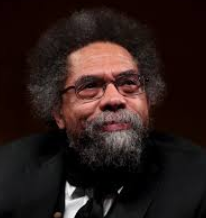
My aim is not to provide excuses for black behavior or to absolve blacks of personal responsibility. But when the new black conservatives accent black behavior and responsibility in such a way that the cultural realities of black people are ignored, they are playing a deceptive and dangerous intellectual game with the lives and fortunes of disadvantaged people. We indeed must criticize and condemn immoral acts of black people, but we must do so cognizant of the circumstances into which people are born and under which they live. By overlooking these circumstances, the new black conservatives fall into the trap of blaming black poor people for their predicament. It is imperative to steer a course between the Scylla of environmental determinism and the Charybdis of a blaming-the-victims perspective.
▼
Source
source
(p56)
4 months 3 weeks ago
One touch of nature makes the whole world tin.

7 months 1 week ago
Thus the sum of things is ever being renewed, and mortal creatures live dependent one upon another. Some species increase, others diminish, and in a short space the generations of living creatures are changed and, like runners, pass on the torch of life.
▼
Source
source
Book II, line 75 (tr. Rouse)

3 months 1 week ago
If one rejects laissez faire on account of man's fallibility and moral weakness, one must for the same reason also reject every kind of government action.
▼
Source
source
Planning for Freedom (1952), p. 44
4 months 2 weeks ago
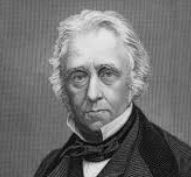
We hold that the most wonderful and splendid proof of genius is a great poem produced in a civilized age.
▼
Source
source
p. 5

5 months 1 week ago
Religion is better described than defined and better felt than described. But if there is any one definition that latterly has obtained acceptance, it is that of Schleiermacher, to the effect that religion consists in the simple feeling of a relationship of dependence upon something above us and a desire to establish relations with this mysterious power.
2 months 3 weeks ago
There is only one woman in the world. One woman, with many faces.
▼
Source
source
This occurs in the film The Last Temptation of Christ (1988), based upon the novel by Kazantzakis, but has not been located in the novel itself.
6 months 3 weeks ago
Every really able man, in whatever direction he work,-a man of large affairs, an inventor, a statesman, an orator, a poet, a painter,-if you talk sincerely with him, considers his work, however much admired, as far short of what it should be.
▼
Source
source
Immortality
3 months 4 days ago
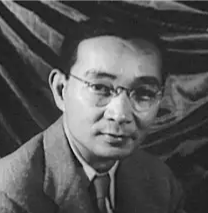
A reasonable naturalist then settles down to this life with a sort of animal satisfaction. As Chinese illiterate women put it, "Others gave birth to us and we give birth to others. What else are we to do?".... Life becomes a biological procession and the very question of immortality is sidetracked. For that is the exact feeling of a Chinese grandfather holding his grandchild by the hand and going to the shops to buy some candy, with the thought that in five or ten years he will be returning to his grave or to his ancestors. The best that we can hope for in this life is that we shall not have sons and grandsons of whom we need to be ashamed.
▼
Source
source
p. 23

3 months 1 week ago
He that owns himself has lost nothing. But how few men are blessed with ownership of self!
6 months 4 weeks ago
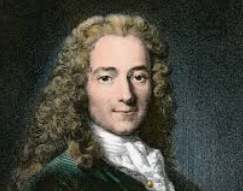
Where is the prince sufficiently educated to know that for seventeen hundred years the Christian sect has done nothing but harm?
▼
Source
source
Letters of Voltaire and Frederick the Great (New York: Brentano's, 1927), transl. Richard Aldington, letter 160 from Voltaire to Frederick II of Prussia, 6 April 1767
6 months 4 weeks ago
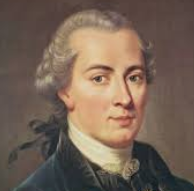
The public use of a man's reason must be free at all times, and this alone can bring enlightenment among men...

5 months 3 weeks ago
Yes! We believe in a higher principle than your virtue and the kind of morality you speak of so paltrily and without much conviction. We believe that there is no imperative or reward for virtue for the soul because it simply acts according to the necessity of its inherent nature. The moral imperative expresses itself in an ought and presupposes the concept of an evil next to that of good.
▼
Source
source
P. 43

5 months 2 weeks ago
In which the technical apparatus of production and distribution (with an increasing sector of automation) functions, not as the sum-total of mere instruments which can be isolated from their social and political effects, but rather as a system which determines a priori the product of the apparatus as well as the operations of servicing and extending it. In this society, the productive apparatus tends to become totalitarian to the extent to which it determines not only the socially needed occupations, skills, and attitudes, but also individual needs and aspirations. It thus obliterates the Opposition between the private and public existence, between individual and social needs.
▼
Source
source
p. xlvii
2 months 3 weeks ago
We want philosophers, among other reasons, because the world is full of false philosophy. The way of experience is beset on every hand by a multitude of verbal judgments, of empty phrases, of word-copies, which pass themselves off as the real thing, which pretend to do duty for concrete fact and, by force of their number and importunity, capture our attention and cause the true originals to be overlooked. If it is true that philosophy must perforce fight its battles with words, is it not equally true that words are the weapons against which it must everywhere contend? The philosopher bent on the enlargement of experience perceives at once that his work cannot be done, cannot even be commenced, until he has cleared away the heaps of verbal detritus under which the bedrocks of experience lie buried.
6 months 2 weeks ago
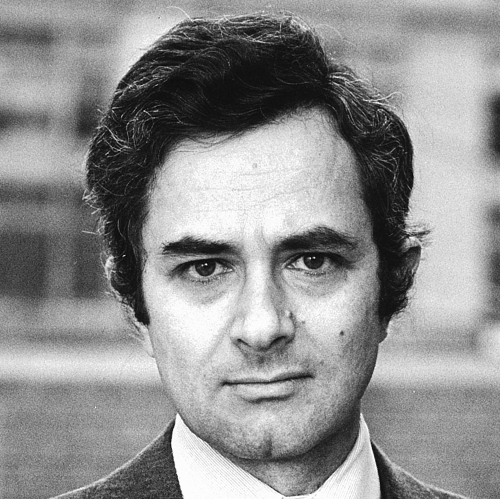
Common sense doesn't have the last word in ethics or anywhere else, but it has, as J. L. Austin said about language, the first word: it should be examined before it is discarded.
▼
Source
source
p. 166.
CivilSimian.com created by AxiomaticPanic, CivilSimian, Kalokagathia