

7 months 3 weeks ago
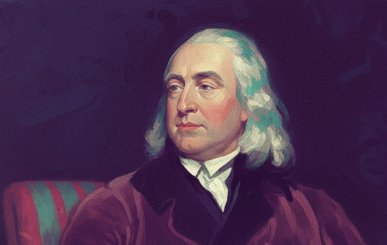
All poetry is misrepresentation.
▼
Source
source
An Aphorism attributed to him according to John Stuart Mill (see Mill's essay On Bentham and Coleridge in Utilitarianism edt. by Mary Warnock p. 123).


6 months 3 weeks ago
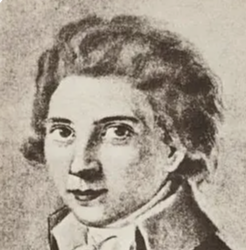
There is no self-knowledge except historical self-knowledge. No one knows what he is if he doesn't know what his contemporaries are.
▼
Source
source
"Ideas," Lucinde and the Fragments, P. Firchow, trans. (1991), § 139

6 months 2 weeks ago
But this priviledge, is allayed by another; and that is, by the priviledge of Absurdity; to which no living creature is subject, but man only.
▼
Source
source
The First Part, Chapter 5, p. 20
7 months 3 weeks ago
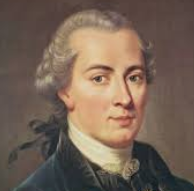
The first characteristic of the human species is man's ability, as a rational being, to establish character for himself, as well as for the society into which nature has placed him. This ability, however, presupposes an already favorable natural predisposition and an inclination to the good in man, because the evil is really without character (since it is at odds with itself, and since it does not tolerate any lasting principle within itself)
▼
Source
source
Kant, Immanuel (1996), page 246
6 months 1 week ago
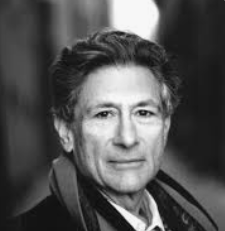
The central fact for me is, I think, that the [role of the] intellectual ... cannot be played without a sense of being someone whose place it is publicly to raise embarrassing questions, to confront orthodoxy and dogma (rather than to produce them), to be someone who cannot easily be co-opted by governments or corporations, and whose raison d'être is to represent all those people and issues that are routinely forgotten or swept under the rug. Representation of the Intellectual
▼
Source
source
1994

7 months 3 weeks ago
Correct and accurate conclusions may be arrived at if we carefully observe the relation of the spheres of concepts, and only conclude that one sphere is contained in a third sphere, when we have clearly seen that this first sphere is contained in a second, which in its turn is contained in the third. On the other hand, the art of sophistry lies in casting only a superficial glance at the relations of the spheres of the concepts, and then manipulating these relations to suit our purposes, generally in the following way: - When the sphere of an observed concept lies partly within that of another concept, and partly within a third altogether different sphere, we treat it as if it lay entirely within the one or the other, as may suit our purpose.
▼
Source
source
Vol. I, Ch. 10, as translated by R. B. Haldane

5 months 3 weeks ago
The newspaper is a corporate symbolist poem, environmental and invisible, as poem.

3 months 3 weeks ago
Anybody interested in solving, rather than profiting from, the problems of food production and distribution will see that in the long run the safest food supply is a local food supply, not a supply that is dependent on a global economy. Nations and regions within nations must be left free - and should be encouraged - to develop the local food economies that best suit local needs and local conditions.
▼
Source
source
"A Bad Big Idea"
4 months 5 days ago
The basic problem is to understand that there are no such things as things; that is to say separate things, separate events. That is only a way of talking. What do you mean by a thing? A thing is a noun. A noun isn't a part of nature it's a part of speech. There are no nouns in the physical world. There are no separate things in the physical world either.
▼
Source
source
Watts on Wiggles Waves, used in the Cosmosis track No Such Thing (2007).
7 months 3 weeks ago
And the final event to himself has been, that, as he rose like a rocket, he fell like the stick.
▼
Source
source
On Edmund Burke's reactions to the American and French revolutions.
6 months 6 days ago
How very little can be done under the spirit of fear.
▼
Source
source
As quoted in The Book of Positive Quotations (2007) by John Cook, p. 479

6 months 4 weeks ago
The heart of man is the place the devil dwells in; I feel sometimes a hell within myself.
▼
Source
source
Section 51
8 months 3 days ago
The Idols of Tribe have their foundation in human nature itself, and in the tribe or race of men. For it is a false assertion that the sense of man is the measure of things. On the contrary, all perceptions as well of the sense as of the mind are according to the measure of the individual and not according to the measure of the universe. And the human understanding is like a false mirror, which, receiving rays irregularly, distorts and discolors the nature of things by mingling its own nature with it.
▼
Source
source
Aphorism 41
4 months 1 week ago
It is, they say, not Russia that plans aggression but, on the contrary, the decaying capitalist democracies. Russia wants merely to defend its own independence. This is an old and well-tried method of justifying aggression. Louis XIV and Napoleon I, Wilhelm II and Hitler were the most peace-loving of all men. When they invaded foreign countries, they did so only in just self-defence. Russia was as much menaced by Estonia or Latvia as Germany was by Luxemburg or Denmark.

6 months 4 days ago
It is a question whether, when we break a murderer on the wheel, we do not fall into the error a child makes when it hits the chair it has bumped into.
▼
Source
source
J 146

6 months 2 weeks ago
It is only natural that I should constantly have revolved in my mind the question of the relationship of the symbolism of the unconscious to Christianity as well as to other religions. Not only do I leave the door open for the Christian message, but I consider it of central importance for Western man. It needs, however, to be seen in a new light, in accordance with the changes wrought by the contemporary spirit.
8 months 2 weeks ago
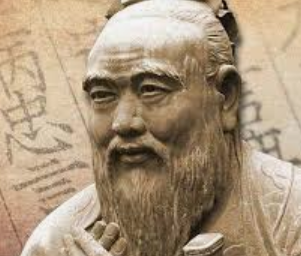
It is the way of the superior man to prefer the concealment of his virtue, while it daily becomes more illustrious, and it is the way of the mean man to seek notoriety, while he daily goes more and more to ruin. It is characteristic of the superior man, appearing insipid, yet never to produce satiety; while showing a simple negligence, yet to have his accomplishments recognized; while seemingly plain, yet to be discriminating. He knows how what is distant lies in what is near. He knows where the wind proceeds from. He knows how what is minute becomes manifested. Such a one, we may be sure, will enter into virtue.
7 months 2 weeks ago
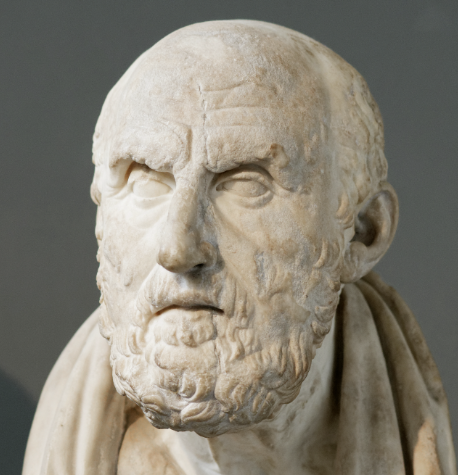
The universe itself is God and the universal outpouring of its soul.
▼
Source
source
As quoted in De Natura Deorum by Cicero, i. 15.
7 months 2 weeks ago
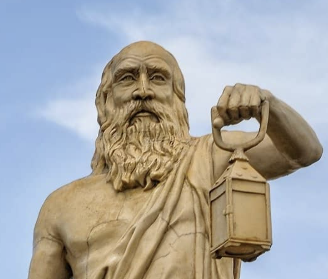
To Xeniades, who had purchased Diogenes at the slave market, he said, "Come, see that you obey orders."
▼
Source
source
Diogenes Laërtius, vi. 36

8 months 1 week ago
Cease therefore to be dismayed by the mere novelty and so to reject reason from your mind with loathing: weigh the questions rather with keen judgment and if they seem to you to be true, surrender, or if the thing is false, gird yourself to the encounter.
▼
Source
source
Book II, lines 1040-1043 (tr. Munro)
7 months 5 days ago
None can be free who is a slave to, and ruled by, his passions.
▼
Source
source
As quoted in Florilegium, XVIII, 23, as translated in Dictionary of Quotations (1906) by Thomas Benfield Harbottle, p. 368

6 months 2 weeks ago
The characteristic of the hour is that the commonplace mind, knowing itself to be commonplace, has the assurance to proclaim the rights of the commonplace and to impose them wherever it will. As they say in the United States: "to be different is to be indecent." The mass crushes beneath it everything that is different, everything that is excellent, individual, qualified and select. Anybody who is not like everybody, who does not think like everybody, runs the risk of being eliminated. And it is clear, of course, that this "everybody" is not "everybody." "Everybody" was normally the complex unity of the mass and the divergent, specialised minorities. Nowadays, "everybody" is the mass alone.
▼
Source
source
Chap.I: The Coming Of The Masses

6 months 3 weeks ago
Yes - you, you alone must pay for everything because you turned up like this, because I'm a scoundrel, because I'm the nastiest, most ridiculous, pettiest, stupidest, and most envious worm of all those living on earth who're no better than me in any way, but who, the devil knows why, never get embarrassed, while all my life I have to endure insults from every louse - that's my fate. What do I care that you do not understand any of this?
▼
Source
source
Part 2, Chapter 9
3 months 3 weeks ago
It is as to whether its services or uses are to be exchanged or not which makes a tool an article of capital or merely an article of wealth. Thus, the lathe of a manufacturer used in making things which are to be exchanged is capital, while the lathe kept by a gentleman for his own amusement is not.
▼
Source
source
Book I, Ch. 3
8 months 3 weeks ago
The male has more teeth than the female in mankind, and sheep, and goats, and swine. This has not been observed in other animals.

6 months 3 weeks ago
Well, which is the most rational theory about these ten millions of species? Is it most likely that there have been ten millions of special creations? or is it most likely that, by continual modifications due to change of circumstances, ten millions of varieties have been produced, as varieties are being produced still?

4 months 2 weeks ago
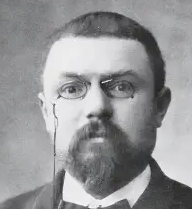
We can not... escape the conclusion that the rule of reasoning by recurrence is irreducible to the principle of contradiction. ...Neither can this rule come to us from experience... This rule, inaccessible to analytic demonstration and to experience, is the veritable type of the synthetic a priori judgment. On the other hand, we can not think of seeing in it a convention, as in some of the postulates of geometry. ...it is only the affirmation of the power of the mind which knows itself capable of conceiving the indefinite repetition of the same act when once this act is possible. The mind has a direct intuition of this power, and experience can only give occasion for using it and thereby becoming conscious of it.
▼
Source
source
Ch. I. (1905) Tr. George Bruce Halstead

7 months 3 weeks ago
It seems to me that science has a much greater likelihood of being true in the main than any philosophy hitherto advanced (I do not, of course, except my own). In science there are many matters about which people are agreed; in philosophy there are none. Therefore, although each proposition in a science may be false, and it is practically certain that there are some that are false, yet we shall be wise to build our philosophy upon science, because the risk of error in philosophy is pretty sure to be greater than in science. If we could hope for certainty in philosophy, the matter would be otherwise, but so far as I can see such a hope would be chimerical.
▼
Source
source
Logical Atomism, 1924
7 months 3 weeks ago
Money is the password, and all doors, which are closed to the man of lesser means, fly open to those whom Plutus favors. The invention of money, which has no other usefulness (or at least it should not have any) except for the commercial exchange of the products of man's industry, now serves all that is physically good among men. Especially after money was represented by metal, it has produced avarice which, finally, without indulgence, but by its mere possession, and even with the resolution (of the stingy) not to spend it, still contains a power which people believe can sufficiently compensate for the lack of any other power.
▼
Source
source
Kant, Immanuel (1996), pages 181-182

6 months 1 week ago
But the capacity to enjoy is impossible without the capacity to suffer; and the faculty of enjoyment is one with that of pain. Whosoever does not suffer does not enjoy, just as whosoever is insensible to cold is insensible to heat.

6 months 2 weeks ago
Philosophy offers an antidote to melancholy. And many still believe in the depth of philosophy!
5 months 3 weeks ago
Headlines are icons, not literature.
▼
Source
source
(p. 5)

7 months 2 weeks ago
No differeance without alterity, no alterity without singularity, no singularity without here-now.
▼
Source
source
Injunctions of Marx, p,31

4 months 5 days ago
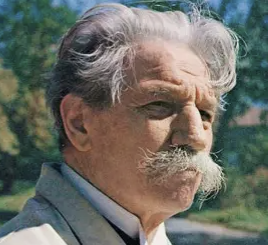
I don't know what your destiny will be, but one thing I know, the only ones among you who will be really happy are those who have sought and found how to serve.
▼
Source
source
Widely attributed to Schwietzer online, no known original source.
8 months 3 weeks ago
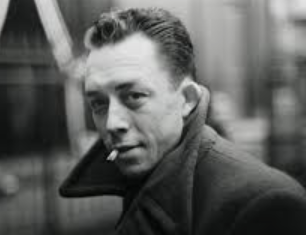
The papers were always talking about the debt owed to society. According to them, it had to be paid. But that doesn't speak to the imagination. What really counted was the possibility of escape, a leap to freedom, out of the implacable ritual, a wild run for it that would give whatever chance for hope there was. Of course, hope meant being cut down on some street corner, as you ran like mad, by a random bullet. But when I really thought it through, nothing was going to allow me such a luxury. Everything was against it; I would just be caught up in the machinery again.


7 months 3 weeks ago
I think that yesterday was a crisis in my life. I finished the first part of Renouvier's second Essais and see no reason why his definition of free will-"the sustaining of a thought because I choose to when I might have other thoughts"-need be the definition of an illusion. At any rate, I will assume for the present-until next year-that it is no illusion. My first act of free will shall be to believe in free will.
▼
Source
source
Diary entry (April 30, 1870) as quoted in Ralph Barton Perry, The Thought and Character of William James, vol. 1, p. 323; Letters of William James, vol. I, p. 147.
8 months 1 week ago
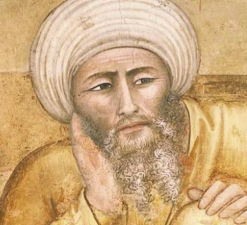
The Asharites have expressed a very peculiar opinion, both with regard to reason and religion; about this problem they have explained it in a way in which religion has not, but have adopted quite an opposite method.
7 months 3 weeks ago
Who does not see that we are likely to ascertain the distinctive significance of religious melancholy and happiness, or of religious trances, far better by comparing them as conscientiously as we can with other varieties of melancholy, happiness, and trance, than by refusing to consider their place in any more general series, and treating them as if they were outside of nature's order altogether?
▼
Source
source
Lecture I, "Religion and Neurology"
6 months 1 week ago
There is nothing truly real, save that which feels, suffers, pities, loves and desires, save consciousness. And we need God in order to save consciousness; not in order to think existence, but in order to live it; not in order to know the why and how of it, but in order to feel the wherefore of it.
8 months 3 weeks ago
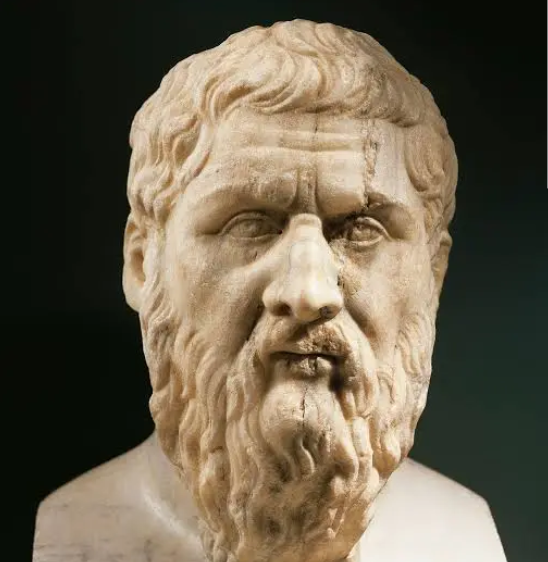
The tyrant has arisen, and the king and oligarchy and aristocracy and democracy, because men are not contented with that one perfect ruler, and do not believe that there could ever be any one worthy of such power or willing and able by ruling with virtue and knowledge to dispense justice and equity rightly to all, but that he will harm and kill and injure any one of us whom he chooses on any occasion, since they admit that if such a man as we describe should really arise, he would be welcomed and would continue to dwell among them, directing to their weal as sole ruler a perfectly right form of government. But, as the case now stands, since, as we claim, no king is produced in our states who is, like the ruler of the bees in their hives, by birth pre-eminently fitted from the beginning in body and mind, we are obliged, as it seems, to follow in the track of the perfect and true form of government by coming together and making written laws.
6 months 2 weeks ago
The wrinkles of a nation are as visible as those of an individual.
8 months 3 weeks ago
We get into the habit of living before acquiring the habit of thinking.
5 months 3 weeks ago
For him who loves labor, there is always something to do.
▼
Source
source
Maxim 219

7 months 3 weeks ago
Scientists try to eliminate their false theories, they try to let them die in their stead. The believer-whether animal or man-perishes with his false beliefs.
▼
Source
source
Epistemology Without A Knowing Subject
CivilSimian.com created by AxiomaticPanic, CivilSimian, Kalokagathia