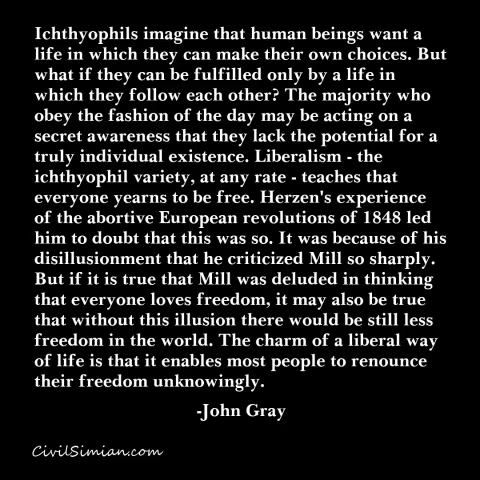
Let people write in arguments without the ridiculous gatekeeping...



But no wall can be erected against Fortune which she cannot take by storm; let us strengthen our inner defences. If the inner part be safe, man can be attacked, but never captured.

There are a thousand hacking at the branches of evil to one who is striking at the root, and it may be that he who bestows the largest amount of time and money on the needy is doing the most by his mode of life to produce that misery which he strives in vain to relieve.

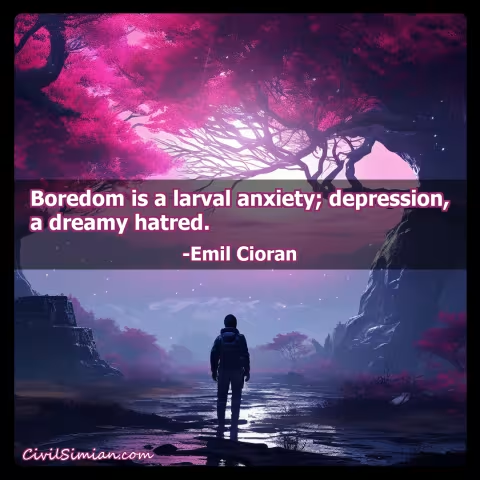
If truth were not boring, science would have done away with God long ago. But God as well as the saints is a means to escape the dull banality of truth.
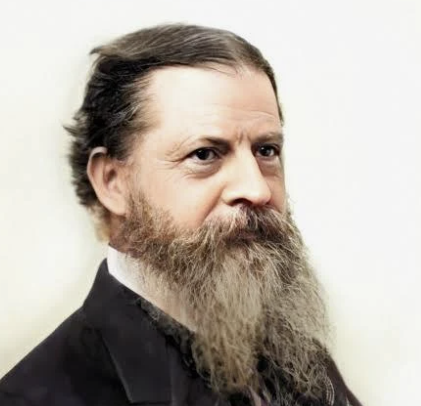
The ordinary logic has a great deal to say about genera and species, or in our nineteeth century dialect, about classes. Now a class is a set of objects comprising all that stand to one another in a special relation of similarity. But where ordinary logic talks of classes the logic of relatives talks of systems. A system is a set of objects comprising all that stands to one another in a group of connected relations. Induction according to ordinary logic rises from the contemplation of a sample of a class to that of a whole class; but according to the logic of relatives it rises from the comtemplation of a fragment of a system to the envisagement of the complete system.

A new moral outlook is called for in which submission to the powers of nature is replaced by respect for what is best in man. It is where this respect is lacking that scientific technique is dangerous.
We have, in fact, two kinds of morality side by side; one which we preach but do not practise, and another which we practise but seldom preach.

The Orient that appears in Orientalism, then, is a system of representations framed by a whole set of forces that brought the Orient into Western learning, Western consciousness, and later, Western empire. ... The Orient is the stage on which the whole East is confined. On this stage will appear the figures whose role it is to represent the larger whole from which they emanate. The Orient then seems to be, not an unlimited extension beyond the familiar European world, but rather a closed field, a theatrical stage affixed to Europe.
These examples... show that, in whatever proportion of its limbs the Gorilla differs from Man, the other Apes depart still more widely from the Gorilla and that, consequently, such differences of proportion can have no ordinal value.

Nothing is ever gotten out of nothing by divine power.
Unjust laws exist: shall we be content to obey them, or shall we endeavor to amend them, and obey them until we have succeeded, or shall we transgress them at once?

It's so much easier to pray for a bore than to go and see one.
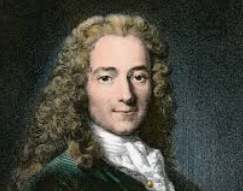
Virtue supposes liberty, as the carrying of a burden supposes active force. Under coercion there is no virtue, and without virtue there is no religion. Make a slave of me, and I shall be no better for it. Even the sovereign has no right to use coercion to lead men to religion, which by its nature supposes choice and liberty. My thought is no more subject to authority than is sickness or health.

Give me health and a day, and I will make the pomp of emperors ridiculous.
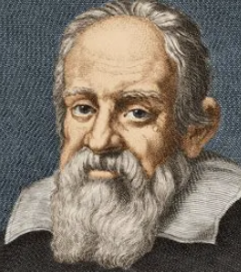
To this end they make a shield of their hypocritical zeal for religion. They go about invoking the Bible, which they would have minister to their deceitful purposes. Contrary to the sense of the Bible and the intention of the holy Fathers, if I am not mistaken, they would extend such authorities until even in purely physical matters - where faith is not involved - they would have us altogether abandon reason and the evidence of our senses in favor of some biblical passage, though under the surface meaning of its words this passage may contain a different sense.
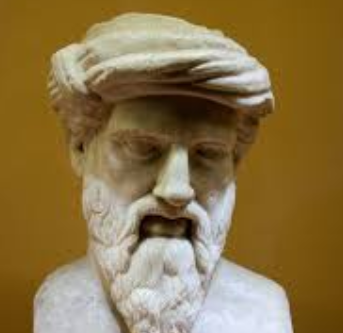
Without Justice, no realm may prosper.
Solitude, the safeguard of mediocrity, is to genius the stern friend.

And the Science of them, is the true and onely Moral Philosophy. For Moral Philosophy is nothing else but the Science of what is Good, and Evill, in the conversation, and Society of mankind. Good, and Evill, are names that signify our Appetites, and Aversions; which in different tempers, customes, and doctrines of men, are different.
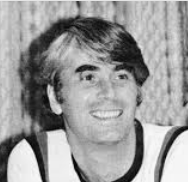
There is no social entity with a good that undergoes some sacrifice for its own good. There are only individual people, different individual people, with their own individual lives. Using one of these people for the benefit of others, uses him and benefits the others. Nothing more.

...no legislator, at any period of the world, has willingly placed the seat of active power in the hands of the multitude: Because there it admits of no control, no regulation; no steady direction whatsoever. The people are the natural control on authority; but to exercise and to control together is contradictory and impossible.

Thus, Beauty is neither an appearance nor a being, but a relationship: the transformation of being into appearance

Direct action, having proven effective along economic lines, is equally potent in the environment of the individual. There a hundred forces encroach upon his being, and only persistent resistance to them will finally set him free. Direct action against the authority in the shop, direct action against the authority of the law, direct action against the invasive, meddlesome authority of our moral code, is the logical, consistent method of Anarchism. Will it not lead to a revolution? Indeed, it will. No real social change has ever come about without a revolution. People are either not familiar with their history, or they have not yet learned that revolution is but thought carried into action.
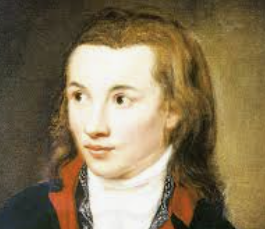
Blood will stream over Europe until the nations become aware of the frightful madness which drives them in circles. And then, struck by celestial music and made gentle, they approach their former altars all together, hear about the works of peace, and hold a great celebration of peace with fervent tears before the smoking altars.
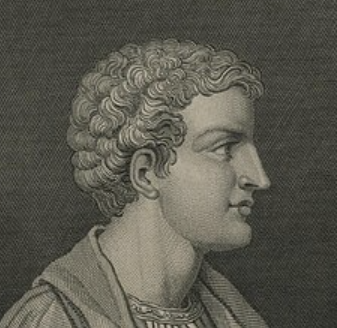
Look round and round the man you recommend, for yours will be the shame should he offend.
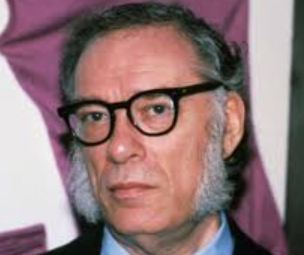
The Bible and science agree in being unable to say anything certainly about what happened before the beginning. There is this difference. The Bible will never be able to tell us. It has reached its final form, and it simply doesn't say. Science, on the other hand, is still developing, and the time may come when it can answer questions that, at present, it cannot.

We return to our analysis of qualities. Something preserves itself throughout this flux, something that passes into other things, but also stands against them as a being for itself. This something can exist only as the product of a process through which it integrates its otherness with its own proper being. Hegel says that its existence comes about through 'the negation of the negation.' The first negation is the otherness in which it turns, and the second is the incorporation of this other into its own self. Such a process presupposes that things possess a certain power over their movement, that they exist in a certain self-relation that enables them to 'mediate' their existential conditions.
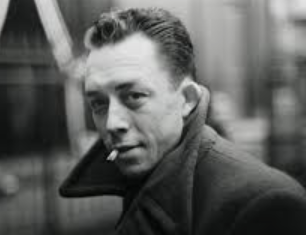
The direction of the world overwhelms me at this time. In the long run, all the continents (yellow, black and brown) will spill over onto Old Europe. They are hundreds and hundreds of millions. They are hungry and they are not afraid to die. We no longer know how to die or how to kill. We could preach, but Europe believes in nothing. So, we must wait for the year 1000 or a miracle. For my part, I find it harder and harder to live before a wall.

What I have given in the second book on the nature and properties of curved lines, and the method of examining them, is, it seems to me, as far beyond the treatment in the ordinary geometry, as the rhetoric of Cicero is beyond the a, b, c of children.

I have often thought that the best way to define a man's character would be to seek out the particular mental or moral attitude in which, when it came upon him, he felt himself most deeply and intensely active and alive. At such moments there is a voice inside which speaks and says: "This is the real me!"

I doubt if a single individual could be found from the whole of mankind free from some form of insanity. The only difference is one of degree. A man who sees a gourd and takes it for his wife is called insane because this happens to very few people.

Hegel made famous his aphorism that all the rational is real and all the real rational; but there are many of us who, unconvinced by Hegel, continue to believe that the real, the really real, is irrational, that reason builds upon irrationalities. Hegel, a great framer of definitions, attempted with definitions to reconstruct the universe, like that artillery sergeant who said that cannon were made by taking a hole and enclosing it with steel.
Since it is difficult to approve the reasons people invoke, each time we leave one of our 'fellow men', the question which comes to mind is invariably the same: how does he keep from killing himself?
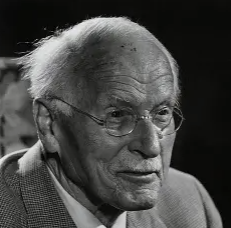
Naturally, every age thinks that all ages before it were prejudiced, and today we think this more than ever and are just as wrong as all previous ages that thought so. How often have we not seen the truth condemned! It is sad but unfortunately true that man learns nothing from history.

Instead of insanity eliminating the crime according to the original meaning of article 64,every crime and even every offense now carries within it, as a legitimate suspicion, but also as a right that may be claimed, the hypothesis of insanity, in any case of anomaly. And the sentence that condemns or acquits is not simply a judgement of guily, a legal decision that lays down punishment; it bears within it an assessment of normality and a technical prescription for a possible normalization Today the judge- magistrate or juror0 certainly does more than 'judge'.
The only thing the young should be taught is that there is virtually nothing to be hoped for from life. One dreams of a Catalogue of Disappointments which would include all the disillusionments reserved for each and every one of us, to be posted in the schools.
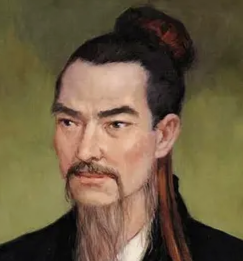
To accomplish anything whatsoever one must have standards. None have yet accomplished anything without them.

The determination to print them (his lectures), and to communicate them to the General Public, must also speak for itself; and should it not do so, any other recommendation of them would be thrown away. Thus, with respect to the appearance of this work, I have nothing further to say to the Public, than that I have nothing to say.
We are all ready to be savage in some cause. The difference between a good man and a bad one is the choice of the cause.

If not reason, then the devil.
From the nature and purpose of civil institutions, all the lands within the limits which any particular society has circumscribed around itself are assumed by that society, and subject to their allotment only. This may be done by themselves, assembled collectively, or by their legislature, to whom they may have delegated sovereign authority; and if they are alloted in neither of these ways, each individual of the society may appropriate to himself such lands as he finds vacant, and occupancy will give him title.

A moral point of view too often serves as a substitute for understanding in technological matters.
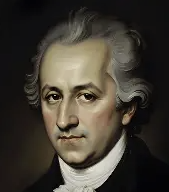
I am more and more convinced that poetry is the universal possession of mankind, revealing itself everywhere and at all times in hundreds and hundreds of men. ... I therefore like to look about me in foreign nations, and advise everyone to do the same. National literature is now a rather unmeaning term; the epoch of world literature is at hand, and everyone must strive to hasten its approach.
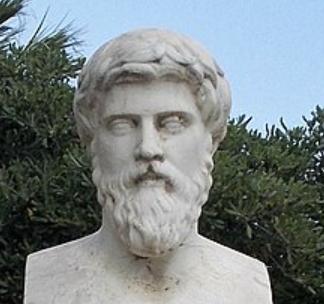
He said they that were serious in ridiculous matters would be ridiculous in serious affairs.
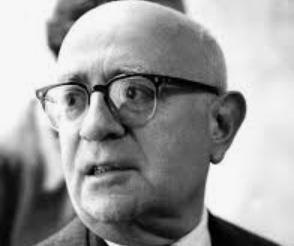
Even the most insensitive hit song enthusiast cannot always escape the feeling that the child with a sweet tooth comes to know in the candy store.
We do not rush toward death, we flee the catastrophe of birth, survivors struggling to forget it. Fear of death is merely the projection into the future of a fear which dates back to our first moment of life. We are reluctant, of course, to treat birth as a scourge: has it not been inculcated as the sovereign good - have we not been told that the worst came at the end, not at the outset of our lives? Yet evil, the real evil, is behind, not ahead of us. What escaped Jesus did not escape Buddha: "If three things did not exist in the world, O disciples, the Perfect One would not appear in the world. ..." And ahead of old age and death he places the fact of birth, source of every infirmity, every disaster.
They made and recorded a sort of institute and digest of anarchy, called the rights of man, in such a pedantic abuse of elementary principles as would have disgraced boys at school; but this declaration of rights was worse than trifling and pedantic in them; as by their name and authority they systematically destroyed every hold of authority by opinion, religious or civil, on the minds of the people. By this mad declaration they subverted the state; and brought on such calamities as no country, without a long war, has ever been known to suffer, and which may in the end produce such a war, and perhaps, many such.
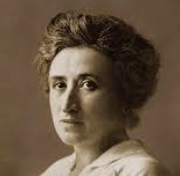
The socialist system of society should only be, and can only be, an historical product, born out of the school of its own experiences, born in the course of its realization, as a result of the developments of living history, which - just like organic nature of which, in the last analysis, it forms a part - has the fine habit of always producing along with any real social need the means to its satisfaction, along with the task simultaneously the solution. However, if such is the case, then it is clear that socialism by its very nature cannot be decreed or introduced by ukase. It has as its prerequisite a number of measures of force - against property, etc. The negative, the tearing down, can be decreed; the building up, the positive, cannot. New Territory. A thousand problems. Only experience is capable of correcting and opening new ways.
CivilSimian.com created by AxiomaticPanic, CivilSimian, Kalokagathia