I just programmed this streak effect. Totally crazy I was able to make it work....wiiiiith AI....😂


The ceaseless labour of your life is to build the house of death.
To me it seems clear that the descriptions of human life we find in the novels of Tolstoy or George Eliot are not mere entertainment; they teach us to perceive what goes on in social and individual life. And such descriptions require the many subtle distinctions that ordinary language has made available to us. The question of the relevance or irrelevance of "how we speak" is not just a question for philosophers, although it is that too. It is a question for philosophers because once ordinary language is laughed out of the room, philosophical theories are no longer held responsible at all to the ways we actually speak and actually live; but it is a question for more than just philosophers because, at bottom, contempt for ordinary language is contempt for all the humanities.

A man can live and be healthy without killing animals for food; therefore, if he eats meat, he participates in taking animal life merely for the sake of his appetite. And to act so is immoral.
Natural science is throughout either a pure or an applied doctrine of motion.
The real struggle is not between East and West, or capitalism and communism, but between education and propaganda.
The Dantean conceptions of Inferno were childish and unworthy of the Divine imagination: fire and torture. Boredom is much more subtle. The inner torture of a mind unable to escape itself in any way, condemned to fester in its own exuding mental pus for all time, is much more fitting. Oh, yes, my friend, we have been judged, and condemned, too, and this is not Heaven, but hell.
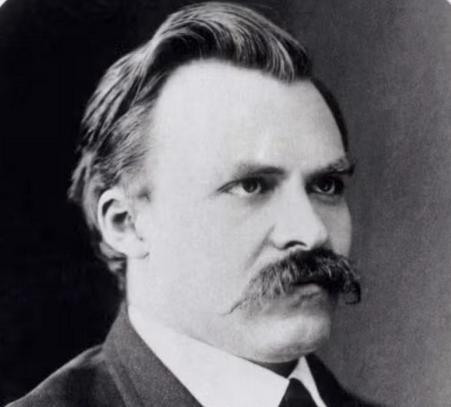
I believe that one can and must hope for a sane society that furthers man's capacity to love his fellow men, to work and create, to develop his reason and his objectivity of a sense of himself that is based on the experience of his productive energy. I believe that one can and must hope for the collective regaining of a mental health that is characterized by the capacity to love and to create...
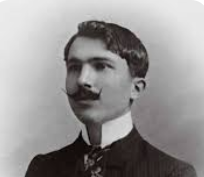
"Fire is the first and final mask of my God. We dance and weep between two enormous pyres." Our thoughts and our bodies flash and glitter with reflected light. Between the two pyres I stand serenely, my brain unshaken amid the vertigo, and I say: "Time is most short and space most narrow between these two pyres, the rhythm of this life is most sluggish, and I have no time, nor a place to dance in. I cannot wait." Then all at once the rhythm of the earth becomes a vertigo, time disappears, the moment whirls, becomes eternity, and every point in space - insect or star or idea - turns into dance.
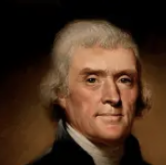
To the existence of banks of discount for cash... there can be no objection, because there can be no danger of abuse, and they are a convenience both to merchants and individuals. I think they should even be encouraged, by allowing them a larger than legal interest on short discounts, and tapering thence, in proportion as the term of discount is lengthened, down to legal interest on those of a year or more. Even banks of deposit, where cash should be lodged, and a paper acknowledgment taken out as its representative, entitled to a return of the cash on demand, would be convenient for remittances, travelling persons, etc. But, liable as its cash would be to be pilfered and robbed, and its paper to be fraudulently re-issued, or issued without deposit, it would require skilful and strict regulation.

The bias of each medium of communication is far more distorting than the deliberate lie.
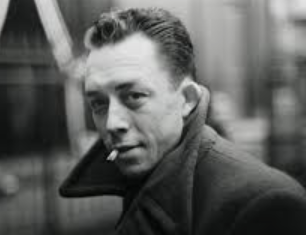
The actor's realm is that of the fleeting.
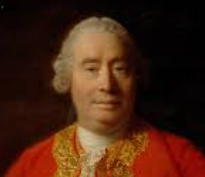
Next to the ridicule of denying an evident truth, is that of taking much pains to defend it; and no truth appears to me more evident, than that beasts are endow'd with thought and reason as well as men. The arguments are in this case so obvious, that they never escape the most stupid and ignorant.

A minimum of unconsciousness is necessary if one wants to stay inside history. To act is one thing; to know one is acting is another. When lucidity invests the action, insinuates itself into it, action is undone, and with it, prejudice, whose function consists, precisely, in subordinating, in enslaving consciousness to action. The man who unmasks his fictions renounces his own resources and, in a sense, himself. Consequently, he will accept other fictions which will deny him, since they will not have cropped up from his own depths. No man concerned with his equilibrium may exceed a certain degree of lucidity and analysis.
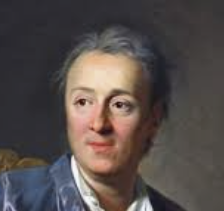
The wisest among us is very lucky never to have met the woman, be she beautiful or ugly, intelligent or stupid, who could drive him crazy enough to be fit to be put into an asylum.

Even those who have renounced Christianity and attack it, in their inmost being still follow the Christian ideal, for hitherto neither their subtlety nor the ardor of their hearts has been able to create a higher ideal of man and of virtue than the ideal given by Christ.

Where we find a difficulty we may always expect that a discovery awaits us. Where there is cover we hope for game.

The entire method consists in the order and arrangement of the things to which the mind's eye must turn so that we can discover some truth.
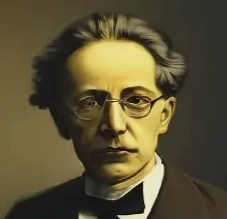
A people cannot be free otherwise than at the individual's expense; for it is not the individual that is the main point in this liberty, but the people. The freer the people, the more bound the individual; the Athenian people, precisely at its freest time, created ostracism, banished the atheists, poisoned the most honest thinker.
The original thinking force of the universe progresses and develops itself in all possible determinations of which it is capable, just as the other original natural forces progress and assume all possible configurations. I am a particular determination of the formative force, like the plant; a particular determination of the peculiar motive force, like the animal; and in addition to this a determination of the thinking force: and the union of these three basic forces into one force, into one harmonious development, is the distinguishing characteristic of my species.

Never wholly separate in your Mind the merits of any Political Question from the Men who are concerned in it.
My friend Professor Tolkien asked me the very simple question, "What class of men would you expect to be most preoccupied with, and most hostile to, the idea of escape?" and gave the obvious answer: jailers.

If conquest constitutes a natural right on the part of the few, the many have only to gather sufficient strength in order to acquire the natural right of reconquering what has been taken from them.

A loving heart is the beginning of all knowledge.
To live, by definition, is not something one learns. Not from oneself, it is not learned from life, taught by life. Only from the other and by death. In any case from the other at the edge of life. At the internal border or the external border, it is a heterodidactics between life and death.
Bach: a scale of tears upon which our desires for God ascend.
I have only two rules which I regard as principles of conduct. The first is: Have no rules. The second is: Be independent of the opinion of others.

One of the scribes came to Jesus and asked him, "Which is the first of all commandments?" Jesus replied,"The first is this: Hear, O Israel! The Lord our God is Lord alone! You shall love the Lord your God with all your heart, with all your soul, with all your mind, and with all your strength. The second is like: You shall love your neighbor as yourself. There is no other commandment greater than these."

Setting the mind to remember... involves a continual minimal irradiation of excitement into paths which lead thereto... the continued presence of the thing in the 'fringe' of our consciousness. Letting the thing go involves withdrawal of the irradiation, unconsciousness of the thing, and... obliteration of the paths.
I. The subjects of every state ought to contribute towards the support of the government, as nearly as possible, in proportion to their respective abilities, that is, in proportion to the revenue which they respectively enjoy under the protection of the state.

Einstein analyses the ideas of time-order and of simultaneity. Primarily (according to his analysis) time-order only refers to the succession of events at a given place. Accordingly each given place has its own time-order. But these time-orders are not independent in the system of nature, and their correlation is known to us by means of physical measurement. Now ultimately all physical measurement depends upon coincidence in time and place.
A spectre is haunting Europe; the spectre of Communism.

When, as a result of what was called Enlightenment in the eighteenth century, the priests had in fact almost entirely lost this function of guidance. Their place was taken by writers and scientists. In both cases it is equally absurd. Mathematics, physics, and biology are as remote from spiritual guidance as the art of arranging words. When that function is usurped by literature and science it proves there is no longer any spiritual life.

The subversive character of truth inflicts upon thought an imperative quality. Logic centers on judgments which are, as demonstrative propositions, imperatives, - the predicative "is" implies an "ought." ... Verification of the proposition involves a process in fact as well as in thought: (S) must become that which it is. The categorical statement thus turns into a categorical imperative; it does not state a fact but the necessity to bring about a fact. For example, it could be read as follows: man is not (in fact) free, endowed with inalienable rights, etc., but he ought to be.

I hate the world and almost all the people in it. I hate the Labour Congress and the journalists who send men to be slaughtered, and the fathers who feel a smug pride when their sons are killed, and even the pacifists who keep saying human nature is essentially good, in spite of all the daily proofs to the contrary. I hate the planet and the human race - I am ashamed to belong to such a species.
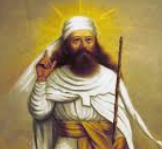
Thus to the Lord doth Asha, the Truth, reply:"No guide is known who can shelter the world from woe, None who knows what moves and works Thy lofty plans."
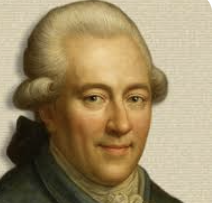
First we have to believe, and then we believe.

I maintain that inversion is the effect of neither a prenatal choice nor an endocrinal malformation nor even the passive and determined result of complexes. It is an outlet that a child discovers when he is suffocating.

Darwinism is not a testable scientific theory, but a metaphysical research program. Unsourced variant: Evolution is not a fact. Evolution doesn't even qualify as a theory or as a hypothesis. It is a metaphysical research program, and it is not really testable science.

Wit and good nature meeting in a fair young lady as they do in you make the best resemblance of an angel that we know; and he that is blessed with the conversation and friendship of a person so extraordinary enjoys all that remains of paradise in this world.

The crisis facing men is not the crisis of masculinity, it is the crisis of patriarchal masculinity. Until we make this distinction clear, men will continue to fear that any critique of patriarchy represents a threat.
People will tell us that without the consolations of religion they would be intolerably unhappy. So far as this is true, it is a coward's argument. Nobody but a coward would consciously choose to live in a fool's paradise. When a man suspects his wife of infidelity, he is not thought the better of for shutting his eyes to the evidence. And I cannot see why ignoring evidence should be contemptible in one case and admirable in the other.
What the learned world tends to offer is one second-hand scrap of information illustrating ideas derived from another second-hand scrap of information. The second-handedness of the learned world is the secret of its mediocrity.
The evil effect of science upon men is principally this, that by far the greatest number of those who wish to display a knowledge of it accomplish no improvement at all of the understanding, but only a perversity of it, not to mention that it serves most of them as a tool of vanity.

It might be wiser for me to avoid Camarina and say nothing of theologians. They are a proud, susceptible race. They will smother me under six hundred dogmas. They will call me heretic and bring thunderbolts out of their arsenals, where they keep whole magazines of them for their enemies. Still they are Folly's servants, though they disown their mistress. They live in the third heaven, adoring their own persons and disdaining the poor crawlers upon earth. They are surrounded with a bodyguard of definitions, conclusions, corollaries, propositions explicit, and propositions implicit. ...They will tell you how the world was created. They will show you the crack where Sin crept in and corrupted mankind.
No longer able to believe in the Church religion, whose falsehood they had detected, and incapable of accepting true Christian teaching, which denounced their whole manner of life, these rich and powerful people, stranded without any religious conception of life, involuntarily returned to that pagan view of things which places life's meaning in personal enjoyment. And then among the upper classes what is called the "Renaissance of science and art" took place, which was really not only a denial of every religion, but also an assertion that religion was unnecessary.
The stock market was created by the telegraph and the telephone, and its panics are engineered by carefully orchestrated stories in the press.
CivilSimian.com created by AxiomaticPanic, CivilSimian, Kalokagathia