



5 months 1 week ago
Phenomenology is not a philosophy; it is a philosophical method, a tool. It is like an adjustable spanner that can be used for dismantling a refrigerator or a car, or used for hammering in nails, or even for knocking somebody out.
▼
Source
source
p. 92
4 months 2 days ago
The modern world inherits the Christian view in which salvation is played out in history. In Christian myth human events follow a design known only to God; the history of humankind is an ongoing story of redemption. This is an idea that informs virtually all of western thought - not least when it is intensely hostile to religion. From Christianity onwards, human salvation would be understood (at least in the west) as involving movement through time. All modern philosophies in which history is seen as a process of human emancipation - whether through revolutionary change or incremental improvement - are garbled versions of this Christian narrative, itself a garbled version of the original message of Jesus.
▼
Source
source
The Faith of Puppets: The Revelation of Philip K. Dick (p. 60)
6 months 3 weeks ago
Let us cultivate our garden.

7 months 2 days ago
Good sense is, of all things among men, the most equally distributed; for every one thinks himself so abundantly provided with it, that those even who are the most difficult to satisfy in everything else, do not usually desire a larger measure of this quality than they already possess.
3 months 3 days ago
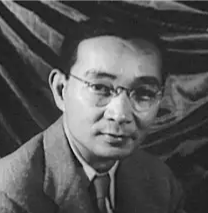
This is a personal testimony, a testimony of my own experience of thought and life. It is not intended to be objective and makes no claim to establish eternal truths. In fact I rather despise claims to objectivity in philosophy; the point of view is the thing. I should have liked to call it "A Lyrical Philosophy," using the word "lyrical" in the sense of being a highly personal and individual outlook...
▼
Source
source
Preface
5 months 4 weeks ago
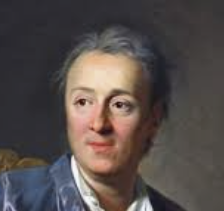
Distance is a great promoter of admiration!
▼
Source
source
As quoted in Thesaurus of Epigrams: A New Classified Collection of Witty Remarks, Bon Mots and Toasts (1942) by Edmund Fuller

6 months 3 weeks ago
What extracts from the Vedas I have read fall on me like the light of a higher and purer luminary, which describes a loftier course through purer stratum. It rises on me like the full moon after the stars have come out, wading through some far stratum in the sky.
▼
Source
source
1850
5 months 1 week ago
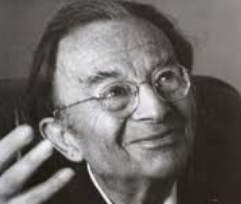
The sick individual finds himself at home with all other similarly sick individuals. The whole culture is geared to this kind of pathology. The result is that the average individual does not experience the separateness and isolation the fully schizophrenic person feels. He feels at ease among those who suffer from the same deformation; in fact, it is the fully sane person who feels isolated in the insane society - and he may suffer so much from the incapacity to communicate that it is he who may become psychotic. In the context of this study the crucial question is whether the hypothesis of a quasi-autistic or of low-grade schizophrenic disturbance would help us to explain some of the violence spreading today.
▼
Source
source
p. 395

6 months 3 weeks ago
It is certain that we cannot escape anguish, for we are anguish.
2 months 3 weeks ago
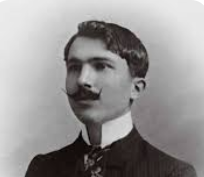
The heart unites whatever the mind separates, pushes on beyond the arena of necessity and transmutes the struggle into love.
5 months 2 weeks ago
The vicious circle of dread of war which leads the nations to arm themselves for self-protection, with the result that bloated armaments ultimately lead to the war which they were intended to avert, can be broken in either of two conceivable ways. There might arise a unique world power, brought into being by the unification of all those now in possession of weapons, and equipped with the capacity to forbid the lesser and unarmed nations to make war. On the other hand, it may arise by the working of a fate to us still inscrutable which, out of ruin, will disclose a way towards the development of a new human being. To will the discovery of this way would be blind impotence, but those who do not wish to deceive themselves will be prepared for the possibility.
6 months 4 weeks ago
The tolls for the maintenance of a high road, cannot with any safety be made the property of private persons.
▼
Source
source
Chapter I, Part III, Article I, p. 786 (See also.. Public-private partnerships).
2 months 3 weeks ago
To constrain the brute force of the people, the European governments deem it necessary to keep them down by hard labor, poverty and ignorance, and to take from them, as from bees, so much of their earnings, as that unremitting labor shall be necessary to obtain a sufficient surplus to sustain a scanty and miserable life.
▼
Source
source
Letter to Justice William Johnson
7 months 4 days ago
Libraries are as the shrine where all the relics of the ancient saints, full of true virtue, and that without delusion or imposture, are preserved and reposed.
4 months 2 weeks ago
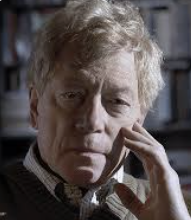
The culture of a civilization is the art and literature through which it rises to consciousness of itself and defines its vision of the world.
▼
Source
source
"What is Culture?" (p. 2)
5 months 3 weeks ago
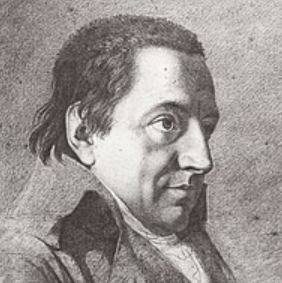
By means of the new education we want to mould the Germans into a corporate body, which shall be stimulated and animated in all its individual members by the same interest.
▼
Source
source
Introduction p. 15
7 months 3 days ago
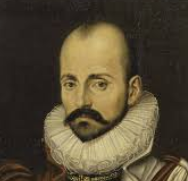
Arts and sciences are not cast in a mould, but are formed and perfected by degrees, by often handling and polishing, as bears leisurely lick their cubs into form.
▼
Source
source
Book II, Ch. 12. Apology for Raimond Sebond

5 months 1 week ago
The first act of violence that patriarchy demands of males is not violence toward women. Instead patriarchy demands of all males that they engage in acts of psychic self-mutilation, that they kill off the emotional parts of themselves. If an individual is not successful in emotionally crippling himself, he can count on patriarchal men to enact rituals of power that will assault his self-esteem.
▼
Source
source
The Will To Change: Men, Masculinity, and Love (2004), p. 66

6 months 3 weeks ago
There is always a best way of doing everything, if it be to boil an egg. Manners are the happy ways of doing things; each once a stroke of genius or of love, - now repeated and hardened into usage. They form at last a rich varnish, with which the routine of life is washed, and its details adorned.
▼
Source
source
Behavior
6 months 4 weeks ago
What a noble privilege is it of human reason to attain the knowledge of the supreme Being; and, from the visible works of nature, be enabled to infer so sublime a principle as its supreme Creator? But turn the reverse of the medal. Survey most nations and most ages. Examine the religious principles, which have, in fact, prevailed in the world. You will scarcely be persuaded, that they are any thing but sick men's dreams: Or perhaps will regard them more as the playsome whimsies of monkies in human shape, than the serious, positive, dogmatical asseverations of a being, who dignifies himself with the name of rational.
▼
Source
source
Part XV - General corollary

5 months 3 weeks ago
It shews the anxiety of the great men who influenced the conduct of affairs at that great event, to make the Revolution a parent of settlement, and not a nursery of future revolutions.
▼
Source
source
Referring to the Glorious Revolution of 1688
7 months 1 week ago
If you have a garden and a library, you have everything you need.
▼
Source
source
To Varro, in Ad Familiares IX, 4
7 months 3 weeks ago
That which distinguishes the Christian narrow way from the common human narrow way is the voluntary. Christ was not someone who coveted earthly things but had to be satisfied with poverty, no, he chose poverty.
5 months 2 weeks ago
The true antithesis of nature is not art but arbitrary conceit, fantasy, and stereotyped convention.
▼
Source
source
p. 158
5 months 4 days ago
A on his lips and not-A in his heart.
▼
Source
source
E 95

4 months 3 weeks ago
If a poor person envies a rich person, he is no better than the rich person.
▼
Source
source
p. 89
2 months 3 weeks ago
I agree with you that it is the duty of every good citizen to use all the opportunities, which occur to him, for preserving documents relating to the history of our country.
▼
Source
source
Letter to Hugh P. Taylor
5 months 1 week ago
Our argument is not flatly circular, but something like it. It has the form, figuratively speaking, of a closed curve in space.
▼
Source
source
"Two Dogmas of Empiricism", p. 26
7 months 3 weeks ago
The ancients, even though they believed in destiny, believed primarily in nature, in which they participated wholeheartedly. To rebel against nature amounted to rebelling against oneself.
4 months 2 days ago
The mass political movements of the 20th century were vehicles for myths inherited from religion, and it is no accident that religion is reviving now that these movements have collapsed.

7 months 1 week ago
The perfection of the effect demonstrates the perfection of the cause, for a greater power brings about a more perfect effect. But God is the most perfect agent. Therefore, things created by Him obtain perfection from Him. So, to detract from the perfection of creatures is to detract from the perfection of divine power.
▼
Source
source
III, 69, 15

2 months 3 weeks ago
The soul is... but an empty word, of which no one has any idea, and which an enlightened man should use only to signify the part in us that thinks...
6 months 3 weeks ago
Man is a useless passion.
▼
Source
source
Part 4, Chapter 2, III

5 months 2 weeks ago
And hereby it comes to passe, that Intemperance, is naturally punished with Diseases; Rashness, with Mischance; Injustice; with Violence of Enemies; Pride, with Ruine; Cowardice, with Oppression; Negligent government of Princes, with Rebellion; and Rebellion with Slaughter.
▼
Source
source
The Second Part, Chapter 31, p. 194
6 months 3 weeks ago
Each to each a looking-glass, Reflects his figure that doth pass. Every wayfarer he meets What himself declared repeats, What himself confessed records, Sentences him in his words; The form is his own corporal form, And his thought the penal worm. Yet shine forever virgin minds, Loved by stars and the purest winds, Which, o'er passion throned sedate, Have not hazarded their state; Disconcert the searching spy, Rendering to a curious eye The durance of a granite ledge To those who gaze from the sea's edge. It is there for benefit; It is there for purging light; There for purifying storms; And its depths reflect all forms; It cannot parley with the mean,- Pure by impure is not seen. For there's no sequestered grot, Lone mountain tarn, or isle forgot, But Justice, journeying in the sphere, Daily stoops to harbour there.
▼
Source
source
Astræa
6 months 2 weeks ago
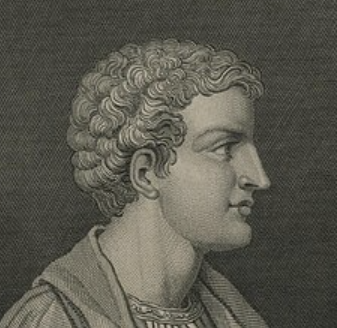
If the world should break and fall on him, it would strike him fearless.
▼
Source
source
Book III, ode iii, line 7

5 months 3 weeks ago
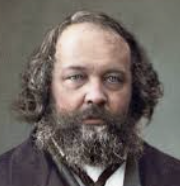
Freedom is the absolute right of every human being to seek no other sanction for his actions but his own conscience, to determine these actions solely by his own will, and consequently to owe his first responsibility to himself alone.
▼
Source
source
As quoted in Anarchism: From Theory to Practice, Daniel Guérin, New York: NY, Monthly Review Press (1970) p. 31
4 months 1 week ago
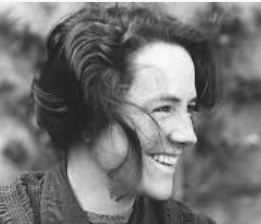
One cannot collect all the beautiful shells on the beach. One can collect only a few, and they are more beautiful if they are few.
▼
Source
source
p. 114
3 months 3 weeks ago
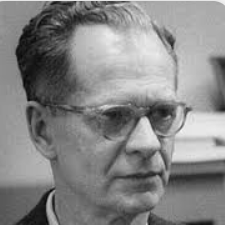
Man's power appears to have increased out of all proportion to his wisdom. He has never been in a better position to build a healthy, happy, and productive world; yet things have perhaps never seemed so black.
▼
Source
source
Science and Human Behavior
3 months 2 weeks ago
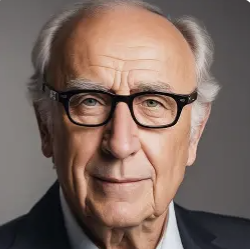
To my complete surprise, that exposure to out-of-date scientific theory and practice radically undermined some of my basic conceptions about the nature of science and the reasons for its special success.Those conceptions were ones I had previously drawn partly from scientific training itself and partly from a long-standing avocational interest in the philosophy of science. Somehow, whatever their pedagogic utility and their abstract plausibility, those notions did not at all fit the enterprise that historical study displayed. Yet they were and are fundamental to many discussions of science, and their failures of verisimilitude therefore seemed thoroughly worth pursuing. The result was a drastic shift in my career plans, a shift from physics to history of science and then, gradually, from relatively straightforward historical problems back to the more philosophical concerns that had initially led me to history.

5 months 2 weeks ago
I came to set fire to the earth, and I wish it were already on fire!
▼
Source
source
12:49 (CEV)

5 months 1 week ago
In fact, for a voluntarist like Schopenhauer, a theory so sanely and cautiously empirical and rational as that of Darwin, left out of account the inward force, the essential motive, of evolution. For what is, in effect, the hidden force, the ultimate agent, which impels organisms to perpetuate themselves and to fight for their persistence and propagation? Selection, adaptation, heredity, these are only external conditions. This inner, essential force has been called will on the supposition that there exists also in other beings that which we feel in ourselves as a feeling of will, the impulse to be everything, to be others as well as ourselves yet without ceasing to be what we are.

6 months 2 weeks ago
What we do is to bring words back from their metaphysical to their everyday use.
▼
Source
source
§ 116
6 months 3 weeks ago
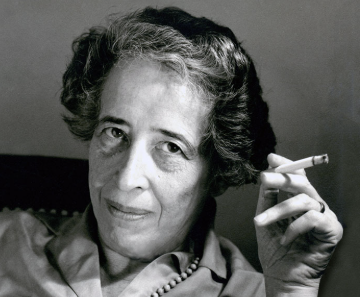
The sad truth of the matter is that most evil is done by people who never made up their minds to be or do either evil or good.
▼
Source
source
The Life of the Mind (1978), "Thinking"
5 months 3 weeks ago
The subject must distinguish itself through opposition from the rational being, which it has assumed outside of itself. The subject has posited itself as one, which contains in itself the last ground of something that is in it, (for this is the condition of Egohood, or of Rationality generally;) but it has also posited a being outside of itself, as the last ground of this something in it. It is to have the power of distinguishing itself from this other being; and this is, under our presupposition, possible only, if the subject can distinguish in that given something how far the ground of this something lies in itself and how far it lies outside of itself.
▼
Source
source
P. 63
CivilSimian.com created by AxiomaticPanic, CivilSimian, Kalokagathia