


8 months 1 week ago
Nothing makes the earth seem so spacious as to have friends at a distance; they make the latitudes and longitudes.
▼
Source
source
Pearls of Thought (1881) p. 95
9 months 5 days ago
Knowing that certain nights whose sweetness lingers will keep returning to the earth and sea after we are gone, yes, this helps us to die.

5 months 4 days ago
A multitude is irreducible multiplicity; the singular social differences that constitute the multitude must always be expressed and can never be flattened into sameness, unity, identity, or indifference. ... the compact identities of factory workers in the dominant countries have been undermined with the rise of short-term contracts and forced mobility of new forms of work; how migration has challenged traditional notions of national identity; how family identity has changed and so forth.
▼
Source
source
105
9 months 6 days ago
You want to know whether I can make a long speech, such as you are in the habit of hearing; but that is not my way. Socrates speaking to Alcibiades


6 months 3 weeks ago
Upper middle-class upbringing has rooted out any element of what might appear to be self-assertion or egoism; good manners is to be like everyone else. So the male of the species becomes accustomed to suppress any stirring of impatience or originality. Shaw once said you can't learn to skate without making a fool of yourself; the British middle-class attitude seems to be that, in that case, you hadn't better skate at all. The result seems to be considerably more oppressive than being brought up in a Jewish ghetto or a west side slum.
▼
Source
source
p. 112, An integrity born of hope: Notes on Christopher Isherwood

8 months 2 weeks ago
Once we have tasted the sweetness of what is spiritual, the pleasures of the world will have no attraction for us. If we disregard the shadows of things, then we will penetrate their inner substance.

8 months 1 week ago
Language is a city to the building of which every human being brought a stone; yet he is no more to be credited with the grand result than the acaleph which adds a cell to the coral reef which is the basis of the continent.
▼
Source
source
Quotation and Originality
7 months 6 days ago
To be a good mother - a woman must have sense, and that independence of mind which few women possess who are taught to depend entirely on their husbands. Meek wives are, in general, foolish mothers; wanting their children to love them best, and take their part, in secret, against the father, who is held up as a scarecrow.
▼
Source
source
Ch. 10

8 months 3 weeks ago
Suppose a person entering a house were to feel heat on the porch, and going further, were to feel the heat increasing, the more they penetrated within. Doubtless, such a person would believe there was a fire in the house, even though they did not see the fire that must be causing all this heat. A similar thing will happen to anyone who considers this world in detail: one will observe that all things are arranged according to their degrees of beauty and excellence, and that the nearer they are to God, the more beautiful and better they are.
▼
Source
source
Art. 1
6 months 3 weeks ago
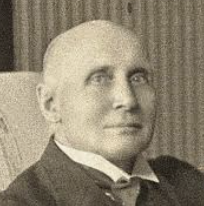
It is in literature that the concrete outlook of humanity receives its expression.
▼
Source
source
Ch. 5: "The Romantic Reaction", p. 106

5 months 3 days ago
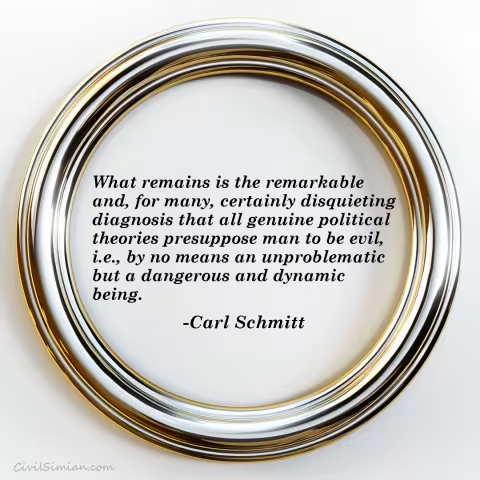
What we may be witnessing is not just the end of the Cold War, or the passing of a particular period of post-war history, but the end of history as such ... That is, the end point of mankind's ideological evolution and the universalization of Western liberal democracy as the final form of human government.

8 months 2 weeks ago
In plain truth, lying is an accursed vice. We are not men, nor have any other tie upon another, but by our word.
▼
Source
source
Book I, Ch. 9

4 months 5 days ago
What is my ruling faculty now to me? and of what nature am I now making it? and for what purpose am I now using it? is it void of understanding? is it loosed and rent asunder from social life? is it melted and mixed with the poor flesh so as to move together with it?
▼
Source
source
X, 24
6 months 2 weeks ago
I believe that love is the main key to open the doors to the "growth" of man. Love and union with someone or something outside of oneself, union that allows one to put oneself into relationship with others, to feel one with others, without limiting the sense of integrity and independence. Love is a productive orientation for which it is essential that there be present at the same time: concern, responsibility, and respect for and knowledge of the object of the union. I believe that the experience of love is the most human and humanizing act that it is given to man to enjoy and that it, like reason, makes no sense if conceived in a partial way.

8 months 2 weeks ago
The end of the republic is to enervate and to weaken all other bodies so as to increase its own body.
▼
Source
source
Book 2, Ch. 3 (translation by Mansfield and Tarcov)
8 months 1 week ago
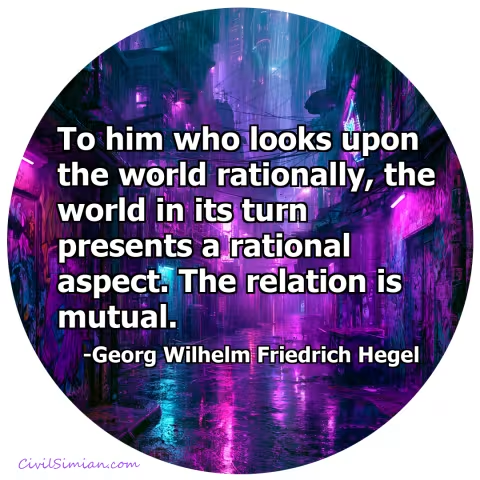
I have assumed throughout that the persons in the original position are rational.
▼
Source
source
Chapter III, Section 25, pg. 142

8 months 3 weeks ago
Now, justification in this life is given to us according to these three things: first by the laver of regeneration by which all sins are forgiven; then, by a struggle with the faults from whose guilt we have been absolved; the third, when our prayer is heard, in which we say: Forgive us our debts, because however bravely we fight against our faults, we are men; but the grace of God so aids as we fight in this corruptible body that there is reason for His hearing us as we ask forgiveness.
▼
Source
source
Against Julian, Book II, ch. 8, 22. In The Fathers of the Church, Matthew A. Schumacher, tr., 1957, ISBN 0813214009 ISBN 9780813214009 pp. 83-84.
6 months 1 day ago
Our media make crisis chatter out of news and fill our minds with anxious phantoms of the real thing - a summit in Helsinki, a treaty in Egypt, a constitutional crisis in India, a vote in the U.N., the financial collapse of New York. We can't avoid being politicized (a word as murky as the condition which it describes) because it is necessary after all to know what is going on. Worse yet, what is going on will not let us alone. Neither the facts nor the deformations, the insidious platitudes of the media (tormenting because the underlying realities are so large and so terrible), can be screened out. The study of literature itself is heavily "politicized."
▼
Source
source
To Jerusalem and Back: A Personal Account (1976) [Viking/Penguin, 1998, ISBN 0-141-18075-7], p. 21
6 months 6 days ago
Money alone sets all the world in motion.
▼
Source
source
Maxim 656

7 months 4 days ago
I long to be free - desperately free. Free as the stillborn are free.

4 months 1 week ago
War is an instrument entirely inefficient toward redressing wrong; and multiplies, instead of indemnifying losses.
▼
Source
source
Letter to John Sinclair
5 months 5 days ago
Ideals are imaginative understanding of that which is desirable in that which is possible.
▼
Source
source
Ch. XII: "The Business of the Great Society", §9, p. 259
5 months 2 days ago
What was observed by us in the third place is the nature or matter of the Milky Way itself, which, with the aid of the spyglass, may be observed so well that all the disputes that for so many generations have vexed philosophers are destroyed by visible certainty, and we are liberated from wordy arguments.
▼
Source
source
Original text as reproduced in Edward Tufte, Beautiful Evidence (Cheshire, Connecticut: Graphics Press LLC, 2006), 101
4 months 1 week ago
I recall an endless desert of infinite and flaming matter. I am burning! I pass through immeasurable, unorganized time, completely done, despairing, crying in the wilderness. And slowly the flame subsides, the womb of matter grows cool, the stone comes alive, breaks open, and a small green leaf uncurls into the air, trembling. It clutches the soil, steadies itself, raises its head and hands, grasps the air, the water, the light, and sucks at the Universe.
7 months 4 days ago
Suppose a surface to be part red and part blue; so that every point on it is either red or blue, and of course, no part can be both red and blue. What then, is the color of the surface in the immediate neighborhood of the point. ...it follows that the boundary is half red and half blue. In like manner, we find it necessary to hold that consciousness essentially occupies time... Thus, the present is half past and half time to come. ...Take another case: the velocity of a particle at any instant of time is its mean velocity during an infinitesimal instant in which that time is consumed. Just so, my immediate feeling is my feeling through an infinitesimal duration containing the present instant.
9 months 6 days ago
We face eternity now. We have no universe left, no outside phenomena, no emotions, no passions. Nothing but ourselves and thought. We face an eternity of introspection, when all through history we have never known what to do with ourselves on a rainy Sunday.

8 months 1 week ago
Dissimulation is innate in woman, and almost as much a quality of the stupid as of the clever.
▼
Source
source
"Of Women"
5 months 4 days ago
If children are a joy for the well-to-do, they are a torment for seven-eights of all civlizees, who cannot afford to maintain and educate them.
9 months 1 week ago
The life-giving Spirit is the very one who slays you; the first thing the life-giving Spirit says is that you must enter into death, that you must die to, it is this way in order that you many not take Christianity in vain. A life-giving Spirit, that is the invitation; who would not willingly take hold of it! But die first, that is the halt!
8 months 2 weeks ago
No man is exempt from saying silly things; the mischief is to say them deliberately.
▼
Source
source
Book III, Ch. 1
8 months 1 week ago
Judges of elegance and taste consider themselves as benefactors to the human race, whilst they are really only the interrupters of their pleasure ... There is no taste which deserves the epithet good, unless it be the taste for such employments which, to the pleasure actually produced by them, conjoin some contingent or future utility: there is no taste which deserves to be characterized as bad, unless it be a taste for some occupation which has mischievous tendency.
▼
Source
source
Théorie des peines et des récompenses (1811); translation by Richard Smith, The Rationale of Reward, J. & H. L. Hunt, London, 1825, Bk. 3, Ch. 1
6 months 3 weeks ago
In a free nation, it matters not whether individuals reason well or ill; it is sufficient that they do reason. Truth arises from the collision and from hence springs liberty, which is a security from the effects of reasoning.
▼
Source
source
Quoted by Thomas Erskine in the trial of Thomas Paine, 1792

8 months 1 week ago
I had obtained some distinction, and felt myself of some importance, before the desire of distinction and of importance had grown into a passion: and little as it was which I had attained, yet having been attained too early, like all pleasures enjoyed too soon, it had made me blasé and indifferent to the pursuit. Thus neither selfish nor unselfish pleasures were pleasures to me. And there seemed no power in nature sufficient to begin the formation of my character anew, and create in a mind now irretrievably analytic, fresh associations of pleasure with any of the objects of human desire.
▼
Source
source
(p. 139)

8 months 2 weeks ago
Justice is a temporary thing that must at last come to an end; but the conscience is eternal and will never die.
▼
Source
source
On Marriage
7 months 4 days ago
Consciousness must essentially cover an interval of time; for if it did not, we could gain no knowledge of time, and not merely no veracious cognition of it, but no conception whatever. We are therefore, forced to say that we are immediately conscious through an infinitesimal interval of time.

8 months 1 week ago
What do we mean by saying that existence precedes essence? We mean that man first of all exists, encounters himself, surges up in the world-and defines himself afterwards. If man as the existentialist see him is not definable, it is because to begin with he is nothing. He will not be anything until later, and then he will be what he makes of himself. Thus, there is no human nature, because there is no God to have a conception of it. Man simply is. Not that he is simply what he conceives himself to be, but he is what he wills, and as he conceives himself after already existing - as he wills to be after that leap towards existence. Man is nothing else but that which he makes of himself. That is the first principle of existentialism.
▼
Source
source
p. 28
7 months 1 week ago
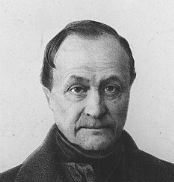
In the final, positive state, the mind has given over the vain search after Abolute notions, the origin and destination of the universe, and the cause of phenomenon, and applies itself to the tudy of their laws, - that is, their invariable relations of succession and resemblance. Reasoning and observation, duly combined, are the means of this knowledge. What is now understood when we speak of an explanation of the facts is simply the establishment of a connection between single phenomena and some general facts, the number of which continually diminishes with the progress of science.
▼
Source
source
Vol I
6 months 1 week ago
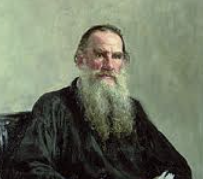
The Churches as Churches-as institutions affirming their own infallibility-are anti-Christian institutions. Between the Churches as such and Christianity, not only is there nothing in common except the name, but they are two quite opposite and opposing principles. The one represents pride, violence, self-assertion, immobility and death: the other humility, penitence, meekness, progress, and life.
▼
Source
source
Chapter III, Christianity Misunderstood by Believers
6 months 4 days ago
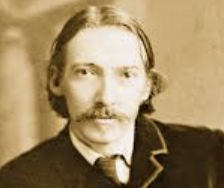
In many ways an artistic nature unfits a man for practical existence.
▼
Source
source
A Lodging for the Night.
7 months 4 days ago
Except for music, everything is a lie, even solitude, even ecstasy. Music, in fact, is the one and the other, only better.
8 months 1 week ago
In early youth, as we contemplate our coming life, we are like children in a theatre before the curtain is raised, sitting there in high spirits and eagerly waiting for the play to begin. It is a blessing that we do not know what is really going to happen. Could we foresee it, there are times when children might seem like innocent prisoners, condemned, not to death, but to life, and as yet all unconscious of what their sentence means.
▼
Source
source
"On the Sufferings of the World"


CivilSimian.com created by AxiomaticPanic, CivilSimian, Kalokagathia