


2 weeks 4 days ago
By remembering then that I am a part of such a whole, I shall be content with everything that happens. And inasmuch as I am in a manner intimately related to the parts which are of the same kind with myself, I shall do nothing unsocial, but I shall rather direct myself to the things which are of the same kind with myself, and I shall turn all my efforts to the common interest, and divert them from the contrary.
▼
Source
source
X, 6
3 months 3 weeks ago
Every presentation of philosophy, whether oral or written, is to be taken and can only be taken in the sense of a means. Every system is only an expression or image of reason, and hence only an object of reason, an object which reason-a living power that procreates itself in new thinking beings-distinguishes from itself and posits as an object of criticism. Every system that is not recognized and appropriated as just a means, limits and warps the mind for it sets up the indirect and formal thought in the place of the direct, original and material thought.
▼
Source
source
Z. Hanfi, trans., in The Fiery Brook (1972), p. 67
2 weeks 4 days ago
Continuously thou wilt look at human things as smoke and nothing at all; especially if thou reflectest at the same time, that what has once changed will never exist again in the infinite duration of time. But thou, in what a brief space of time is thy existence? And why art thou not content to pass through this short time in an orderly way?
▼
Source
source
X, 31

4 months 3 weeks ago
To be shaken out of the ruts of ordinary perception, to be shown for a few timeless hours the outer and inner world, not as they appear to an animal obsessed with survival or to a human being obsessed with words and notions, but as they are apprehended, directly and unconditionally, by Mind at Large - this is an experience of inestimable value to everyone and especially to the intellectual.
1 month 6 days ago
When I hear any man talk of an unalterable law, the only effect it produces upon me is to convince me that he is an unalterable fool.
▼
Source
source
Peter Plymley's Letters (1808), Letter IV
3 weeks ago
In framing scientific terms, the appropriation of old words is preferable to the invention of new ones.

4 months 3 weeks ago
The poor, short lone fact dies at birth. Memory catches it up into her heaven and bathes it in immortal waters.
▼
Source
source
"Memory", p. 66

4 months 4 weeks ago
Great abuses in the world are begotten, or, to speak more boldly, all the abuses of the world are begotten, by our being taught to be afraid of professing our ignorance, and that we are bound to accept all things we are not able to refute: we speak of all things by precepts and decisions. The style at Rome was that even that which a witness deposed to having seen with his own eyes, and what a judge determined with his most certain knowledge, was couched in this form of speaking: "it seems to me." They make me hate things that are likely, when they would impose them upon me as infallible.
▼
Source
source
Ch. 12, tr. Cotton, rev. W. Carew Hazlitt, 1877

3 months 3 weeks ago
You talk of Paine with more respect than he deserves: He is utterly incapable of comprehending his subject. He has not even a moderate portion of learning of any kind. He has learnd the instrumental part of literature, a style, and a method of disposing his ideas, without having ever made a previous preparation of Study or thinking-for the use of it. ... [Paine] possesses nothing more than what a man whose audacity makes him careless of logical consequences, and his total want of honour and morality makes indifferent as to political consequences, may very easily write. They indeed who seriously write upon a principle of levelling ought to be answerd by the Magistrate-and not by the Speculatist.
▼
Source
source
Letter to William Cusac Smith (22 July 1791), quoted in Alfred Cobban and Robert A. Smith (eds.), The Correspondence of Edmund Burke, Volume VI: July 1789-December 1791 (1967), pp. 303-304
3 months 1 week ago
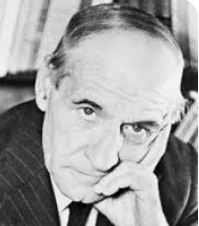
This fighting-shy of every obligation partly explains the phenomenon, half ridiculous, half disgraceful, Of the setting-up in our days of the platform of "youth" as youth. ... In comic fashion people call themselves "young," because they have heard that youth has more rights than obligations, since it can put off the fulfilment of these latter to the Greek Kalends of maturity. ...[T]he astounding thing at present is that these take it as an effective right precisely in order to claim for themselves all those other rights which only belong to the man who has already done something.
▼
Source
source
Chapter XV: We Arrive At The Real Question

4 months 3 weeks ago
You must love the crust of the earth on which you dwell more than the sweet crust of any bread or cake; you must be able to extract nutriment out of a sand heap.
▼
Source
source
January 25, 1858

5 months 5 days ago
The living force of his soul gained the day: on he passed far beyond the flaming walls of the world and traversed throughout in mind and spirit the immeasurable universe.
▼
Source
source
Book I, lines 72-74 (tr. H. A. J. Munro); of Epicurus.

4 months 1 week ago
Beware an act of avarice; it is bad and incurable disease.
▼
Source
source
Maxim no. 19.

3 months 6 days ago
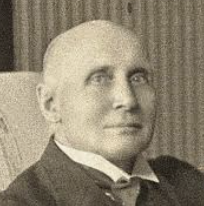
Philosophy finds religion, and modifies it; and conversely religion is among the data of experience which philosophy must weave into its own scheme. Religion is an ultimate craving to infuse into the insistent particularity of emotion that non-temporal generality which primarily belongs to conceptual thought alone. In the higher organisms the differences of tempo between the mere emotions and the conceptual experiences produce a life-tedium, unless this supreme fusion has been effected. The two sides of the organism require a reconciliation in which emotional experiences illustrate a conceptual justification, and conceptual experiences find an emotional illustration.
▼
Source
source
Pt. I, ch. 1, sec. 6.
2 months 2 weeks ago
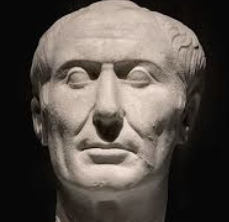
The loss which is unknown is no loss at all.
▼
Source
source
Maxim 38
2 months 2 weeks ago
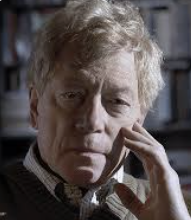
We are not born free, nor do we come into this world with a self-identity and autonomy of our own. We achieve those things, through the conflict and cooperation that weave us into the social fabric.
▼
Source
source
Where We Are: The State of Britain Now

3 months 3 weeks ago
Influences of various kinds conspire to increase corporate action and decrease individual action. And the change is being on all sides aided by schemers, each of whom thinks only of his pet plan and not at all of the general reorganization which his plan, joined with others such, are working out. It is said that the French Revolution devoured its own children. Here, an analogous catastrophe seems not unlikely. The numerous socialistic changes made by Act of Parliament, joined with the numerous others presently to be made, will by-and-by be all merged in State-socialism-swallowed in the vast wave which they have little by little raised."But why is this change described as 'the coming slavery'?," is a question which many will still ask. The reply is simple. All socialism involves slavery.

4 months 3 weeks ago
His character does not appear more extraordinary and unusual by the mixture of so much absurdity with so much penetration, than by his tempering such violent ambition, and such enraged fanaticism with so much regard to justice and humanity.
▼
Source
source
Volume III, Chapter LXI; referring to Oliver Cromwell
2 months 3 weeks ago
People no longer look at each other, but there are institutes for that. They no longer touch each other, but there is contactotherapy. They no longer walk, but they go jogging, etc. Everywhere one recycles lost faculties, or lost bodies, or lost sociality, or the lost taste for food.
▼
Source
source
"The Precession of Simulacra," p. 13
2 months 2 weeks ago
Nothing like a little judicious levity.
▼
Source
source
The Wrong Box, ch. 7 (1889).

2 months 1 week ago
The measure of a man is a man. Justice, morality, ethics, fairness, goodness all based on the preservation of life. You can do other things, but you'd be Good by coincidence.

5 months 1 week ago
Virtuous, worthy, wise and capable people are chosen as leaders.


4 months 2 weeks ago
If life becomes hard to bear we think of a change in our circumstances. But the most important and effective change, a change in our own attitude, hardly even occurs to us, and the resolution to take such a step is very difficult for us.
▼
Source
source
p. 53e

2 months 2 weeks ago
Writing turned a spotlight on the high, dim Sierras of speech; writing was the visualization of acoustic space. It lit up the dark.
▼
Source
source
(p. 14)

3 weeks ago
The priests have so disfigured the simple religion of Jesus that no one who reads the sophistications they have engrafted on it, from the jargon of Plato, of Aristotle & other mystics, would conceive these could have been fathered on the sublime preacher of the sermon on the mount.
▼
Source
source
Letter to Benjamin Waterhouse (13 October 1815). Published in The Works of Thomas Jefferson in Twelve Volumes, Federal Edition, Paul Leicester Ford, ed., New York: G. P. Putnam's Sons, 1904, Vol. 11, p. 492
4 months 3 weeks ago
The best effect of fine persons is felt after we have left their presence.
▼
Source
source
1839

3 months 2 weeks ago
Some minds will jump here jump to the conclusion that a past idea cannot in any sense be present. But that is hasty and illogical. How extravagant too, to pronounce our whole knowledge of the past to be mere delusion! Yet it would seem that the past is completely beyond the bounds of possible experience as a Kantian thing-in-itself.

3 months 4 days ago
"Why do you not say how things will be operated under Anarchism?" is a question I have had to meet thousands of times. Because I believe that Anarchism can not consistently impose an iron-clad program or method on the future. The things every new generation has to fight, and which it can least overcome, are the burdens of the past, which holds us all as in a net. Anarchism, at least as I understand it, leaves posterity free to develop its own particular systems, in harmony with its needs. Our most vivid imagination can not foresee the potentialities of a race set free from external restraints. How, then, can any one assume to map out a line of conduct for those to come? We, who pay dearly for every breath of pure, fresh air, must guard against the tendency to fetter the future. If we succeed in clearing the soil from the rubbish of the past and present, we will leave to posterity the greatest and safest heritage of all ages.

3 months 3 days ago
The two most far-reaching critical theories at the beginning of the latest phase of industrial society were those of Marx and Freud. Marx showed the moving powers and the conflicts in the social-historical process. Freud aimed at the critical uncovering of the inner conflicts. Both worked for the liberation of man, even though Marx's concept was more comprehensive and less time-bound than Freud's.
▼
Source
source
The Art of Being" Pt. 3
1 month 2 weeks ago
It is only through science and art that civilization is of value. Some have wondered at the formula: science for its own sake; an yet it is as good as life for its own sake, if life is only misery; and even as happiness for its own sake, if we do not believe that all pleasures are of the same quality...Every act should have an aim. We must suffer, we must work, we must pay for our place at the game, but this is for seeing's sake; or at the very least that others may one day see.

3 months 2 weeks ago
The only minds which seduce us are the minds which have destroyed themselves trying to give their life a meaning.

2 months 1 week ago
Those who cannot find moral clarity are likely to settle for the far more dangerous simplicity, or purity, instead.

4 months 3 weeks ago
What, in unenlightened societies, colour, race, religion, or in the case of a conquered country, nationality, are to some men, sex is to all women; a peremptory exclusion from almost all honourable occupations, but either such as cannot be fulfilled by others, or such as those others do not think worthy of their acceptance.
▼
Source
source
Ch. 4
2 weeks 4 days ago
When you wake up in the morning, tell yourself: The people I deal with today will be meddling, ungrateful, arrogant, dishonest, jealous, and surly. They are like this because they can't tell good from evil. (Hays translation) Say to yourself in the early morning: I shall meet today inquisitive, ungrateful, violent, treacherous, envious, uncharitable men. All these things have come upon them through ignorance of real good and ill.
▼
Source
source
II, 1
3 months 3 weeks ago
We have busied ourselves and contented ourselves long enough with speaking and writing; now at last we demand that the word become flesh, the spirit matter; we are as sick of political as we are of philosophical idealism; we are determined to become political materialists.
▼
Source
source
Lecture I, Occasion and Context

2 months 3 weeks ago
One can only live while one is intoxicated with life; as soon as one is sober it is impossible not to see that it is all a mere fraud and a stupid fraud! Ch. 4 Variant: It is possible to live only as long as life intoxicates us; once we are sober we cannot help seeing that it is all a delusion, a stupid delusion.
1 month 2 weeks ago
We can not... escape the conclusion that the rule of reasoning by recurrence is irreducible to the principle of contradiction. ...Neither can this rule come to us from experience... This rule, inaccessible to analytic demonstration and to experience, is the veritable type of the synthetic a priori judgment. On the other hand, we can not think of seeing in it a convention, as in some of the postulates of geometry. ...it is only the affirmation of the power of the mind which knows itself capable of conceiving the indefinite repetition of the same act when once this act is possible. The mind has a direct intuition of this power, and experience can only give occasion for using it and thereby becoming conscious of it.
▼
Source
source
Ch. I. (1905) Tr. George Bruce Halstead

5 months 2 weeks ago
Outside of that single fatality of death, everything, joy or happiness, is liberty.

3 months 4 days ago
The pornographic face says nothing. It has no expressivity or mystery.

4 months 2 weeks ago
A young man who wishes to remain a sound Atheist cannot be too careful of his reading. There are traps everywhere... God is, if I may say it, very unscrupulous.
▼
Source
source
p. 191
4 months 2 weeks ago
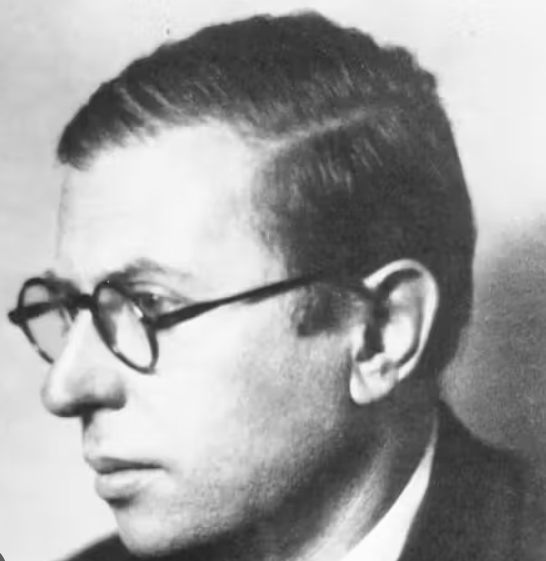
Life has no meaning a priori ... It is up to you to give it a meaning, and value is nothing but the meaning that you choose.
▼
Source
source
p. 58
3 months 1 week ago
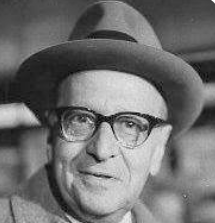
When the great religious and philosophical conceptions were alive, thinking people did not extol humility and brotherly love, justice and humanity because it was realistic to maintain such principles and odd and dangerous to deviate from them, or because these maxims were more in harmony with their supposedly free tastes than others. They held to such ideas because they saw in them elements of truth, because they connected them with the idea of logos, whether in the form of God or of a transcendental mind, or even of nature as an eternal principle.
▼
Source
source
p. 34.
4 months 1 week ago
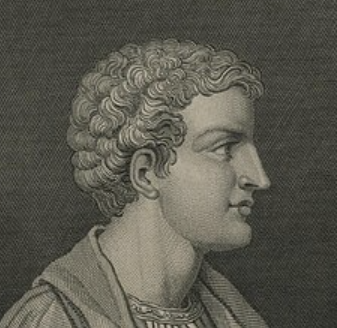
Life grants nothing to us mortals without hard work.
▼
Source
source
Book I, satire ix, line 59

4 months 3 weeks ago
It is difficult for the isolated individual to work himself out of the immaturity which has become almost natural for him. He has even become fond of it and for the time being is incapable of employing his own intelligence, because he has never been allowed to make the attempt. Statutes and formulas, these mechanical tools of a serviceable use, or rather misuse, of his natural faculties, are the ankle-chains of a continuous immaturity. Whoever threw it off would make an uncertain jump over the smallest trench because he is not accustomed to such free movement. Therefore there are only a few who have pursued a firm path and have succeeded in escaping from immaturity by their own cultivation of the mind.
2 months 2 weeks ago
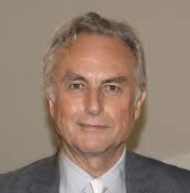
It takes intellectual courage to kick yourself out of your emotional incredulity and persuade yourself that there is no other rational choice.
▼
Source
source
The Intellectual and Moral Courage of Atheism
3 weeks 1 day ago
I will not accept boundaries; appearances cannot contain me; I choke! To bleed in this agony, and to live it profoundly, is the second duty. The mind is patient and adjusts itself, it likes to play; but the heart grows savage and will not condescend to play; it stifles and rushes to tear apart the nets of necessity.
CivilSimian.com created by AxiomaticPanic, CivilSimian, Kalokagathia