


3 months 2 weeks ago
Fortunate those who, born before science, were privileged to die of their first disease!
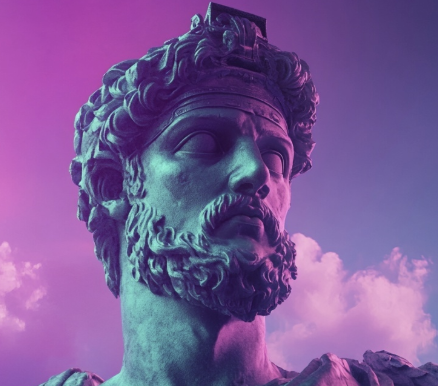
2 weeks 4 days ago
You see how few things you have to do to live a satisfying and reverent life? If you can manage this, that's all even the gods can ask of you. Thou seest how few be the things, the which if a man has at his command his life flows gently on and is divine.
▼
Source
source
II, 5

4 months 3 weeks ago
It is time to be old, To take in sail: - The god of bounds, Who sets to seas a shore, Came to me in his fatal rounds, And said: 'No more!
▼
Source
source
Terminus

4 months 1 week ago
Making money is not without its value, but nothing is baser than to make it by wrong-doing.
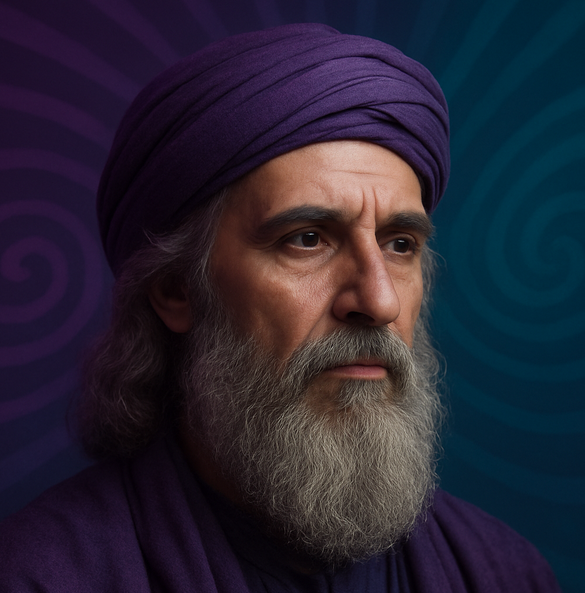
4 months 1 week ago
Practice no sloth, so that the duty and good work, which it is necessary for thee to do, may not remain undone.
▼
Source
source
(p. 59)

3 weeks ago
The Presbyterian clergy are loudest, the most intolerant of all sects, the most tyrannical, and ambitious; ready at the word of the lawgiver, if such a word could be now obtained, to put the torch to the pile, and to rekindle in this virgin hemisphere, the flames in which their oracle Calvin consumed the poor Servetus, because he could not find in his Euclid the proposition which has demonstrated that three are one, and one is three, nor subscribe to that of Calvin that magistrates have a right to exterminate all heretics to Calvinistic creed.
▼
Source
source
Letter to William Short
3 months 1 week ago
Freedom of thought and of expression are not mere rights to be claimed. They have their roots deep in the existence of individuals as developing careers in time. Their denial and abrogation is an abdication of individuality and a virtual rejection of time as opportunity.
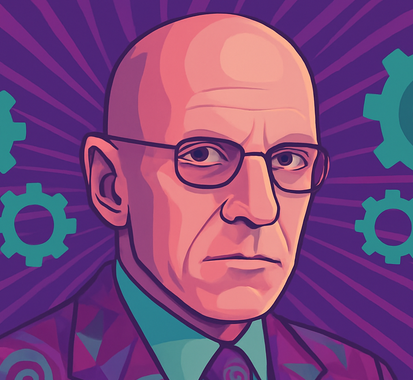
4 months 2 weeks ago
The question here is the same as the question I addressed with regard to madness, disease, delinquency and sexuality. In all of these cases, it was not a question of showing how these objects were for a long time hidden before being finally discovered, nor of showing how all these objects are only wicked illusions or ideological products to be dispelled in the light of reason finally having reached its zenith. It was a matter of showing by what conjunctions a whole set of practices-from the moment they become coordinated with a regime of truth-was able to make what does not exist (madness, disease, delinquency, sexuality, etcetera), nonetheless become something.
▼
Source
source
Lecture 1, January 10, 1979, p. 19

4 months 2 weeks ago
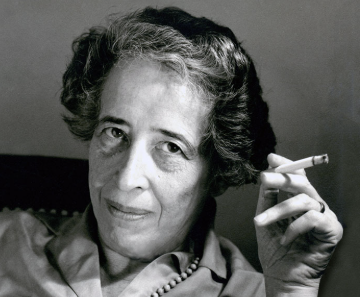
The ideal subject of totalitarian rule is not the convinced Nazi or the convinced Communist, but people for whom the distinction between fact and fiction (i.e., the reality of experience) and the distinction between true and false (i.e., the standards of thought) no longer exist.
▼
Source
source
Part 3, Ch. 13, § 3

4 months 2 weeks ago
If in this book harsh words are spoken about some of the greatest among the intellectual leaders of mankind, my motive is not, I hope, the wish to belittle them. It springs rather from my conviction that, if our civilization is to survive, we must break with the habit of deference to great men. Great men may make great mistakes; and as the book tries to show, some of the greatest leaders of the past supported the perennial attack on freedom and reason. Their influence, too rarely challenged, continues to mislead those on whose defence civilization depends, and to divide them. The responsibility of this tragic and possibly fatal division becomes ours if we hesitate to be outspoken in our criticism of what admittedly is a part of our intellectual heritage. By reluctance to criticize some of it, we may help to destroy it all.
▼
Source
source
Preface to the First Edition
4 weeks 1 day ago
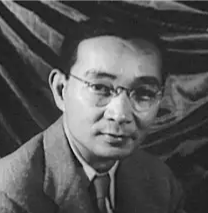
These influences of my young childhood were greatest: 1, the mountain landscape, 2, my father the impossible idealist, and 3, the upringing of a closely-knit Christian home.
▼
Source
source
Memoirs of an Octogenarian (1975), pp. 8-9
1 month 1 week ago
If the press was to be free, nothing would be so important as precisely its liberation from every coercion that could be put on it in the name of a law. And, that it might come to that, I my own self should have to have absolved myself from obedience to the law.
▼
Source
source
Cambridge 1995, p. 249

3 months 1 day ago
He who says he hates every kind of flattery, and says it in earnest, certainly does not yet know every kind of flattery.
▼
Source
source
K 41

5 months 3 weeks ago
That body is heavier than another which, in an equal bulk, moves downward quicker.

3 months 4 days ago
The pornographic face says nothing. It has no expressivity or mystery.

3 months 5 days ago
The fact of the religious vision, and its history of persistent expansion, is our one ground for optimism. Apart from it, human life is a flash of occasional enjoyments lighting up a mass of pain and misery, a bagatelle of transient experience.
▼
Source
source
Ch. 12: "Religion and Science", p. 268

4 months 3 weeks ago
My father's moral inculcations were at all times mainly those of the "Socratici viri;" justice, temperance (to which he gave a very extended application), veracity, perseverance, readiness to encounter pain and especially labour; regard for the public good; estimation of persons according to their merits, and of things according to their intrinsic usefulness; a life of exertion in contradiction to one of self-indulgent sloth. These and other moralities he conveyed in brief sentences, uttered as occasion arose, of grave exhortation, or stern reprobation and contempt.But though direct moral teaching does much, indirect does more; and the effect my father produced on my character, did not depend solely on what he said or did with that direct object, but also, and still more, on what manner of man he was.
▼
Source
source
(p. 47)
4 months 3 weeks ago
And when his hours are numbered, and the world Is all his own, retiring, as he were not, Leaves, when the sun appears, astonished Art To mimic in slow structures, stone by stone Built in an age, the mad wind's night-work, The frolic architecture of the snow.
▼
Source
source
The Snow-Storm
4 months 3 weeks ago
Again, defenders of utility often find themselves called upon to reply to such objections as this-that there is not time, previous to action, for calculating and weighing the effects of any line of conduct on the general happiness. This is exactly as if any one were to say that it is impossible to guide our conduct by Christianity, because there is not time, on every occasion on which anything has to be done, to read through the Old and New Testaments. The answer to the objection is, that there has been ample time, namely, the whole past duration of the human species. During all that time mankind have been learning by experience the tendencies of actions.
▼
Source
source
Ch. 2

4 months 3 weeks ago
Love is of all the passions the strongest, for it attacks simultaneously the head, the heart, and the body.
▼
Source
source
Le Dernier Volume Des Œuvres De Voltaire: Contes - Comédie - Pensées - Poésies - Lettres, 1862
3 months 2 weeks ago
For it is not the bare Words, but the Scope of the writer that giveth true light, by which any writing is to bee interpreted; and they that insist upon single Texts, without considering the main Designe, can derive no thing from them clearly; but rather by casting atomes of Scripture, as dust before mens eyes, make everything more obscure than it is; an ordinary artifice of those who seek not the truth, but their own advantage.
▼
Source
source
The Third Part, Chapter 43, p. 331
5 months 6 days ago
It is difficulties that show what men are.
▼
Source
source
Book I, ch. 24, 1.
2 months 3 weeks ago
I do not define time, space, place, and motion, as being well known to all. Only I must observe, that the common people conceive those quantities under no other notions but from the relation they bear to sensible objects. And thence arise certain prejudices, for the removing of which it will be convenient to distinguish them into absolute and relative, true and apparent, mathematical and common.
▼
Source
source
Definitions - Scholium
1 month 2 days ago
The most strongly enforced of all known taboos is the taboo against knowing who or what you really are behind the mask of your apparently separate, independent, and isolated ego.
▼
Source
source
Inside Information

4 months 4 weeks ago
How many things served us yesterday for articles of faith, which today are fables for us?
▼
Source
source
Ch. 27. Of Friendship

5 months 3 weeks ago
From the Christian point of view it stands firm that the truly Christian venturing requires probability.

4 months 3 weeks ago
Is dogmatic or scholastic theology less doubted in point of fact for claiming, as it does, to be in point of right undoubtable? And if not, what command over truth would this kind of theology really lose if, instead of absolute certainty, she only claimed reasonable probability for her conclusions? If we claim only reasonable probability, it will be as much as men who love the truth can ever at any given moment hope to have within their grasp. Pretty surely it will be more than we could have had, if we were unconscious of our liability to err.
▼
Source
source
Lectures XIV and XV, "The Value of Saintliness"
4 months 3 weeks ago
It is sublime as night and a breathless ocean. It contains every religious sentiment, all the grand ethics, which visit in turn each noble poetic mind .... It is of no use to put away the book if I trust myself in the woods or in a boat upon the pond. Nature makes a Brahmin of me presently: eternal compensation, unfathomable power, unbroken silence .... This is her creed. Peace, she saith to me, and purity and absolute abandonment - these panaceas expiate all sin and bring you to the beatitude of the Eight Gods.
▼
Source
source
Quoted in Nani Ardeshir Palkhivala, India's Priceless Heritage, 1st ed. (Bombay: Bharatiya Vidya Bhavan, 1980) pp. 9-24

4 months 3 weeks ago
I think modern educational theorists are inclined to attach too much importance to the negative virtue of not interfering with children, and too little to the positive merit of enjoying their company.
▼
Source
source
Ch. 12: Education and Discipline
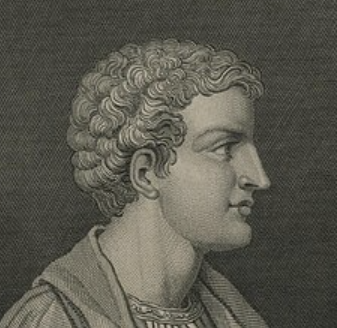
4 months 1 week ago
It is your concern when your neighbor's wall is on fire.
▼
Source
source
Book I, epistle xviii, line 84
2 weeks 4 days ago
Wipe out the imagination. Stop pulling the strings. Confine thyself to the present. ...Divide and distribute every object into the causal [formal] and the material. ...Let the wrong which is done by a man stay there where the wrong was done.
▼
Source
source
VII, 29

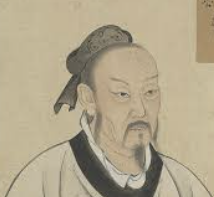
1 month 2 weeks ago
A person who is transformed by the instructions of a teacher, devotes himself to study, and abides by ritual and rightness may become a noble person, while one who follows his nature and emotions, is content to give free play to his passions, and abandons ritual and rightness is a lesser person.
▼
Source
source
Sources of Chinese Tradition (1999), vol. 1, p. 180
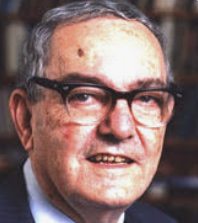
3 months ago
Before a science can develop principles, it must possess concepts. Before a law of gravitation could be formulated, it was necessary to have the notions of "acceleration" and "weight."
▼
Source
source
p. 43.
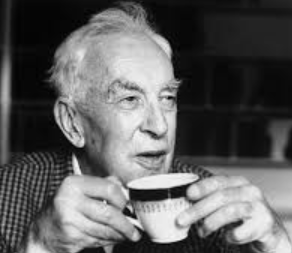
2 months 4 days ago
Civilizations die from suicide, not by murder.
▼
Source
source
In Mark Steyn, "It's the Demography, Stupid!", Opinion Journal, WSJ (2006).

4 months 2 weeks ago
The World and Life are one. Physiological life is of course not "Life". And neither is psychological life. Life is the world. Ethics does not treat of the world. Ethics must be a condition of the world, like logic. Ethics and Aesthetics are one.
▼
Source
source
Journal entry (24 July 1916), p. 77e
3 months 4 days ago
Stories on digital platforms like Facebook or Instagram are not genuine stories. They have no narrative duration. Rather, they are just sequences of momentary impressions that do not tell us anything.

4 months 4 weeks ago
A person must take care to exercise moderate discipline over the body and subject it to the Spirit by means of fasting, vigils, and labor. The goal is to have the body obey and conform - and not hinder - the inner person and faith. Unless it is held in check, we know it is the nature of the body to undermine faith and the inner person.
▼
Source
source
pp. 71-72
3 months 1 week ago
The rise of new science in the seventeenth century laid hold upon general culture in the next century. The enlightenment... testified to the widespread belief that at last light had dawned, that dissipation of ignorance, superstition, and bigotry was at hand, and the triumph of reason was assured -- for reason was counterpart in man of the laws of nature which science was disclosing. The reign of law in the natural world was to be followed by the reign of law in human affairs.

2 months 1 week ago
From the point of view of the moralist the animal world is on about the same level as a gladiator's show. The creatures are fairly well treated, and set to fight-whereby the strongest, the swiftest and the cunningest live to fight another day. The spectator has no need to turn his thumbs down, as no quarter is given.
▼
Source
source
(February 1888) "The Struggle for Existence: A Programme". The Nineteenth Century 23: 161-180. (quote from p. 163)
3 months 3 days ago
All men are in need of help and depend on one another. Human solidarity is the necessary condition for the unfolding of any one individual.
▼
Source
source
Ch. 2
5 months 6 days ago
Who are those people by whom you wish to be admired? Are they not these about whom you are in the habit of saying that they are mad? What then? Do you wish to be admired by the mad?
▼
Source
source
Book I, ch. 21, 4.
3 months 2 weeks ago
We are fulfilled only when we aspire to nothing, when we are impregnated by that nothing to the point of intoxication.

1 month 6 days ago
Before I became old I tried to live well; now that I am old, I shall try to die well; but dying well means dying gladly.
▼
Source
source
Line 2.
4 months 2 weeks ago
The appearance in nineteenth-century psychiatry, jurisprudence, and literature of a whole series of discourses on the species and subspecies of homosexuality, inversion, pederasty, and "psychic hermaphroditism" made possible a strong advance of social controls into this area of "perversity"; but it also made possible the formation of a "reverse" discourse: homosexuality began to speak in its own behalf, to demand that its legitimacy or "naturality" be acknowledged, often in the same vocabulary, using the same categories by which it was medically disqualified.
▼
Source
source
Vol. I, p. 101

3 months 1 week ago
And if the immortality of the soul had been unable to find vindication in rational empiricism, neither is it satisfied with pantheism. To say that everything is God, and that when we die, we return to God, or more accurately, continue in Him, avails our longing nothing; for if this indeed be so, then we were in God before we were born, and if we die we return to where we were before being born, then the human soul, the individual consciousness, is perishable. And since we know very well that God, the personal and conscious God of Christian monotheism, is simply the provider, and above all the guarantor, of our immortality, pantheism is said, and rightly said to be merely atheism disguised; and in my opinion, undisguised.
4 months 2 weeks ago
Being is only Being for Dasein.
▼
Source
source
Macquarrie & Robinson translation

3 months 1 week ago
Above all our thought should be empty, waiting, not seeking anything, but ready to receive in its naked truth the object that is to penetrate it. All wrong translations, all absurdities in geometry problems, all clumsiness of style, and all faulty connection of ideas in compositions and essays, all such things are due to the fact that thought has seized upon some idea too hastily, and being thus prematurely blocked, is not open to the truth.

4 months 3 weeks ago
In regard to propaganda the early advocates of universal literacy and a free press envisaged only two possibilities: the propaganda might be true, or it might be false. They did not foresee what in fact has happened, above all in our Western capitalist democracies-the development of a vast mass communications industry, concerned in the main neither with the true nor the false, but with the unreal, the more or less totally irrelevant. In a word, they failed to take into account man's almost infinite appetite for distraction.
▼
Source
source
Chapter 4 (pp. 35-36)
CivilSimian.com created by AxiomaticPanic, CivilSimian, Kalokagathia