


5 months 2 weeks ago
Spontaneous love can reach the point of despair, shows that it is in despair, that even when it is happy it loves with the power of despair.
2 months 1 week ago
In one point I fully agree with the gentlemen to whose general views I am opposed. I feel with them, that it is impossible for us, with our limited means, to attempt to educate the body of the people. We must at present do our best to form a class who may be interpreters between us and the millions whom we govern; a class of persons, Indian in blood and colour, but English in taste, in opinions, in morals, and in intellect. To that class we may leave it to refine the vernacular dialects of the country, to enrich those dialects with terms of science borrowed from the Western nomenclature, and to render them by degrees fit vehicles for conveying knowledge to the great mass of the population.

3 months 2 days ago
You', the ego, live in your left brain. When we say that man is the only creature who spends 99 per cent of his time inside his own head, we mean, in fact, inside his left cerebral hemisphere. And in the basement of the left hemisphere is the library full of filing cabinets -- the stuffy room that we mistake for reality.
▼
Source
source
p. 9
5 months 2 weeks ago
There has never been any custom, however useless it may become with changing conditions, that isn't clung to desperately simply because it is something old and familiar.

4 months 2 weeks ago
Money often costs too much.
▼
Source
source
Wealth

4 months 2 weeks ago
I suppose you imagined I was so insanely in love with you that I could commit any folly. When will you women understand that one isn't insanely in love? All one asks for is a quiet life, which you won't allow one to have. I don't know what the devil ever induced me to marry you. It was all a damned stupid, practical joke. And now you go about saying I'm a murderer. I won't stand it.
▼
Source
source
The Gioconda smile, in Mortal Coils, 1921

2 weeks 5 days ago
Dispersed as the Jews are, they still form one nation, foreign to the land they live in.
▼
Source
source
As quoted in The Americans by Daniel Boorstin. See Truth from the "Zog Bog" by Gyeorgos Ceres Hatonn, 1993, 224 p.

4 months 1 day ago
Disbelieve nothing wonderful concerning the gods, nor concerning divine dogmas.
▼
Source
source
Symbol 4
4 months 2 weeks ago
Men love to wonder, and that is the seed of our science.
▼
Source
source
Works and Days;

4 months 2 weeks ago
There is an artist imprisoned in each one of us. Let him loose to spread joy everywhere.
▼
Source
source
Last Essay: "1967"
4 months 2 weeks ago
It is not by prayer and humility that you cause things to go as you wish, but by acquiring a knowledge of natural laws.

4 months 2 weeks ago
The industrial peak of a people when its main concern is not yet gain, but rather to gain.
▼
Source
source
Introduction, p. 7.

4 months 2 weeks ago
If the injustice is part of the necessary friction of the machine of government, let it go, let it go; perchance it will wear smooth--certainly the machine will wear out. If the injustice has a spring, or a pulley, or a rope, or a crank, exclusively for itself, then perhaps you may consider whether the remedy will not be worse than the evil; but if it is of such a nature that it requires you to be the agent of injustice to another, then I say, break the law. Let your life be a counter-friction to stop the machine. What I have to do is to see, at any rate, that I do not lend myself to the wrong which I condemn.
5 months 5 days ago
A man might say, "The things that are in the world are what God has made. ... Why should I not love what God has made?" ...Suppose, my brethren, a man should make for his betrothed a ring, and she should prefer the ring given her to the betrothed who made it for her, would not her heart be convicted of infidelity? ... God has given you all these things: therefore, love him who made them.
▼
Source
source
Second Homily, as translated by John Burnaby (1955), pp. 275-276

5 months 2 weeks ago
Every ideology is contrary to human psychology.
4 months 2 weeks ago
The believing we do something when we do nothing is the first illusion of tobacco.
▼
Source
source
1859
2 weeks 2 days ago
The thought of every group is seen as arising out of its life conditions. Thus, it becomes the task of the sociological history of thought to anlayse without regard for party biases all the factors in the actually existing social situation which may influence thought. This sociologically oriented history of ideas is destined to provide modern men with a revised view of the whole historical process.
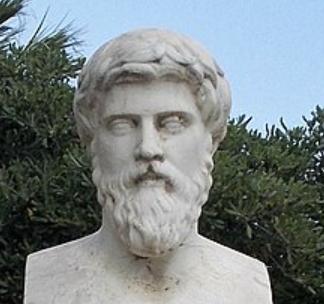
4 months 1 week ago
There are two sentences inscribed upon the Delphic oracle, hugely accommodated to the usages of man's life: "Know thyself," and "Nothing too much;" and upon these all other precepts depend.
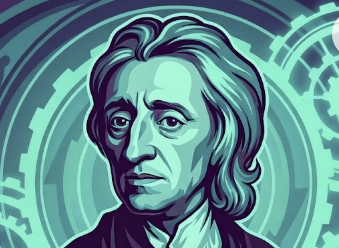
4 months 3 weeks ago
Sophistry is only fit to make men more conceited in their ignorance.
2 months 1 week ago
I think that New York is not the cultural center of America, but the business and administrative center of American culture.
▼
Source
source
BBC radio interview, The Listener

3 months 3 days ago
The process begins with the individual woman's acceptance that American women, without exception, are socialized to be racist, classist and sexist, in varying degrees, and that labeling ourselves feminists does not change the fact that we must consciously work to rid ourselves of the legacy of negative socialization.

4 months 3 weeks ago
If it were art to overcome heresy with fire, the executioners would be the most learned doctors on earth.
▼
Source
source
To the Christian Nobility of the German States (1520), translated by Charles M. Jacobs, reported in rev. James Atkinson, The Christian in Society, I (Luther's Works, ed. James Atkinson, vol. 44), p. 207

3 months 2 weeks ago
Even in childhood I watched the hours flow, independent of any reference, any action, any event, the disjunction of time from what was not itself, its autonomous existence, its special status, its empire, its tyranny. I remember quite clearly that afternoon when, for the first time, confronting the empty universe, I was no more than a passage of moments reluctant to go on playing their proper parts. Time was coming unstuck from being - at my expense.
3 months 2 weeks ago
Every act of courage is the work of an unbalanced man. Animals, normal by definition, are always cowardly except when they know themselves to be stronger, which is cowardice itself.
2 weeks 5 days ago
It was by the sober sense of our citizens that we were safely and steadily conducted from monarchy to republicanism, and it is by the same agency alone we can be kept from falling back.
▼
Source
source
Letter to Arthur Campbell


1 month 4 days ago
No furniture so charming as books.
▼
Source
source
Vol. I, ch. 9, p. 289
4 months 2 weeks ago
In the name of national security, the Commission's hearings were held in secret, thereby continuing the policy which has marked the entire course of the case. This prompts my second question: If, as we are told, Oswald was the lone assassin, where is the issue of national security? Indeed, precisely the same question must be put here as was posed in France during the Dreyfus case: If the Government is so certain of its case, why has it conducted all its inquiries in the strictest secrecy? "
▼
Source
source
16 Questions on the Assassination" in The Minority of One, ed. M.S. Arnoni (1964-09-06), pp. 6-8
3 months 2 weeks ago
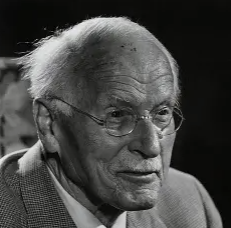
I know every numbskull will babble on about "black man," "maneater," "chance," and "retrospective interpretation," in order to banish something terribly inconvenient that might sully the familiar picture of childhood innocence. Ah, these good, efficient, healthy-minded people, they always remind me of those optimistic tadpoles who bask in a puddle in the sun, in the shallowest of waters, crowding together and amiably wriggling their tails, totally unaware that the next morning the puddle will have dried up and left them stranded. On a phallic dream he had as a young child.
▼
Source
source
p. 14
4 months 2 weeks ago
The sky is the daily bread of the eyes.
▼
Source
source
May 25, 1843
1 month 4 days ago
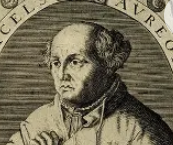
Belief and work, knowledge and action are one and the same thing.
4 months 2 weeks ago
There is no knowledge that is not power.
▼
Source
source
Old Age
3 months 2 weeks ago
I have no ideas, only obsessions. Anybody can have ideas. Ideas have never caused anybody's downfall.
1 month 4 weeks ago
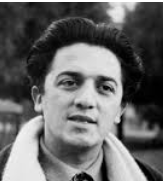
Talking about dreams is like talking about movies, since the cinema uses the language of dreams; years can pass in a second and you can hop from one place to another. It's a language made of image. And in the real cinema, every object and every light means something, as in a dream.
▼
Source
source
As quoted in Rolling Stone no. 421
1 month ago
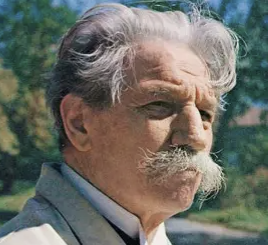
It is the fate of 'little faiths' of truth that they, true followers of Peter, whether they be Roman or the Protestant observance, cry out and sink in the sea of ideas, where the followers of Paul, believing in the Spirit, walk secure and undismayed.
▼
Source
source
p. 32
3 months 3 days ago
Radical black feminists have never confined their vision to just the emancipation of black women or women in general, or all black people for that matter. Rather, they are the theorists and proponents of a radical humanism committed to liberating humanity and reconstructing social relations across the board. When bell hooks says "Feminism is for everybody," she is echoing what has always been a basic assumption of black feminists. We are not talking about identity politics but a constantly developing often contested, revolutionary conversation about how all of us might envision and remake the world.
▼
Source
source
Robin Kelley Freedom Dreams
4 months 1 week ago
On James's view, "true" resembles "good" or "rational" in being a normative notion, a compliment paid to sentences that seem to be paying their way and that fit with other sentences which are doing so.
▼
Source
source
Introduction to Consequences of Pragmatism
4 months 1 week ago
Then take, good sir, your pleasure while you may; With life so short 'twere wrong to lose a day.
▼
Source
source
Book II, satire viii, line 96 (trans. Conington)

4 months 2 weeks ago
Does man think because he has found that thinking pays? Does he bring his children up because he has found it pays?
▼
Source
source
§ 467
3 months 1 week ago
The free will, the actual motor of reason in society, necessarily creates wrong. The individual must clash with the social order that claims to represent his own will in its objective form. But the wrong and the 'avenging justice' that remedies it not only expresses a 'higher logical necessity,' but also prepare the transition to a higher social form of freedom, the transition from abstract right to morality. For, in committing a wrong, and in accepting punishment for his deed, the individual becomes conscious of the 'infinite subjectivity' of his freedom. He learns that he is free only as a private person.
▼
Source
source
P. 198

3 months 2 days ago
Emptiness simply prevents what is individual from insisting on itself.
4 months 2 weeks ago
Persons of genius, it is true, are, and are always likely to be, a small minority; but in order to have them, it is necessary to preserve the soil in which they grow. Genius can only breathe freely in an atmosphere of freedom.
▼
Source
source
Ch. III: Of Individuality, As One of the Elements of Well-Being
2 weeks 6 days ago
I put my body through its paces like a war horse; I keep it lean, sturdy, prepared. I harden it and I pity it. I have no other steed. I keep my brain wide awake, lucid, unmerciful. I unleash it to battle relentlessly so that, all light, it may devour the darkness of the flesh. I have no other workshop where I may transform darkness into light. I keep my heart flaming, courageous, restless. I feel in my heart all commotions and all contradictions, the joys and sorrows of life. But I struggle to subdue them to a rhythm superior to that of the mind, harsher than that of my heart - to the ascending rhythm of the Universe.
5 months 4 days ago
Yet God hath not only granted these faculties, by which we may bear every event without being depressed or broken by it, but like a good prince and a true father, hath placed their exercise above restraint, compulsion, or hindrance, and wholly within our own control.
▼
Source
source
Book I, ch. 6, 40.
4 months 2 weeks ago
Who does not see that we are likely to ascertain the distinctive significance of religious melancholy and happiness, or of religious trances, far better by comparing them as conscientiously as we can with other varieties of melancholy, happiness, and trance, than by refusing to consider their place in any more general series, and treating them as if they were outside of nature's order altogether?
▼
Source
source
Lecture I, "Religion and Neurology"
1 week 2 days ago
It is, therefore, quite natural that the churches have always fought against science and have persecuted its supporters. But, on the other hand, I assert that the cosmic religious experience is the strongest and noblest driving force behind scientific research. No one who does not appreciate the terrific exertions, and, above all, the devotion without which pioneer creations in scientific thought cannot come into being, can judge the strength of the feeling out of which alone such work, turned away as it is from immediate practical life, can grow. What a deep faith in the rationality of the structure of the world and what a longing to understand even a small glimpse of the reason revealed in the world there must have been in Kepler and Newton to enable them to unravel the mechanism of the heavens in long years of lonely work! Any one who only knows scientific research in its practical applications may easily come to a wrong interpretation of the state of mind of the men who, surrounded by skeptical contemporaries, have shown the way to kindred spirits scattered over all countries in all centuries. Only those who have dedicated their lives to similar ends can have a living conception of the inspiration which gave these men the power to remain loyal to their purpose in spite of countless failures. It is the cosmic religious sense which grants this power. A contemporary has rightly said that the only deeply religious people of our largely materialistic age are the earnest men of research.
3 months 2 weeks ago
History proves nothing because it contains everything.

5 months 1 week ago
It pertains to all men to know themselves and to learn self-control.
2 months 2 weeks ago
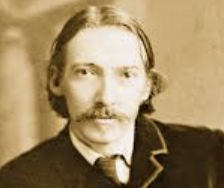
Our business in this world is not to succeed, but to continue to fail, in good spirits.
▼
Source
source
Complete Works, vol. 26, Reflections and Remarks on Human Life, section 4.

1 month 1 week ago
Flimsy, desultory readers, who fly from foolish book to foolish book, and get good of none, and mischief of all-are not these as foolish, unhealthy eaters, who mistake their superficial false desire after spiceries and confectioneries for their real appetite, of which even they are not destitute, though it lies far deeper, far quieter, after solid nutritive food?
CivilSimian.com created by AxiomaticPanic, CivilSimian, Kalokagathia