

3 months 1 week ago
My atheism, like that of Spinoza, is true piety towards the universe and denies only gods fashioned by men in their own image, to be servants of their human interests.
▼
Source
source
"On My Friendly Critics"

2 months 3 weeks ago
But it is not to be conceived that mere mechanical causes could give birth to so many regular motions: since the Comets range over all parts of the heavens, in very eccentric orbits. For by that kind of motion they pass easily through the orbs of the Planets, and with great rapidity; and in their aphelions, where they move the slowest, and are detain'd the longest, they recede to the greatest distances from each other, and thence suffer the least disturbance from their mutual attractions.

4 months 3 weeks ago
What a noble privilege is it of human reason to attain the knowledge of the supreme Being; and, from the visible works of nature, be enabled to infer so sublime a principle as its supreme Creator? But turn the reverse of the medal. Survey most nations and most ages. Examine the religious principles, which have, in fact, prevailed in the world. You will scarcely be persuaded, that they are any thing but sick men's dreams: Or perhaps will regard them more as the playsome whimsies of monkies in human shape, than the serious, positive, dogmatical asseverations of a being, who dignifies himself with the name of rational.
▼
Source
source
Part XV - General corollary
2 months 5 days ago
The man-like Apes... have certain characters of structure and of distribution in common.
▼
Source
source
Ch.1, p. 34

5 months 2 weeks ago
It would be better for me that multitudes of men should disagree with me rather than that I, being one, should be out of harmony with myself.

4 months 2 weeks ago
Human beings are not born identical. There are many different temperaments and constitutions; and within each psycho-physical class one can find people at very different stages of spiritual development. Forms of worship and spiritual discipline which may be valuable for one individual maybe useless or even positively harmful for another belonging to a different class and standing, within that class, at a lower or higher level of development.

4 months 2 weeks ago
The philosophy of nature must not be unduly terrestrial; for it, the earth is merely one of the smaller planets of one of the smaller stars of the Milky Way. It would be ridiculous to warp the philosophy of nature in order to bring out results that are pleasing to the tiny parasites of this insignificant planet. Vitalism as a philosophy, and evolutionism, show, in this respect, a lack of sense of proportion and logical relevance. They regard the facts of life, which are personally interesting to us, as having a cosmic significance, not a significance confined to the earth's surface. Optimism and pessimism, as cosmic philosophies, show the same naive humanism; the great world, so far as we know it from the philosophy of nature, is neither good nor bad, and is not concerned to make us happy or unhappy. All such philosophies spring from self-importance and are best corrected by a little astronomy.

1 month 2 weeks ago
Jesus, in some respects, was an anarchist, for he had no idea of civil government. That government seems to him purely and simply an abuse.
▼
Source
source
Ch. 7.
3 months 1 week ago
It is precisely the essential feature of egoism that it does not apprehend the full value of the isolated self. The egoist sees himself only with regard to the others, as a member of society who wishes to possess and acquire more than the others. Self-directedness or other-directedness have no essential bearing on the specific quality of love or hatred. These acts are different in themselves, quite independently of their direction.
▼
Source
source
L. Coser, trans. (1961), p. 96

4 months 2 weeks ago
The ornament of a house is the friends who frequent it.
▼
Source
source
Domestic Life

2 months 4 weeks ago
Man can acquire accomplishments or he can become an animal, whichever he wants. God makes the animals, man makes himself.
▼
Source
source
F 49
2 weeks 4 days ago
The rights of men to the use of land are not joint rights: they are equal rights. Were there only one man on earth, he would have a right to the use of the whole earth or any part of the earth. When there is more than one man on earth, the right to the use of land that any one of them would have, were he alone, is not abrogated: it is only limited. The right of each to the use of land is still a direct, original right, which he holds of himself, and not by the gift or consent of the others; but it has become limited by the similar rights of the others, and is therefore an equal right.
▼
Source
source
Part I : Declaration, Ch. III : "Social Statics" - The Right of Property

4 months 2 weeks ago
Malthus's population principle was quite as much a banner, and a point of union among us, as any opinion specially belonging to Bentham. This great doctrine, originally brought forward as an argument against the indefinite improvability of human affairs, we took up with ardent zeal in the contrary sense, as indicating the sole means of realizing that improvability by securing full employment at high wages to the whole labouring population through a voluntary restriction of the increase of their numbers.
▼
Source
source
(p. 105)

1 month 4 days ago
Our luxuries have condemned us to weakness; we have ceased to be able to do that which we have long declined to do.
3 months 1 week ago
Perhaps the only true dignity of man is his capacity to despise himself.
4 months 2 weeks ago
Formerly, it was held by philosophers and mathematicians alike that the proofs in Geometry depended on the figure; nowadays, this is known to be false. In the best books there are no figures at all. The reasoning proceeds by the strict rules of formal logic from a set of axioms laid down to begin with.
▼
Source
source
Ch. 5: Mathematics and the Metaphysicians
4 months 2 weeks ago
A great man quotes bravely, and will not draw on his invention when his memory serves him with a word just as good.
▼
Source
source
Quotation and Originality

3 months 2 days ago
Theory is taught so as to make the student believe that he or she can become a Marxist, a feminist, an Afrocentrist, or a deconstructionist with about the same effort and commitment required in choosing items from a menu.
▼
Source
source
Chap 4, Sect 2
4 months 2 weeks ago
Our conviction that the world is meaningless is due in part to the fact (discussed in a later paragraph) that the philosophy of meaningless lends itself very effectively to furthering the ends of political and erotic passion; in part to a genuine intellectual error - the error of identifying the world of science, a world from which all meaning has deliberately been excluded, with ultimate reality.
▼
Source
source
Ch. 14, p. 309 [2012 reprint]

4 months 1 day ago
None but a Craftsman can judge of a craft.
2 weeks 6 days ago
Comrades, I've voyaged long and far on sea and soul,my eyes have seen disease, gods, ghosts, and men, and yetin no land have I seen a more false, murderous sirenthan that wind-headed, babbling, blind bitch-hound called Hope!
▼
Source
source
Odysseus, Book X, line 892

3 months 1 week ago
“What man among you with 100 sheep, on losing one of them, will not leave the 99 behind in the wilderness and go after the lost one until he finds it? And when he has found it, he puts it on his shoulders and rejoices. And when he gets home, he calls his friends and his neighbors together, saying to them, ‘Rejoice with me, for I have found my sheep that was lost.' I tell you that in the same way, there will be more joy in heaven over one sinner who repents than over 99 righteous ones who have no need of repentance.
▼
Source
source
Luke 15: 4-7

3 months 2 days ago
Someone has said that it requires less mental effort to condemn than to think. The widespread mental indolence, so prevalent in society, proves this to be only too true. Rather than to go to the bottom of any given idea, to examine into its origin and meaning, most people will either condemn it altogether, or rely on some superficial or prejudicial definition of non-essentials.
2 weeks 6 days ago
If you are a man of learning, fight in the skull, kill ideas and create new ones. God hides in every idea as in every cell of flesh. Smash the idea, set him free! Give him another, a more spacious idea in which to dwell.
3 months 2 weeks ago
It is ...easy to be certain. One has only to be sufficiently vague.
▼
Source
source
Vol. IV, par. 237



3 months 2 weeks ago
What every man who loves his country hopes for in his inmost heart: the suppression of half his compatriots.

3 months 4 days ago
Our habitual experience is a complex of failure and success in the enterprise of interpretation. If we desire a record of uninterpreted experience, we must ask a stone to record its autobiography.
▼
Source
source
Pt. I, ch. 1, sec. 6.

4 months 3 weeks ago
Though the principles of the banking trade may appear somewhat abstruse, the practice is capable of being reduced to strict rules. To depart upon any occasion from these rules, in consequence of some flattering speculation of extraordinary gain, is almost always extremely dangerous, and frequently fatal to the banking company which attempts it.
▼
Source
source
Chapter I, Part III, p. 820.

3 months 5 days ago
One could count on one's fingers the number of scientists in the entire world who have a general idea of the history and development of their own particular science; there is not one who is really competent as regards sciences other than his own. As science forms an indivisible whole, one may say that there are no longer, strictly speaking, any scientists, but only drudges doing scientific work. . . .
▼
Source
source
p. 13 (as quoted in On Science, Necessity, and the Love of God (1968), p.1)
4 months 3 weeks ago
Change alone is eternal, perpetual, immortal.
▼
Source
source
Unverified attribution noted in Respectfully Quoted: A Dictionary of Quotations (1993), ed. Suzy Platt, Library of Congress, p. 39;
2 months 2 weeks ago
A man, Mr. Scrymgeour, may fall into a thousand perplexities, but if his heart be upright and his intelligence unclouded, he will issue from them all without dishonour.
▼
Source
source
The Rajah's Diamond, Story of the House with the Green Blinds.

3 months 2 days ago
Enlightenment is an awakening to the everyday.

1 month 1 week ago
The inventive genius of great England will not forever sit patient with mere wheels and pinions, bobbins, straps and billy-rollers whirring in the head of it. The inventive genius of England is not a Beaver's, or a Spinner's or Spider's genius: it is a Man's genius, I hope, with a God over him!

5 months 4 days ago
If a person gave your body to any stranger he met on his way, you would certainly be angry. And do you feel no shame in handing over your own mind to be confused and mystified by anyone who happens to verbally attack you?
▼
Source
source
(28) [tr. Elizabeth Carter]
3 months 5 days ago
It is not only in literature that fiction generates immorality. It does it also in life itself. For the substance of our life is almost exclusively composed of fiction. We fictionalize our future, and, unless we are heroically devoted to truth, we fictionalize our past, refashioning it to our taste. We do not study other people; we invent what they are thinking, saying, and doing. Reality provides us with some raw material, just as novelists often take a theme from a news item, but we envelop it in a fog in which, as in all fiction, values are reversed, so that evil is attractive and good is tedious.
▼
Source
source
"Morality and literature," pp. 161-162

4 months 2 weeks ago
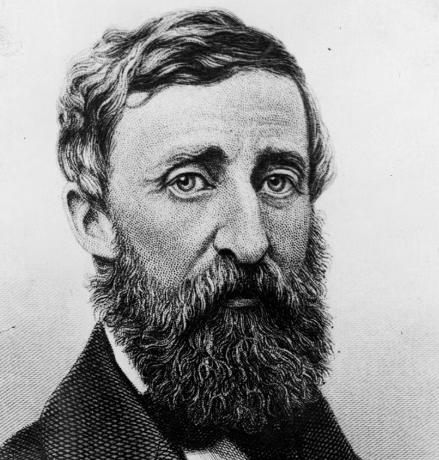
It would be worth the while to look closely into the eye which has been open and seeing at such hours, and in such solitudes, its dull, yellowish, greenish eye. Methinks my own soul must be a bright invisible green.
4 months 2 weeks ago
All that the conscious ego can do is to formulate wishes, which are then carried out by forces which it controls very little and understands not at all.

4 months 3 weeks ago
...so it is with human reason, which strives not against faith, when enlightened, but rather furthers and advances it.
▼
Source
source
On Justification CCXCIV
4 months 2 weeks ago
The heroic cannot be the common, nor can the common be heroic.
▼
Source
source
Quotation and Originality
1 month ago
Engels feared that the Socialists, in order to gain adherents in the electoral struggles rapidly, would make promises which were contrary to Marxist doctrine. The antisemites told the peasants and the small shopkeepers that they would protect them from the development of capitalism. Engels thought that an imitation of this procedure would be dangerous, since, in his opinion, the social revolution could only be realised when capitalism had almost completely destroyed the small proprietors and small industries; if the Socialists, then, endeavoured to hinder this evolution, they would ultimately compromise their own cause.
▼
Source
source
Reflections on Violence, London: UK, George Allen & Unwin, (reprinted in Saxony 1925) p. 180

4 months 2 weeks ago
The art of being wise is the art of knowing what to overlook.
▼
Source
source
Ch. 22
4 months 2 weeks ago
A belief in hell and the knowledge that every ambition is doomed to frustration at the hands of a skeleton have never prevented the majority of human beings from behaving as though death were no more than an unfounded rumour, and survival a thing beyond the bounds of possibility.
▼
Source
source
Themes and Variations, 1950
2 months 1 week ago
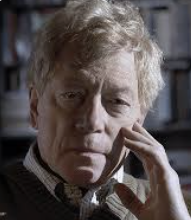
In discussing tradition, we are not discussing arbitrary rules and conventions. We are discussing answers that have been discovered to enduring questions.
▼
Source
source
(p. 21)
2 weeks 6 days ago
Contend with the powers of nature, force them to the yoke of superior purpose. Free that spirit which struggles within them and longs to mingle with that spirit which struggles within you.

3 months 2 weeks ago
They made and recorded a sort of institute and digest of anarchy, called the rights of man, in such a pedantic abuse of elementary principles as would have disgraced boys at school; but this declaration of rights was worse than trifling and pedantic in them; as by their name and authority they systematically destroyed every hold of authority by opinion, religious or civil, on the minds of the people. By this mad declaration they subverted the state; and brought on such calamities as no country, without a long war, has ever been known to suffer, and which may in the end produce such a war, and perhaps, many such.
▼
Source
source
Speech in the House of Commons (9 February 1790), quoted in The Parliamentary History of England, From the Earliest Period to the Year 1803, Vol. XXVIII (1816), column 358
1 month ago
All relationships of people to each other rest, as a matter of course, upon the precondition that they know something about each other. The merchant knows that his correspondent wants to buy at the lowest price and to sell at the highest price. The teacher knows that he may credit to the pupil a certain quality and quantity of information. Within each social stratum the individual knows approximately what measure of culture he has to presuppose in each other individual.
▼
Source
source
p. 441: First lines of the article.
1 month 5 days ago
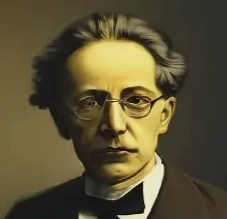
Do I write out of love to men? No, I write because I want to procure for my thoughts an existence in the world; and, even if I foresaw that these thoughts would deprive you of your rest and your peace, even if I saw the bloodiest wars and the fall of many generations springing up from this seed of thought - I would nevertheless scatter it. Do with it what you will and can, that is your affair and does not trouble me.
▼
Source
source
Cambridge 1995, p. 262, 263
4 months 2 weeks ago
The pivot round which the religious life... revolves, is the interest of the individual in his private personal destiny. Religion, in short, is a monumental chapter in the history of human egotism. The gods believed in-whether by crude savages or by men disciplined intellectually-agree with each other in recognizing personal calls. Religious thought is carried on in terms of personality, this being, in the world of religion, the one fundamental fact. To-day, quite as much as at any previous age, the religious individual tells you that the divine meets him on the basis of his personal concerns.
▼
Source
source
Lecture XX, "Conclusions"
CivilSimian.com created by AxiomaticPanic, CivilSimian, Kalokagathia