


5 months 2 weeks ago
Be of good courage, and if you are discouraged, still take courage over against the various forms of nature. He who has ears to hear, let him hear.
▼
Source
source
Chapter 4.
2 months 3 weeks ago
I am not alone in my fear, nor alone in my hope, nor alone in my shouting. A tremendous host, an onrush of the Universe fears, hopes, and shouts with me. I am an improvised bridge, and when Someone passes over me, I crumble away behind Him.
5 months 6 days ago
That man and woman have an equality of duties and rights is accepted by woman even less than by man. Behind his destiny woman must annihilate herself, must be only his complement. A woman dedicates herself to the vocation of her husband; she fills up and performs the subordinate parts in it. But if she has any destiny, any vocation of her own, she must renounce it, in nine cases out of ten.

2 months 3 weeks ago
History has informed us that bodies of men, as well as individuals, are susceptible of the spirit of tyranny.
7 months 3 weeks ago
Everything that depends on the action of nature is by nature as good as it can be, and similarly everything that depends on art or any rational cause, and especially if it depends on the best of all causes. To entrust to chance what is greatest and most noble would be a very defective arrangement.

6 months 3 weeks ago
Who can exhaust a man? Who knows a man's resources?

6 months 4 weeks ago
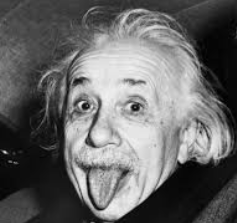
We feel and know that we are eternal.
▼
Source
source
Part V, Prop. XXIII, Scholium
2 months 2 weeks ago
The really good music, whether of the East or of the West, cannot be analyzed.
▼
Source
source
Interview with Rabindranath Tagore (14 April 1930), published in The Religion of Man (1930) by Rabindranath Tagore, p. 222, and in The Tagore Reader (1971) edited by Amiya Chakravarty

4 months 1 day ago
Hayek's blind spot with regard to politics was clear in the early 1980s when the first Thatcher government, in an attempt to reduce inflation and bring the public finances closer to a balanced budget, was raising interest rates and cutting public spending. As he had done during the 1930s, Hayek attacked these policies as not being severe enough. It would be better, he told me in a conversation we had around this time, if Thatcher imposed a more drastic contraction on the economy so that the wage-setting power of the trade unions could be broken. He appeared unfazed by unemployment, which was already higher (more than three million people) than at any time since the 1930s, and would rise much further if his recommendations were accepted.

6 months 3 weeks ago
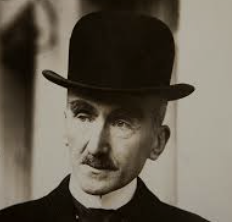
A belief in hell and the knowledge that every ambition is doomed to frustration at the hands of a skeleton have never prevented the majority of human beings from behaving as though death were no more than an unfounded rumour, and survival a thing beyond the bounds of possibility.
▼
Source
source
Themes and Variations, 1950
5 months 2 weeks ago
The present contains nothing more than the past, and what is found in the effect was already in the cause.
▼
Source
source
Creative Evolution (1907), Chapter I, as translated by Arthur Mitchell (1911), p. 14.; italicized in the original.

5 months 2 weeks ago
I anticipated witnessing in my lifetime the disappearance of our species. But the Gods have been against me.
5 months 3 weeks ago
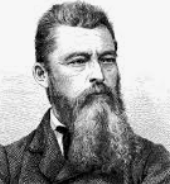
"Can any good come out of Nazareth?" This is always the question of the wiseacres and the knowing ones. But the good, the new, comes from exactly that quarter whence it is not looked for, and is always something different from what is expected. Everything new is received with contempt, for it begins in obscurity. It becomes a power unobserved.
▼
Source
source
As quoted in "Voices of the New Time" as translated by C. C. Shackford in The Radical Vol. 7 (1870), p. 329
6 months 4 weeks ago
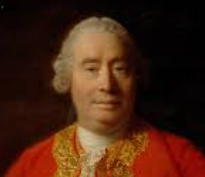
Nature may certainly produce whatever can arise from habit: Nay, habit is nothing but one of the principles of nature, and derives all its force from that origin.
▼
Source
source
Part 3, Section 16
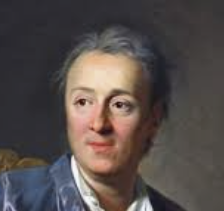
5 months 4 weeks ago
There is no kind of harassment that a man may not inflict on a woman with impunity in civilized societies.
▼
Source
source
"On Women" (1772), as translated in Selected Writings (1966) edited by Lester G. Crocker
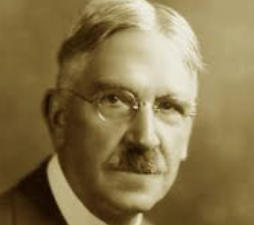
5 months 2 weeks ago
Every thinker puts some portion of an apparently stable world in peril and no one can wholly predict what will emerge in its place.
▼
Source
source
Ch. VI: Nature, Mind and the Subject
5 months 2 weeks ago
To found a family. I think it would have been easier for me to found an empire.
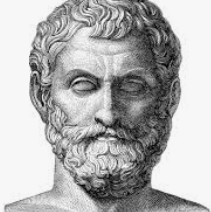
6 months 6 days ago
Do not ask who started it.
▼
Source
source
Finish it A Dictionary of Thoughts (1908) by Tryon Edwards, p. 234
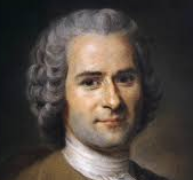
6 months 3 weeks ago
Remorse sleeps during a prosperous period but wakes up in adversity.
▼
Source
source
Variant translations: Remorse sleeps during prosperity but awakes bitter consciousness during adversity. Remorse goes to sleep during a prosperous period and wakes up in adversity.
4 months 3 weeks ago
What is left when honor is lost?
▼
Source
source
Maxim 265
5 months 1 week ago
To desire friendship is a great fault. Friendship should be a gratuitous joy like those afforded by art or life. We must refuse it so that we may be worthy to receive it; it is of the order of grace.
▼
Source
source
p. 274
5 months 2 weeks ago
Dialectical thought understands the critical tension between "is" and "ought" first as an ontological condition, pertaining to the structure of Being itself. However, the recognition of this state of Being - its theory - intends from the beginning a concrete practice. Seen in the light of a truth which appears in them falsified or denied, the given facts themselves appear false and negative.
▼
Source
source
p. 133

6 months 3 weeks ago
Freedom of Men under Government is, to have a standing Rule to live by, common to every one of that Society, and made by the Legislative Power erected in it; a Liberty to follow my own Will in all things, where the Rule prescribes not; and not to be subject to the inconstant, uncertain, unknown, Arbitrary Will of another Man: as Freedom of Nature is, to be under no other restraint but the Law of Nature.
▼
Source
source
Second Treatise of Civil Government, Ch. IV, sec. 21

6 months 3 weeks ago
Not my idea of God, but God.

4 months 3 days ago
The irrationality of the "appeal to Nature" is illustrated by a simple thought-experiment. Imagine, fancifully, if starvation, disease, parasitism, disembowelling, asphyxiation and being eaten alive were not endemic to the living world - or such miseries have already been abolished and replaced by an earthly paradise. Would anyone propose there is ethical case for (re)introducing them? Even proposing such a thought-experiment can sound faintly ridiculous.
▼
Source
source
"A Welfare State For Elephants?: A Case Study of Compassionate Stewardship", Relations: Beyond Anthropocentrism, Vol. 3, Iss. 2 (Nov. 2015), p. 162

5 months 1 week ago
There are pretenses which are very sincere, and marriage is their school.
▼
Source
source
Tres novelas ejemplares y un prólogo [Three Exemplary Novels and a Prologue] (1920); Two Mothers
5 months 1 week ago
Concern for the symbol has completely disappeared from our science. And yet, if one were to give oneself the trouble, one could easily find, in certain parts at least of contemporary mathematics... symbols as clear, as beautiful, and as full of spiritual meaning as that of the circle and mediation. From modern thought to ancient wisdom the path would be short and direct, if one cared to take it.
▼
Source
source
The Need for Roots (1949), p. 292
5 months 3 weeks ago
Every father is given the opportunity to corrupt his daughter's nature, and the educator, husband, or psychiatrist then has to face the music. For what has been spoiled by the father can only be made good by a father, just as what has been spoiled by the mother can only be repaired by a mother. The disastrous repetition of the family pattern could be described as the psychological original sin, or as the curse of the Atrides running through the generations.
▼
Source
source
Mysterium Coniunctionis (1955) CW 14: P. 232
5 months 2 weeks ago
I don't understand how people can believe in God, even when I myself think of him everyday.

5 months 4 weeks ago
I think that democratic communities have a natural taste for freedom: left to themselves, they will seek it, cherish it, and view any privation of it with regret. But for equality, their passion is ardent, insatiable, incessant, invincible: they call for equality in freedom; and if they cannot obtain that, they still call for equality in slavery.
▼
Source
source
Book Two, Chapter I.
2 months 3 weeks ago
We are faced with the curiously appalling trend of modern thought, in which the absolute which was once a means of entering into communion with the divine, has now become an instrument used by those who profit from it, to distort, pervert, and conceal the meaning of the present.
6 months 3 weeks ago
By means of ever more effective methods of mind-manipulation, the democracies will change their nature; the quaint old forms- elections, parliaments, Supreme Courts and all the rest-will remain. The underlying substance will be a new kind of non-violent totalitarianism. All the traditional names, all the hallowed slogans will remain exactly what they were in the good old days. Democracy and freedom will be the theme of every broadcast and editorial-but democracy and freedom in a strictly Pickwickian sense. Meanwhile the ruling oligarchy and its highly trained elite of soldiers, policemen, thought-manufacturers and mind-manipulators will quietly run the show as they see fit.
▼
Source
source
Chapter 3, p. 25
6 months 3 weeks ago
The sweetest thing in all my life has been the longing - to reach the Mountain, to find the place where all the beauty came from - my country, the place where I ought to have been born. Do you think it all meant nothing, all the longing? The longing for home? For indeed it now feels not like going, but like going back.
▼
Source
source
Psyche

5 months 4 days ago
A schoolteacher or professor cannot educate individuals, he educates only species.
▼
Source
source
J 10

6 months 3 weeks ago
The practical consequence of such a[n individualistic] philosophy is the well-known democratic respect for the sacredness of individuality,-is, at any rate, the outward tolerance of whatever is not itself intolerant. These phrases are so familiar that they sound now rather dead in our ears. Once they had a passionate inner meaning. Such a passionate inner meaning they may easily acquire again if the pretension of our nation to inflict its own inner ideals and institutions vi et armis upon Orientals should meet with a resistance as obdurate as so far it has been gallant and spirited. Religiously and philosophically, our ancient national doctrine of live and let live may prove to have a far deeper meaning than our people now seem to imagine it to possess.
▼
Source
source
"Preface"
7 months 2 weeks ago
The journey of a thousand miles begins with a single step.
5 months 2 weeks ago
He that is not on my side is against me, and he that does not gather with me scatters.
▼
Source
source
12:30, New World Translation

6 months 3 weeks ago
I am against a League war in present circumstances, because the anti-League powers are strong. The analogy is not King v. Barons, but the War of the Roses. If the League were strong enough I should favour sanctions, because the effect would suffice, or the war would be short and small. The whole question is quantitative.
▼
Source
source
Letter to Kingsley Martin shortly before the Italo-Abyssinian War (7 August 1935), quoted in Kingsley Martin, Editor: A Second Volume of Autobiography, 1931-45 (1968), p. 207

6 months 3 weeks ago
Undeterred by this examination, the French Revolution gave rise to ideas which led beyond the ideas of the entire old world order. The revolutionary movement which began in 1789 in the Cercle Social, which in the middle of its course had as its chief representatives Leclerc and Roux, and which finally with Babeuf's conspiracy was temporarily defeated, gave rise to the communist idea which Babeuf's friend Buonarroti re-introduced in France after the Revolution of 1830. This idea, consistently developed, is the idea of the new world order.
▼
Source
source
Chapter 6, 3

2 months 2 weeks ago
Freedom only for the supporters of the government, only for the members of one party - however numerous they may be - is no freedom at all. Freedom is always and exclusively freedom for the one who thinks differently. Not because of any fanatical concept of "justice" but because all that is instructive, wholesome and purifying in political freedom depends on this essential characteristic, and its effectiveness vanishes when "freedom" becomes a special privilege.
▼
Source
source
Chapter Six, "The Problem of Dictatorship"
5 months 3 weeks ago
There is nothing whatever in Existence but immediate and living Thought:-Thought, I say, but by no means a thinking substance, a dead body in which thought inheres,-with which no-thought indeed a no-thinker is full surely at hand:-Thought, I say, and also the real Life of this Thought, which at bot tom is the Divine Life; both of which-Thought and , this its real Life-are molten together into one inward organic Unity; like as, outwardly, they are one simple, identical, eternal, and unchangeable Unity.
▼
Source
source
P. 56
2 months 3 weeks ago
I advance with obedience to the work, ready to retire from it whenever you become sensible how much better choice it is in your power to make.
6 months 3 weeks ago
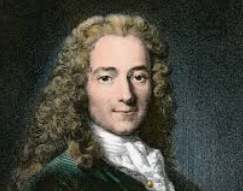
If God did not exist, it would be necessary to invent him.

6 months 3 weeks ago
Descartes is rightly regarded as the father of modern philosophy primarily and generally because he helped the faculty of reason to stand on its own feet by teaching men to use their brains in place whereof the Bible, on the one hand, and Aristotle, on the other, had previously served.
▼
Source
source
E. Payne, trans. (1974) Vol. 1, p. 3

3 months 2 weeks ago
Those who try to include all life when trying to determine justice: Should a man be executed for killing a fly? No? The fly has a short life span? The fly is small? All these rationalizations can be applied to you, by a creature that lives longer, is bigger, etc. #philosophy
6 months 4 weeks ago
The same good sense, that directs men in the ordinary occurrences of life, is not hearkened to in religious matters, which are supposed to be placed altogether above the cognizance of human reason.

4 months 3 weeks ago
If we sit and talk in a dark room, words suddenly acquire new meanings and different textures...and on the radio. Given only the sound of a play, we have to fill in all of the senses, not just the sight of the action. So much do-it-yourself, or completion and "closure" of action, develops a kind of independent isolation in the young that makes them remote and inaccessible.
▼
Source
source
(p. 264)
CivilSimian.com created by AxiomaticPanic, CivilSimian, Kalokagathia