

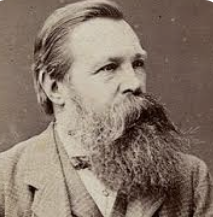
3 months 2 weeks ago
From the moment when labour can no longer be converted into capital, money, or rent, into a social power capable of being monopolized, i.e., from the moment when individual property can no longer be transformed into bourgeois property, into capital, from that moment, you say individuality vanishes.
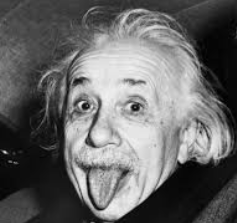
1 week 4 days ago
I should unconditionally refuse every direct or indirect war service and try to induce my friends to adopt the same attitude, irrespective of the general opinion of the causes of war.

3 months 3 weeks ago
When we speak of the commerce with our [American] colonies, fiction lags after truth, invention is unfruitful, and imagination cold and barren.

3 months 5 days ago
Our minds are finite, and yet even in these circumstances of finitude we are surrounded by possibilities that are infinite, and the purpose of human life is to grasp as much as we can out of the infinitude.
▼
Source
source
Ch. 21, June 28, 1941.
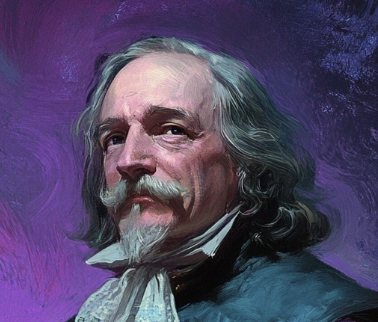
3 months 1 week ago
Understanding being nothing else, but conception caused by Speech.
▼
Source
source
The First Part, Chapter 4, p. 17
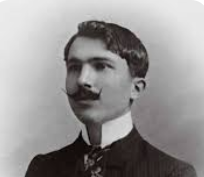
3 weeks ago
Thus did the Holy Harlots unhinge the brains of man,and when they met and clashed with the pure Mountain Maidens,they raised their white arms high, their armpits smelled of musk,and, as the rites decreed, both fought their verbal war:"God swoops from mountain peeks to eat and play on earth;we are his food and drink and even his sacred toys -and learn, O sterile maids, we are his soft, sweet mates.Let her now leave who fears to merge with her dread God!"The scornful savage mouth of Krino flashed reply:"We will not leave! We guard the innocent soul of man!God is a spirit with pure white wings, a soul that sails,light, disembodied, deep in our thoughts, without embrace.It's we who keep the world in bloom with virgin souls!"
▼
Source
source
From the Bull Ritual, Book VI, line 197
1 month 2 days ago
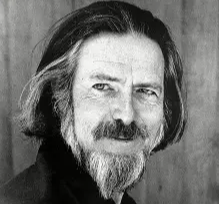
The pity of all this is, you know, a man like that [Sri Ramakrishna] has to have disciples, or no one would ever hear about him. But somehow, as the generations pass, the flame dies out. And eventually the disciples kill him.I wish that there was a way of putting a time-bomb into scriptures and records - not a time-bomb, but some kind of invisible ink, so that all scriptures would un-print themselves about fifty years after the master's death. And just dissolve.
▼
Source
source
Audio lecture Ramakrishna, Ramana, and Krishnamurti

4 months 3 weeks ago
By this means all knowledge degenerates into probability; and this probability is greater or less, according to our experience of the veracity or deceitfulness of our understanding, and according to the simplicity or intricacy of the question.
▼
Source
source
Part 4, Section 1

2 weeks 4 days ago
What was man before the invention of words and the knowledge of language? An animal..

4 months 2 weeks ago
The devil...the prowde spirit...cannot endure to be mocked.
▼
Source
source
Thomas More, quoted at the beginning of The Screwtape Letters
3 months 5 days ago
For the kingdom of heaven is with us today.

4 months 3 weeks ago
How much education may reconcile young people to pain and sufference, the examples of Sparta do sufficiently shew; and they who have once brought themselves not to think bodily pain the greatest of evils, or that which they ought to stand most in fear of, have made no small advance toward virtue.
▼
Source
source
Sec. 115
3 months 2 days ago
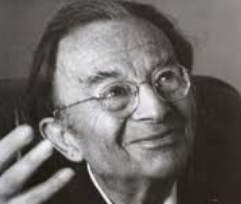
Neurosis can be understood best as the battle between tendencies within an individual; deep character analysis leads, if successful, to the progressive solution.
▼
Source
source
p. 264
5 months 1 week ago
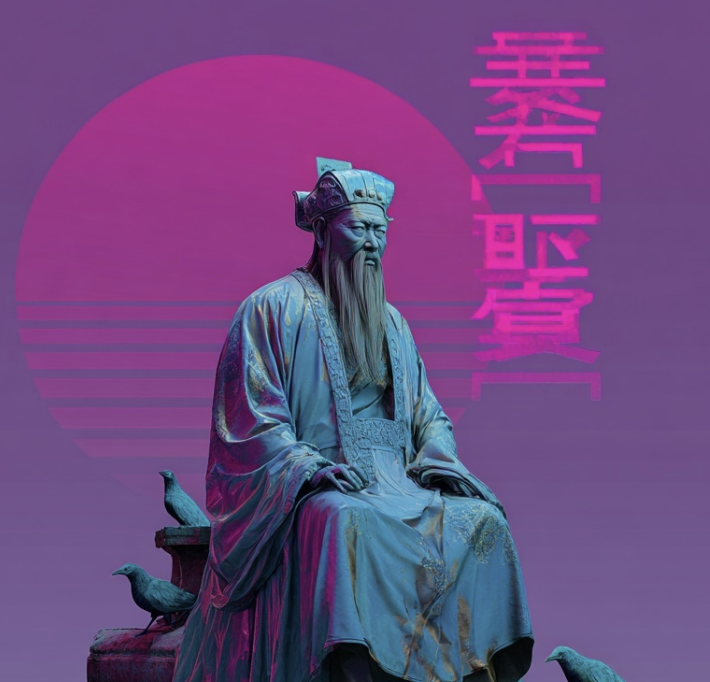
Among the appliances to transform the people, sound and appearances are but trivial influences.
4 months 2 weeks ago
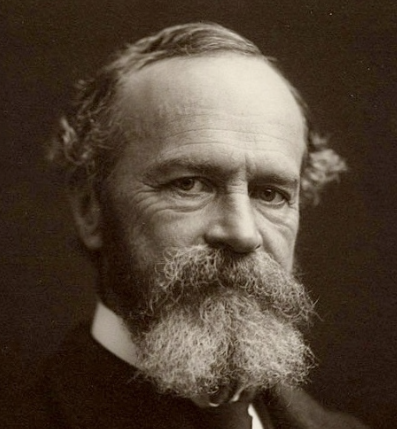
In its widest possible sense, however, a man's Self is the sum total of all that he can call his, not only his body and his psychic powers, but his clothes and his house, his wife and children, his ancestors and friends, his reputation and works, his lands and horses, and yacht and bank-account. All these things give him the same emotions. If they wax and prosper, he feels triumphant; if they dwindle and die away, he feels cast down.
▼
Source
source
Ch. 10

4 months 2 days ago
All the good are friends of one another.
▼
Source
source
As quoted in Stromata, v. 14. by Clement of Alexandria

4 months 3 weeks ago
The government of an exclusive company of merchants is, perhaps, the worst of all governments for any country whatever.
▼
Source
source
Chapter VII, Part Second, p. 619.
1 week 4 days ago
There are certain occupations, even in modern society, which entail living in isolation and do not require great physical or intellectual effort. Such occupations as the service of lighthouses and lightships come to mind. Would it not be possible to place young people who wish to think about scientific problems, especially of a mathematical or philosophical nature, in such occupations? Very few young people with such ambitions have, even during the most productive period of their lives, the opportunity to devote themselves undisturbed for any length of time to problems of a scientific nature.
3 weeks ago
How simple and frugal a thing is happiness: a glass of wine, a roast chestnut, a wretched little brazier, the sound of the sea. . . . All that is required to feel that here and now is happiness is a simple, frugal heart.
▼
Source
source
Ch. 7

4 months 3 weeks ago
When Confucius and the Indian Scriptures were made known, no claim to monopoly of ethical wisdom could be thought of... It is only within this century [the 1800 's] that England and America discovered that their nursery tales were old German and Scandinavian stories; and now it appears that they came from India, and are therefore the property of all the nations.
▼
Source
source
Quoted in S. Londhe, A Tribute to Hinduism, 2008
3 months 1 week ago
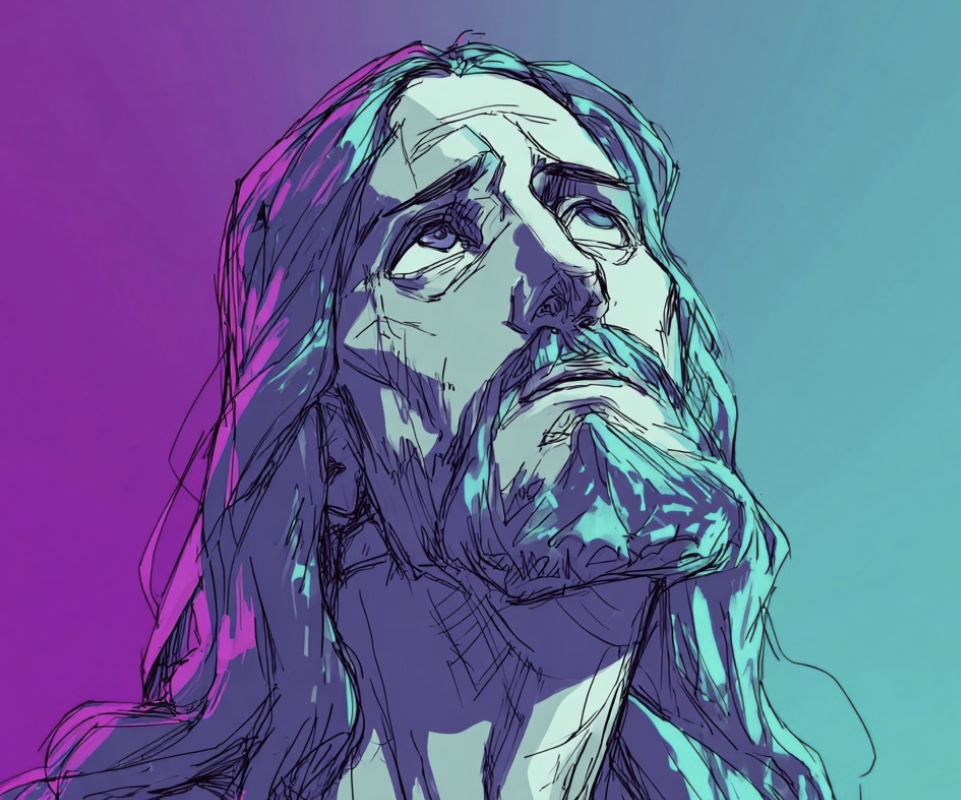
Wherefore by their fruits ye shall know them.
▼
Source
source
Matthew 7:20 (KJV)

1 month 5 days ago
Take your fill when the cask is first opened and when it is nearly spent, but midways be sparing: it is poor saving when you come to the lees.
▼
Source
source
Line 5 This quote is often directly attributed to Seneca, but he is referring to lines 368-369 of Works and Days by the Greek poet Hesiod, (translated by Hugh G. Evelyn-White)

4 months 2 weeks ago
For the moment, the jazz is playing; there is no melody, just notes, a myriad of tiny tremors. The notes know no rest, an inflexible order gives birth to them then destroys them, without ever leaving them the chance to recuperate and exist for themselves.... I would like to hold them back, but I know that, if I succeeded in stopping one, there would only remain in my hand a corrupt and languishing sound. I must accept their death; I must even want that death: I know of few more bitter or intense impressions.

1 month 1 week ago
Examine the man who lives in misery because he does not shine above other men; who goes about producing himself, pruriently anxious about his gifts and claims; struggling to force everybody, as it were begging everybody for God's sake, to acknowledge him a great man, and set him over the heads of men! Such a creature is among the wretchedest sights seen under this sun. A great man? A poor morbid prurient empty man; fitter for the ward of a hospital, than for a throne among men. I advise you to keep out of his way. He cannot walk on quiet paths; unless you will look at him, wonder at him, write paragraphs about him, he cannot live. It is the emptiness of the man, not his greatness. Because there is nothing in himself, he hungers and thirsts that you would find something in him. In good truth, I believe no great man, not so much as a genuine man who had health and real substance in him of whatever magnitude, was ever much tormented in this way.

4 months 4 weeks ago
Habit is a second nature.
▼
Source
source
Book III, Ch. 10


3 months 2 weeks ago
Education to true religion is the final task of the new education.
▼
Source
source
General Nature of New Eduction p. 38

2 months 3 weeks ago
It seems to me, that if the matter of our sun and planets and all the matter of the universe, were evenly scattered throughout all the heavens, and every particle had an innate gravity towards all the rest, and the whole of space throughout which this matter was scattered was but finite, the matter on [toward] the outside of this space would, by its gravity, tend towards all the matter on the inside, and, by consequence, fall down into the middle of the whole space, and there compose one great spherical mass. But if the matter was evenly disposed throughout an infinite space it could never convene into one mass; but some of it would convene into one mass and some into another, so as to make an infinite number of great masses, scattered at great distances from one another throughout all that infinite space.
▼
Source
source
Four Letters to Bentley (1692) first letter

4 months 3 weeks ago
Ancient histories, as one of our wits has said, are but fables that have been agreed upon.
▼
Source
source
Jeannot et Colin, 1764
4 months 2 weeks ago
Not till then did his controllers allow him to suspect that death itself might not after all cure the illusion of being a soul-nay, might prove the entry into a world where that illusion raged infinite and unchecked. Escape for the soul, if not for the body, was offered him. He became able to know (and simultaneously refused the knowledge) that he had been wrong from the beginning, that souls and personal responsibility existed. He half saw: he wholly hated. The physical torture of the burning was not fiercer than his hatred of that.
▼
Source
source
Ch. 16 : Banquet at Belbury, section 6

2 weeks 6 days ago
I believe that the world was created and approved by love, that it subsists, coheres, and endures by love, and that, insofar as it is redeemable, it can be redeemed only by love.
▼
Source
source
"Health is Membership"
4 months 2 weeks ago
"A pleasure is full grown only when it is remembered. You are speaking, Hmān, as if the pleasure were one thing and the memory another. It is all one thing. The séroni could say it better than I say it now. Not better than I could say it in a poem. What you call remembering is the last part of the pleasure, as the crah is the last part of a poem. When you and I met, the meeting was over very shortly, it was nothing. Now it is growing something as we remember it. But still we know very little about it. What it will be when I remember it as I lie down to die, what it makes in me all my days till then-that is the real meeting. The other is only the beginning of it."
▼
Source
source
Hyoi, p. 73
1 month 1 day ago
Faith which refuses to face indisputable facts is but little faith. Truth is always gain, however hard it is to accommodate ourselves to it. To linger in any kind of untruth proves to be a departure from the straight way of faith.
▼
Source
source
p. 290
1 month 1 week ago
It is truly a lordly spectacle how this great soul takes in all kinds of men and objects, a Falstaff, an Othello, a Juliet, a Coriolanus; sets them all forth to us in their round completeness; loving, just, the equal brother of all. Novum Organum, and all the intellect you will find in Bacon, is of a quite secondary order; earthy, material, poor in comparison with this. Among modern men, one finds, in strictness, almost nothing of the same rank. Goethe alone, since the days of Shakspeare, reminds me of it. Of him too you say that he saw the object; you may say what he himself says of Shakspeare: 'His characters are like watches with dial-plates of transparent crystal; they show you the hour like others, and the inward mechanism also is all visible.'.
1 month 1 day ago
To recognize that some of the things our culture believes are not true imposes on us the duty of finding out which are true and which are not.
▼
Source
source
"Western Civ," p. 22.
3 months 4 days ago
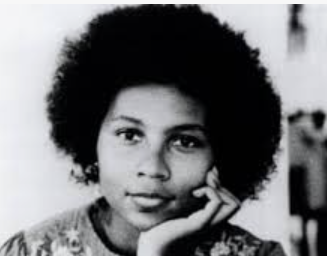
Feminist thought and practice were fundamentally altered when radical women of color and white women allies began to rigorously challenge the notion of "gender" was the primary factor determining a woman's fate. I can still recall how it upset everyone in the first women's studies class I attended-a class where everyone except me was white and female and mostly from privileged backgrounds-when I interrupted a discussion about the origins of domination in which it was argued that when a child is coming out of the womb the factor deemed most important is gender. I stated that when the child of two black parents is coming out of the womb the factor that is considered first is skin color, then gender, because race and gender will determine that child's fate. Looking at the interlocking nature of gender, race, and class was the perspective that changed the direction of feminist thought.
▼
Source
source
p. xiii.
3 months 6 days ago
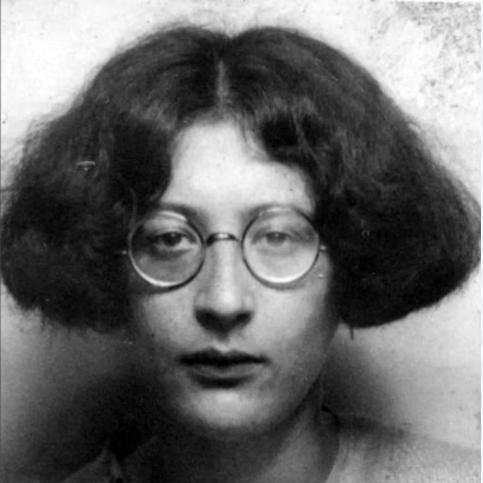
If we want a love which will protect the soul from wounds we must love something other than God.
▼
Source
source
p. 62
2 weeks 4 days ago
It is from the shadow of a cloister that there emerges one of mankind's greatest very greatest scourges. Luther appears; Calvin follows him. The Peasants' Revolt; the Thirty Years' War; the civil war in France; the massacre of the Low Countries; the massacre of Ireland; the massacre of the Cévennes; St Bartholomew's Day; the murders of Henry II, Henry IV, Mary Stuart, and Charles I; and finally, in our day, from the same source, the French Revolution.
▼
Source
source
Chapter III, p. 27
2 weeks 3 days ago
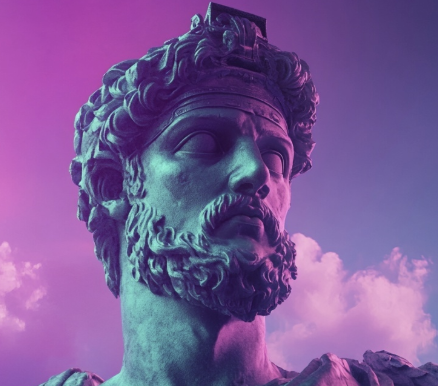
Look at everything that exists, and observe that it is already in dissolution and change, and as it were putrefaction or dispersion, or that everything is so constituted in nature as to die.
▼
Source
source
X, 18


3 months 4 days ago
And at once I saw with great clarity that human beings possess two bodies. One is the physical body, the other -- just as real, just as self-contained -- is the emotional body. Like the physical body, the emotional body reaches a certain level of growth, and then stops. But it stops rather sooner than the physical body. So most of us possess the emotional body of a retarded adolescent.
▼
Source
source
p. 23
4 months 3 weeks ago
It is the privilege of true genius, and certainly of the genius that opens a new road, to make without punishment great mistakes.
▼
Source
source
"Siècle de Louis XIV," ch. 32 (1751), qtd. in Arthur Schopenhauer, "The World as Will and Representation," Criticism of the Kantian philosophy, 1818
3 months 1 week ago
Thou hast said: nevertheless I say unto you, Hereafter shall ye see the Son of man sitting on the right hand of power, and coming in the clouds of heaven.
▼
Source
source
26:64 (KJV) Said to Caiaphas, the high priest.

4 months 3 weeks ago
I love liberty, and I loathe constraint, dependence, and all their kindred annoyances. As long as my purse contains money it secures my independence, and exempts me from the trouble of seeking other money, a trouble of which I have always had a perfect horror; and the dread of seeing the end of my independence, makes me proportionately unwilling to part with my money. The money that we possess is the instrument of liberty, that which we lack and strive to obtain is the instrument of slavery.

2 months 2 weeks ago
If we want to postulate a deity capable of engineering all the organized complexity in the world, either instantaneously or by guiding evolution, that deity must have been vastly complex in the first place. The creationist, whether a naive Bible-thumper or an educated bishop, simply postulates an already existing being of prodigious intelligence and complexity. If we are going to allow ourselves the luxury of postulating organized complexity without offering an explanation, we might as well make a job of it and simply postulate the existence of life as we know it!
▼
Source
source
Chapter 11 "Doomed Rivals" (p. 316)
3 months 2 weeks ago
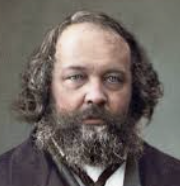
In a word, we reject all legislation, all authority, and all privileged, licensed, official, and legal influence, even though arising from universal suffrage, convinced that it can turn only to the advantage of a dominant minority of exploiters against the interest of the immense majority in subjection to them. This is the sense in which we are really Anarchists.
1 month 5 days ago
Show me that the good in life does not depend upon life's length, but upon the use we make of it; also, that it is possible, or rather usual, for a man who has lived long to have lived too little. Say to me when I lie down to sleep: "You may not wake again!" And when I have waked: "You may not go to sleep again!" Say to me when I go forth from my house: "You may not return!" And when I return: "You may never go forth again!"
3 months 1 week ago
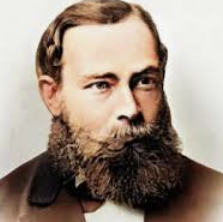
Gottlob Frege created modern logic including "for all," "there exists," and rules of proof. Leibniz and Boole had dealt only with what we now call "propositional logic" (that is, no "for all" or "there exists"). They also did not concern themselves with rules of proof, since their aim was to reach truth by pure calculation with symbols for the propositions. Frege took the opposite track: instead of trying to reduce logic to calculation, he tried to reduce mathematics to logic, including the concept of number.
▼
Source
source
Michael J. Beeson, "The Mechanization of Mathematics," in Alan Turing: Life and Legacy of a Great Thinker2004
3 months ago
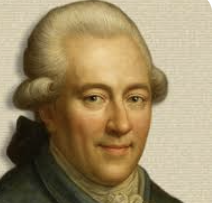
He who is enamored of himself will at least have the advantage of being inconvenienced by few rivals.
▼
Source
source
H 10 Variant translation: He who is in love with himself has at least this advantage - he won't encounter many rivals.
2 months ago
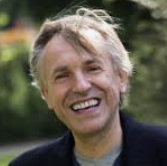
Why expect a false theory of the world, i.e. classical physics, to yield a true account of consciousness?
▼
Source
source
Social Media Unsorted Postings 2016
CivilSimian.com created by AxiomaticPanic, CivilSimian, Kalokagathia