He's likely talking about "God"...meh....


The art of progress is to preserve order amid change, and to preserve change amid order.
He is worst of all, that is malicious against his friends.
Men gather the clouds, and then they complain of the tempests that follow.
He used to reason as follows: 'Everything belongs to the gods; the wise are friends of the gods; friends hold all things in common; ergo, everything belongs to the wise.'

The initial revelation of any monastery: everything is nothing. Thus begin all mysticisms. It is less than one step from nothing to God, for God is the positive expression of nothingness.

Faith which does not doubt is dead faith.
Decisive actions are often taken in a moment and without any conscious deliverance from the rational parts of man.
By relieving the brain of all unnecessary work, a good notation sets it free to concentrate on more advanced problems, and in effect increases the mental power of the race..

The community has no bribe that will tempt a wise man. You may raise money enough to tunnel a mountain, but you cannot raise money enough to hire a man who is minding his own business. An efficient and valuable man does what he can, whether the community pay him for it or not. The inefficient offer their inefficiency to the highest bidder, and are forever expecting to be put into office. One would suppose that they were rarely disappointed.

In Kant's words, human beings are uncaused causes, and therefore have infinite value, and a liberal regime protects that autonomy by giving people rights... The right to speak, to organize, to associate, and ultimately to have a share of power by being able to vote. ...This is ...the moral status, the dignity that life in a liberal regime that does respect individual rights, gives us, and it is one of the reasons that to this day, people do not want to live in authoritarian countries that do not recognize the fundamental dignity of their... citizens.
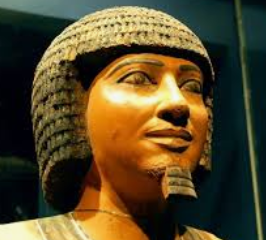
Truth is great and its effectiveness endures.

Death, like generation, is a secret of Nature.
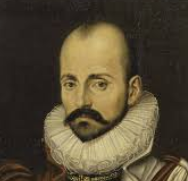
There is no man so good, who, were he to submit all his thoughts and actions to the laws, would not deserve hanging ten times in his life.
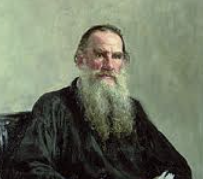
The whole plan of our order should be based on the idea of preparing men of firmness and virtue bound together by unity of conviction-aiming at the punishment of vice and folly, and patronizing talent and virtue: raising worthy men from the dust and attaching them to our Brotherhood. Only then will our order have the power unobtrusively to bind the hands of the protectors of disorder and to control them without their being aware of it. In a word, we must found a form of government holding universal sway, which should be diffused over the whole world without destroying the bonds of citizenship, and beside which all other governments can continue in their customary course and do everything except what impedes the great aim of our order, which is to obtain for virtue the victory over vice.
Exploitation and manipulation produce boredom and triviality; they cripple man, and all factors that make man into a psychic cripple turn him also into a sadist or a destroyer. This position will be characterized by some as "overoptimistic," "utopian," or "unrealistic." In order to appreciate the merits of such criticism a discussion of the ambiguity of hope and the nature of optimism and pessimism seems called for.
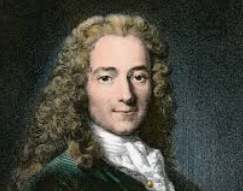
I opened with that which good Catholics have more than once made to Huguenots. "My dear sir," said I, "were you ever baptized?" "No, friend," replied the Quaker, "nor any of my brethren." "Zounds!" said I to him, "you are not Christians then!" "Friend," replied the old man, in a soft tone of voice, "do not swear; we are Christians, but we do not think that sprinkling a few drops of water on a child's head makes him a Christian." "My God!" exclaimed I, shocked at his impiety, "have you then forgotten that Christ was baptized by St. John?" "Friend," replied the mild Quaker, "once again, do not swear. Christ was baptized by John, but He Himself never baptized any one; now we profess ourselves disciples of Christ, and not of John." "Mercy on us," cried I, "what a fine subject you would be for the holy inquisitor! In the name of God, my good old man, let me baptize you."
The diversity of physical arguments and opinions embraces all sorts of methods.
Ideas should be neutral. But man animates them with his passions and folly. Impure and turned into beliefs, they take on the appearance of reality. The passage from logic is consummated. Thus are born ideologies, doctrines, and bloody farce.
The most momentous thing in human life is the art of winning the soul to good or to evil.

For me, reason is the natural organ of truth; but imagination is the organ of meaning. Imagination, producing new metaphors or revivifying old, is not the cause of truth, but its condition.

Useful undertakings which require sustained attention and vigorous precision in order to succeed often end up by being abandoned, for, in America, as elsewhere, the people move forward by sudden impulses and short-lived efforts.
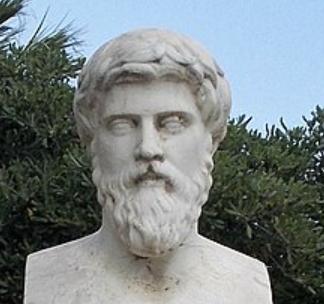
Socrates thought that if all our misfortunes were laid in one common heap, whence every one must take an equal portion, most persons would be contented to take their own and depart.
It is the destiny of our race to become united into one great body, thoroughly connected in all its parts, and possessed of similar culture. Nature, and even the passions and vices of Man, have from the beginning tended towards this end. A great part of the way towards it is already passed, and we may surely calculate that it will in time be reached.
Intuition is a method of feeling one's way intellectually into the inner heart of a thing to locate what is unique and inexpressible in it.
I have known only one person in my life who claimed to have seen a ghost. It was a woman; and the interesting thing is that she disbelieved in the immortality of the soul before seeing the ghost and still disbelieves after having seen it. She thinks it was a hallucination. In other words, seeing is not believing. This is the first thing to get clear in talking about miracles.

Applaud us when we run, console us when we fall, cheer us when we recover.

The Noble in the high place, the Ignoble in the low; that is, in all times and in all countries, the Almighty Maker's Law.

Philosophy may in no way interfere with the actual use of language; it can in the end only describe it.

It is for the sake of order that I seduced Clytemnestra, for the sake of order that I killed my king. I wanted for order to rule and that it rule through me. I have lived without desire, without love, without hope: I made order. Oh! terrible and divine passion!

Thus, while the refugee serfs only wished to be free to develop and assert those conditions of existence which were already there, and hence, in the end, only arrived at free labour, the proletarians, if they are to assert themselves as individuals, will have to abolish the very condition of their existence hitherto (which has, moreover, been that of all society up to the present), namely, labour. Thus they find themselves directly opposed to the form in which, hitherto, the individuals, of which society consists, have given themselves collective expression, that is, the State. In order, therefore, to assert themselves as individuals, they must overthrow the State.
Don't discuss yourself, for you are bound to lose; if you belittle yourself, you are believed; if you praise yourself, you are disbelieved.
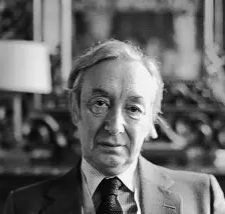
The ground for taking ignorance to be restrictive of freedom is that it causes people to make choices which they would not have made if they had seen what the realization of their choices involved.
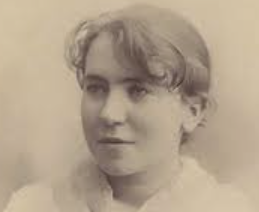
It is true that parents today are learning to enhance the physical qualities of their children. But their minds and characters they cannot mould. The antiquated system of education and our perverse social influences unfortunately do that. In view of the numerous misfit and marred children these institutions have created, I am quite content not to have contributed any of my own.

Though I certainly deserve no ill treatment from mortals, yet if the insults and repulses I receive were attended with any advantage to them, I would content myself with lamenting in silence my own unmerited indignities and man's injustice.
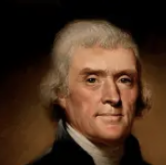
Men by their constitutions are naturally divided into two parties: 1. Those who fear and distrust the people, and wish to draw all powers from them into the hands of the higher classes. 2. Those who identify themselves with the people, have confidence in them, cherish and consider them as the most honest and safe, although not the most wise depositary of the public interests. In every country these two parties exist, and in every one where they are free to think, speak, and write, they will declare themselves. Call them, therefore, liberals and serviles, Jacobins and Ultras, whigs and tories, republicans and federalists, aristocrats and democrats, or by whatever name you please, they are the same parties still and pursue the same object. The last appellation of aristocrats and democrats is the true one expressing the essence of all.
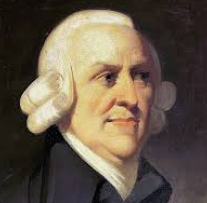
In England, and in all Roman Catholic countries, the lottery of the church is in reality much more advantageous than is necessary.
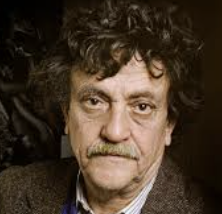
What television does is rent us friends and relatives who are quite satisfactory. The child watching TV loves these people, you know -- they're in color, and they're talking to the child. Why wouldn't a child relate to these people? And you know, if you can't sleep at 3 o'clock in the morning, you can turn on a switch, and there are your friends and relatives, and they obviously like you. And they're charming. Who wouldn't want Peter Jennings for a relative? This is quite something, to rent artificial friends and relatives right inside the house.
Wonder, indeed, is, on all hands, dying out: it is the sign of uncultivation to wonder.

We boil at different degrees.

Neither a man nor a crowd nor a nation can be trusted to act humanely or to think sanely under the influence of a great fear.

Who is everywhere is nowhere. When a person spends all his time in foreign travel, he ends by having many acquaintances, but no friends.
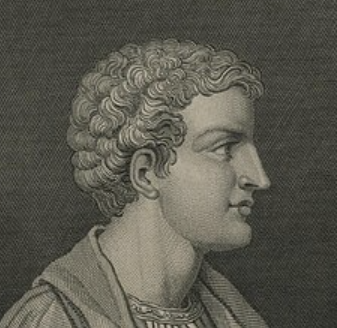
I am not bound over to swear allegiance to any master; where the storm drives me I turn in for shelter.
Every act of courage is the work of an unbalanced man. Animals, normal by definition, are always cowardly except when they know themselves to be stronger, which is cowardice itself.
The days .... come and go like muffled and veiled figures, sent from a distant friendly party; but they say nothing, and if we do not use the gifts they bring, they carry them as silently away.
The value of a principle is the number of things it will explain; and there is no good theory of disease which does not at once suggest a cure.
There is only one way to defeat the enemy, and that is to write as well as one can. The best argument is an undeniably good book.
CivilSimian.com created by AxiomaticPanic, CivilSimian, Kalokagathia