


1 month 3 weeks ago
Throughout the years in which the US was punishing countries that departed from fiscal prudence, it was borrowing on a colossal scale to finance tax cuts and fund its over-stretched military commitments. Now, with federal finances critically dependent on continuing large inflows of foreign capital, it will be the countries that spurned the American model of capitalism that will shape America's economic future.

2 months 2 weeks ago
Electricity does not centralize, but decentralizes.
▼
Source
source
(p. 36)

4 months 3 weeks ago
When profit diminishes, merchants are very apt to complain that trade decays; though the diminution of profit is the natural effect of its prosperity, or of a greater stock being employed in it than before.
▼
Source
source
Chapter IX
3 months 1 week ago
All the cases in which means and ends are external to one another are non-esthetic.
▼
Source
source
p. 205
1 month 2 weeks ago
If I shall have sufficient strength to improve and amplify what was written and published by me up to now about motion by adding some little speculations, and in particular those relating to the force of percussion, in the investigation of which I have consumed hundreds and thousands of hours, and finally reduced this to very easy explanation, so that people can understand it in less than half an hour of time.
2 months 2 weeks ago
Whenever a system of communication evolves, there is always the danger that some will exploit the system for their own ends.
▼
Source
source
Ch. 4. The Gene machine
2 months 2 weeks ago
The first cause cannot have been an intelligence, let alone an intelligence that answers prayers and enjoys being worshiped. Intelligent, creative, complex, statistically improbable things come late into the universe, as the product of evolution or some other process of gradual escalation from simple beginnings. They come late into the universe and therefore cannot be responsible for designing it. "Why There Almost Certainly Is No God", The Huffington Post, 23/10/2006

4 months 2 weeks ago
If someone is merely ahead of his time, it will catch up to him one day.
▼
Source
source
p. 8e

4 months 2 weeks ago
For me, reason is the natural organ of truth; but imagination is the organ of meaning. Imagination, producing new metaphors or revivifying old, is not the cause of truth, but its condition.
▼
Source
source
"Bluspels and Flalansferes: A Semantic Nightmare", Rehabilitations and Other Essays, 1939

2 months 3 weeks ago
Every body continues in its state of rest, or of uniform motion in a right line, unless it is compelled to change that state by forces impressed upon it.
▼
Source
source
Laws of Motion, I
3 months 1 week ago
Bereavement is a darkness impenetrable to the imagination of the unbereaved.
▼
Source
source
The Sacred and Profane Love Machine (1974) p. 37.

3 months 1 week ago
The greatest height of heroism to which an individual, like a people, can attain is to know how to face ridicule; better still, to know how to make oneself ridiculous and not to shrink from the ridicule.
3 months 2 weeks ago
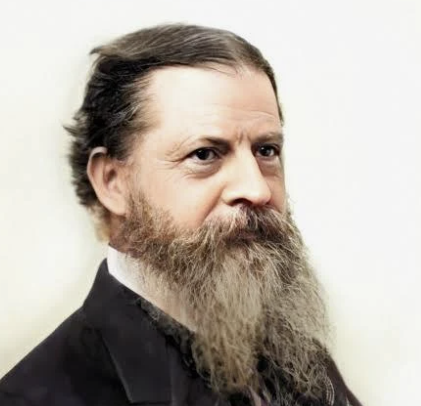
Logical analysis applied to mental phenomenon shows that there is but one law of mind, namely that ideas tend to spread continuously and to affect certain others which stand to them in a peculiar relation of affectibility. In this spreading they lose intensity, and especially the power of affecting others, but gain generality and become welded with other ideas.


3 months 3 weeks ago
In a revolution, as in a novel, the most difficult part to invent is the end.
▼
Source
source
Recollections of Alexis de Tocqueville, p. 71.
4 months 2 days ago
Nothing is more ancient than God, for He was never created; nothing more beautiful than the world, it is the work of that same God; nothing is more active than thought, for it flies over the whole universe; nothing is stronger than necessity, for all must submit to it.
▼
Source
source
As quoted in Love and Live Or Kill and Die: Realities of the Destruction of Human Life (2009) by James H. Wilson, p. 72

4 months 2 weeks ago
Some of your hurts you have cured, And the sharpest you still have survived, But what torments of grief you endured From evils which never arrived!
▼
Source
source
Borrowing From the French

4 months 3 weeks ago
What a pity and what a poverty of spirit, to assert that beasts are machines deprived of knowledge and sentiment, which affect all their operations in the same manner, which learn nothing, never improve, &c. [...] Some barbarians seize this dog, who so prodigiously excels man in friendship, they nail him to a table, and dissect him living, to show the mezarian veins. You discover in him all the same organs of sentiment which are in yourself. Answer me, machinist, has nature arranged all the springs of sentiment in this animal that he should not feel? Has he nerves to be incapable of suffering? Do not suppose this impertinent contradiction in nature. [...] The animal has received those of sentiment, memory, and a certain number of ideas. Who has bestowed these gifts, who has given these faculties? He who has made the herb of the field to grow, and who makes the earth gravitate towards the sun.
▼
Source
source
"Beasts", in A Philosophical Dictionary, Volume 2, J. and H. L. Hunt, 1824, p. 9
5 months 3 days ago
Rules necessary for demonstrations. To prove all propositions, and to employ nothing for their proof but axioms fully evident of themselves, or propositions already demonstrated or admitted; Never to take advantage of the ambiguity of terms by failing mentally to substitute definitions that restrict or explain them.
5 months 3 weeks ago
That body is heavier than another which, in an equal bulk, moves downward quicker.
2 months 4 weeks ago
In sum, a theory is only accepted if the theory has substantial, non-ad hoc, explanatory successes. This is in accordance with Popper; unfortunately, it is in even better accordance with the 'inductivist' accounts that Popper rejects, since these stress support rather than falsification.
▼
Source
source
The 'corroboration' of theories
4 months 3 weeks ago
When the man governed by self-interest, the god of this world, does not renounce it but merely refines it by the use of reason and extends it beyond the constricting boundary of the present, he is represented (Luke XVI, 3-9) as one who, in his very person [as servant], defrauds his master [self- interest] and wins from him sacrifices in behalf of "duty."
▼
Source
source
Book IV, Part 1, Section 2, "The Christian religion as a natural religion"
2 weeks 5 days ago
The state as the decisive political entity possesses an enormous power: the possibility of waging war and thereby publicly disposing of the lives of men. The jus belli contains such a disposition. It implies a double possibility: the right to demand from its own members the readiness to die and unhesitatingly to kill enemies.

5 months 3 weeks ago
That which does not kill us makes us stronger.

1 month 5 days ago
Let another say. "Perhaps the worst will not happen." You yourself must say. "Well, what if it does happen? Let us see who wins! Perhaps it happens for my best interests; it may be that such a death will shed credit upon my life."

4 months 3 weeks ago
No doubt, when modesty was made a virtue, it was a very advantageous thing for the fools, for everybody is expected to speak of himself as if he were one.
▼
Source
source
Vol. 1, Ch. 3, Section 2: Pride
2 weeks 3 days ago
Look round at the courses of the stars, as if thou wert going along with them; and constantly consider the changes of the elements into one another; for such thoughts purge away the filth of the terrene life.
▼
Source
source
VII, 47

4 months 2 weeks ago
In situations of sparse resources along with degraded self-images and depoliticized sensibilities, one avenue for poor people is in existential rebellion and anarchic expression. The capacity to produce social chaos is the last resort of desperate people.
▼
Source
source
The Role of Law in Progressive Politics in Keeping Faith: Philosophy and Race in America
1 week 3 days ago
I am a determinist. As such, I do not believe in free will. The Jews believe in free will. They believe that man shapes his own life. I reject that doctrine philosophically. In that respect, I am not a Jew.
4 months 3 weeks ago
His capital is continually going from him in one shape, and returning to him in another, and it is only by means of such circulation, or successive exchanges, that it can yield him any profit. Such capitals, therefore, may very properly be called circulating capitals.
▼
Source
source
Chapter I, p. 305.
1 month 3 weeks ago
Humans kill one another - and in some cases themselves - for many reasons, but none is more human than the attempt to make sense of their lives. More than the loss of life, they fear loss of meaning.
▼
Source
source
In the Puppet Theatre: Roof Gardens, Feathers and Human Sacrifice (p. 87)

4 months 3 weeks ago
There is an inconvenience which attends all abstruse reasoning. That it may silence, without convincing an antagonist, and requires the same intense study to make us sensible of its force, that was at first requisite for its invention. When we leave our closet, and engage in the common affairs of life, its conclusions seem to vanish, like the phantoms of the night on the appearance of the morning; and 'tis difficult for us to retain even that conviction, which we had attain'd with difficulty.
▼
Source
source
Part 1, Section 1

3 months 3 days ago
Why is it so hard to keep the mind concentrated, and to live up to our good resolutions? The problem is the basically mechanical nature of our left-brain consciousness. We have a kind of robot servant who does things for us: we learn to type or drive a car, painfully and consciously, then our robot takes over, and does it far more quickly and efficiently. Because man is the most complex creature on Earth, he is forced to rely on his robot far more than other animals. The result is that, whenever he gets tired, the robot takes over. For the modern city dweller, most of his everyday living is done by the robot. This is why it takes an emergency to concentrate the mind 'wonderfully', and why we forget so quickly.
▼
Source
source
p. 344

3 months 3 days ago
"Why do you not say how things will be operated under Anarchism?" is a question I have had to meet thousands of times. Because I believe that Anarchism can not consistently impose an iron-clad program or method on the future. The things every new generation has to fight, and which it can least overcome, are the burdens of the past, which holds us all as in a net. Anarchism, at least as I understand it, leaves posterity free to develop its own particular systems, in harmony with its needs. Our most vivid imagination can not foresee the potentialities of a race set free from external restraints. How, then, can any one assume to map out a line of conduct for those to come? We, who pay dearly for every breath of pure, fresh air, must guard against the tendency to fetter the future. If we succeed in clearing the soil from the rubbish of the past and present, we will leave to posterity the greatest and safest heritage of all ages.
4 months 3 weeks ago
In these frequent talks about the books I read, he used, as opportunity offered, to give me explanations and ideas respecting civilization, government, morality, mental cultivation, which he required me afterwards to restate to him in my own words. He also made me read, and give him a verbal account of, many books which would not have interested me sufficiently to induce me to read them of myself: among others, Millar's Historical View of the English Government, a book of great merit for its time, and which he highly valued; Mosheim's Ecclesiastical History, McCrie's Life of John Knox, and even Sewel's and Rutty's Histories of the Quakers. He was fond of putting into my hands books which exhibited men of energy and resource in unusual circumstances, struggling against difficulties and overcoming them: of such works I remember Beaver's African Memoranda, and Collins's account of the first settlement of New South Wales.
▼
Source
source
(p. 8)
4 months 3 weeks ago
The force of mind is only as great as its expression; its depth only as deep as its power to expand and lose itself.
▼
Source
source
Preface (J. B. Baillie translation), § 10

1 month 4 weeks ago
If we want eternal life, then we'll need to rewrite our bug-ridden genetic code and become god-like. "May all that have life be delivered from suffering", said Gautama Buddha. It's a wonderful sentiment. Sadly, only hi-tech solutions can ever eradicate suffering from the living world. Compassion alone is not enough.
▼
Source
source
Interview with Nick Bostrom and David Pearce, Dec. 2007
1 month 5 days ago
Much must also be withdrawn into oneself: for a well-composed conversation of differences disturbs and renews the affections, and infuriates whatever is weak in the mind and has not been cared for...Loneliness will cure the hatred of the crowd, the boredom of solitude will be cured by the crowd.... A certain dullness and languor of the mind is born from constant toil....Nor would the desire of men so much tend to this, unless play and fun had a kind of natural voluptuousness. The frequent use of which will relieve all the weight of the soul and all the vigor.For sleep is also necessary for refreshment, but if you continue it day and night, death will result.
4 months 2 weeks ago
What cannot be imagined cannot even be talked about.
▼
Source
source
Journal entry (12 October 1916), p. 84e
4 months 4 weeks ago
The mad mob does not ask how it could be better, only that it be different. And when it then becomes worse, it must change again. Thus they get bees for flies, and at last hornets for bees. Whether Soldiers Can Also Be in a State of Grace
▼
Source
source
1526

3 months 1 week ago
Liberating tolerance, then, would mean intolerance against movements from the Right, and toleration of movements from the Left.
▼
Source
source
An Essay on Liberation Beacon Press, 1969, p. 109
4 months 2 weeks ago
The way for a person to develop a [writing] style is (a) to know exactly what he wants to say, and (b) to be sure he is saying exactly that. The reader, we must remember, does not start by knowing what we mean. If our words are ambiguous, our meaning will escape him. I sometimes think that writing is like driving sheep down a road. If there is any gate open to the left or the right the readers will most certainly go into it.
▼
Source
source
As quoted in part 2 of Sherwood Eliot Wirt in "The Final Interview of C. S. Lewis", 1963
4 months 4 days ago
I think that when friendship and perception of kinship ruled everything, no one killed any creature, because people thought the other animals were related to them.
▼
Source
source
2, 22, 1

4 months 3 weeks ago
I care not how affluent some may be, provided that none be miserable in consequence of it. But it is impossible to enjoy affluence with the felicity it is capable of being enjoyed, while so much misery is mingled in the scene.
▼
Source
source
Means by Which the Fund Is to Be Created

3 months 3 weeks ago
Example is the school of mankind, and they will learn at no other.
▼
Source
source
No. 1, volume v, p. 331
3 weeks ago
Even the most humble insect and the most insignificant idea are the military encampments of God. Within them, all of God is arranged in fighting position for a critical battle. Even in the most meaningless particle of earth and sky I hear God crying out: "Help me!" Everything is an egg in which God's sperm labors without rest, ceaselessly. Innumerable forces within and without it range themselves to defend it. With the light of the brain, with the flame of the heart, I besiege every cell where God is jailed, seeking, trying, hammering to open a gate in the fortress of matter, to create a gap through which God may issue in heroic attack.
3 months 1 week ago
And what is its moral proof? We may formulate it thus: Act so that in your own judgment and in the judgment of others you may merit eternity, act so that you may become irreplaceable, act so that you may not merit death. Or perhaps thus: Act as if you were to die tomorrow, but to die in order to survive and be eternalized. The end of morality is to give personal, human finality to the Universe; to discover the finality that belongs to it - if indeed it has any finality - and to discover it by acting.
3 months 3 weeks ago
Wit is the appearance, the external flash of imagination. Thus its divinity, and the witty character of mysticism.
▼
Source
source
Aphorism 26, as translated in Dialogue on Poetry and Literary Aphorisms (1968)
3 months 2 weeks ago
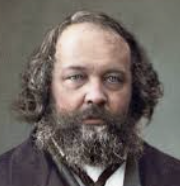
Nothing, in fact, is as universal or as ancient as the iniquitous and absurd; truth and justice, on the contrary, are the least universal, the youngest features in the development of human society.
4 months 1 week ago
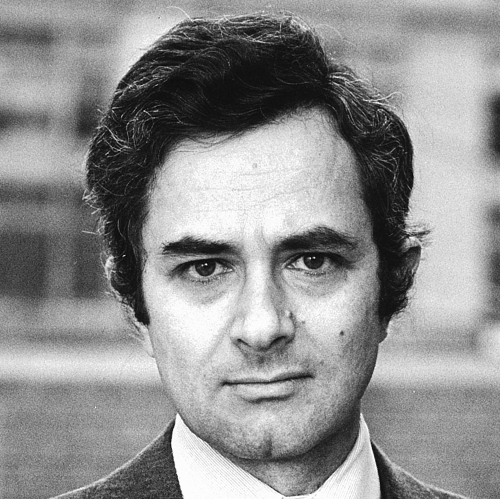
Leading a human life is a full-time occupation, to which everyone devotes decades of intense concern.
▼
Source
source
"The Absurd" (1971), p. 15.
CivilSimian.com created by AxiomaticPanic, CivilSimian, Kalokagathia