


6 months 3 weeks ago
I do not believe that science per se is an adequate source of happiness, nor do I think that my own scientific outlook has contributed very greatly to my own happiness, which I attribute to defecating twice a day with unfailing regularity.
▼
Source
source
Letter to W. W. Norton (publisher), 27 January, 1931
3 months 4 days ago
Man's position in the world is defined by the fact that in every dimension of his being and behavior he finds himself at every moment between two boundaries. This condition appears as the formal structure of our existence, filled always with different contents in life's diverse provinces, activities, and destinies. We feel that the content and value of every hour stands between a higher and a lower; every thought between a wiser and a more foolish; every possession between a more extended and a more limited; every deed between a greater and a lesser measure of meaning, adequacy, and morality.
▼
Source
source
p. 1. Opening line of first essay "Life as Transcendence"

6 months 3 weeks ago
When you have reached your own room, be kind to those who have chosen different doors and to those who are still in the hall. If they are wrong they need your prayers all the more; and if they are your enemies, then you are under orders to pray for them. That is one of the rules common to the whole house.
▼
Source
source
Preface

6 months 3 weeks ago
Obey the voice at eve obeyed at prime.
▼
Source
source
Terminus
2 months 3 weeks ago
The Catastrophist constructs theories, the Uniformitarian Demolishes them.

6 months 3 weeks ago
I think of death only with tranquility, as an end. I refuse to let death hamper life. Death must enter life only to define it.
5 months 2 weeks ago
The only satisfied rationalists today are blinkered scientists or Marxists.
▼
Source
source
Ch. 7, p. 113
3 months 2 weeks ago
We seek not what God could have done but what He has done.... God could have caused birds to fly with bones of solid gold, with veins full of quicksilver, with flesh heavier than lead and very small and heavy wings, so as to better show His power ... but He wanted to make their bones, flesh and feathers very light ... to teach us that He likes simplicity and ease.
▼
Source
source
Notes in a copy of Jean-Baptiste Morin's "Famous and ancient problems of the earth's motion or rest, yet to be solved" (published 1631).

3 months 2 weeks ago
A man of Intellect, of real and not sham Intellect, is by the nature of him likewise inevitably a man of nobleness, a man of courage, rectitude, pious strength; who, even because he is and has been loyal to the Laws of this Universe, is initiated into discernment of the same; to this hour a Missioned of Heaven; whom if men follow, it will be well with them; whom if men do not follow, it will not be well. Human Intellect, if you consider it well, is the exact summary of Human Worth; and the essence of all worth-ships and worships is reverence for that same.
5 months 3 weeks ago
The evil of marriage, as is it practiced in the European countries, extends further than we have yet described. The method is for a thoughtless and romantic youth of each sex, to come together, to see each other, for a few times, and under circumstances full of delusion and then to vow eternal attachment. What is the consequence of this? In almost every instance they find themselves deceived. They are reduced to make the best of an irretrievable mistake. They are led to conceive it their wiser policy, to shut their eyes upon realities, happy, if by any perversion of intellect, they can persuade themselves that they were right in their first crude opinion of each other. Thus the institution of marriage is made a system of fraud; and men who carefully mislead their judgement in the daily affair of their life, must be expected to have a crippled judgement in every other concern.
4 months 2 weeks ago
The difficulty of literature is not to write, but to write what you mean; not to affect your reader, but to affect him precisely as you wish.
▼
Source
source
Truth of Intercourse.

5 months 2 weeks ago
Consciousness is nature's nightmare.
7 months 3 days ago
Nothing is terrible except fear itself.
▼
Source
source
De Augmentis Scientiarum, Book II, "Fortitudo"

6 months 3 weeks ago
The mass of men lead lives of quiet desperation. What is called resignation is confirmed desperation.
▼
Source
source
p. 10

5 months 3 weeks ago
They showed me their trees, and I could not understand the intense love with which they looked at them; it was as though they were talking with creatures like themselves. And perhaps I shall not be mistaken if I say that they conversed with them. Yes, they had found their language, and I am convinced that the trees understood them. They looked at all Nature like that - at the animals who lived in peace with them and did not attack them, but loved them, conquered by their love. They pointed to the stars and told me something about them which I could not understand, but I am convinced that they were somehow in touch with the stars, not only in thought, but by some living channel.

5 months 4 weeks ago
Wandering in a vast forest at night, I have only a faint light to guide me. A stranger appears and says to me: "My friend, you should blow out your candle in order to find your way more clearly." This stranger is a theologian.
▼
Source
source
Number VIII

2 months 3 weeks ago
Even where Marx did not soften his main drive to a "revolutionary development," it was still aimed at capitalism alone (a relatively young and derivative cancer) and not equally at the age-old, lasting core of all enslavement, cruelty and exploitation: at militarism, feudalism and the supremacist world at large.
▼
Source
source
p. 38
5 months 4 weeks ago
Good music is very close to primitive language.
▼
Source
source
"Correspondence of Ideas with the Motion of Organs"
6 months 3 weeks ago
Brief and powerless is Man's life; on him and all his race the slow, sure doom falls pitiless and dark.

4 months 4 weeks ago
Truth is ever to be found in simplicity, and not in the multiplicity and confusion of things.
▼
Source
source
Cited in Rules for methodizing the Apocalypse, Rule 9, from a manuscript published in The Religion of Isaac Newton (1974) by Frank E. Manuel, p. 120

4 months 3 weeks ago
Speech structures the abyss of mental and acoustic space...it is a cosmic, invisible architecture of the human dark.
▼
Source
source
(p. 13)
6 months 3 weeks ago
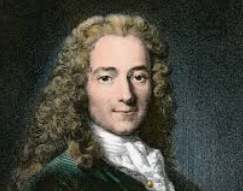
I asked my guide how it was possible the judicious part of them could suffer such incoherent prating? "We are obliged," said he, "to suffer it, because no one knows, when a brother rises up to hold forth, whether he will be moved by the spirit or by folly. In this uncertainty, we listen patiently to every one. We even allow our women to speak in public; two or three of them are often inspired at the same time, and then a most charming noise is heard in the Lord's house." "You have no priests, then?" said I. "No, no, friend," replied the Quaker; "heaven make us thankful!" Then opening one of the books of their sect, he read the following words in an emphatic tone: "'God forbid we should presume to ordain any one to receive the Holy Spirit on the Lord's day, in exclusion to the rest of the faithful!'
▼
Source
source
Further account of his conversations with Andrew Pit

6 months 3 weeks ago
In short, competition has to shoulder the responsibility of explaining all the meaningless ideas of the economists, whereas it should rather be the economists who explain competition.
▼
Source
source
Vol. III, Ch. L, Illusions Created by Competition, p. 866.

6 months 2 weeks ago
Men in their prayers beg the gods for health, not knowing that this is a thing they have in their own power. Through their incontinence undermining it, they themselves become, because of their passions, the betrayers of their own health.
3 months 3 days ago
To what purpose, pray, exist all these things that be born? Whence come male and female? Whence the difference in kind of all things that be, amongst visible species, unless there be certain pre-existing and previously established Reasons and Causes subsisting beforehand, in the nature of a pattern? With regard to which, though we are dull of sight, yet let us strive to clear away the mist from the eyes of the soul.
5 months 1 week ago
The Text is plural. Which is not simply to say that it has several meanings, but that it accomplishes the very plural of meaning: an irreducible (and not merely an acceptable) plural. The Text is not a co-existence of meanings but a passage, an overcrossing; thus it answers not to an interpretation, even a liberal one, but to an explosion, a dissemination.
▼
Source
source
Proposition 4
2 months 3 weeks ago
The spiritual men of India, a great and watchful multitude whose spiritual status is unattainable, are many of them catholics in a deeper sense than we of the West have yet given to the word ....
▼
Source
source
In his book, Two Letters, 1934
6 months 4 weeks ago
A propensity to hope and joy is real riches: One to fear and sorrow, real poverty.
▼
Source
source
Part I, Essay 18: The Sceptic
3 months 2 days ago
It is not when he is working in the office but when he is lying idly on the sand that his soul utters, "Life is beautiful."
▼
Source
source
Ch. I : The Awakening, p. 2

5 months 2 weeks ago
Life, individual or collective, personal or historic, is the one entity in the universe whose substance is compact of danger, of adventure. It is, in the strict sense of the word, drama. ... The primary, radical meaning of life appears when it is employed in the sense not of biology, but of biography. For the very strong reason that the whole of biology is quite definitely only a chapter in certain biographies, it is what biologists do in the portion of their lives open to biography.
▼
Source
source
Chap.IX: The Primitive and the Technical

6 months 3 weeks ago
The gods we stand by are the gods we need and can use, the gods whose demands on us are reinforcements of our demands on ourselves and on one another. What I then propose to do is, briefly stated, to test saintliness by common sense, to use human standards to help us decide how far the religious life commends itself as an ideal kind of human activity . ... It is but the elimination of the humanly unfit, and the survival of the humanly fittest, applied to religious beliefs; and if we look at history candidly and without prejudice, we have to admit that no religion has ever in the long run established or proved itself in any other way. Religions have approved themselves; they have ministered to sundry vital needs which they found reigning. When they violated other needs too strongly, or when other faiths came which served the same needs better, the first religions were supplanted.
▼
Source
source
Lectures XIV and XV, "The Value of Saintliness"

6 months 3 weeks ago
In regard to man's final end, all the higher religions are in complete agreement. The purpose of human life is the discovery of Truth, the unitive knowledge of the Godhead. The degree to which this unitive knowledge is achieved here on earth determines the degree to which it will be enjoyed in the posthumous state. Contemplation of truth is the end, action the means.

2 months 3 weeks ago
Art thy not content that thou hast done something conformable to thy nature, and dost thou seek to be paid for it? Just as if the eye demanded recompense for seeing, or the feet for walking. For as these members are formed for a particular purpose... so also is man formed by nature to acts of benevolence.
▼
Source
source
IX, 42

6 months 2 weeks ago
I don't know why we are here, but I'm pretty sure that it is not in order to enjoy ourselves.
▼
Source
source
As quoted in The Beginning of the End (2004) by Peter Hershey, p. 109 Also, as quoted in "The Relentless Rise of Science as Fun", by Jeremy Burgess, in New Scientist, Volume 143, Issues 1932-1945, originally published 1994.
7 months 3 weeks ago
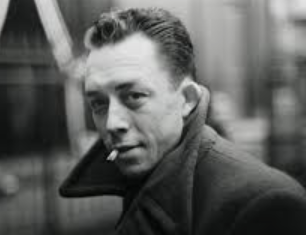
A novel is never anything but a philosophy put into images. And in a good novel, the whole of the philosophy has passed into the images. But if once the philosophy overflows the characters and action, and therefore looks like a label stuck on the work, the plot loses its authenticity and the novel its life. Nevertheless, a work that is to last cannot dispense with profound ideas. And this secret fusion between experiences and ideas, between life and reflection on the meaning of life, is what makes the great novelist.
6 months 3 weeks ago
There is a kind of latent omniscience not only in every man but in every particle.
▼
Source
source
p. 263
5 months 3 weeks ago
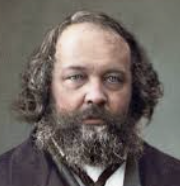
This means that no state, howsoever democratic its forms, not even the reddest political republic - a people's republic only in the sense of the lie known as popular representation - is capable of giving the people what they need: the free organization of their own interests from below upward, without any interference, tutelage, or coercion from above. That is because no state, not even the most republican and democratic, not even the pseudo-popular state contemplated by Marx, in essence represents anything but government of the masses from above downward, by an educated and thereby privileged minority which supposedly understands the real interests of the people better than the people themselves.

5 months 2 weeks ago
I disclose my mysteries to those who are worthy of my mysteries.
6 months 4 weeks ago
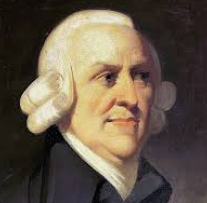
When the profits of trade happen to be greater than ordinary, over-trading becomes a general error both among great and small dealers.
▼
Source
source
Chapter I, p. 469.
4 months 3 weeks ago
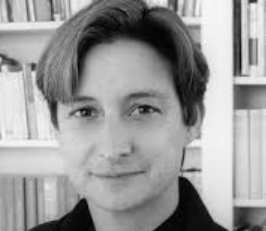
The move from a structuralist account in which capital is understood to structure social relations in relatively homologous ways to a view of hegemony in which power relations are subject to repetition, convergence, and rearticulation brought the question of temporality into the thinking of structure, and marked a shift from a form of Althusserian theory that takes structural totalities as theoretical objects to one in which the insights into the contingent possibility of structure inaugurate a renewed conception of hegemony as bound up with the contingent sites and strategies of the rearticulation of power.
▼
Source
source
"Further Reflections on the Conversations of Our Time" (1997), which received first place in the Philosophy and Literature Bad Writing Contest
6 months 2 weeks ago
Tis not sufficient to combine well-chosen words in a well-ordered line.
▼
Source
source
Book I, satire iv, line 54 (translated by John Conington)
6 months 4 weeks ago
Art may make a suit of clothes; but nature must produce a man.
▼
Source
source
Part I, Essay 15: The Epicurean

5 months 4 weeks ago
I should have loved freedom, I believe, at all times, but in the time in which we live I am ready to worship it.
▼
Source
source
Book Four, Chapter VII.
CivilSimian.com created by AxiomaticPanic, CivilSimian, Kalokagathia