

4 weeks 1 day ago
I pray the Sovereign Sun himself to grant me ability to explain the nature of the station that he holds amongst those in whose middle he is placed! By the term "middle" we are to understand not what is so defined in the case of things contrary to each other, as "equi-distant from the extremes," as orange and dark brown in the case of colours; lukewarm, in that of hot and cold, and other things of the sort; but the power that collects and unites into one things dispersed, like the "Harmony" of Empedocles, from which he completely excludes all discord and contention.
4 weeks ago
A man may own a thousand acres of land, and yet he still sleeps upon a bed of five feet.
▼
Source
source
p. 38 (Chinese saying)
3 months 2 weeks ago
When one rational being affects another rational being as mere matter, then the lower sense of that being is also affected, it is true, and is so affected necessarily and altogether independently of the freedom of that being, (as the lower sense is indeed always affected;) but it is not to be assumed that this affection was in the intention of the person who produced it. His intention was merely to attain his purpose, to express his conception in matter, and he never took into consideration whether that matter would feel it or not. Hence, the reciprocal influence of rational beings upon each other, as such, always occurs by means of the higher sense; for only the higher sense is one which cannot be affected without having been presupposed. Our criterion of this reciprocal influence remains, therefore, correct.
▼
Source
source
P. 108
3 months 1 week ago
He that dippeth his hand with me in the dish, the same shall betray me. The Son of man goeth as it is written of him: but woe unto that man by whom the Son of man is betrayed! it had been good for that man if he had not been born.
▼
Source
source
26:23-24 (KJV)
3 months ago
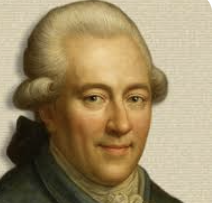
The noble simplicity in the works of nature only too often originates in the noble shortsightedness of him who observes it.
▼
Source
source
H 1

3 months 3 weeks ago
A Dialogue between two Infants in the womb concerning the state of this world, might handsomely illustrate our ignorance of the next, whereof methinks we yet discourse in Plato's Den, and are but Embryon Philosophers.
▼
Source
source
Chapter IV

1 month 2 weeks ago
There are defects and gaps in a liberal society that are constantly being filled by other longings and... structures... that sometimes end up undermining that liberal project.
▼
Source
source
13:05
4 months 4 weeks ago
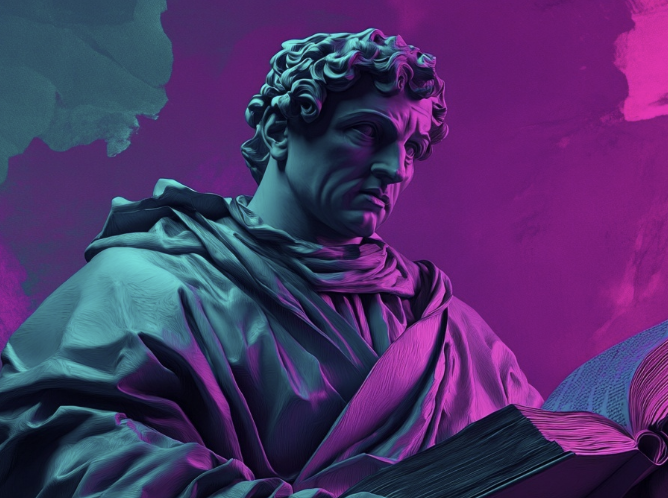
Dear rulers ... I maintain that the civil authorities are under obligation to compel the people to send their children to school. ... If the government can compel such citizens as are fit for military service to bear spear and rifle, to mount ramparts, and perform other martial duties in time of war, how much more has it a right to compel the people to send their children to school, because in this case we are warring with the devil, whose object it is secretly to exhaust our cities and principalities of their strong men.
▼
Source
source
letter to the German rulers (1524), as quoted in The History of Compulsory Education in New England, John William Perrin, 1896

3 months 3 weeks ago
I have come across men of letters who have written history without taking part in public affairs, and politicians who have concerned themselves with producing events without thinking about them. I have observed that the first are always inclined to find general causes whereas the second, living in the midst of disconnected daily facts, are prone to imagine that everything is attributable to particular incidents, and that the wires they pull are the same as those that move the world. It is to be presumed that both are equally deceived.
▼
Source
source
Recollections of Alexis de Tocqueville, p. 80
5 months 6 days ago
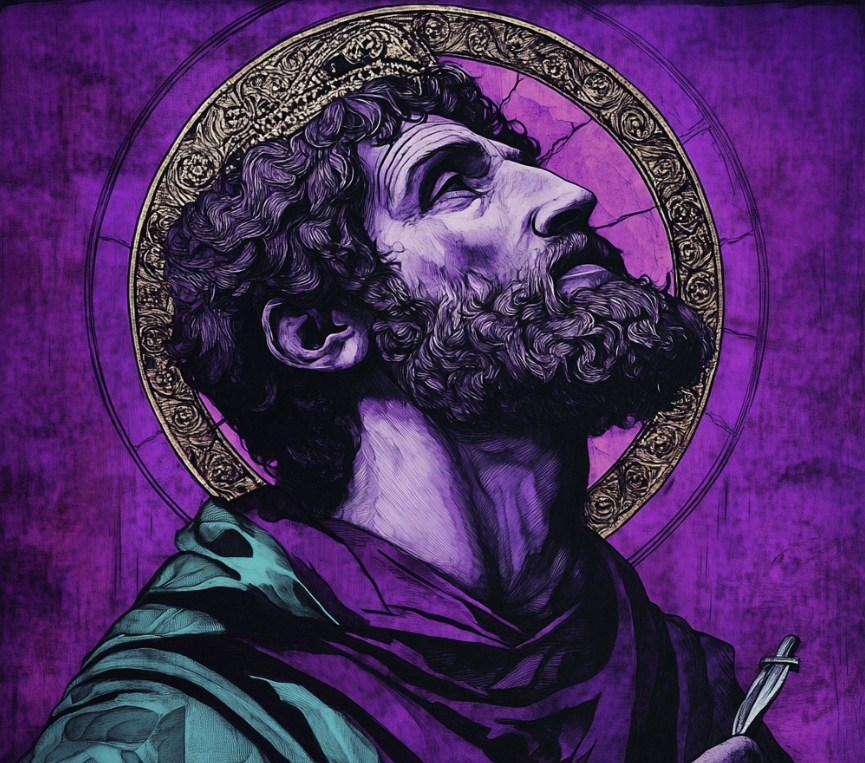
He who created us without our help will not save us without our consent.
▼
Source
source
St. Augustine, Sermo 169, 11, 13: PL 38, 923 as quoted in Fr. Mitch Pacwa, S. J.. Saved: A Bible Study Guide for Catholics (p. 15). Our Sunday Visitor. Kindle Edition.



3 months 2 weeks ago
There is an innate anxiety which supplants in us both knowledge and intuition.

4 months 4 weeks ago
Once we have tasted the sweetness of what is spiritual, the pleasures of the world will have no attraction for us. If we disregard the shadows of things, then we will penetrate their inner substance.

4 months 3 weeks ago
He asked my religion and I replied 'agnostic'. He asked how to spell it, and remarked with a sigh: 'Well, there are many religions, but I suppose they all worship the same God. This remark kept me cheerful for about a week.

3 months 3 weeks ago
The stupider one is, the closer one is to reality. The stupider one is, the clearer one is. Stupidity is brief and artless, while intelligence wriggles and hides itself. Intelligence is a knave, but stupidity is honest and straightforward.

4 months 4 days ago
Again, Amyclas the Heracleotean, one of Plato's familiars, and Menæchmus, the disciple, indeed, of Eudoxus, but conversant with Plato, and his brother Dinostratus, rendered the whole of geometry as yet more perfect. But Theudius, the Magnian, appears to have excelled, as well in mathematical disciplines, as in the rest of philosophy. For he constructed elements egregiously, and rendered many particulars more universal. Besides, Cyzicinus the Athenian, flourished at the same period, and became illustrious in other mathematical disciplines, but especially in geometry. These, therefore, resorted by turns to the Academy, and employed themselves in proposing common questions.
▼
Source
source
Ch. IV.
2 weeks 3 days ago
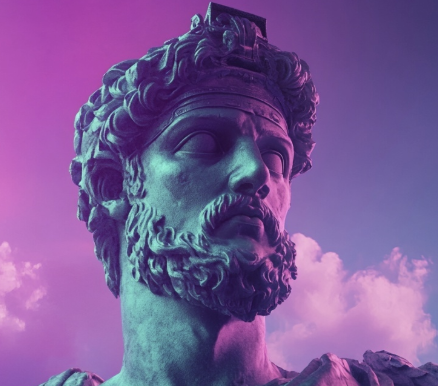
Do not think that what is hard for you to master is humanly impossible; but if a thing is humanly possible, consider it to be within your reach.
▼
Source
source
VI, 19

3 months 3 days ago
These are the visionary, mystical moments, when a man 'completes his partial mind'. His everyday conscious self is only a small part of the mind, like the final crescent of the moon. In moments of crisis, the full moon suddenly appears.
▼
Source
source
p. 156

2 months 2 weeks ago
African audiences cannot accept our passive consumer role in the presence of film.
▼
Source
source
(p. 44)

4 months 2 weeks ago
The dreamer must contaminate the others by his dream, he must make them fall into it.
▼
Source
source
p. 399

4 months 2 weeks ago
"They would say," he answered, "that you do not fail in obedience through lack of love, but have lost love because you never attempted obedience."
▼
Source
source
Ch. 7 : The Pendragon, section 2
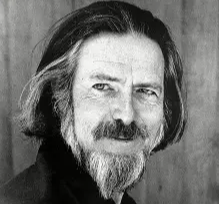
1 month 1 day ago
Zen does not confuse spirituality with thinking about God while one is peeling potatoes. Zen spirituality is just to peel the potatoes. Paraphrase of original text which reads "It does not confuse spirituality with thinking about God while one is peeling potatoes. Zen spirituality is just to peel the potatoes.
▼
Source
source
The Way of Zen, Pt. 2, Ch. 2
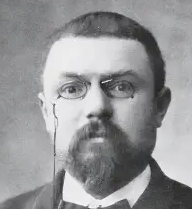
1 month 2 weeks ago
Does the harmony the human intelligence thinks it discovers in nature exist outside of this intelligence? No, beyond doubt, a reality completely independent of the mind which conceives it, sees or feels it, is an impossibility. A world as exterior as that, even if it existed, would for us be forever inaccessible.
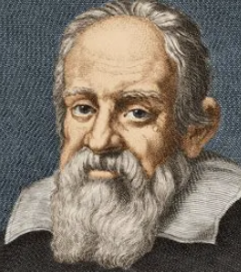
1 month 2 weeks ago
All truths are easy to understand once they are discovered; the point is to discover them.
▼
Source
source
As quoted in Angels in the workplace: stories and inspirations for creating a new world of work (1999) by Melissa Giovagnoli
3 months 3 weeks ago
Life itself is but the shadow of death, and souls departed but the shadows of the living: All things fall under this name. The Sun itself is but the dark simulacrum, and the light but the shadow of God.
▼
Source
source
Ch. 4

5 months 3 weeks ago
Haste is universal because everyone is in flight from himself.
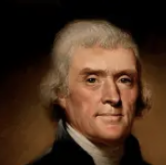
2 weeks 6 days ago
Truth will do well enough if left to shift for herself. She seldom has received much aid from the power of great men to whom she is rarely known & seldom welcome. She has no need of force to procure entrance into the minds of men. Error indeed has often prevailed by the assistance of power or force. Truth is the proper & sufficient antagonist to error.
▼
Source
source
Notes on Religion (October 1776), published in The Writings of Thomas Jefferson : 1816-1826 (1899) edited by Paul Leicester Ford, v. 2, p. 102
4 months 1 week ago
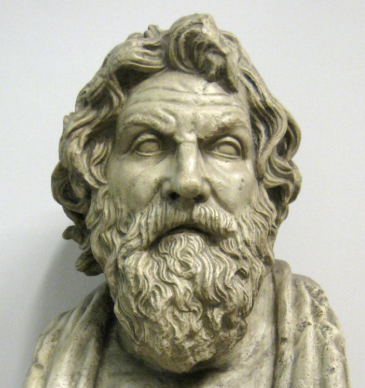
When he was asked what advantage had accrued to him from philosophy, his answer was, "The ability to hold converse with myself."
▼
Source
source
§ 4
5 months 6 days ago
The dominion of bad men is hurtful chiefly to themselves who rule, for they destroy their own souls by greater license in wickedness; while those who are put under them in service are not hurt except by their own iniquity. For to the just all the evils imposed on them by unjust rulers are not the punishment of crime, but the test of virtue. Therefore the good man, although he is a slave, is free; but the bad man, even if he reigns, is a slave, and that not of one man, but, what is far more grievous, of as many masters as he has vices; of which vices when the divine Scripture treats, it says, For of whom any man is overcome, to the same he is also the bond-slave.
▼
Source
source
IV, 3 Variant translation: The good man, though a slave, is free; the wicked, though he reigns, is a slave, and not the slave of a single man, but — what is worse — the slave of as many masters as he has vices.
2 weeks 5 days ago
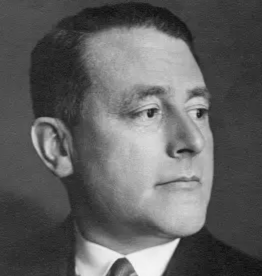
The concept of the state presupposes the concept of the political.
2 weeks 3 days ago
He who fears death either fears to lose all sensation or fears new sensations. In reality, you will either feel nothing at all, and therefore nothing evil, or else, if you can feel any sensations, you will be a new creature, and so will not have ceased to have life.
▼
Source
source
VIII, 58

2 months 3 weeks ago
Preserving seeks to secure the life that already is; safeguarding secures and reproduces the conditions of becoming, of living, of futurity, where the content of that life, that living, can be neither prescribed nor predicted, and where self-determination emerges as a potential.
▼
Source
source
p. 94
2 weeks 6 days ago
The Constitution of the United States asserts that all power is inherent in the people; that they may exercise it by themselves; that it is their right and duty.
▼
Source
source
Letter to Justice William Johnson
2 weeks 5 days ago
Only an atheist can be a good Christian.
▼
Source
source
Atheismus im Christentum 1968, english translation: Atheism in Christianity: The Religion of the Exodus and the Kingdom 1972
3 months 2 weeks ago
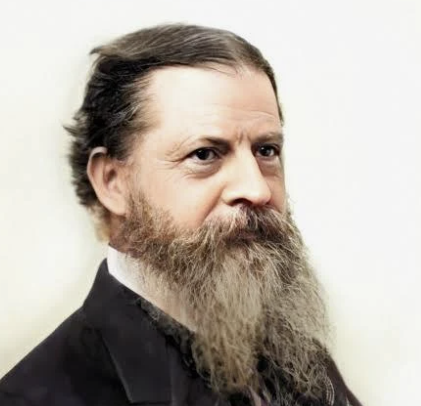
In an article published in The Monist for January, 1891, I endeavored to show what ideas ought to form the warp of a system of philosophy, and particularly emphasized that of absolute chance. In the number of April, 1892, I argued further in favor of that way of thinking, which it will be convenient to christen tychism (from τύχη, chance). A serious student of philosophy will be in no haste to accept or reject this doctrine; but he will see in it one of the chief attitudes which speculative thought may take, feeling that it is not for an individual, nor for an age, to pronounce upon a fundamental question of philosophy. That is a task for a whole era to work out. I have begun by showing that tychism must give birth to an evolutionary cosmology, in which all the regularities of nature and of mind are regarded as products of growth, and to a Schelling-fashioned idealism which holds matter to be mere specialized and partially deadened mind.

1 month 1 week ago
Literary men are...a perpetual priesthood.
▼
Source
source
The State of German Literature.

4 months 3 weeks ago
The sense of justice and injustice is not deriv'd from nature, but arises artificially... from education, and human conventions.
▼
Source
source
Part 2, 1.17
2 weeks 3 days ago
Does anything genuinely beautiful need supplementing? No more than justice does-or truth, or kindness, or humility. Are any of those improved by being praised? Or damaged by contempt? Is an emerald suddenly flawed if no one admires it? Or gold, or ivory, or purple? Lyres? Knives? Flowers? Bushes?
▼
Source
source
(Hays translation) IV, 20
3 months 2 weeks ago
To conceive a thought - just one, but one that would tear the universe to pieces.
3 weeks ago
I said only one word, brought only one message: Love. Love - nothing else.
3 months 6 days ago
Philosophy ... must not bargain away anything of the emphatic concept of truth.
▼
Source
source
p. 7
4 months 2 weeks ago
Suppose that I wish to deserve the title of "robber of remorse" and that I place in myself all the townspeople's repentence?
▼
Source
source
Orestes to Electra, Act 2
3 weeks ago
Every man worthy of being called a son of man bears his cross and mounts his Golgotha. Many, indeed most, reach the first or second step, collapse pantingly in the middle of the journey, and do not attain the summit of Golgotha, in other words the summit of their duty: to be crucified, resurrected, and to save theirs souls. Afraid of crucifixion, they grow fainthearted; they do not know that the cross is the only path to resurrection. There is no other path.
▼
Source
source
Author's Introduction, p. 15

4 months 2 weeks ago
In regard to man's final end, all the higher religions are in complete agreement. The purpose of human life is the discovery of Truth, the unitive knowledge of the Godhead. The degree to which this unitive knowledge is achieved here on earth determines the degree to which it will be enjoyed in the posthumous state. Contemplation of truth is the end, action the means.
3 months 1 week ago
Oh, how empty is praise when it reflects back to its origin!
▼
Source
source
No. 50. (Rica writing to * * *)

4 months 4 weeks ago
The sun, which passeth through pollutions and itself remains as pure as before.
5 months 3 weeks ago
Knowledge of the fact differs from knowledge of the reason for the fact.
4 months 3 weeks ago
I believe that the abolition of private ownership of land and capital is a necessary step toward any world in which the nations are to live at peace with one another.
▼
Source
source
Ch. VI: International relations, p. 99
4 months 2 weeks ago
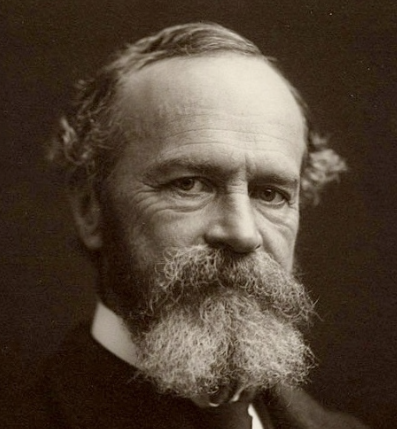
Truth lives, in fact, for the most part on a credit system. Our thoughts and beliefs 'pass,' so long as nothing challenges them, just as bank-notes pass so long as nobody refuses them.
▼
Source
source
Lecture VI, Pragmatism's Conception of Truth
CivilSimian.com created by AxiomaticPanic, CivilSimian, Kalokagathia