

5 months 1 week ago
The issue over there being classes seems more a question of convenient conceptual scheme; the issue over there being centaurs, or brick houses on Elm Street, seems more a question of fact. But I have been urging that this difference is only one of degree, and that it turns upon our vaguely pragmatic inclination to adjust one strand of the fabric of science rather than another in accommodating some particular recalcitrant experience. Conservatism figures in such choices, and so does the quest for simplicity.
▼
Source
source
"Two Dogmas of Empiricism"

6 months 3 weeks ago
Young man! Deny yourself satisfaction (of amusement, of debauchery, of love, etc.), not with the Stoical intention of complete abstinence, but with the refined Epicurean intention of having in view an ever-growing pleasure. This stinginess with the cash of your vital urge makes you definitely richer through the postponement of pleasure, even if you should, for the most part, renounce the indulgence of it until the end of your life. The awareness of having pleasure under your control is, like everything idealistic, more fruitful and more abundant than everything that satisfies the sense through indulgence because it is thereby simultaneously consumed and consequently lost from the aggregate of totality.
▼
Source
source
Kant, Immanuel (1996), page 54.

6 months 3 weeks ago
Some old poet's grand imagination is imposed on us as adamantine everlasting truth, and God's own word! Pythagoras says, truly enough, "A true assertion respecting God, is an assertion of God"; but we may well doubt if there is any example of this in literature.
7 months 2 weeks ago
We must consider both the ultimate end and all clear sensory evidence, to which we refer our opinions; for otherwise everything will be full of uncertainty and confusion.

7 months 2 days ago
There is a plague on Man, the opinion that he knows something.

4 months 1 week ago
Economic reforms based on the idea of limitless growth in a limited world, can only be maintained by the powerful grabbing the resources of the vulnerable. The resource grab that is essential for "growth" creates a culture of rape-the rape of the earth, of local self-reliant economies, and of women.
▼
Source
source
On economic reforms in India and rape in India, from "Vandana Shiva: Our Violent Economy is Hurting Women " article in Yes Magazine

6 months 3 weeks ago
As the strata of the earth preserve in succession the living creatures of past epochs, so the shelves of libraries preserve in succession the errors of the past and their expositions, which like the former were very lively and made a great commotion in their own age but now stand petrified and stiff in a place where only the literary palaeontologist regards them.
▼
Source
source
Vol. 2 "On Books and Writing" as translated in Essays and Aphorisms (1970), as translated by R. J. Hollingdale

3 months 2 days ago
Life after all is made up of eating and sleeping, of meeting and saying good-by to friends, of reunions and farewell parties, of tears and laughter, of having a haircut once in two weeks, of watering a potted flower and watching one's neighbor fall off his roof.
▼
Source
source
p. 202

5 months 2 weeks ago
Why do ye also transgress the commandment of God by your tradition? For God commanded, saying, Honour thy father and mother: and, He that curseth father or mother, let him die the death. But ye say, Whosoever shall say to his father or his mother, It is a gift, by whatsoever thou mightest be profited by me; And honour not his father or his mother, he shall be free. Thus have ye made the commandment of God of none effect by your tradition. Ye hypocrites, well did Esaias prophesy of you, saying, This people draweth nigh unto me with their mouth, and honoureth me with their lips; but their heart is far from me. But in vain they do worship me, teaching for doctrines the commandments of men.
▼
Source
source
15:3-9 (KJV)

2 months 3 weeks ago
Of my grandfather Verus I have learned to be gentle and meek, and to refrain from all anger and passion... I have learned both shamefastness and manlike behaviour. Of my mother I have learned to be religious, and bountiful; and to forbear, not only to do, but to intend any evil; to content myself with a spare diet, and to fly all such excess as is incidental to great wealth.
▼
Source
source
I, 1


2 months 3 weeks ago
To begin an affair of that kind now, and carry it on so long a time in form, is by no means a proper plan ... whatever assurances I may give her in private of my esteem for her, or whatever assurances I may ask in return from her, depend on it - they must be kept in private. Necessity will oblige me to proceed in a method which is not generally thought fair; that of treating with a ward before obtaining the approbation of her guardian. I say necessity will oblige me to it, because I never can bear to remain in suspense so long a time. If I am to succeed, the sooner I know it, the less uneasiness I shall have to go through. If I am to meet with a disappointment, the sooner I know it, the more of life I shall have to wear it off: and if I do meet with one, I hope in God, and verily believe; it will be the last.
▼
Source
source
Letter to John Page (15 July 1763); published in The Works of Thomas Jefferson
6 months 1 week ago
Lycurgus the Lacedæmonian brought long hair into fashion among his countrymen, saying that it rendered those that were handsome more beautiful, and those that were deformed more terrible. To one that advised him to set up a democracy in Sparta, "Pray," said Lycurgus, "do you first set up a democracy in your own house."
▼
Source
source
57 Lycurgus
2 months 3 weeks ago
Look within. Within is the fountain of the good, and it will ever bubble up, if thou wilt ever dig.
▼
Source
source
VII, 59

6 months 3 weeks ago
Mark what 'tis his mind aims at in the question, and not what words he expresses it in: and when you have informed and satisfied him in that, you shall see how his thoughts will enlarge themselves, and how by fit answers he may be led on farther than perhaps you could have imagine. For knowledge is grateful to the understanding, as light to the eyes.
▼
Source
source
Sec. 118

5 months 6 days ago
Women dream till they have no longer the strength to dream; those dreams against which they so struggle, so honestly, vigorously, and conscientiously, and so in vain, yet which are their life, without which they could not have lived; those dreams go at last. All their plans and visions seem vanished, and they know not where; gone, and they cannot recall them. They do not even remember them. And they are left without the food of reality or of hope. Later in life, they neither desire nor dream, neither of activity, nor of love, nor of intellect. The last often survives the longest. They wish, if their experiences would benefit anybody, to give them to someone. But they never find an hour free in which to collect their thoughts, and so discouragement becomes ever deeper and deeper, and they less and less capable of undertaking anything.

7 months 3 weeks ago
When a war breaks out, people say: "It's too stupid; it can't last long." But though the war may well be "too stupid," that doesn't prevent its lasting. Stupidity has a knack of getting its way; as we should see if we were not always so much wrapped up in ourselves.
7 months 1 week ago
I will speak in a low voice, just so as to let the judges hear me. For men are not wanting who would be glad to excite that people against me and against every eminent man; and I will not assist them and enable them to do so more easily.
▼
Source
source
Cicero, The Orations of Marcus Tullius Cicero; Translation by C.D. Yonge., 1856.

6 months 3 weeks ago
Hatred comes from the heart; contempt from the head; and neither feeling is quite within our control.
▼
Source
source
"Psychological Observations"
6 months 1 week ago
Alcibiades had a very handsome dog, that cost him seven thousand drachmas; and he cut off his tail, "that," said he, "the Athenians may have this story to tell of me, and may concern themselves no further with me."
▼
Source
source
50 Alcibiades

4 months 4 weeks ago
It is indeed a matter of great difficulty to discover, and effectually to distinguish, the true motions of particular bodies from the apparent; because the parts of that immovable space, in which those motions are performed, do by no means come under the observation of our senses. Yet the thing is not altogether desperate; for we have some arguments to guide us, partly from the apparent motions, which are the differences of the true motions; partly from the forces, which are the causes and effects of the true motions.
▼
Source
source
Definitions - Scholium

5 months 3 weeks ago
And now once again I asked myself the question: do I love her? And once more I could not answer, that is to say, again, for the hundredth time, I answered that I hated her.

5 months 3 weeks ago
You can never plan the future by the past.
▼
Source
source
Letter to a Member of the National Assembly (1791), Volume IV, p. 55.

5 months 1 week ago
I have told you that... we know nothing save what we have first, in one way or another, desired; and it may even be added that we can know nothing well save what we love, save what we pity.

6 months 3 weeks ago
Every really able man, in whatever direction he work,-a man of large affairs, an inventor, a statesman, an orator, a poet, a painter,-if you talk sincerely with him, considers his work, however much admired, as far short of what it should be.
▼
Source
source
Immortality
4 months 2 weeks ago
All who have meant good work with their whole hearts, have done good work, although they may die before they have the time to sign it. Every heart that has beat strong and cheerfully has left a hopeful impulse behind it in the world, and bettered the tradition of mankind. And even if death catch people, like an open pitfall, and in mid-career, laying out vast projects, and planning monstrous foundations, flushed with hope, and their mouths full of boastful language, they should be at once tripped up and silenced: is there not something brave and spirited in such a termination? and does not life go down with a better grace, foaming in full body over a precipice, than miserably straggling to an end in sandy deltas?
▼
Source
source
316


3 months 1 week ago
Manners are the shadows of virtues; the momentary display of those qualities which our fellow creatures love, and respect.
▼
Source
source
Sermon XII, Sermons
6 months 3 weeks ago
It is dangerous to be right in matters where established men are wrong.
▼
Source
source
Le Siècle de Louis XIV (1752) Fontenelle Note: The most frequently attributed variant of this quote is: It is dangerous to be right when the government is wrong.
5 months 3 weeks ago
The End of the Life of Mankind on Earth is this,-that in this Life they may order all their relations with FREEDOM according to REASON.
▼
Source
source
p. 5
7 months 3 weeks ago
He marveled at the strange blindness by which men, though they are so alert to what changes in themselves, impose on their friends an image chosen for them once and for all. He was being judged by what he had been. Just as dogs don't change character, men are dogs to one another.

5 months 2 weeks ago
I am the way and the truth and the life. No one comes to the Father except through me.
▼
Source
source
14:06
5 months 2 weeks ago
Can the children of the bridechamber mourn, as long as the bridegroom is with them? but the days will come, when the bridegroom shall be taken from them, and then shall they fast. No man putteth a piece of new cloth unto an old garment, for that which is put in to fill it up taketh from the garment, and the rent is made worse. Neither do men put new wine into old bottles: else the bottles break, and the wine runneth out, and the bottles perish: but they put new wine into new bottles, and both are preserved.
▼
Source
source
9:15-17 (KJV)

5 months 2 weeks ago
When you have understood that nothing is, that things do not even deserve the status of appearances, you no longer need to be saved, you are saved, and miserable forever.
6 months 6 days ago
Choose always the way that seems the best, however rough it may be; custom will soon render it easy and agreeable.
▼
Source
source
As quoted in A Dictionary of Thoughts: Being a Cyclopedia of Laconic Quotations from the Best Authors of the World, both Ancient and Modern (1908) by Tyron Edwards, p. 101
5 months 2 weeks ago
While they denounce as subversive anarchy signs of independent thought, of thinking for themselves on the part of others lest such thought disturb the conditions by which they profit, they think quite literally for themselves, that is of themselves.
▼
Source
source
Human Nature and Conduct (1921) Part 1 Section IV.
7 months 3 weeks ago
"What on earth prompted you to take a hand in this?""I don't know. My... my code of morals, perhaps.""Your code of morals. What code, if I may ask?" "Comprehension."
3 months 2 weeks ago
It is by logic that we prove, but by intuition that we discover. To know how to criticize is good, to know how to create is better.
▼
Source
source
Part II. Ch. 2 : Mathematical Definitions and Education, p. 129

5 months 1 week ago
Violence may capture space, but it does not create space.
5 months 1 week ago
Is there not therefore rational necessity, but vital anguish that impels us to believe in God. And to believe in God - I must reiterate it yet again - is, before all and above all, to feel a hunger for God, a hunger for divinity, to be sensible to his lack and absence, to wish that God may exist. And it is the wish to save the human finality of the Universe. For one might even come to resign oneself to being absorbed by God, if it be that our consciousness is based upon Consciousness, if consciousness is the end of the Universe.

6 months 3 weeks ago
The fact that all Mathematics is Symbolic Logic is one of the greatest discoveries of our age; and when this fact has been established, the remainder of the principles of mathematics consists in the analysis of Symbolic Logic itself.
▼
Source
source
Principles of Mathematics (1903), Ch. I: Definition of Pure Mathematics, p. 5

3 months 2 days ago
If we should classify one by one all those who hate others and injure others, should we find them to be universal in love or partial? Of course we should say they are partial. Now, since partiality against one another is the cause of the major calamities in the empire, then partiality is wrong.
▼
Source
source
Book 4; Universal Love III

5 months 1 week ago
It is impossible to feel equal respect for things that are in fact unequal unless the respect is given to something that is identical in all of them. Men are unequal in all their relations with the things of this world, without exception. The only thing that is identical in all men is the presence of a link with the reality outside the world. All human beings are absolutely identical in so far as they can be thought of as consisting of a centre, which is an unquenchable desire for good, surrounded by an accretion of psychical and bodily matter.
5 months 3 weeks ago
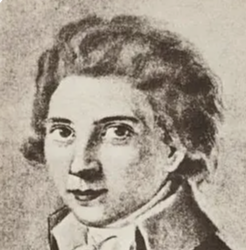
Religion is usually nothing but a supplement to or even a substitute for education, and nothing is religious in the strict sense which is not a product of freedom.
▼
Source
source
"Selected Aphorisms from the Athenaeum (1798)", Dialogue on Poetry and Literary Aphorisms, Ernst Behler and Roman Struc, trans. (Pennsylvania University Press:1968) #233

5 months 1 week ago
Religion, mysticism and magic all spring from the same basic 'feeling' about the universe: a sudden feeling of meaning, which human beings sometimes 'pick up' accidentally, as your radio might pick up some unknown station. Poets feel that we are cut off from meaning by a thick, lead wall, and that sometimes for no reason we can understand the wall seems to vanish and we are suddenly overwhelmed with a sense of the infinite interestingness of things.
▼
Source
source
p. 28
6 months 3 weeks ago
None believeth in the soul of man, but only in some man or person old and departed.
▼
Source
source
p. 25
6 months 2 weeks ago
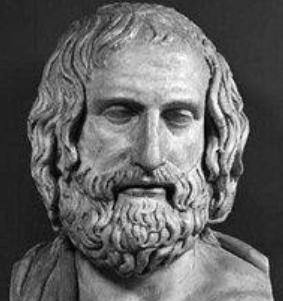
The sun provides the moon with its brightness.
▼
Source
source
Fragment in Plutarch De facie in orbe lunae, 929b, as quoted in The Riverside Dictionary of Biography (2005), p. 23
CivilSimian.com created by AxiomaticPanic, CivilSimian, Kalokagathia