


6 months 2 weeks ago
Form no covetous desire, so that the demon of greediness may not deceive thee, and the treasure of the world may not be tasteless to thee.
7 months 3 weeks ago
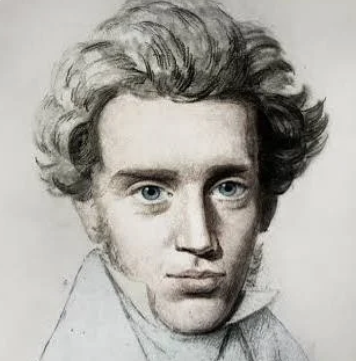
A genius and an Apostle are qualitatively different, they are definitions which each belong in their own spheres: the sphere of immanence, and the sphere of transcendence.

7 months 2 days ago
By God's grace, I know Satan very well. If Satan can turn God's Word upside down and pervert the Scriptures, what will he do with my words -- or the words of others?
▼
Source
source
Confession Concerning Christ's Supper, Part 3. Robert E. Smith, tr. Dr. Martin Luthers Werke: Kritische Gesamtsusgabe. (Weimar: Herman Boehlaus Nachfolger, 1909), pp. 499-500.

3 months 1 week ago
Virtue alone affords everlasting and peace-giving joy; even if some obstacle arise, it is but like an intervening cloud, which floats beneath the sun but never prevails against it.
6 months 2 weeks ago
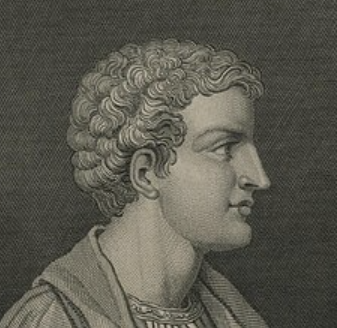
Life grants nothing to us mortals without hard work.
▼
Source
source
Book I, satire ix, line 59
3 months 2 weeks ago
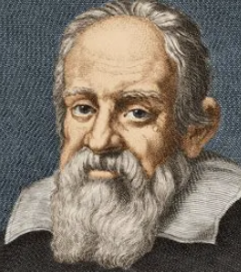
Whence do you have it that the terrestrial globe is so heavy? For my part, either I do not know what heaviness is, or the terrestrial globe is neither heavy nor light, as likewise all other globes of the universe. Heaviness to me (and I believe to Nature) is that innate tendency by which a body resists being moved from its natural place and by which, when forcibly removed therefrom, it spontaneously returns there. Thus a bucketful of water raised on high and set free, returns to the sea; but who will say that the same water remains heavy in the sea, when being set free there, does not move?
5 months 1 day ago
Probability fractions arise from our knowledge and from our ignorance.
▼
Source
source
Chapter 14, Equipossibility, p. 132.

5 months 3 weeks ago
By means of the new education we want to mould the Germans into a corporate body, which shall be stimulated and animated in all its individual members by the same interest.
▼
Source
source
Introduction p. 15

6 months 3 weeks ago
Neither of us cares a straw for popularity. A proof of this is for example, that, because of aversion to any personality cult, I have never permitted the numerous expressions of appreciation from various countries with which I was pestered during the existence of the International to reach the realm of publicity, and have never answered them, except occasionally by a rebuke. When Engels and I first joined the secret Communist Society we made it a condition that everything tending to encourage superstitious belief in authority was to be removed from the statutes.
▼
Source
source
Remarks against personality cults from a letter to W. Blos (10 November 1877).

3 months 2 weeks ago
No place in the world has had a comparable role to that of the nameless mountain or valley where mankind first attained self-consciousness. Let us be proud ... of the old patriarchs who, at the foot of Imaiis, laid the foundations of what we are and of what we shall become.
▼
Source
source
Poliakov, L. (1974). The Aryan myth : a history of racist and nationalist ideas in Europe page 208

2 months 3 weeks ago
Where any work can be done conformably to the reason which is common to gods and men, there we have nothing to fear; for where we are able to get profit by means of the activity which is successful and proceeds according to our constitution, there no harm is to be suspected.
▼
Source
source
VII, 53

6 months 3 weeks ago
Yet a man may love a paradox, without losing either his wit or his honesty.
▼
Source
source
"Walter Savage Landor", from The Dial, xii, 1841
5 months 2 weeks ago
So long as a man's power, that is, his capacity to realize what he has in mind, is bound to the goal, to the work, to the calling, it is, considered in itself, neither good nor evil, it is only a suitable or unsuitable instrument. But as soon as this bond with the goal is broken off or loosened, and the man ceases to think of power as the capacity to do something, but thinks of it as a possession, that is, thinks of power in itself, then his power, being cut off and self-satisfied, is evil; it is power withdrawn from responsibility, power which betrays the spirit, power in itself.
▼
Source
source
p. 152
6 months 3 weeks ago
None shall rule but the humble, And none but Toil shall have.
▼
Source
source
Boston Hymn

5 months 2 weeks ago
There is an innate anxiety which supplants in us both knowledge and intuition.
3 months 2 weeks ago
Before a man can do things there must be things he will not do.
▼
Source
source
Eugene H. Peterson, A Long Obedience in the Same Direction (IVP, 1980), Ch 2

7 months 3 weeks ago
The absurd is the essential concept and the first truth.
3 months 2 weeks ago
All truths are easy to understand once they are discovered; the point is to discover them.
▼
Source
source
As quoted in Angels in the workplace: stories and inspirations for creating a new world of work (1999) by Melissa Giovagnoli
3 months 1 week ago
If the church had deadly sins, the state has capital crimes; if the one had heretics, the other has traitors; the one ecclesiastical penalties, the other criminal penalties; the one inquisitorial processes, the other fiscal; in short, there sins, here crimes, there inquisition and here - inquisition. Will the sanctity of the state not fall like the church's? The awe of its laws, the reverence for its highness, the humility of its 'subjects', will this remain? Will the 'saint's' face not be stripped of its adornment?
▼
Source
source
Cambridge 1995, p. 211, 212

4 months 3 weeks ago
The pre-atomist multisensory void was an animate, pulsating, and moving vibrant interval, neither container nor contained, acoustic space penetrated by tactility.
▼
Source
source
p. 34

6 months 3 weeks ago
Man is a credulous animal, and must believe something; in the absence of good grounds for belief, he will be satisfied with bad ones.

2 months 3 weeks ago
Man... whatever the origin of his soul, if it is pure, noble, and lofty, it is a beautiful soul which dignifies the man endowed with it.
6 months 4 weeks ago
In manufactures, a very small advantage will enable foreigners to undersell our own workmen, even in the home market. It will require a very great one to enable them to do so in the rude produce of the soil. If the free importation of foreign manufactures were permitted, several of the home manufactures would probably suffer, and some of them, perhaps, go to ruin altogether, and a considerable part of the stock and industry at present employed in them, would be forced to find out some other employment. But the freest importation of the rude produce of the soil could have no such effect upon the agriculture of the country.
▼
Source
source
Chapter II
4 months 3 weeks ago
Dualism makes the problem insoluble; materialism denies the existence of any phenomenon to study, and hence of any problem.
▼
Source
source
Consciousness and Language (2002) p. 47.
7 months 3 weeks ago
Since the science of nature is conversant with magnitudes, motion, and time, each of which must necessarily be either infinite or finite...we should speculate the infinite, and consider whether it is or not; and if it is what it is. ...All those who appear to have touched on a philosophy of this kind... consider it as a certain principle of beings. Some, indeed, as the Pythagoreans and Plato, consider it, per se, not as being an accident to any thing else, but as having an essential subsistence... the Pythagoreans... consider the infinite as subsisting in sensibles; for they do not make number to be separate; and they assert that what is beyond the heavens is infinite; but Plato says that beyond the heavens there is not any body, nor ideas, because these are no where: he affirms, however, that the infinite is both in sensibles, and in ideas. ...Plato establishes two infinities, viz. the great and the small.

5 months 3 weeks ago
I gave up caring about anything, and all the problems disappeared. And it was after that that I found out the truth. I learnt the truth last November - on the third of November, to be precise - and I remember every instant since.
5 months 2 weeks ago
Although a poem be not made by counting of syllables upon the fingers, yet "numbers" is the most poetical synonym we have for verse, and "measure" the most significant equivalent for beauty, for goodness, and perhaps even for truth. Those early and profound philosophers, the followers of Pythagoras, saw the essence of all things in number, and it was by weight, measure, and number, as we read in the Bible, that the Creator first brought Nature out of the void.
▼
Source
source
Interpretations of Poetry and Religion (1900), p. 251
7 months 3 weeks ago
What will be left of the power of example if it is proved that capital punishment has another power, and a very real one, which degrades men to the point of shame, madness, and murder?

4 months 3 weeks ago
Remember then: there is only one time that is important-Now! It is the most important time because it is the only time when we have any power. The most necessary man is he with whom you are, for no man knows whether he will ever have dealings with any one else: and the most important affair is, to do him good, because for that purpose alone was man sent into this life!
▼
Source
source
Part VII: Stories Given to Aid Persecuted Jews (1903) "Three Questions", translated by Louise and Aylmer Maude, p271.
6 months 3 weeks ago
I have lived an honest and useful life to mankind; my time has been spend in doing good and I die in perfect composure and resignation to the will of my Creator, God.
▼
Source
source
Last will (1809), as quoted in The Fortnightly Review, vol. 31, pp. 398-399
5 months 2 weeks ago
We suppose, it would seem, that concepts grow in the individual mind like leaves on a tree, and we think to discover their nature by studying their growth; we seek to define them psychologically, in terms of the human mind. But this account makes everything subjective, and if we follow it through to the end, does away with truth. What is known as the history of concepts is really a history either of our knowledge of concepts or of the meanings of words.
▼
Source
source
Translation J. L. Austin (Oxford, 1950) as quoted by Stephen Toulmin, Human Understanding: The Collective Use and Evolution of Concepts (1972) Vol. 1, p. 56.

5 months 3 weeks ago
Nothing less will content me, than whole America.
4 months 3 days ago
To recognize a difficulty is not to solve it.
▼
Source
source
Chapter 1, The Faces of Silence, p. 9
3 months 3 weeks ago
Love, in spite of the romantics, is not self-sustaining; it endures only when the lovers love many things together, and not merely each other.
▼
Source
source
Ch. XIV: "Love in the Great Society", §6, pp. 308-309

6 months 3 weeks ago
All that we call human history-money, poverty, ambition, war, prostitution, classes, empires, slavery-the long terrible story of man trying to find something other than God which will make him happy.
▼
Source
source
Book II, Chapter 3, "The Shocking Alternative"
6 months 2 weeks ago
Mind is infinite and self-ruled, and is mixed with nothing, but is alone itself by itself.
▼
Source
source
Frag. B 12, quoted in John Burnet's Early Greek Philosophy, (1920), Chapter 6.
3 months 3 weeks ago
Some people steal from others, or defraud them, or enslave them, seizing their product and preventing them from living as they choose, or forcibly exclude others from competing in exchanges. None of these are permissible modes of transition from one situation to another.
▼
Source
source
Ch. 7 : Distributive Justice, Section I, The Entitlement Theory, p. 152

4 months 1 day ago
The whole world is in some ways better than it's ever been in the past. And, indeed, I think for many people the meaning of their lives really depends on that belief. If you strip out that belief in progress, if you start thinking of the world in the way in which the ancient pre-Christian Europeans did, or the Buddhists and the Hindus or the Taoists of China do, many people think that's a kind of despair. I don't know how many times I've been told "If I thought that, John, I wouldn't get up in the morning" and "If I agreed with you, John, that history had no pattern of that kind, I wouldn't get up in the morning." I said, "Well, stay in bed a bit longer, you might find a better reason for getting up."
▼
Source
source
Quoted in John Gray at the Writers' Festival, part 1," The Philosopher's Zone, a discussion with Alan Saunders on ABC Radio National
6 months 4 weeks ago
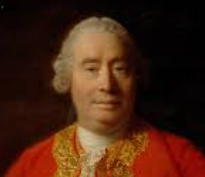
With regard to politics and the character of princes and great men, I think I am very moderate. My views of things are more conformable to Whig principles; my representation of persons to Tory prejudices. Nothing can so much prove that men commonly regard more persons than things, as to find that I am commonly numbered among the Tories.
▼
Source
source
E. C. Mossner, Life of David Hume (Clarendon Press, 2001), p. 311.
5 months 2 weeks ago
The teacher of love teaches struggle. The teacher of lifeless isolation from the world teaches peace.

6 months 3 weeks ago
Christianity taught only what the whole of Asia knew already long before and even better.
▼
Source
source
quoted in Londhe, S. (2008). A tribute to Hinduism: Thoughts and wisdom spanning continents and time about India and her culture. New Delhi: Pragun Publication.
4 months 6 days ago
Compassion is the desire that moves the individual self to widen the scope of its self-concern to embrace the whole of the universal self.
▼
Source
source
The Toynbee-Ikeda Dialogue: Man Himself Must Choose

4 months 1 week ago
I have repeatedly stressed that the rape of the Earth and rape of women are intimately linked - both metaphorically, in shaping world-views, and materially, in shaping women's everyday lives. The deepening economic vulnerability of women makes them more vulnerable to all forms of violence, including sexual assault, as we found out during a series of public hearings on the impact of economic reforms on women organized by the National Commission on Women and the Research Foundation for Science, Technology and Ecology.
▼
Source
source
Ecofeminism, by Maria Mies and Vandana Shiva, 1993, (full text pdf)
6 months 3 weeks ago
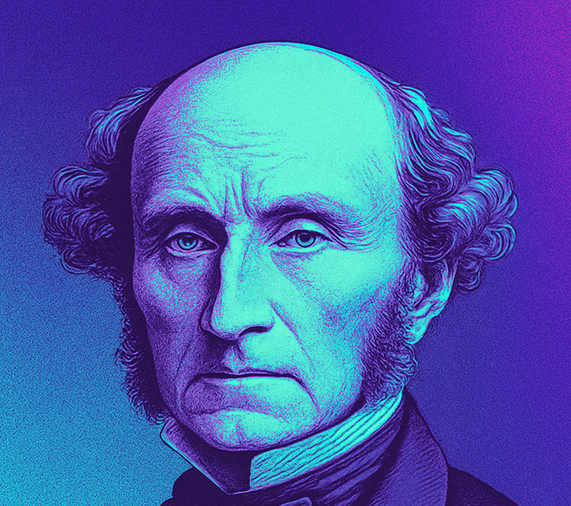
It is not because men's desires are strong that they act ill; it is because their consciences are weak.
▼
Source
source
On Liberty, 1859
6 months 3 weeks ago
I knew a parson who frightened his congregation terribly by telling them that the second coming was very imminent indeed, but they were much consoled when they found that he was planting trees in his garden.
▼
Source
source
"Defects in Christ's Teaching"


6 months 3 weeks ago
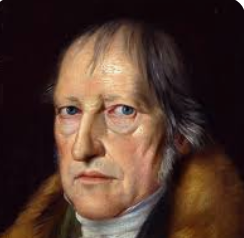
Reading the morning newspaper is the realist's morning prayer. One orients one's attitude toward the world either by God or by what the world is. The former gives as much security as the latter, in that one knows how one stands.
▼
Source
source
Miscellaneous writings of G.W.F. Hegel, translation by Jon Bartley Stewart, Northwestern University Press, 2002, page 247.
6 months 3 weeks ago
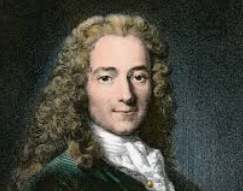
Whatever you do, crush the infamous thing, and love those who love you.
▼
Source
source
Letter to Jean le Rond d'Alembert (28 November 1762);

6 months 3 weeks ago
There are many difficulties impeding the rapid spread of reasonableness. One of the main difficulties is that it always takes two to make a discussion reasonable. Each of the parties must be ready to learn from the other. You cannot have a rational discussion with a man who prefers shooting you to being convinced by you.
6 months 3 weeks ago
When the intensity of emotional conviction subsides, a man who is in the habit of reasoning will search for logical grounds in favour of the belief which he finds in himself.
▼
Source
source
Ch. 1: Mysticism and Logic
CivilSimian.com created by AxiomaticPanic, CivilSimian, Kalokagathia