

5 months 3 days ago
Everything has two handles, the one by which it may be carried, the other by which it cannot. If your brother acts unjustly, don't lay hold on the action by the handle of his injustice, for by that it cannot be carried; but by the opposite, that he is your brother, that he was brought up with you; and thus you will lay hold on it, as it is to be carried.
▼
Source
source
(43).
4 weeks 1 day ago
Listen intently to a voice singing without words. It may charm you into crying, force you to dance, fill you with rage, or make you jump for joy. You can't tell where the music ends and the emotions begin, for the whole thing is a kind of music-the voice playing on your nerves as the breath plays on a flute. All experience is just that, except that its music has many more dimensions than sound. It vibrates in the dimensions of sight, touch, taste, and smell, and in the intellectual dimension of symbols and words-all evoking and playing upon each other.
▼
Source
source
p. 95

3 months 1 day ago
The great and inspiring aims of the Revolution became so clouded with and obscured by the methods used by the ruling political power that it was hard to distinguish what was temporary means and what final purpose. Psychologically and socially the means necessarily influence and alter the aims. The whole history of man is continuous proof of the maxim that to divest one's methods of ethical concepts means to sink into the depths of utter demoralization. In that lies the real tragedy of the Bolshevik philosophy as applied to the Russian Revolution. May this lesson not be in vain.
3 months 2 weeks ago
The abolition of private property has become not only possible but absolutely necessary. ... The outcome can only be the victory of the proletariat.

3 months 2 weeks ago
Thanks to depression - that alpinism of the indolent - we scale every summit and daydream over every precipice from our bed.
4 months 1 week ago
That is what is meant, I think by the allegation that it is good simply to be alive, even if one is undergoing terrible experiences. The situation is roughly this: There are elements which, if added to one's experience, make life better; there are other elements which, if added to one's experience, make life worse. But what remains when these are set aside is not merely neutral: it is emphatically positive. Therefore life is worth living even when the bad elements of experience are plentiful, and the good ones too meager to outweigh the bad ones on their own. The additional positive weight is supplied by experience itself, rather than by any of its contents.
▼
Source
source
"Death", p. 2. This passage not present in the 1970 version (Nous, IV, no. 1), but present in the 1979 version.
1 month 1 week ago
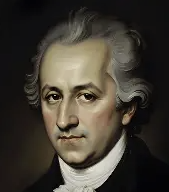
One of the most striking signs of the decay of art is the intermixing of different genres.
▼
Source
source
Propylaea (1798) Introduction

2 weeks 2 days ago
Frenchmen, it was to the noise of hellish songs, the blasphemy of atheism, the cries of death, and the prolonged moans of slaughtered innocence, it was by the light of flames, on the debris of throne and altar, watered by the blood of the best of kings and an innumerable host of other victims, it was by the contempt of morality and the established faith, it was in the midst of every crime that your seducers and your tyrants founded what they call your liberty.
▼
Source
source
Chapter X, p. 84

3 months 1 week ago
If you have money, don't lend it at interest. Rather, give it to someone from whom you won't get it back.

4 months 3 weeks ago
Books must follow sciences, and not sciences books.
▼
Source
source
Proposition touching Amendment of Laws
4 months 1 week ago
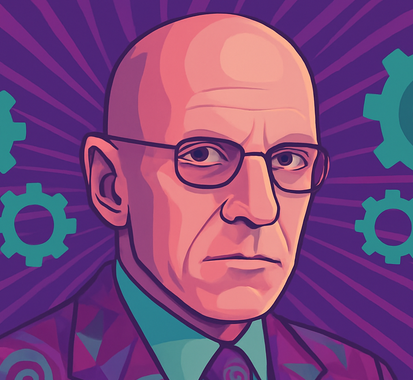
The perfect disciplinary apparatus would make it possible for a single haze to see everything constantly. A central point would be both the source of light illuminating everything, and a locus of convergence for everything that must be known: a perfect eye that nothing would escape and a centre towards which all gazes would be turned.
▼
Source
source
Part Three, The Means of Correct Training

3 months 1 week ago
Society is eliminating the prerogatives and privileges of feudal. aristocratic culture together with its content. The fact that the transcending truths of the fine arts, the aesthetics of life and thought, were accessible only to the few wealthy and educated was the fault of a repressive society. But this fault is not corrected by paperbacks, general education, long-playing records, and the abolition of formal dress in the theater and concert hall. The cultural privileges expressed the injustice of freedom, the contradiction between ideology and reality, the separation of intellectual from material productivity; but they also provided a protected realm in which the tabooed truths could survive in abstract integrity-remote from the society which suppressed them.
▼
Source
source
pp. 64-65

3 months 4 days ago
It is only by entering the transcendental, the supernatural, the authentically spiritual order that man rises above the social. Until then, whatever he may do, the social is transcendent in relation to him.
▼
Source
source
p. 123

3 months 3 days ago
The order of nature cannot be justified by the mere observation of nature. For there is nothing in the present fact which inherently refers either to the past or to the future.... It illustrates the anti-rationalism of the scientific public that, when Hume did appear, it was only the religious implications of his philosophy which attracted attention. This was because the clergy were in principle rationalists, whereas the men of science were content with a simple faith in the order of nature.
▼
Source
source
Ch. 3: "The Century of Genius", p. 73

3 months 5 days ago
Everything in me that conspires to break the unity and continuity of my life conspires to destroy me and consequently to destroy itself. Every individual in a people who conspires to break the spiritual unity and continuity of that people tends to destroy it and to destroy himself as a part of that people.

1 month 2 weeks ago
Every identity, such (third) critics say, even the multitude, must be defined by its remained, those outside of it, call them excluded, the abject, or the subaltern. ... There can certainly be points or nodes outside a network but none are necessarily outside. Its boundaries are indefinite and open. ... None is necessarily excluded but this inclusion is not guaranteed: the expansion of the common is a practical, political manner.
▼
Source
source
226


2 months 2 weeks ago
Decisive actions are often taken in a moment and without any conscious deliverance from the rational parts of man.
▼
Source
source
The Rajah's Diamond, Story of the Young Man in Holy Orders.
2 weeks 5 days ago
Her green eyes fluttered swiftly twice or thrice, then glazed,her mouth gaped open, bleating, then her jaws hung looseand retched up all her soul in lumps of clotting blood.
▼
Source
source
Death of Phida, Book VIII, line 410

2 months 2 weeks ago
Primitivism has become the vulgar cliche of much modern art and speculation.
▼
Source
source
(p. 77)
4 months 3 weeks ago
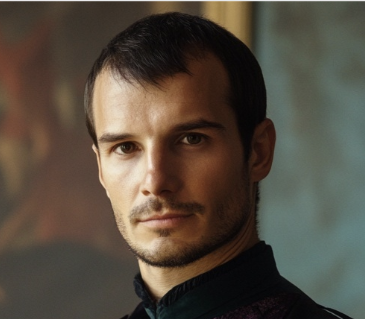
In judging policies we should consider the results that have been achieved through them rather than the means by which they have been executed.
▼
Source
source
From an undated letter to Piero Soderini (translated here by Dr. Arthur Livingston), in The Living Thoughts of Machiavelli, by Count Carlo Sforza, published by Cassell, London (1942), p. 85
4 months 1 week ago
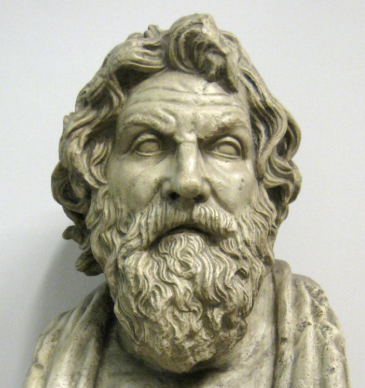
Being asked what learning is the most necessary, he replied, "How to get rid of having anything to unlearn.
▼
Source
source
" § 7

4 months 2 weeks ago
...the reality of society involves the socialization of certain unrealities.
▼
Source
source
p. 455
3 months 2 weeks ago
One of the greatest delusions of the average man is to forget that life is death's prisoner.

1 month 1 week ago
"Do the Duty which lies nearest thee," which thou knowest to be a Duty! Thy second Duty will already have become clearer.
▼
Source
source
Bk. II, ch. 9.
4 months 2 weeks ago
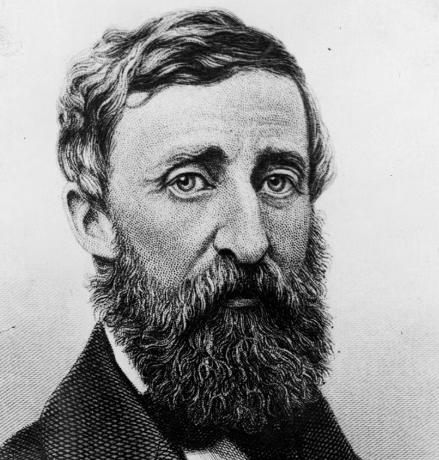
When our life ceases to be inward and private, conversation degenerates into mere gossip. We rarely meet a man who can tell us any news which he has not read in a newspaper, or been told by his neighbor; and, for the most part, the only difference between us and our fellow is, that he has seen the newspaper, or been out to tea, and we have not. In proportion as our inward life fails, we go more constantly and desperately to the post-office.
▼
Source
source
p. 491

4 months 2 weeks ago
If I had had more time, this letter would have been shorter.
▼
Source
source
Written by Voltaire in an over-long letter to a friend, quoted to A. P. Martinich in Philosophical Writing: An Introduction, Note to the Second Edition, 1996
3 months 2 weeks ago
The little world of childhood with its familiar surroundings is a model of the greater world. The more intensively the family has stamped its character upon the child, the more it will tend to feel and see its earlier miniature world again in the bigger world of adult life. Naturally this is not a conscious, intellectual process.
▼
Source
source
The Theory of Psychoanalysis

5 months 2 weeks ago
Printing will tell you such useful things and such interesting things that not being able to read would be as bad as not being able to see.

4 months 2 weeks ago
And the final event to himself has been, that, as he rose like a rocket, he fell like the stick.
▼
Source
source
On Edmund Burke's reactions to the American and French revolutions.
4 months 2 weeks ago
The little honesty that exists among authors is discernible in the unconscionable way they misquote from the writings of others.

2 months 4 weeks ago
Actual aristocracy cannot be abolished by any law: all the law can do is decree how it is to be imparted and who is to acquire it.
▼
Source
source
L 44
4 months 2 weeks ago
I know. I know that I shall never again meet anything or anybody who will inspire me with passion. You know, it's quite a job starting to love somebody. You have to have energy, generosity, blindness. There is even a moment, in the very beginning, when you have to jump across a precipice: if you think about it you don't do it. I know I'll never jump again.
3 months 1 week ago
Outside the academic establishment, the "far-reaching change in all our habits of thought" is more serious. It serves to coordinate ideas and goals with those exacted by the prevailing system, to enclose them in the system, and to repel those which are irreconcilable with the system. The reign of such a one-dimensional reality does not mean that materialism rules, and that the spiritual, metaphysical, and bohemian occupations are petering out. On the contrary, there is a great deal of "Worship together this week," "Why not try God," Zen, existentialism, and beat ways of life, etc. But such modes of protest and transcendence are no longer contradictory to the status quo and no longer negative. They are rather the ceremonial part of practical behaviorism, its harmless negation, and are quickly digested by the status quo as part of its healthy diet.
▼
Source
source
pp. 13-14
3 months 4 days ago
Only he who has measured the dominion of force, and knows how not to respect it, is capable of love and justice.
▼
Source
source
p. 192
1 month 3 weeks ago
Progress in civilization seems possible only in interludes when history is idling.
▼
Source
source
An Old Chaos: The Emperor's Tomb (p. 35)
2 weeks 1 day ago
Observe always that everything is the result of a change, and get used to thinking that there is nothing Nature loves so well as to change existing forms and to make new ones like them.
▼
Source
source
IV, 36
3 weeks 5 days ago
Never express yourself more clearly than you are able to think.
▼
Source
source
As quoted in Values of the Wise : Humanity's Highest Aspirations (2004) by Jason Merchey, p. 63
4 months 2 weeks ago
To be aware of limitations is already to be beyond them.
▼
Source
source
As quoted in Inwardness and Existence (1989) by Walter A. Davis, p. 18

5 months 2 weeks ago
If God stops a man on the road, and calls him with a revelation and sends him armed with divine authority among men, they say to him; from whom dost thou come? He answers: from God. But now God cannot help his messenger physically like a king, who gives him soldiers or policemen, or his ring or his signature, which is known to all; in short, God cannot help men by providing them with physical certainty that an Apostle is an Apostle-which would, moreover, be nonsense. Even miracles, if the Apostle has that gift, give no physical certainty; for the miracle is the object of faith.
1 month 1 week ago
And so in City after City, street-barricades are piled, and truculent, more or less murderous insurrection begins; populace after populace rises, King after King capitulates or absconds; and from end to end of Europe Democracy has blazed up explosive, much higher, more irresistible and less resisted than ever before; testifying too sadly on what a bottomless volcano, or universal powder-mine of most inflammable mutinous chaotic elements, separated from us by a thin earth-rind, Society with all its arrangements and acquirements everywhere, in the present epoch, rests! The kind of persons who excite or give signal to such revolutions-students, young men of letters, advocates, editors, hot inexperienced enthusiasts, or fierce and justly bankrupt desperadoes, acting everywhere on the discontent of the millions and blowing it into flame,-might give rise to reflections as to the character of our epoch. Never till now did young men, and almost children, take such a command in human affairs.
2 weeks 5 days ago
As I watched the seagulls, I thought: "That's the road to take; find the absolute rhythm and follow it with absolute trust."
▼
Source
source
Ch. 21

2 weeks 4 days ago
Experience declares that man is the only animal which devours his own kind; for I can apply no milder term to the governments of Europe, and to the general prey of the rich on the poor.
▼
Source
source
Letter to Colonel Edward Carrington
3 months 3 days ago
There is a quality of life which lies always beyond the mere fact of life; and when we include the quality in the fact, there is still omitted the quality of the quality.
▼
Source
source
Religion in the Making (February 1926), Lecture II: "Religion and Dogma".
3 months 1 day ago
America had declared war with Spain.... It did not require much political wisdom to see that America's concern was a matter of sugar and had nothing to do with humanitarian feelings. Of course there were plenty of credulous people, not only in the country at large, but even in liberal ranks, who believed in America's claim. I could not join them. I was sure that no one, be it individual or government, engaged in enslaving and exploiting at home, could have the integrity or the desire to free people in other lands.
▼
Source
source
(p. 226)
2 months 1 week ago
The late philosopher Morris R. Cohen of CCNY was asked by a student in the metaphysics course, "Professor Cohen, how do I know that I exist?" The keen old prof replied, "And who is asking?"
▼
Source
source
Humboldt's Gift (1996), p. 163

4 months 3 weeks ago
We only labor to stuff the memory, and leave the conscience and the understanding unfurnished and void.
▼
Source
source
Book I, Ch. 25
3 months 5 days ago
Not without reason did he who had the right to do so speak of the foolishness of the cross. Foolishness, without a doubt, foolishness. And the American humorist, Oliver Wendell Holmes, was not altogether wide of the mark in making one of the characters in his ingenious conversations say that he thought better of those who were confined in a lunatic asylum on account of religious mania than of those who, while professing the same religious principles, kept their wits and appeared to enjoy life very well outside the asylums. But those who are at large, are they not really, thanks to God, mad too? Are there not mild madnesses, which not only permit us to mix with our neighbors without danger to society, but which rather enable us to do so, for by means of them we are able to attribute a meaning and finality to life and society?
CivilSimian.com created by AxiomaticPanic, CivilSimian, Kalokagathia