


2 months 2 weeks ago
The cucumber is bitter? Then throw it out. There are brambles in the path? Then go around them. That's all you need to know.
▼
Source
source
(Hays translation) VIII, 50

7 months 1 week ago
The perfection of the effect demonstrates the perfection of the cause, for a greater power brings about a more perfect effect. But God is the most perfect agent. Therefore, things created by Him obtain perfection from Him. So, to detract from the perfection of creatures is to detract from the perfection of divine power.
▼
Source
source
III, 69, 15


2 months 3 weeks ago
We Americans are not usually thought to be a submissive people, but of course we are. Why else would we allow our country to be destroyed? Why else would we be rewarding its destroyers? Why else would we all - by proxies we have given to greedy corporations and corrupt politicians - be participating in its destruction? Most of us are still too sane to piss in our own cistern, but we allow others to do so and we reward them for it. We reward them so well, in fact, that those who piss in our cistern are wealthier than the rest of us. How do we submit? By not being radical enough. Or by not being thorough enough, which is the same thing.
▼
Source
source
Compromise, Hell! Orion magazine
6 months 3 weeks ago
Do not most of us resemble that old general of ninety who, having come upon some young officers debauching some girls, said to them angrily: "Gentlemen, is that the example I give you?" "Character"
▼
Source
source
1764

5 months 2 weeks ago
If this superstitious fear of Spirits were taken away, and with it, Prognostiques from Dreams, false Prophecies, and many other things depending thereon, by which, crafty ambitious persons abuse the simple people, men would be much more fitted then they are for civill Obedience.
▼
Source
source
The First Part, Chapter 2, p. 8

5 months 2 weeks ago
And, being assembled together with them, commanded them that they should not depart from Jerusalem, but wait for the promise of the Father, which, saith he, ye have heard of me. For John truly baptized with water; but ye shall be baptized with the Holy Ghost not many days hence.
▼
Source
source
1:4-5 (KJV)

3 months 1 week ago
We must admit, however, that neither wild beasts nor any other creature except man is subject to anger: for, whilst anger is the foe of reason, it nevertheless does not arise in any place where reason cannot dwell. Wild beasts have impulses, fury, cruelty, combativeness: they have not anger any more than they have luxury: yet they indulge in some pleasures with less self-control than human beings.

6 months 3 weeks ago
A fundamental economic reconstruction, bringing with it very far-reaching changes in ways of thinking and feeling, in philosophy and art and private relations, seems absolutely necessary if industrialism is to become the servant of man instead of his master. In all this, I am at one with the Bolsheviks; politically, I criticize them only when their methods seem to involve a departure from their own ideals.
▼
Source
source
Preface

6 months 1 week ago
The enmity of one's kindred is far more bitter than the enmity of strangers.

3 months 2 weeks ago
It is a greatness not of mere body and gigantic bulk, but a rude greatness of soul. There is a sublime uncomplaining melancholy traceable in these old hearts. A great free glance into the very deeps of thought. They seem to have seen, these brave old Northmen, what Meditation has taught all men in all ages, That this world is after all but a show,-a phenomenon or appearance, no real thing. All deep souls see into that,-the Hindoo Mythologist, the German Philosopher,-the Shakspeare, the earnest Thinker, wherever he may be.
5 months 3 weeks ago
We are near awakening when we dream that we dream.

7 months 6 days ago
I do not speak here of divine truths... because they are infinitely superior to nature: God alone can place them in the soul... I know that he has desired that they should enter from the heart into the mind, and not from the mind into the heart, to humiliate that proud power of reasoning that pretends to the right to be the judge of the things that the will chooses; and to cure this infirm will which is wholly corrupted by its filthy attachments.
5 months 2 weeks ago
The student of mathematics often finds it hard to throw off the uncomfortable feeling that his science, in the person of his pencil, surpasses him in intelligence,-an impression which the great Euler confessed he often could not get rid of. This feeling finds a sort of justification when we reflect that the majority of the ideas we deal with were conceived by others, often centuries ago. In a great measure it is really the intelligence of other people that confronts us in science.
▼
Source
source
Mach, Ernst. p. 196: Mathematics seems possessed of intelligence

4 months 3 weeks ago
Interface, of the resonant interval as 'where the action is', whether chemical, psychic or social, involves touch.
▼
Source
source
p. 102

6 months 3 weeks ago
Opinion considers the opposition of what is true and false quite rigid, and, confronted with a philosophical system, it expects agreement or contradiction. And in an explanation of such a system, opinion still expects to find one or the other.
▼
Source
source
Preface, § 2
3 months 2 weeks ago
When young, one is confident to be able to build palaces for mankind, but when the time comes one has one's hands full just to be able to remove their trash.
▼
Source
source
Letter to Johann Kaspar Lavatar

2 months 3 weeks ago
It is in our lives, and not from our words, that our religion must be read. By the same test the world must judge me. But this does not satisfy the priesthood. They must have a positive, a declared assent to all their interested absurdities. My opinion is that there would never have been an infidel, if there had never been a priest.
▼
Source
source
Letter to Mrs. Harrison Smith

7 months 2 weeks ago
To be happy, we must not be too concerned with others.
2 months 3 weeks ago
In our university of Virginia you know there is no Professorship of Divinity. A handle has been made of this, to disseminate an idea that this is an institution, not merely of no religion, but against all religion. Occasion was taken at the last meeting of the Visitors, to bring forward an idea that might silence this calumny, which weighed on the minds of some honest friends to the institution.
▼
Source
source
Letter to Thomas Cooper (3 November 1822), published in The Works of Thomas Jefferson in Twelve Volumes, Federal Edition, Paul Leicester Ford, ed., New York: G. P. Putnam's Sons, 1904, Vol. 12, p. 272

6 months 3 weeks ago
I speak for the slave when I say that I prefer the philanthropy of Captain Brown to that philanthropy which neither shoots me nor liberates me.
5 months 2 weeks ago
Perhaps the only true dignity of man is his capacity to despise himself.
2 months 3 weeks ago
Laugh. Laughter is immeasurable. Be joyful though you have considered all the facts.
▼
Source
source
Manifesto: The Mad Farmer Liberation Front in Farming: A Hand Book

5 months 6 days ago
The Kropotkins, the Perovskayas, the Breshkovskayas, and hosts of others repudiated wealth and station and refused to serve King Mammon. They went among the people, not to lift them up but themselves to be lifted up, to be instructed, and in return to give themselves wholly to the people. That accounts for the heroism, the art, the literature of Russia, the unity between the people, the mujik and the intellectual. That to some extent explains the literature of all European countries, the fact that the Strindbergs, the Hauptmanns, the Wedekinds, the Brieux, the Mirbeaus, the Steinlins and Rodins have never dissociated themselves from the people.
5 months 2 weeks ago
Man must not only make himself: the weightiest thing he has to do is to determine what he is going to be. He is causa sui to the second power.
▼
Source
source
As quoted in Existentialism from Dostoevsky to Sartre, p. 155
5 months 2 weeks ago
To live one's love and hatred, to live that which one is means defeat, resignation, and death. The crimes of society, the hell that man has made or man become unconquerable cosmic forces.
▼
Source
source
p. 61
2 months 2 weeks ago
Men exist for the sake of one another. Teach them then or bear with them.
▼
Source
source
(Long translation) All men are made one for another: either then teach them better, or bear with them. (trans. Meric Casaubon). VIII, 59
3 months 4 days ago
What then is the place and role of the writer in this cruel, dynamic, split world on the brink of its ten destructions? After all we have nothing to do with letting off rockets, we do not even push the lowliest of hand-carts, we are quite scorned by those who respect only material power. Is it not natural for us too to step back, to lose faith in the steadfastness of goodness, in the indivisibility of truth, and to just impart to the world our bitter, detached observations: how mankind has become hopelessly corrupt, how men have degenerated, and how difficult it is for the few beautiful and refined souls to live amongst them? But we have not even recourse to this flight. Anyone who has once taken up the WORD can never again evade it; a writer is not the detached judge of his compatriots and contemporaries, he is an accomplice to all the evil committed in his native land or by his countrymen.
4 months 3 weeks ago
We begin again to structure the primordial feelings...from which 3000 years of literacy divorced us. We begin again to live a myth.
▼
Source
source
(p. 17)

6 months 3 weeks ago
The "through-and-through" universe seems to suffocate me with its infallible impeccable all-pervasiveness. Its necessity, with no possibilities; its relations, with no subjects, make me feel as if I had entered into a contract with no reserved rights ... It seems too buttoned-up and white-chokered and clean-shaven a thing to speak for the vast slow-breathing unconscious Kosmos with its dread abysses and its unknown tides.
▼
Source
source
Essays in Radical Empiricism (1912), Ch. 12 : Absolutism and Empiricism
2 months 3 weeks ago
I congratulate you, fellow citizens, on the approach of the period at which you may interpose your authority constitutionally to withdraw the citizens of the United States from all further participation in those violations of human rights which have been so long continued on the un-offending inhabitants of Africa, and which the morality, the reputation, and the best of our country have long been eager to proscribe. Although no law you may pass can take prohibitory effect until the first day of the year 1808, yet the intervening period is not too long to prevent by timely notice expeditions which can not be completed before that day.
▼
Source
source
Thomas Jefferson's Sixth State of the Union Address
5 months 2 weeks ago
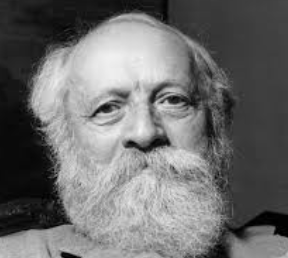
The concept of guilt is found most powerfully developed even in the most primitive communal forms which we know: ... the man is guilty who violates one of the original laws which dominate the society and which are mostly derived from a divine founder; the boy who is accepted into the tribal community and learns its laws, which bind him thenceforth, learns to promise; this promise is often given under the sign of death, which is symbolically carried out on the boy, with a symbolical rebirth.
▼
Source
source
p. 178
5 months 3 weeks ago
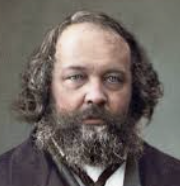
There is but one way to bring about the triumph of liberty, of justice, and of peace in Europe's international relations, to make civil war impossible between the different peoples who make up the European family; and that is the formation of the United States of Europe.

5 months 2 weeks ago
What to think of other people? I ask myself this question each time I make a new acquaintance. So strange does it seem to me that we exist, and that we consent to exist.

5 months 2 weeks ago
To be is to be cornered.

6 months 3 weeks ago
That the human mind has a certain order of possible progress, in which some things must precede others, an order which governments and public instructors can modify to some, but not to an unlimited extent: that all questions of political institutions are relative, not absolute, and that different stages of human progress not only will have, but ought to have, different institutions: That government is always either in the hands, or passing into the hands, of whatever is the strongest power in society, and that what this power is, does not depend on institutions, but institutions on it: That any general theory or philosophy of politics supposes a previous theory of human progress, and that this is the same thing with a philosophy of history.
▼
Source
source
(p. 162)
6 months 3 weeks ago
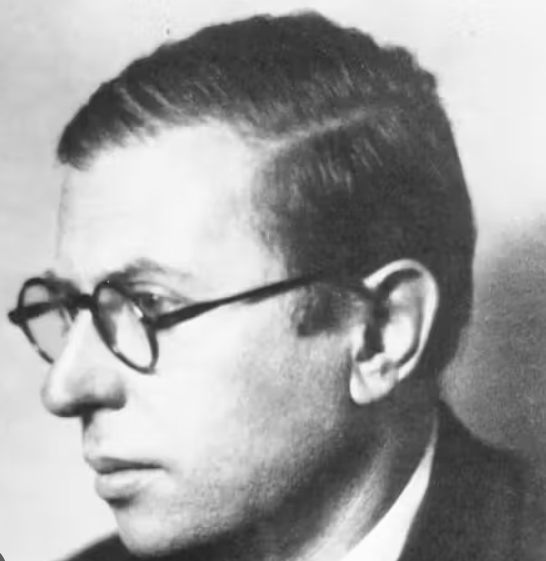
His business is here, it is here that he is despised and vilified, it is here that he must carry out his undertaking.
▼
Source
source
p. 67
5 months 2 weeks ago
How many disappointments are conducive to bitterness? One or a thousand, depending on the subject.
7 months 1 week ago
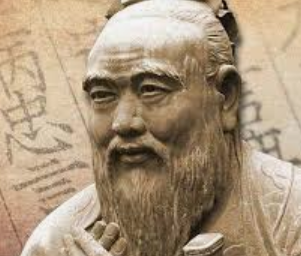
If names be not correct, language is not in accordance with the truth of things. Paraphrased as a chinese proverb stating "The beginning of wisdom is to call things by their proper name."
6 months 3 weeks ago
I take it for granted, when I am invited to lecture anywhere, - for I have had a little experience in that business, - that there is a desire to hear what I think on some subject, though I may be the greatest fool in the country, - and not that I should say pleasant things merely, or such as the audience will assent to; and I resolve, accordingly, that I will give them a strong dose of myself. They have sent for me, and engaged to pay for me, and I am determined that they shall have me, though I bore them beyond all precedent.
▼
Source
source
p. 484
5 months 1 week ago
Sensitiveness without impulse spells decadence, and impulse without sensitiveness spells brutality.
▼
Source
source
Ch. 13: "Requisites for Social Progress", p. 280
6 months 3 weeks ago
Matter is indeed infinitely and incredibly refined. To anyone who has ever looked on the face of a dead child or parent the mere fact that matter could have taken for a time that precious form, ought to make matter sacred ever after. It makes no difference what the principle of life may be, material or immaterial, matter at any rate co-operates, lends itself to all life's purposes. That beloved incarnation was among matter's possibilities.
▼
Source
source
Lecture III, Some Metaphysical Problems Pragmatically Considered


5 months 3 weeks ago
A standing army, for instance, is incompatible with freedom; because subordination and rigour are the very sinews of military discipline; and despotism is necessary to give vigour to enterprise that one will directs. A spirit inspired by romantic notions of honour, a kind of morality founded on the fashion of the age, can only be felt by a few officers, whilst the main body must be moved by command, like the waves of the sea; for the strong wind of authority pushes the crowd of subalterns forward, they scarcely know or care why, with headlong fury.
▼
Source
source
Ch. 1


6 months 2 weeks ago
If a person tells me he has been to the worst places I have no reason to judge him; but if he tells me it was his superior wisdom that enabled him to go there, then I know he is a fraud.
▼
Source
source
Conversation of 1930
CivilSimian.com created by AxiomaticPanic, CivilSimian, Kalokagathia