


4 months 2 weeks ago
One might say: art shows us the miracles of nature. It is based on the concept of the miracles of nature.

2 weeks 4 days ago
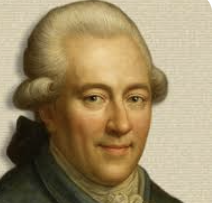
History, I believe, furnishes no example of a priest-ridden people maintaining a free civil government. This marks the lowest grade of ignorance of which their civil as well as religious leaders will always avail themselves for their own purposes.
▼
Source
source
Letter to Alexander von Humboldt (6 December 1813) Scanned letter at The Library of Congress Transcript at The Library of Congress
2 months 4 weeks ago
The pleasures of the imagination are as it were only drawings and models which are played with by poor people who cannot afford the real thing.
▼
Source
source
C 38

3 months 2 weeks ago
We have, indeed, in the part taken by many scientific men in this controversy of "Law versus Miracle," a good illustration of the tenacious vitality of superstitions. Ask one of our leading geologists or physiologists whether he believes in the Mosaic account of the creation, and he will take the question as next to an insult. Either he rejects the narrative entirely, or understands it in some vague non-natural sense. ...Whence ...this notion of "special creations"...Why, after rejecting all the rest of the story, he should strenuously defend this last remnant of it, as though he had received it on valid authority, he would be puzzled to say.
5 months 1 week ago
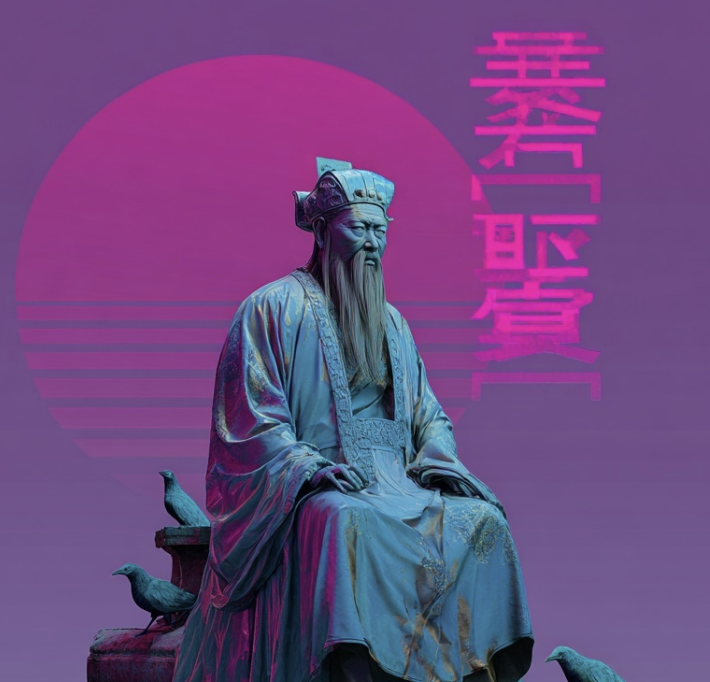
When we have intelligence resulting from sincerity, this condition is to be ascribed to nature; when we have sincerity resulting from intelligence, this condition is to be ascribed to instruction. But given the sincerity, and there shall be the intelligence; given the intelligence, and there shall be the sincerity.

4 months 3 weeks ago
In the state of nature, wrong-doing is impossible ; or, if anyone does wrong, it is to himself, not to another. For no one by the law of nature is bound to please another, unless he chooses, nor to hold anything to be good or evil, but what he himself, according to his own temperament, pronounces to be so ; and, to speak generally, nothing is forbidden by the law of nature, except what is beyond everyone's power.
▼
Source
source
Ch. 2, Of Natural Right
4 months 3 weeks ago
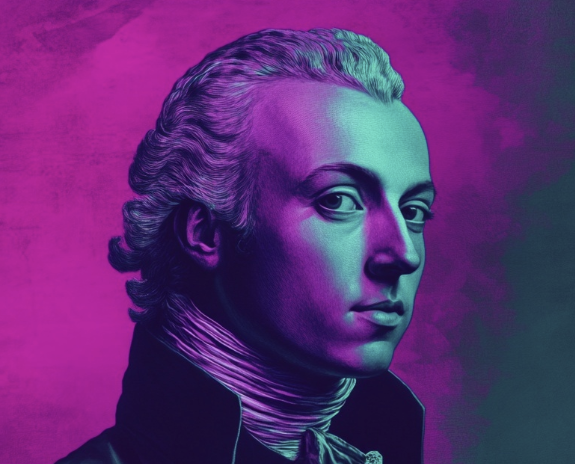
There must be a seed of every good thing in the character of men, otherwise no one can bring it out. Lacking that, analogous motives, honor, etc., are substituted. Parents are in the habit of looking out for the inclinations, for the talents and dexterity, perhaps for the disposition of their children, and not at all for their heart or character.
▼
Source
source
Part III : Selection on Education from Kant's other Writings, Ch. I Pedagogical Fragments, # 13
2 months 3 weeks ago
We favor hypotheses for their simplicity and explanatory power, much as the architect of the world might have done in choosing which possibility to create.
▼
Source
source
Chapter 15, Inductive Logic, p. 142.

4 months 2 weeks ago
Among human beings, the subjection of women is much more complete at a certain level of civilization than it is among savages. And the subjection is always reinforced by morality.
▼
Source
source
Ch. 15: Power and moral codes
2 weeks 2 days ago
All grandeur, all power, all subordination to authority rests on the executioner: he is the horror and the bond of human association. Remove this incomprehensible agent from the world and at that very moment order gives way to chaos, thrones topple and society disappears.
▼
Source
source
"First Dialogue," p. 20
3 months ago
The spirit of a production-centered, commodity-greedy society is such that only the non-conformist can defend himself sufficiently against it. Those who are seriously concerned with love as the only rational answer to the problem of human existence must, then, arrive at the conclusion that important and radical changes in our social structure are necessary, if love is to become a social and not a highly individualistic, marginal phenomenon.
3 months 1 week ago
Ideas, aspirations, and objectives that, by their content, transcend the established universe of discourse and action are either repelled or reduced to terms of this universe.
▼
Source
source
p. 12

4 months 3 weeks ago
...it is the peculiar and perpetual error of the human understanding to be more moved and excited by affirmatives than by negatives...
▼
Source
source
Aphorism 46

4 months 2 weeks ago
Perfect humility dispenses with modesty.

5 months 2 weeks ago
But in the end one needs more courage to live than to kill himself.
2 months 4 days ago
Is Man so different from any of these Apes that he must form an order by himself? Or does he differ less from them than they differ from one another, and hence must take his place in the same order with them?
▼
Source
source
Ch.2, p. 86
3 months 1 week ago
There is another significant involution of time and movement in space. It is constituted not only by directional tendencies-up and down for example-but by mutual approaches and retreatings. Near and far, close and distant, are qualities of pregnant, often tragic, import-that is, as they are experienced, not just stated by measurement of science. They signify loosening and tightening, expanding and contracting, separating and compacting, soaring and drooping, rising and falling; the dispersive, scattering, and the hovering and brooding, unsubstantial lightness and massive blow. Such actions and reaction are the very stuff out if which the objects and events we experience are made.
▼
Source
source
p. 215
4 months 2 weeks ago
Friendship is unnecessary, like philosophy, like art, like the universe itself (for God did not need to create). It has no survival value; rather it is one of those things which give value to survival.
4 months 2 weeks ago
Even when the experts all agree, they may well be mistaken.
▼
Source
source
A Fresh Look at Empiricism: 1927-42 (1996), p. 281

4 months 2 weeks ago
He would have left a Greek accent slanting the wrong way, and righted up a falling man.

3 months 5 days ago
Knowledge is employed in the service of the necessity of life and primarily in the service of the instinct of personal preservation. The necessity and this instinct have created in man the organs of knowledge and given them such capacity as they possess. Man sees, hears, touches, tastes and smells that which it is necessary for him to see, hear, touch, taste and smell in order to preserve his life. The decay or loss of any of these senses increases the risks with which his life is environed, and if it increases them less in the state of society in which we are actually living, the reason is that some see, hear, touch, taste and smell for others. A blind man, by himself and without a guide, could not live long. Society is an additional sense; it is the true common sense.

3 months 3 weeks ago
I have no hesitation in saying that although the American woman never leaves her domestic sphere and is in some respects very dependent within it, nowhere does she enjoy a higher station. And if anyone asks me what I think the chief cause of the extraordinary prosperity and growing power of this nation, I should answer that it is due to the superiority of their women.
▼
Source
source
Book Three, Chapter XII.

3 months 2 weeks ago
Talking nonsense is man's only privilege that distinguishes him from all other organisms.
1 month 3 days ago
Great men hallow a whole people and lift up all who live in their time.
▼
Source
source
Ireland, published in The Edinburgh Review
5 months 2 weeks ago
Since we're all going to die, it's obvious that when and how don't matter.

1 month 3 days ago
Show me that the good in life does not depend upon life's length, but upon the use we make of it; also, that it is possible, or rather usual, for a man who has lived long to have lived too little. Say to me when I lie down to sleep: "You may not wake again!" And when I have waked: "You may not go to sleep again!" Say to me when I go forth from my house: "You may not return!" And when I return: "You may never go forth again!"
2 months 1 week ago
Perhaps no person can be a poet, or even enjoy poetry, without a certain unsoundness of mind.
▼
Source
source
p. 7



4 months 3 weeks ago
Malice sucks up the greatest part of its own venom, and poisons itself.
▼
Source
source
Of Repentance, Book III, Ch. 2
3 months 1 week ago
When all these things are lacking there is no culture; there is in the strictest sense of the word, barbarism. And let us not deceive ourselves, this is what is beginning to appear in Europe under the progressive rebellion of the masses. The traveller who arrives in a barbarous country knows that in that territory there are no ruling principles to which it is possible to appeal. Properly speaking, there are no barbarian standards. Barbarism is the absence of standards to which appeal can be made.
▼
Source
source
Chap. VIII: The Masses Intervene In Everything, And Why Their Intervention Is Solely By Violence
3 months 2 weeks ago
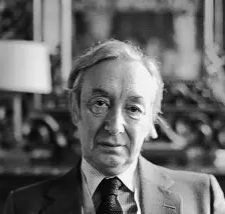
The traditional disputes of philosophers are, for the most part, as unwarranted as they are unfruitful. The surest way to end them is to establish beyond question what should be the purpose and method of a philosophical enquiry. And this is by no means so difficult a task as the history of philosophy would lead one to suppose. For if there are any questions which science leaves it to philosophy to answer, a straightforward process of elimination must lead to their discovery.
▼
Source
source
Ch. 1, first lines.
2 weeks 1 day ago
And virtue they will curse, speaking harsh words.
▼
Source
source
XI, 32
3 months 1 week ago
If one examines the reason why certain works of art offend us, one is likely to find that the cause is that there is no personally felt emotion guiding the selecting the assembling of the materials presented. We derive the impression that the artist, say the author of a novel, is trying to regulate by conscious intent the nature of the emotion aroused. We are irritated by a feeling that he is manipulating materials to secure an effect decided upon in advance. The facets of the work, the variety so indispensable to it, are held together by some external force. The movement of the parts and the conclusion disclose no logical necessity. The author, not the subject matter, is the arbiter.
2 weeks 3 days ago
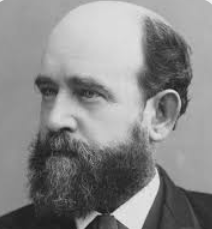
But there is another form of monopoly, far more general and far more insidious. The accumulation of large amounts of capital under consolidated control creates a new kind of power-essentially different from the power of increase. Increase is constructive in its nature. Power from accumulation is destructive. It is often exercised with reckless disregard, not only to industry but to the personal rights of individuals. A railroad approaches a small town as a highwayman approaches his victim. "Agree to our terms or we will bypass your town" is as effective a threat as "your money or your life." As robbers unite to plunder and divide the spoils, the trunk lines of railroads unite to raise rates and pool their earnings. The public is then forced to pay the cost of the whole maneuver, as the vanquished are forced to pay the cost of their own enslavement by a conquering army.
2 weeks 4 days ago
The inhabitants of the ceded territory shall be incorporated in the Union of the United States, and admitted as soon as possible, according to the principles of the Federal constitution, to the enjoyment of all the rights, advantages, and immunities, of citizens of the United States; and, in the mean time, they shall be maintained and protected in the free enjoyment of their liberty, property, and the religion which they profess.
▼
Source
source
Louisiana Treaty of Cession, Art. III

2 months 2 weeks ago
By electricity we have not been driven out of our senses so much as our senses have been driven out of us.
▼
Source
source
(p. 375)
4 months 3 weeks ago
But men must know that in this theater of man's life it is reserved only for God and angels to be lookers on.
▼
Source
source
Book II, xx, 8
4 months 2 weeks ago
The pursuit of philosophy is founded on the belief that knowledge is good, even if what is known is painful. A man imbued with the philosophic spirit, whether a professional philosopher or not, will wish his beliefs to be as true as he can make them, and will, in equal measure, love to know and hate to be in error. This principle has a wider scope than may be apparent at first sight.

3 months 2 weeks ago
Ideas should be neutral. But man animates them with his passions and folly. Impure and turned into beliefs, they take on the appearance of reality. The passage from logic is consummated. Thus are born ideologies, doctrines, and bloody farce.
3 months 2 weeks ago
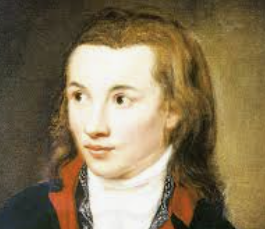
Someone arrived there - who lifted the veil of the goddess, at Sais. - But what did he see? He saw - wonder of wonders - himself. Novalis here alludes to Plutarch's account of the shrine of the goddess Minerva, identified with Isis, at Sais, which he reports had the inscription "I am all that hath been, and is, and shall be; and my veil no mortal has hitherto raised."
2 weeks 4 days ago
Above all things, lose no occasion of exercising your dispositions to be grateful, to be generous, to be charitable, to be humane, to be true, just, firm, orderly, courageous, &c. Consider every act of this kind, as an exercise which will strengthen your moral faculties and increase your worth.
2 months 2 days ago
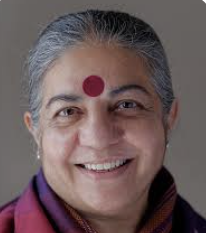
In the last 50 years agrotoxins have spread and are pushing bees to extinction. The choices before humanity are clear, a Poison Free Future to save bees, farmers, our food and humanity. Or continue to use poisons, threatening our common future by walking blindly to extinction through the arrogance that we can substitute bees with artificial intelligence and robots... There is no substitute for the amazing biodiversity and gifts of bees. Let us together as diverse species and diverse cultures and through poison free organic food and farming, rejuvenate the biodiversity of our pollinators and restore their sacredness. We have the creative power to stop the sixth mass extinction and climate catastrophe without the need for these false technocratic solutions.
▼
Source
source
Poisons Mean Extinction: For Bees and Humanity article for Common Dreams
2 months 2 weeks ago
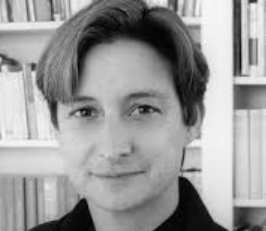
To affirm equality is to affirm a cohabitation defined in part by an interdependency that takes the edge off the individual boundaries of the body, or that works that edge for its social and political potential.
▼
Source
source
p. 148

4 months 2 weeks ago
Use, do not abuse; as the wise man commands. I flee Epictetus and Petronius alike. Neither abstinence nor excess ever renders man happy.
▼
Source
source
"Cinquième discours: sur la nature de plaisir," Sept Discours en Vers sur l'Homme, 1738
5 months 3 days ago
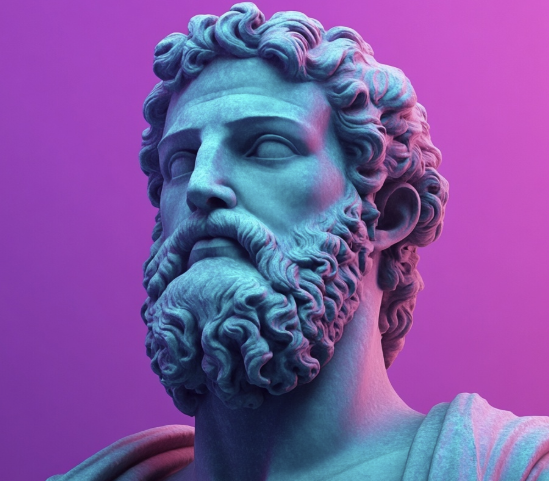
Remember that you ought to behave in life as you would at a banquet. As something is being passed around it comes to you; stretch out your hand, take a portion of it politely. It passes on; do not detain it. Or it has not come to you yet; do not project your desire to meet it, but wait until it comes in front of you. So act toward children, so toward a wife, so toward office, so toward wealth.
▼
Source
source
(15).
4 months 2 weeks ago
When I was 4 years old ... I dreamt that I'd been eaten by a wolf, and to my great surprise I was in the wolf's stomach and not in heaven.
▼
Source
source
BBC interview on "Face to Face" (1959); The Listener, Vol. 61 (1959), p. 503

4 months 2 weeks ago
All war propaganda consists, in the last resort, in substituting diabolical abstractions for human beings. Similarly, those who defend war have invented a pleasant sounding vocabulary of abstractions in which to describe the process of mass murder.
▼
Source
source
"Pacifism and Philosophy", 1936
4 months 2 weeks ago
With Leibnitz the extent to which thoughts advance is the extent of the universe; where comprehension ceases, the universe ceases, and God begins: so that later it was even maintained that to be comprehended was derogatory to God, because He was thus degraded into finitude. In that procedure a beginning is made from the determinate, this and that are stated to be necessary; but since in the next place the unity of these moments is not comprehended, it is transferred to God. God is therefore, as it were, the waste channel into which all contradictions flow: Leibnitz's Théodicée is just a popular summing up such as this.
▼
Source
source
Third division, Chapter I. - The Metaphysics of the Understanding Alternate translation: "God is, as it were, the sewer into which all contradictions flow."
3 months 1 week ago
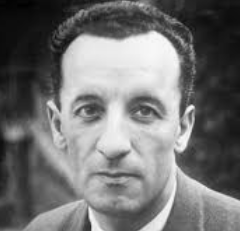
Theology recognizes the contingency of human existence only to derive it from a necessary being, that is, to remove it. Theology makes use of philosophical wonder only for the purpose of motivating an affirmation which ends it. Philosophy, on the other hand, arouses us to what is problematic in our own existence and in that of the world, to such a point that we shall never be cured of searching for a solution.
▼
Source
source
p. 44
3 months 1 week ago
It is the most advanced industrial society which feels most directly threatened by the rebellion, because it is here that the social necessity of repression and alienation, of servitude and heteronomy is most transparently unnecessary, and unproductive in terms of human progress. Therefore the cruelty and violence mobilized in the struggle against the threat, therefore the monotonous regularity with which the people are made familiar with, and accustomed to inhuman attitudes and behavior-to wholesale killing as patriotic act.
CivilSimian.com created by AxiomaticPanic, CivilSimian, Kalokagathia