

3 months 2 weeks ago
When one considers the sublime disposition underlying the tmly universal educatiOn (of traditional India) ... then what IS or has been called religion in Europe seems to us to be scarcely deserving of that name. And one feels compelled to advise those who Wish to witness religion to travel to India for that purpose ....
▼
Source
source
quoted in Londhe, S. (2008). A tribute to Hinduism: Thoughts and wisdom spanning continents and time about India and her culture. New Delhi: Pragun Publication.
3 months 2 weeks ago
A difficulty which confronts the synechistic philosophy is this. In considering personality, that philosophy is forced to accept the doctrine of a personal God; but in considering communication, it cannot but admit that if there is a personal God, we must have a direct perception of that person and indeed be in personal communication with him. Now, if that be the case, the question arises how it is possible that the existence of this being should ever have been doubted by anybody. The only answer that I can at present make is that facts that stand before our face and eyes and stare us in the face are far from being, in all cases, the ones most easily discerned. That has been remarked since time immemorial.

1 month 1 week ago
Man's unhappiness, as I construe, comes of his greatness; it is because there is an Infinite in him, which with all his cunning he cannot quite bury under the Finite.
▼
Source
source
Bk. I, ch. 9.

5 months 4 days ago
Incomprehensible and immutable is the love wherewith God loves. He did not begin to love us only on the day we were reconciled to Him by the blood of His Son; He loved us before the world was made, that we too might become His sons together with His Only-begotten Son, long before we had any existence.
▼
Source
source
p.435
4 months 2 weeks ago
The eye may see for the hand, but not for the mind.

4 months 2 weeks ago
Philosophy is to be studied, not for the sake of any definite answers to its questions, since no definite answers can, as a rule, be known to be true, but rather for the sake of the questions themselves; because these questions enlarge our conception of what is possible, enrich our intellectual imagination and diminish the dogmatic assurance which closes the mind against speculation; but above all because, through the greatness of the universe which philosophy contemplates, the mind is also rendered great, and becomes capable of that union with the universe which constitutes its highest good.

2 months 2 weeks ago
People usually think that progress consists in the increase of knowledge, in the improvement of life, but that isn't so. Progress consists only in the greater clarification of answers to the basic questions of life. The truth is always accessible to a man. It can't be otherwise, because a man's soul is a divine spark, the truth itself. It's only a matter of removing from this divine spark (the truth) everything that obscures it. Progress consists, not in the increase of truth, but in freeing it from its wrappings. The truth is obtained like gold, not by letting it grow bigger, but by washing off from it everything that isn't gold.
▼
Source
source
Tolstoy's Diaries (1985) edited and translated by R. F. Christian. London: Athlone Press, Vol 2, p. 512

2 months 2 weeks ago
One feature of our own society that seems decidedly anomalous is the matter of sexual advertisement. As we have seen, it is strongly to be expected on evolutionary grounds that, where the sexes differ, it should be the males that advertise and the females that are drab. Modern western man is undoubtedly exceptional in this respect. It is of course true that some men dress flamboyantly and some women dress drably but, on average, there can be no doubt that in our society the equivalent of the peacock's tail is exhibited by the female, not by the male. Women paint their faces and glue on false eyelashes. Apart from special cases, like actors, men do not. Ch. 9. Battle of the Sexes

4 months ago
By Silence, the discretion of a man is known: and a fool, keeping Silence, seemeth to be wise.


4 months 2 weeks ago
It is likely that America will be more important during the next century or two, but after that it may well be the turn of China.
▼
Source
source
Letter to Rachel Gleason Brooks, May 5, 1930
4 weeks 1 day ago
Just as no thing or organism exists on its own, it does not act on its own. Furthermore, every organism is a process: thus the organism is not other than its actions. To put it clumsily: it is what it does. More precisely, the organism, including its behavior, is a process which is to be understood only in relation to the larger and longer process of its environment. For what we mean by "understanding" or "comprehension" is seeing how parts fit into a whole, and then realizing that they don't compose the whole, as one assembles a jigsaw puzzle, but that the whole is a pattern, a complex wiggliness, which has no separate parts. Parts are fictions of language, of the calculus of looking at the world through a net which seems to chop it up into bits. Parts exist only for purposes of figuring and describing, and as we figure the world out we become confused if we do not remember this all the time.
▼
Source
source
p. 73

2 weeks 1 day ago
Remember this, then, that this little compound, thyself, must either be dissolved, or thy poor breath must be extinguished, or be removed and placed elsewhere.
▼
Source
source
VIII, 25

4 months 2 weeks ago
These considerations did not make us overlook the folly of premature attempts to dispense with the inducements of private interest in social affairs, while no substitute for them has been or can be provided: but we regarded all existing institutions and social arrangements as being (in a phrase I once heard from Austin) "merely provisional," and we welcomed with the greatest pleasure and interest all socialistic experiments by select individuals (such as the Co-operative Societies), which, whether they succeeded or failed, could not but operate as a most useful education of those who took part in them, by cultivating their capacity of acting upon motives pointing directly to the general good, or making them aware of the defects which render them and others incapable of doing so.
▼
Source
source
(pp. 233-234)
4 months 2 weeks ago
What extracts from the Vedas I have read fall on me like the light of a higher and purer luminary, which describes a loftier course through purer stratum. It rises on me like the full moon after the stars have come out, wading through some far stratum in the sky.
▼
Source
source
1850

5 months 2 weeks ago
Existence is illusory and it is eternal.
2 months 1 week ago
The strange superstition has arisen in the Western world that we can start all over again, remaking human nature, human society, and the possibilities of happiness; as though the knowledge and experience of our ancestors were now entirely irrelevant.
▼
Source
source
Gentle Regrets: Thoughts from a Life
3 months 3 weeks ago
The first condition of unity is a subjective principle; and this principle in the Positive system is the subordination of the intellect to the heart: Without this the unity that we seek can never be placed on a permanent basis, whether individually or collectively. It is essential to have some influence sufficiently powerful to produce convergence amid the heterogeneous and often antagonistic tendencies of so complex an organism as ours.
▼
Source
source
p. 24

8 months 3 weeks ago
Think about the strangeness of today's situation. Thirty, forty years ago, we were still debating about what the future will be: communist, fascist, capitalist, whatever. Today, nobody even debates these issues. We all silently accept global capitalism is here to stay. On the other hand, we are obsessed with cosmic catastrophes: the whole life on earth disintegrating, because of some virus, because of an asteroid hitting the earth, and so on. So the paradox is, that it's much easier to imagine the end of all life on earth than a much more modest radical change in capitalism.

4 months 3 weeks ago
In England, and in all Roman Catholic countries, the lottery of the church is in reality much more advantageous than is necessary.
▼
Source
source
Chapter X, Part II, p. 155.

4 months 2 weeks ago
I disbelieve in specialization and... experts. ...[P]aying too much respect to the specialist ...[is] destroying the commonwealth of learning, the rationalist tradition, and science ...

2 months 2 weeks ago
Nonviolence has now to be understood less as a moral position adopted by individuals in relation to a field of possible action than as a social and political practice undertaken in concert, culminating in a form of resistance to systemic forms of destruction coupled with a commitment to world building that honors global interdependency of the kind that embodies ideals of economic, social, and political freedom and equality.
▼
Source
source
p. 20

4 months 2 weeks ago
Scepticism is not irrefutable, but obviously nonsensical, when it tries to raise doubts where no questions can be asked. For doubt can exist only where a question exists, a question only where an answer exists, and an answer only where something can be said.

3 months 2 weeks ago
Do you know that ages will pass and mankind will proclaim in its wisdom and science that there is no crime and, therefore no sin, but that there are only hungry people. "Feed them first and then demand virtue of them!" - that is what they will inscribe on their banner which they will raise against you and which will destroy your temple.

4 months 2 weeks ago
It is very important to note that some 2,500 years ago at the least Pythagoras went from Samos to the Ganges to learn geometry...But he would certainly not have undertaken such a strange journey had the reputation of the Brahmins' science not been long established in Europe...
▼
Source
source
Voltaire, Fragments historiques sur l'Inde. Quoted in Gewali, Salil (2013). Great Minds on India. New Delhi: Penguin Random House.

3 months 2 weeks ago
Men who undertake considerable things, even in a regular way, ought to give us ground to presume ability.

5 months 2 weeks ago
The fact is that I've never called myself a genius, and I think the term has been cheapened by overuse into meaninglessness. If other people want to call me that, that's their problem.

4 months 3 weeks ago
Although the whole of this life were said to be nothing but a dream and the physical world nothing but a phantasm, I should call this dream or phantasm real enough, if, using reason well, we were never deceived by it.
▼
Source
source
As quoted in The World of Mathematics (1956) by J. R. Newman, p. 1832

1 month 1 week ago
My dear Kepler, what would you say of the learned here, who, replete with the pertinacity of the asp, have steadfastly refused to cast a glance through the telescope? What shall we make of this? Shall we laugh, or shall we cry?
▼
Source
source
Letter to Johannes Kepler (1610), as quoted in The Crime of Galileo (1955) by Giorgio De Santillana

4 months 3 weeks ago
Nothing is terrible except fear itself.
▼
Source
source
De Augmentis Scientiarum, Book II, "Fortitudo"
1 month 4 days ago
The unhampered market economy is not a system which would seem commendable from the standpoint of the selfish group interests of the entrepreneurs and capitalists. It is not the particular interests of a group or of individual persons that require the market economy, but regard for the common welfare. It is not true that the advocates of the free-market economy are defenders of the selfish interests of the rich. The particular interests of the entrepreneurs and capitalists also demand interventionism to protect them against the competition of more efficient and active men. The free development of the market economy is to be recommended, not in the interest of the rich, but in the interest of the masses of the people.
▼
Source
source
Ch. VII : The Economic, Social, and Political Consequences of Interventionism § 1. The Economic Consequences
3 months 2 weeks ago
Those who give and those who receive arbitrary power are alike criminal; and there is no man but is bound to resist it to the best of his power, wherever it shall show its face to the world. It is a crime to bear it, when it can be rationally shaken off. Nothing but absolute impotence can justify men in not resisting it to the utmost of their ability.
▼
Source
source
Speech in opening the impeachment of Warren Hastings (16 February 1788), quoted in The Works of the Right Honourable Edmund Burke, Volume the Ninth (1899), p. 458

3 months 3 days ago
Buddhism is the most colossal example in the history of applied metaphysics.
▼
Source
source
in Verhoeven, Martin J. 2001. "Buddhism and Science: Probing the Boundaries Of Faith and Reason." Religion East and West (1): 77-97.
3 months ago
In spite of the universalistic spirit of the monotheistic Western religions and of the progressive political concepts that are expressed in the idea "that all men are created equal," love for mankind has not become a common experience. Love for mankind is looked upon as an achievement which, at best, follows love for an individual or as an abstract concept to be realized only in the future. But love for man cannot be separated from love for one individual. To love one person productively means to be related to his human core, to him as representing mankind. Love for one individual, in so far as it is divorced from love for man, can refer only to the superficial and to the accidental; of necessity it remains shallow.
▼
Source
source
Ch. 2
1 month 2 weeks ago
Heresy is a set of opinions "at variance with established or generally received principles." In this sense, heresy is the price of all originality and innovation.
4 months 2 weeks ago
Supply and demand constantly determine the prices of commodities; never balance, or only coincidentally; but the cost of production, for its part, determines the oscillations of supply and demand.
▼
Source
source
Notebook I, The Chapter on Money, p. 58.

4 months 2 weeks ago
Earth laughs in flowers to see her boastful boys Earth-proud, proud of the earth which is not theirs; Who steer the plough, but can not steer their feet Clear of the grave.
▼
Source
source
Hamatreya
3 months 2 weeks ago
The unbought grace of life, the cheap defence of nations, the nurse of manly sentiment and heroic enterprise, is gone!
▼
Source
source
Volume iii, p. 331
4 weeks ago
Existing social conditions favour the production of an infinite number of acts of violence and there has been no hesitation in urging the workers not to refrain from brutality when this might do them service.
▼
Source
source
p. 183
2 months 4 weeks ago
Once the good man was dead, one wore his hat and another his sword as he had worn them, a third had himself barbered as he had, a fourth walked as he did, but the honest man that he was - nobody any longer wanted to be that.
▼
Source
source
C 36
2 weeks 3 days ago
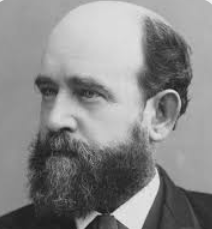
To prevent government from becoming corrupt and tyrannous, its organization and methods should be as simple as possible, its functions be restricted to those necessary to the common welfare, and in all its parts it should be kept as close to the people and as directly within their control as may be.
▼
Source
source
Ch. 17 : The Functions of Government
4 months 2 weeks ago
When the husk gets separated from the kernel, almost all men run after the husk and pay their respects to that. It is only the husk of Christianity that is so bruited and wide spread in this world; the kernel is still the very least and rarest of all things. There is not a single church founded on it.

3 months 3 weeks ago
I have often admired the mystical way of Pythagoras, and the secret Magic of numbers.
▼
Source
source
Section 12
4 weeks 1 day ago
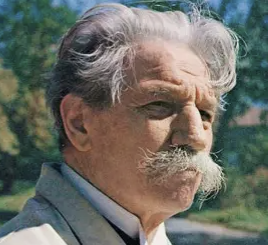
I must interpret the life about me as I interpret the life that is my own. My life is full of meaning to me. The life around me must be full of significance to itself. If I am to expect others to respect my life, then I must respect the other life I see, however strange it may be to mine. And not only other human life, but all kinds of life: life above mine, if there be such life; life below mine, as I know it to exist. Ethics in our Western world has hitherto been largely limited to the relations of man to man. But that is a limited ethics. We need a boundless ethics which will include the animals also.
2 months 2 weeks ago
Quite apart from assiduous efforts to restrict the use of violence as means rather than an end, the actualization of violence as a means can inadvertently become its own end, producing new violence, producing violence anew, reiterating the license, and licensing further violence. Violence does not exhaust itself in the realization of a just end; rather, it renews itself in directions that exceed both deliberate intention and instrumental schemes. In other words, by acting as if the use of violence can be a means to achieve a nonviolent end, one imagines that the practice of violence does not in the act posit violence as its own end. The technē is undermined by the praxis, and the use of violence only makes the world into a more violent place, by bringing more violence into the world.
▼
Source
source
p. 20
4 weeks 1 day ago
For several years I have referred to this, hitherto, rare and inaccessible work as the I-told-you-so-book, because it has often been implied that I have invented my explanations of Buddhism out of thin air, thus falsifying its authentic teachings... Yet, despite the occultist flavor of its title, The Secret Oral Teachings in the Tibetan Buddhist Sects is the most direct, no-nonsense, and down-to-earth explanation of Mahayana Buddhism which has thus far been written.
▼
Source
source
Watts' Foreward to The Secret Oral Teachings in the Tibetan Buddhist Sects (1964)], by Alexandra David Neel
4 months 2 weeks ago
I wish to suggest that a man may be very industrious, and yet not spend his time well. There is no more fatal blunderer than he who consumes the greater part of his life getting his living. All great enterprises are self-supporting. The poet, for instance, must sustain his body by his poetry, as a steam planing-mill feeds its boilers with the shavings it makes. You must get your living by loving.
▼
Source
source
pp. 486-7

4 months 2 weeks ago
The Indians, whom we call barbarous, observe much more decency and civility in their discourses and conversation, giving one another a fair silent hearing till they have quite done; and then answering them calmly, and without noise or passion. And if it be not so in this civiliz'd part of the world, we must impute it to a neglect in education, which has not yet reform'd this antient piece of barbarity amongst us.
▼
Source
source
Sec. 145
4 months 6 days ago
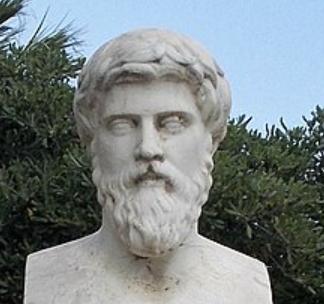
Cato requested old men not to add the disgrace of wickedness to old age, which was accompanied with many other evils.
▼
Source
source
Cato the Elder

4 months 3 weeks ago
The entire method consists in the order and arrangement of the things to which the mind's eye must turn so that we can discover some truth.
▼
Source
source
Rules for the Direction of the Mind: X.379 As quoted in Clarke, Desmond M. (2006). Descartes : a Biography. Cambridge Press. p. 67. ISBN 978-0-521-82301-2.
CivilSimian.com created by AxiomaticPanic, CivilSimian, Kalokagathia